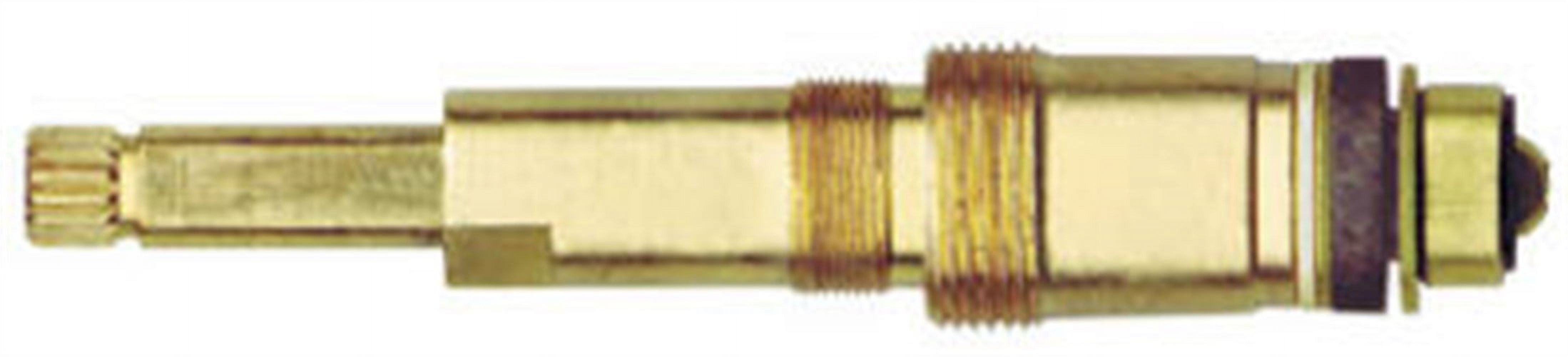
Identifying the correct American Standard faucet stem requires determining the faucet's model number or physically measuring the existing stem's length, diameter, and spline count. Most modern American Standard two-handle faucets utilize a 22-point spline broach and ceramic disc technology, while older models may use compression stems with rubber washers or plastic cartridges.
Finding the exact replacement part for a leaking faucet is often the most challenging stage of a plumbing repair. In 2026, American Standard continues to support a vast catalog of legacy and contemporary fixtures. However, because many stems look nearly identical to the naked eye, precision is required to ensure a watertight fit and proper handle alignment. This guide provides the technical specifications and procedural steps necessary to identify your American Standard faucet stem with professional accuracy.
Why Precise Stem Identification Matters
The faucet stem (or cartridge) is the internal component responsible for controlling the flow and temperature of water. In the context of American Standard products, using an "almost right" part is a recipe for failure. Even a fractional difference in the length of the stem or the pattern of the splines—the small teeth at the top of the stem where the handle attaches—can lead to several issues:
- Handle Misalignment: If the "stop" on the stem is not oriented correctly, your faucet handles may point in the wrong direction when turned off.
- Persistent Leaks: A stem that is slightly too short may not exert enough pressure against the seat, allowing water to bypass the seal.
- Stripped Handles: Using a handle on a stem with a different spline count will eventually strip the interior of the handle, requiring a more expensive repair.
- Internal Damage: Forcing a cartridge into a valve body that it wasn't designed for can crack the brass housing, often necessitating a full faucet replacement behind the wall or under the sink.
Method 1: Identification via Model Number
The most efficient way to identify a stem is by identifying the faucet model itself. American Standard typically organizes its parts by "families" or collections, such as the Colony, Reliant, Amarilis, or Hampton series.
Locating the Model Number
In 2026, most American Standard faucets manufactured within the last 15 years include a small identification tag. Look for a thin metallic or plastic wrap around the cold water supply line under the sink. This tag usually lists the model number (typically a four-digit number followed by a three-digit suffix, such as 7415.501).
If the tag is missing, you can use the American Standard official website's "Parts Lookup" tool. By filtering for the type of faucet (e.g., widespread, centerset, or single-control) and the finish (chrome, brushed nickel, or oil-rubbed bronze), you can often visually match your fixture to a model and download the corresponding "Exploded Parts View" PDF. This document will list the exact part number for the hot and cold stems.
Method 2: Physical Measurement and Visual Analysis
If the model number is unavailable, you must remove the stem and perform a manual identification. This is the "gold standard" for DIY repairs and professional plumbing.
Counting the Splines (The Broach)
The "broach" is the top portion of the stem that enters the handle. American Standard is well-known for using a 22-point spline. To count these, it is helpful to mark one tooth with a marker and count around the circle.
- Standard American Standard: 22 splines.
- Older or Specialty Models: Occasionally, you may encounter a square broach or a "D-shape" flat-sided broach, though these are less common in modern residential two-handle faucets.
Measuring Length and Diameter
Using a digital caliper is highly recommended for this step. Measure the total length from the very top of the spline to the very bottom of the seal.
- Note the "Shank" length: This is the threaded portion that screws into the faucet body.
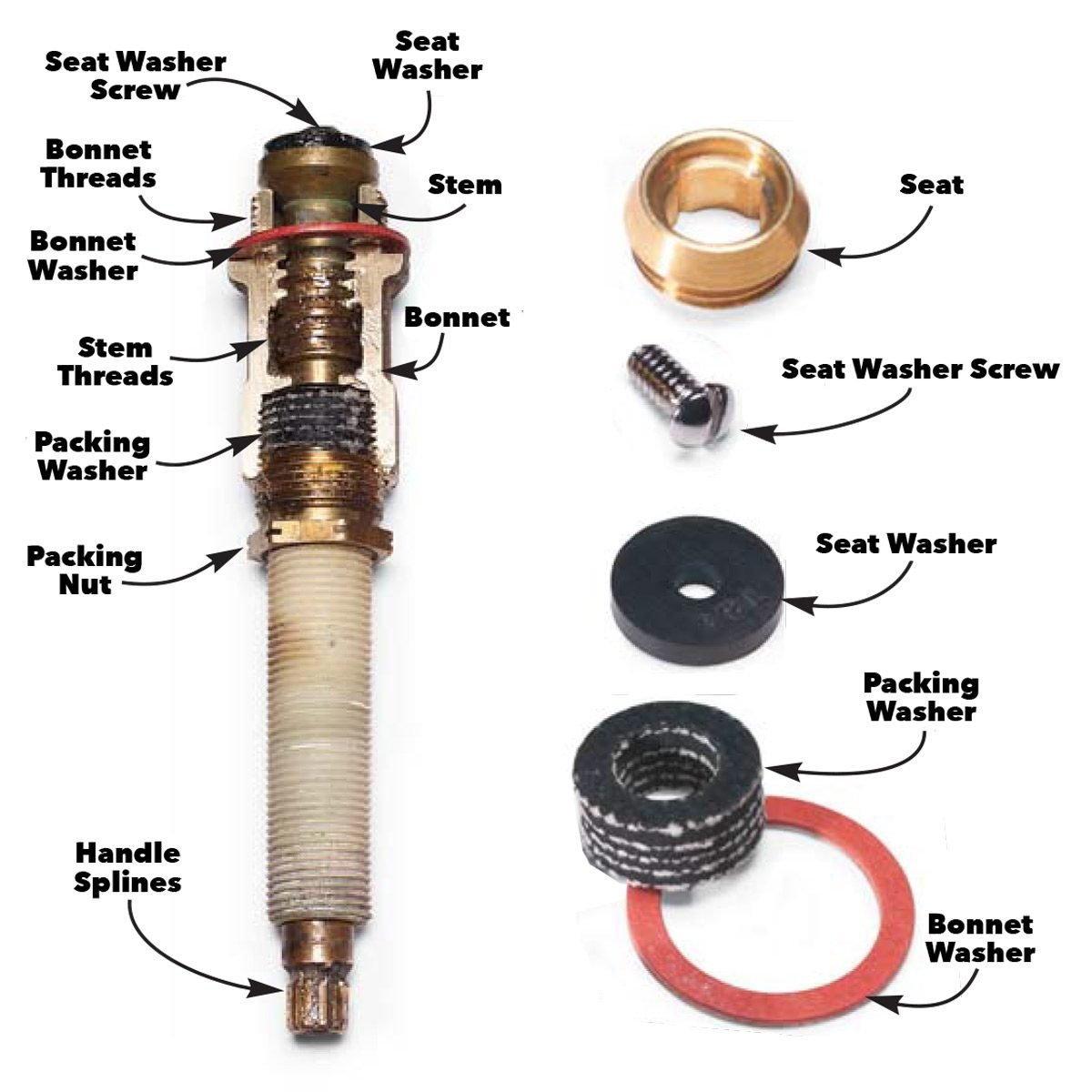
- Check the base: Is the bottom of the stem flat with a rubber seal (ceramic disc), or does it have a protruding screw and a thick rubber washer (compression)?
Color Coding
American Standard often uses color-coded plastic components on their cartridges to distinguish between hot and cold sides.
- Red/Brown/White: Often indicates a "clockwise close" (usually the hot side).
- Blue/Black: Often indicates a "counter-clockwise close" (usually the cold side).
- Neutral/Beige: Some universal ceramic cartridges, like the popular 994053-0070A, are designed to be reversible or used on either side depending on the handle orientation.
Common American Standard Stem Types
Understanding the specific engineering of the most common stems helps narrow down the search.
1. Ceramic Disc Cartridges (994053-0070A and Variants)
This is perhaps the most common stem in American Standard’s 21st-century catalog. It features a brass body with ceramic plates inside. It is incredibly durable but sensitive to sediment. If your faucet handle only turns 90 degrees (a quarter-turn), it is likely a ceramic disc model.
2. The "Nu-Seal" Units
Older American Standard faucets (pre-1990s) often use the Nu-Seal style. These are identifiable by their unique rubber "hat" or diaphragm that fits over the end of the stem. They are compression-style but rely on this specialized rubber component rather than a flat washer.
3. Single-Control Cartridges
If you have a single-lever faucet (like the Ceramix or Reliant+), you aren't looking for a "stem" in the traditional sense, but a large plastic cartridge. These are identified by the "legs" or alignment pins on the bottom. For example, the M962430-0070A is a staple for many single-handle kitchen and bath faucets.
Technical Specifications Comparison Table
The following table highlights the specifications for some of the most frequently replaced American Standard stems as of 2026.
| Part Number | Type | Spline Count | Common Applications | Distinguishing Feature |
|---|---|---|---|---|
| 994053-0070A | Ceramic Disc | 22 | Hampton, Amarilis, Heritage | Brass body, 1/4 turn, very common |
| M954800-0070A | Ceramic Disc | 24 (Special) | Specialty Widespread | Used in high-end designer lines |
| 032230-0070A | Compression | Square/None | Heritage/Old Style | Uses a traditional bibb washer |
| M962430-0070A | Single Lever | N/A | Ceramix, Reliant 3 | Large plastic cylinder with three ports |
| A954440-0070A | Pressure Balance | N/A | Shower/Tub Valves | Large unit with a balancing spool |
Step-by-Step Removal for Identification
To identify the part, you must see it. Follow these steps to safely extract an American Standard stem.
- Shut Off Water: Turn off the isolation valves under the sink. Open the faucet to drain any remaining pressure.
- Remove the Handle Button: Use a small flathead screwdriver to pop off the decorative cap (index button) on top of the handle.
- Unscrew the Handle: Use a Phillips head screwdriver or an Allen wrench (usually 3/32" or 2.5mm) to remove the handle screw. Lift the handle straight up.
- Remove the Escutcheon/Cap: Some faucets have a decorative sleeve or "bonnet nut" covering the stem. Unscrew this by hand or using a wrench with padded jaws to avoid scratching the finish.
- Extract the Stem: Use a deep socket wrench or an adjustable wrench to unscrew the stem from the valve body. Turn counter-clockwise.
- Clean and Inspect: Once removed, wipe away any lime scale or debris. Look for a stamped part number on the brass or plastic body, which is common on American Standard parts manufactured after 2010.
Troubleshooting Identification Challenges
Sometimes, even with the part in hand, identification remains difficult.
The "Stuck" Stem
In older homes, mineral deposits (calcium and magnesium) can "weld" a brass stem to a brass faucet body. If the stem won't budge, do not apply excessive force, as you may snap the faucet body. Apply a penetrating oil like WD-40 Specialist or PB Blaster and let it sit for at least 30 minutes before trying again.
Stripped Splines
If the teeth on the stem are worn down, you cannot count them. In this case, count the splines inside the handle instead. Since they mesh together, the count will be the same.
Legacy Discontinuation
While American Standard is excellent at maintaining parts, some mid-century models may no longer have "Genuine" parts available. In these instances, look for reputable aftermarket brands like Danco or LASCO. Use their "Stem Finder" charts, which provide 1:1 scale drawings. You can lay your physical stem onto the paper chart to find an exact match.
Where to Source Replacement Stems
Once identified, you have three primary avenues for procurement:
- American Standard/LIXIL Official Store: This ensures you receive an OEM (Original Equipment Manufacturer) part, which typically carries a better warranty and fits more precisely than generics. American Standard Parts & Support is the primary resource here.
- Plumbing Supply Houses: Companies like Ferguson or local independent plumbing wholesalers are more likely to have "new old stock" for discontinued items compared to big-box retailers.
- Hardware Stores: Stores like Home Depot or Lowe’s stock the top 5–10 most common American Standard cartridges. If you have a popular model like the Colony, you can usually find the part locally.
FAQ: American Standard Stem Identification
How can I tell if my faucet uses a ceramic disc or a compression stem?
The easiest way is to test the handle's rotation. If the handle stops firmly after a 90-degree (quarter) or 180-degree (half) turn, it is a ceramic disc. If you have to keep spinning the handle several full rotations to shut the water off, it is a compression stem.
Are American Standard stems interchangeable with Delta or Moen?
No. Plumbing manufacturers use proprietary designs for their valve bodies and stems. A Moen cartridge will not fit an American Standard faucet, and even within American Standard, stems are rarely interchangeable between different collections (e.g., a single-handle Reliant cartridge will not fit a two-handle Hampton faucet).
My stem has no part number on it. How do I find it?
Refer to the "Exploded View" diagram for your faucet model on the manufacturer's website. If you don't know the model, use a "Plumbing Stem Identification Guide" (available at most hardware stores), which allows you to compare the length, broach, and bottom seal to hundreds of silhouettes.
Can I just replace the O-rings instead of the whole stem?
On older compression stems, replacing the rubber washer and O-rings often solves the leak. However, for modern ceramic disc cartridges (like the 994053-0070A), the ceramic plates inside are usually what fail or get cracked. These units are designed to be replaced as a whole assembly rather than repaired.
Why is there a hot and cold version of the same stem?
In two-handle faucets, the handles usually turn in opposite directions to open (e.g., the hot handle turns counter-clockwise and the cold handle turns clockwise). The stems are mechanically "mirrored" to allow for this ergonomic symmetry. Using two "hot" stems would mean both handles turn the same way, which is functional but unintuitive.
Final Recommendation
Before purchasing a replacement, always verify the spline count and the overall length. For most homeowners in 2026, the American Standard 994053-0070A will be the correct part for two-handle bathroom faucets. If your faucet is a single-handle kitchen model, the M962430-0070A is the most likely candidate. Always keep your old stem until the new one is successfully installed and tested for leaks.