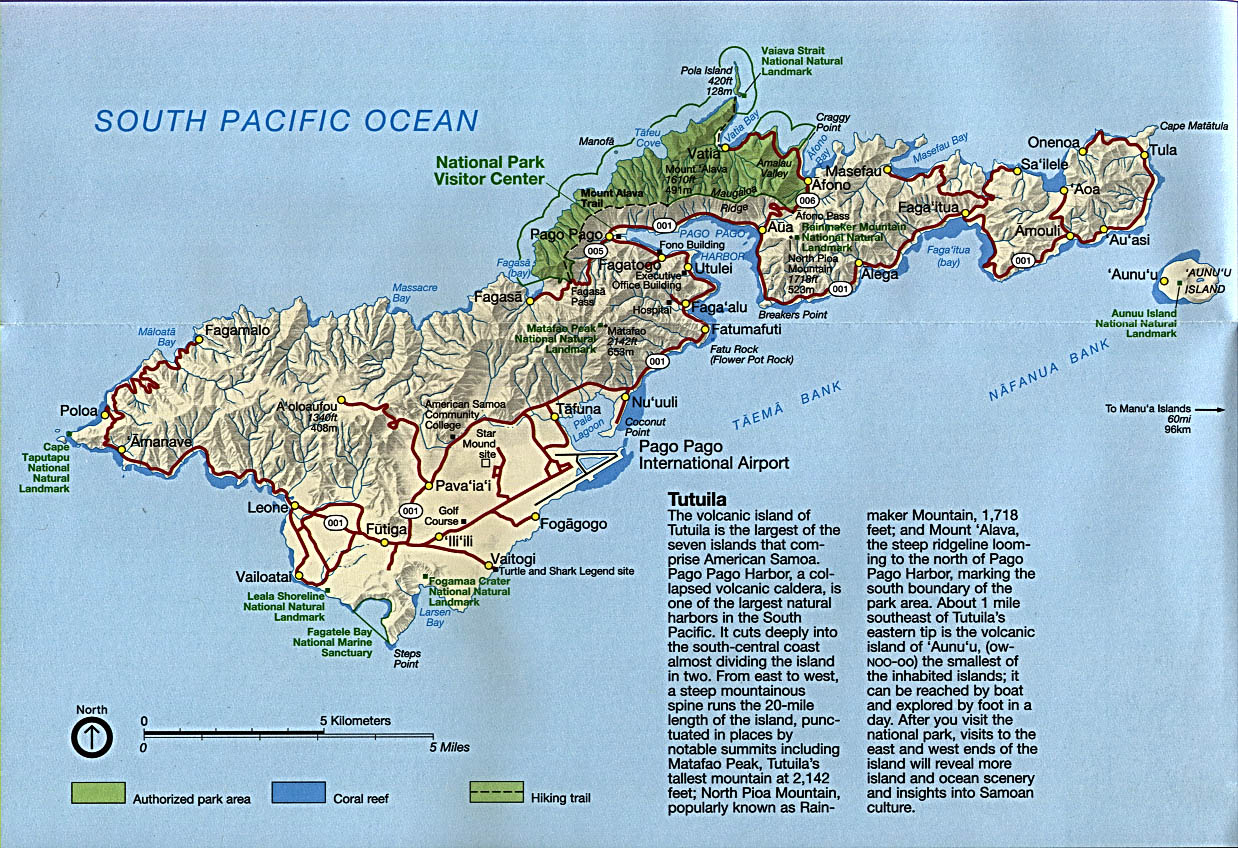
American Samoa is a legally recognized unincorporated territory of the United States located in the South Pacific. While it is under U.S. sovereignty and its residents are U.S. nationals, it remains "unorganized," meaning the U.S. Congress has not passed an Organic Act to establish its local government. Instead, it is self-governed under its own constitution.
Defining the Legal Status: Unincorporated and Unorganized
To understand how American Samoa is part of the United States in 2026, one must first navigate the specific legal nomenclature used by the Office of Insular Affairs. The United States classifies its territories based on two primary axes: incorporation and organization. American Samoa is unique among U.S. jurisdictions because it is the only major inhabited territory that is both unincorporated and unorganized.
The term "unincorporated" signifies that the U.S. Constitution does not apply in its entirety to the islands. According to the "Insular Cases"—a series of Supreme Court decisions from the early 20th century—only "fundamental" constitutional rights apply to residents of unincorporated territories. This distinction allows the local government to maintain traditional laws, such as communal land ownership, which might otherwise be deemed unconstitutional under the Equal Protection Clause in a U.S. state.
The term "unorganized" refers to the absence of an Organic Act. For territories like Guam or the U.S. Virgin Islands, Congress passed specific legislation to define their relationship with the federal government and establish their local governance. American Samoa, conversely, operates under a constitution approved by the Secretary of the Interior in 1960. This provides the territory with a significant degree of local autonomy while remaining firmly under the "plenary power" of the U.S. Congress as stipulated by Article IV, Section 3 of the U.S. Constitution.
The Deeds of Cession: The Historical Foundation
The relationship began with the 1900 Deed of Cession for Tutuila and Aunu'u, followed by the 1904 Deed of Cession for the Manu'a Islands. Unlike many other territories acquired through conquest or purchase, these deeds were agreements between local traditional leaders (matai) and the United States. The chiefs sought protection from other colonial powers while the U.S. sought a strategic coaling station for its Navy in the Pago Pago Harbor.
These documents are foundational to why American Samoa is part of the United States. They established the U.S. as the sovereign authority while explicitly promising to protect the "lands and the customs" of the Samoan people. This promise remains the cornerstone of the contemporary political and social landscape in the territory.
U.S. Nationality vs. U.S. Citizenship
One of the most complex aspects of American Samoa’s status is the distinction between "U.S. National" and "U.S. Citizen." As of 2026, persons born in American Samoa are U.S. nationals at birth, but not U.S. citizens. This makes American Samoa the only U.S. jurisdiction where this distinction applies to the general population born within its borders.
The Practical Implications of Being a U.S. National
A U.S. national owes permanent allegiance to the United States and is entitled to the protection of the U.S. government. For most practical purposes, the rights of a national mirror those of a citizen. Nationals can:
- Travel and work freely anywhere within the United States.
- Apply for and hold U.S. passports (which include a notation stating the bearer is a U.S. national, not a U.S. citizen).
- Serve in the U.S. Armed Forces (American Samoa has historically had one of the highest per-capita enlistment rates in the nation).
However, there are critical limitations. U.S. nationals cannot vote in federal, state, or local elections outside of American Samoa. They are also generally barred from certain federal and state civil service jobs that require citizenship as a prerequisite. Furthermore, they cannot hold a U.S. passport that grants them the right to vote or run for office in a U.S. state without first undergoing a naturalization process.
The Path to Naturalization
For American Samoans who wish to become U.S. citizens, the process is streamlined compared to foreign nationals, but it is not automatic. Under the Immigration and Nationality Act, a U.S. national who takes up residence in a U.S. state can apply for naturalization after meeting residency requirements (usually three months in a specific state) and passing the standard civics and English tests. They are exempt from many of the fees and waiting periods associated with green card holders because they are already legally present in the U.S. by right of their nationality.
Governance and Political Structure in 2026
The government of American Samoa mimics the U.S. federal structure but integrates traditional Samoan culture, known as Fa'a Samoa. This "Samoan Way" is legally protected and informs the operations of the executive, legislative, and judicial branches.
The Executive Branch and the Fono
The Governor of American Samoa serves as the head of the local government. Since 1977, this position has been popularly elected by the residents of the territory. The Governor oversees the territorial bureaucracy and acts as the primary liaison with the U.S. Department of the Interior.
The legislature, known as the Fono, is a bicameral body. It consists of:
- The House of Representatives: Comprised of 21 members, 20 of whom are elected by popular vote from various districts, and one non-voting delegate from Swains Island.
- The Senate: Comprising 18 members who are not elected by the general public but are instead chosen by the local councils of chiefs (matai) in accordance with Samoan custom. This ensures that traditional leadership remains a core component of the law-making process.
Representation in the U.S. Congress
American Samoa is represented in the U.S. House of Representatives by a single Delegate. Like delegates from other territories and the District of Columbia, the representative from American Samoa can sit on committees, participate in debates, and vote on matters within those committees. However, the Delegate is not permitted to vote on the final passage of legislation on the House floor. This lack of full voting representation is a recurring point of political discussion regarding the territory's integration into the federal system.
The Protection of Land and Culture: Fa'a Samoa
A primary reason American Samoa has resisted "incorporation" or "citizenship at birth" (through some legal avenues) is the fear that it would jeopardize their land tenure system. In American Samoa, approximately 90% of the land is communal. This land is owned by extended families (aiga) and managed by the family’s head chief (matai).
Under territorial law, only those with at least 50% Samoan ancestry are permitted to own or inherit communal land. This restriction is designed to prevent the displacement of the indigenous population and the commercialization of ancestral lands. If American Samoa were to become a state or fully incorporated territory, these race-based land restrictions would likely be struck down by U.S. courts as a violation of the 14th Amendment. Consequently, the current status as an "unincorporated" territory serves as a legal shield for the Samoan way of life.
Comparison of U.S. Territories (2026 Status)
The following table outlines the differences between American Samoa and other major U.S. territories to clarify its unique standing within the American political family.
| Feature | American Samoa | Puerto Rico | Guam | U.S. Virgin Islands | Northern Mariana Islands |
|---|---|---|---|---|---|
| Status | Unincorporated / Unorganized | Unincorporated / Organized | Unincorporated / Organized | Unincorporated / Organized | Unincorporated / Commonwealth |
| Citizenship | U.S. National | U.S. Citizen | U.S. Citizen | U.S. Citizen | U.S. Citizen |
| Organic Act | No (Local Constitution) | Yes | Yes | Yes | Yes (Covenant) |
| Federal Taxes | Self-Employment only* | Limited (Varies) | Limited (Varies) | Limited (Varies) | Limited (Varies) |
| U.S. Constitution | Fundamental Rights only | Fundamental Rights only | Fundamental Rights only | Fundamental Rights only | Fundamental Rights only |
| Communal Land | Yes (Protected) | No | No | No | Limited protections |
*Note: While most residents do not pay federal income tax on income earned within the territory, they do pay into Social Security and Medicare if they are self-employed or work for the federal government.
Travel, Customs, and Immigration Requirements
Although American Samoa is part of the United States, it maintains its own borders and customs authority. This creates a distinct experience for travelers compared to flying between the U.S. mainland and Hawaii or Puerto Rico.
Entering American Samoa
U.S. citizens and nationals do not need a visa to enter American Samoa, but they must possess a valid U.S. passport or a certified birth certificate accompanied by a government-issued photo ID. Upon arrival at Pago Pago International Airport, all travelers must clear local immigration and customs.
For non-U.S. citizens, the entry requirements are governed by the American Samoa Government (ASG), not the U.S. Department of State or Homeland Security. The territory has its own immigration laws and issues its own entry permits. This autonomy allows the territory to manage its workforce and population density independent of federal immigration quotas.
Customs and Trade Regulations
American Samoa is outside the U.S. customs territory. This means that goods traveling from the U.S. mainland to American Samoa—and vice versa—are subject to customs inspections and potentially different duty rates. However, the territory benefits from "Headnote 3(a)" of the Harmonized Tariff Schedule of the United States, which allows products manufactured in the territory to enter the U.S. mainland duty-free if they meet certain local content requirements. This has historically been vital for the territory’s tuna canning industry.
Frequently Asked Questions
Can American Samoans vote for the U.S. President?
No. Residents of American Samoa, whether they are U.S. nationals or U.S. citizens living there, cannot vote in the general election for the President of the United States. They do, however, send delegates to the Democratic and Republican national conventions to participate in the nomination process. If an American Samoan moves to a U.S. state and attains citizenship, they can then vote for the President in that state.
Does the U.S. Supreme Court have jurisdiction over American Samoa?
Yes, but with nuances. The U.S. Supreme Court is the highest judicial authority over all U.S. territories. However, because American Samoa is unincorporated, the Court has historically allowed the High Court of American Samoa to handle most local matters, including those involving traditional land and titles, without direct federal interference, provided that fundamental constitutional rights are not violated.
Is the U.S. Dollar the official currency?
Yes, the United States Dollar is the official and only currency used in American Samoa. The territory’s economy is deeply integrated with the U.S. financial system, and its banks are generally regulated under frameworks that include federal oversight, though local banking options like the Territorial Bank of American Samoa exist to serve the community’s specific needs.
Are American Samoans eligible for federal benefits?
Most federal programs apply to American Samoa, but sometimes in a modified form. Residents pay into and are eligible for Social Security and Medicare. However, they are currently ineligible for Supplemental Security Income (SSI). The territory also receives federal funding for education, infrastructure, and healthcare (Medicaid), though the funding formulas often differ from those used for U.S. states.
What is the primary language spoken in the territory?
Both Samoan and English are official languages. Samoan is the primary language spoken at home and in traditional settings, while English is used for most government business, secondary education, and commerce. This bilingualism is a reflection of American Samoa’s dual identity as a traditional Pacific island society and a part of the United States.
Next Steps for Travelers and Researchers
If you are planning to visit American Samoa or conduct business within the territory, it is essential to contact the American Samoa Government directly regarding current entry permit requirements and business licenses. For legal researchers or those interested in the constitutional status of territories, the U.S. Department of the Interior’s Office of Insular Affairs provides the most comprehensive primary documents and official reports regarding the "unorganized" status of the islands.
Understanding that American Samoa is part of the United States requires recognizing a unique middle ground: it is American in its allegiance and protection, but Samoan in its culture and internal governance.