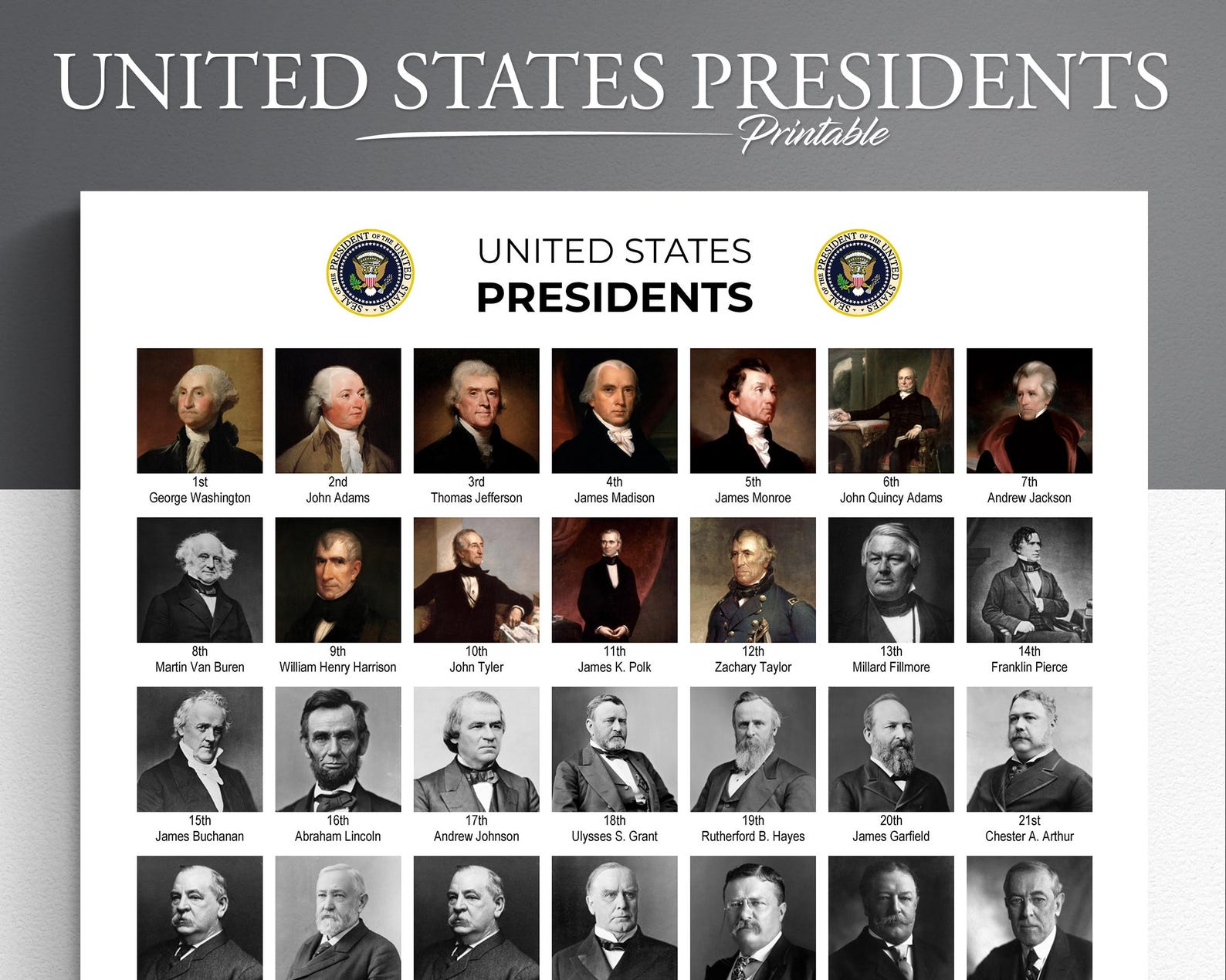
The age of an American president is more than a simple statistic; it often dictates the energy of an administration, the perspective of the executive branch, and the historical legacy of the era. As of 2026, the record for the oldest president to take office is held by Joe Biden, who was 78 at his first inauguration, while Theodore Roosevelt remains the youngest at age 42.
Understanding the history of American presidents listed by age requires looking at three distinct categories: age at inauguration, age at the time of death, and the length of their post-presidency. Since the founding of the Republic, the average age for a president to take the oath of office has hovered around 55. However, recent decades have seen a shift toward both ends of the spectrum, featuring some of the oldest candidates in history alongside relatively young leaders like Barack Obama and Bill Clinton.
The Youngest Presidents in U.S. History
The United States Constitution sets the minimum age for the presidency at 35, a requirement established in Article II, Section 1. Despite this relatively low threshold, very few individuals under the age of 50 have reached the nation's highest office.
Theodore Roosevelt: The Youngest to Serve
Theodore Roosevelt holds the record for the youngest person to ever serve as President of the United States. He assumed the office at the age of 42 years and 322 days following the assassination of William McKinley in 1901. Roosevelt brought an unprecedented level of physical vigor to the White House, famously advocating for the "strenuous life." His youth was a defining characteristic of his presidency, influencing his "Bully Pulpit" style and his aggressive approach to trust-busting and conservation.
John F. Kennedy: The Youngest Elected
While Roosevelt was the youngest to serve, John F. Kennedy remains the youngest person ever elected to the presidency. Kennedy was 43 years and 236 days old when he was inaugurated in 1961. His youth was a central theme of his campaign, symbolizing a "passing of the torch" to a new generation of Americans born in the 20th century. Kennedy’s age was often contrasted with that of his predecessor, Dwight D. Eisenhower, who was then one of the oldest men to have served.
Other Notable Young Presidents
Several other presidents began their terms before reaching age 50:
- Bill Clinton: 46 years, 154 days.
- Ulysses S. Grant: 46 years, 311 days.
- Barack Obama: 47 years, 169 days.
- Grover Cleveland: 47 years, 351 days (first term).
These leaders often campaigned on platforms of change and modernization, using their relative youth to signal a break from the political establishment of their predecessors.
The Oldest Presidents in U.S. History
In the 21st century, the trend has shifted significantly toward older candidates. This shift is often attributed to the increasing complexity of national politics, which rewards long-term experience, and advancements in healthcare that allow individuals to remain active and sharp well into their late 70s and 80s.
Joe Biden: The Age Record-Holder
Joe Biden became the oldest president in U.S. history when he was inaugurated at age 78 years and 61 days in January 2021. By the time he concluded his term in early 2025, he had set a new benchmark for the physical and mental demands of the office in one's eighties. His presidency sparked significant national dialogue regarding the "gerontocracy" of American leadership and whether age limits or competency tests should be introduced—though no such legal changes were made.
Donald Trump and Ronald Reagan
Before Biden, Donald Trump held the record, having been inaugurated at 70 years and 220 days in 2017. Prior to Trump, Ronald Reagan was the standard-bearer for older presidents. Reagan was 69 years and 349 days old at his first inauguration. By the time Reagan left office in 1989, he was nearly 78, making him the oldest serving president until Joe Biden surpassed that mark during his first term.
William Henry Harrison: A Historical Outlier
In the 19th century, William Henry Harrison was considered exceptionally old for the office. He was 68 years and 23 days old at his inauguration in 1841. Tragically, Harrison died just 31 days into his term, which many at the time attributed to the physical strain of the inauguration and his advanced age, though modern historians suggest enteric fever from the White House water supply was the more likely cause.
Comparative Table: American Presidents by Inaugural Age
The following table provides a comprehensive look at American presidents listed by age at the time they first took the oath of office.
| President | Age at Inauguration | Year of Inauguration |
|---|---|---|
| Joe Biden | 78 years, 61 days | 2021 |
| Donald Trump | 70 years, 220 days | 2017 |
| Ronald Reagan | 69 years, 349 days | 1981 |
| William Henry Harrison | 68 years, 23 days | 1841 |
| James Buchanan | 65 years, 315 days | 1857 |
| George H.W. Bush | 64 years, 222 days | 1989 |
| Zachary Taylor | 64 years, 100 days | 1849 |
| Dwight D. Eisenhower | 62 years, 98 days | 1953 |
| John Adams | 61 years, 125 days | 1797 |
| Andrew Jackson | 61 years, 354 days | 1829 |
| Harry S. Truman | 60 years, 339 days | 1945 |
| Gerald Ford | 61 years, 26 days | 1974 |
| James Monroe | 58 years, 310 days | 1817 |
| James K. Polk | 49 years, 122 days | 1845 |
| Barack Obama | 47 years, 169 days | 2009 |
| Ulysses S. Grant | 46 years, 311 days | 1869 |
| Bill Clinton | 46 years, 154 days | 1993 |
| John F. Kennedy | 43 years, 236 days | 1961 |
| Theodore Roosevelt | 42 years, 322 days | 1901 |
Note: The table highlights the spread across different eras, showcasing the movement from middle-aged founders to the older executives of the modern era.
Presidential Longevity and Post-Presidency Records
The story of a president's age doesn't end when they leave the White House. Longevity after office has become a hallmark of the modern era, thanks to better security, healthcare, and a less strenuous lifestyle following their terms.
Jimmy Carter: The Longevity Champion
As of 2026, Jimmy Carter remains the longest-living president in the history of the United States. Born on October 1, 1924, Carter has surpassed the age of 101. His post-presidency has lasted over 45 years, during which he founded the Carter Center, won a Nobel Peace Prize, and authored dozens of books. Carter’s longevity is unprecedented and has redefined the expectations for what a former president can achieve in their "twilight" years.
The 90-Plus Club
Several other presidents have lived into their 90s, a feat that was extremely rare in the 18th and 19th centuries.
- George H.W. Bush: Died at 94 years, 171 days.
- Gerald Ford: Died at 93 years, 165 days.
- Ronald Reagan: Died at 93 years, 120 days.
- John Adams: Died at 90 years, 247 days.
- Herbert Hoover: Died at 90 years, 71 days.
It is noteworthy that John Adams remained the longest-lived president for nearly 175 years until he was finally surpassed by Herbert Hoover, and later the modern trio of Reagan, Ford, and the Bushes.
The Physical Toll of the Presidency
While modern presidents are living longer, the office itself is famous for its physical toll. Observers often point to the "graying of the president" as a visible sign of the stress associated with the job. Studies of presidential aging suggest that for every year spent in the White House, the leader effectively ages two years in terms of physiological stress.
Health and Transparency
In the early years of the Republic, a president’s health was a private matter. However, after the hidden illnesses of Woodrow Wilson (stroke) and Franklin D. Roosevelt (congestive heart failure), the public and the media have demanded greater transparency. Today, the annual presidential physical is a major news event. When considering American presidents listed by age, the focus is often on their "fitness for duty," a subjective measure that combines physical health with cognitive resilience.
Impact of Medical Advancements
The difference in lifespan between early presidents and modern ones is stark. The average lifespan of the first ten presidents was roughly 77 years—remarkably high for the time, but skewed by outliers like John Adams. In contrast, the modern expectation is that a president will live well into their 80s or 90s. This change is largely due to the management of cardiovascular health and the availability of advanced emergency medicine.
Constitutional Requirements vs. Modern Reality
The debate over presidential age often returns to the Constitution. The framers chose 35 as the minimum age to ensure a candidate had sufficient "maturity" and a "settled character." They did not, however, set a maximum age.
The Case for Age Diversity
Proponents of younger presidents argue that the office requires a level of stamina and a connection to the future that only younger leaders can provide. They point to Theodore Roosevelt’s energy and JFK’s "New Frontier" as examples of how youth can galvanize a nation.
Conversely, supporters of older presidents emphasize the value of "judicial temperament" and decades of crisis-management experience. In a world of nuclear weapons and complex global economies, many voters prefer a "steady hand" that has been tested by time. This tension ensures that age will remain a primary factor in every American election cycle.
Frequently Asked Questions
Who was the youngest person to ever be president?
Theodore Roosevelt was the youngest person to serve as president, taking office at age 42. However, John F. Kennedy was the youngest person ever elected to the office at age 43. The distinction exists because Roosevelt assumed the presidency from the vice presidency following the death of his predecessor.
Who is the oldest living U.S. President?
As of 2026, Jimmy Carter is the oldest living U.S. President. He turned 101 in late 2024 and continues to hold the record for the longest-living president in American history.
What is the average age of a U.S. President at inauguration?
The average age at inauguration is approximately 55 years old. While recent presidents like Joe Biden and Donald Trump have been significantly older, they are balanced out in the historical average by younger leaders like Ulysses S. Grant, Bill Clinton, and Barack Obama.
Can a president be too old to serve?
Constitutionally, there is no upper age limit for the presidency. As long as a person is at least 35 years old, a natural-born citizen, and has resided in the U.S. for 14 years, they are eligible. Any concerns regarding an older president's ability to serve are typically addressed through the 25th Amendment, which provides a mechanism for the vice president to assume power if the president is "unable to discharge the powers and duties of his office."
Who was the oldest president before the 20th century?
William Henry Harrison was the oldest president of the 19th century, inaugurated at age 68 in 1841. Before him, the record was held by Andrew Jackson, who was 61 at his first inauguration.
Final Considerations for Researchers
When analyzing American presidents listed by age, it is essential to consider the era in which they lived. An age of 60 in the year 1800 represented a significantly different stage of life than age 60 does in 2026. For those studying presidential history, the data suggests that while the "ideal" age remains a matter of public debate, the American electorate has shown a willingness to trust both the energetic youth of the 40s and the seasoned experience of the 70s.
For further verification of presidential birth dates and inaugural ages, researchers should consult the National Archives or the White House Historical Association. These institutions provide the primary source documents, including family bibles and official certificates, that confirm these historical records.