Minors injured on the job in Alabama are generally entitled to the same core medical and wage-replacement protections as adult employees, though child labor laws and specific statutory frameworks dictate how claims are processed and whether additional penalties apply for illegal employment.
Navigating the intersection of youth employment and injury compensation requires understanding how state labor regulations, insurance mandates, and legal remedies interact when a young worker gets hurt on the clock. While Alabama law ensures that most injured employees receive coverage regardless of age, the employment of minors involves strict statutory guidelines that can significantly alter the legal landscape of a workers' compensation claim. For parents, employers, and young workers alike, grasping these rules is essential for protecting rights, securing necessary medical care, and understanding financial liabilities after a workplace accident.
The Legal Framework of Youth Employment in Alabama
To understand how workers' compensation applies to minors, it is necessary to examine how the state regulates youth employment. Alabama's child labor laws, overseen by the Alabama Department of Labor (ADOL), establish strict boundaries regarding the types of jobs minors can perform, the maximum number of hours they can work, and the mandatory documentation required before a young person enters the workforce.
Minors under the age of 18 must typically secure an eligibility to work form or adhere to specific school-attendance mandates depending on their exact age bracket. Hazardous occupations—such as operating heavy machinery, working on roofs, handling certain types of commercial motor vehicles, or using power-driven meat slicers—are strictly prohibited for workers under 18 under both state guidelines and the federal Fair Labor Standards Act (FLSA).
When a youth worker is injured, the legality of their employment status becomes a critical factor. If a minor was legally employed at the time of the accident, the standard workers' compensation system processes the claim identically to an adult injury. However, if the minor was performing prohibited hazardous work or working outside permitted hours in violation of child labor laws, complex legal questions arise regarding statutory coverage versus potential civil liability.
Eligibility and Coverage Under Alabama Workers' Compensation Law
The Alabama Workers' Compensation Act (Code of Alabama 1975, Title 25, Chapter 5) governs workplace injuries in the state. Under this framework, coverage is broadly mandatory for most employers with five or more employees, whether full-time or part-time.
Crucially, the statutory definition of an "employee" under the Alabama Workers' Compensation Act includes minors. Minors, whether lawfully or unlawfully employed, possess the same statutory rights to medical benefits as adult workers. This means an injured youth worker is entitled to:
- 100% of reasonable and necessary medical expenses related to the workplace injury, including doctor visits, surgeries, hospital stays, medication, and physical therapy.
- Temporary total disability (TTD) benefits if the injury causes them to miss more than three days of work, replacing a portion of their average weekly wages.
- Permanent partial or permanent total disability benefits if the injury results in a lasting impairment or vocational disability.
| Claim Component | Standard Provision for Youth Workers | Key Statutory Caveat |
|---|---|---|
| Medical Benefits | 100% coverage of authorized medical care | Treatment must be provided by the employer's designated physician list. |
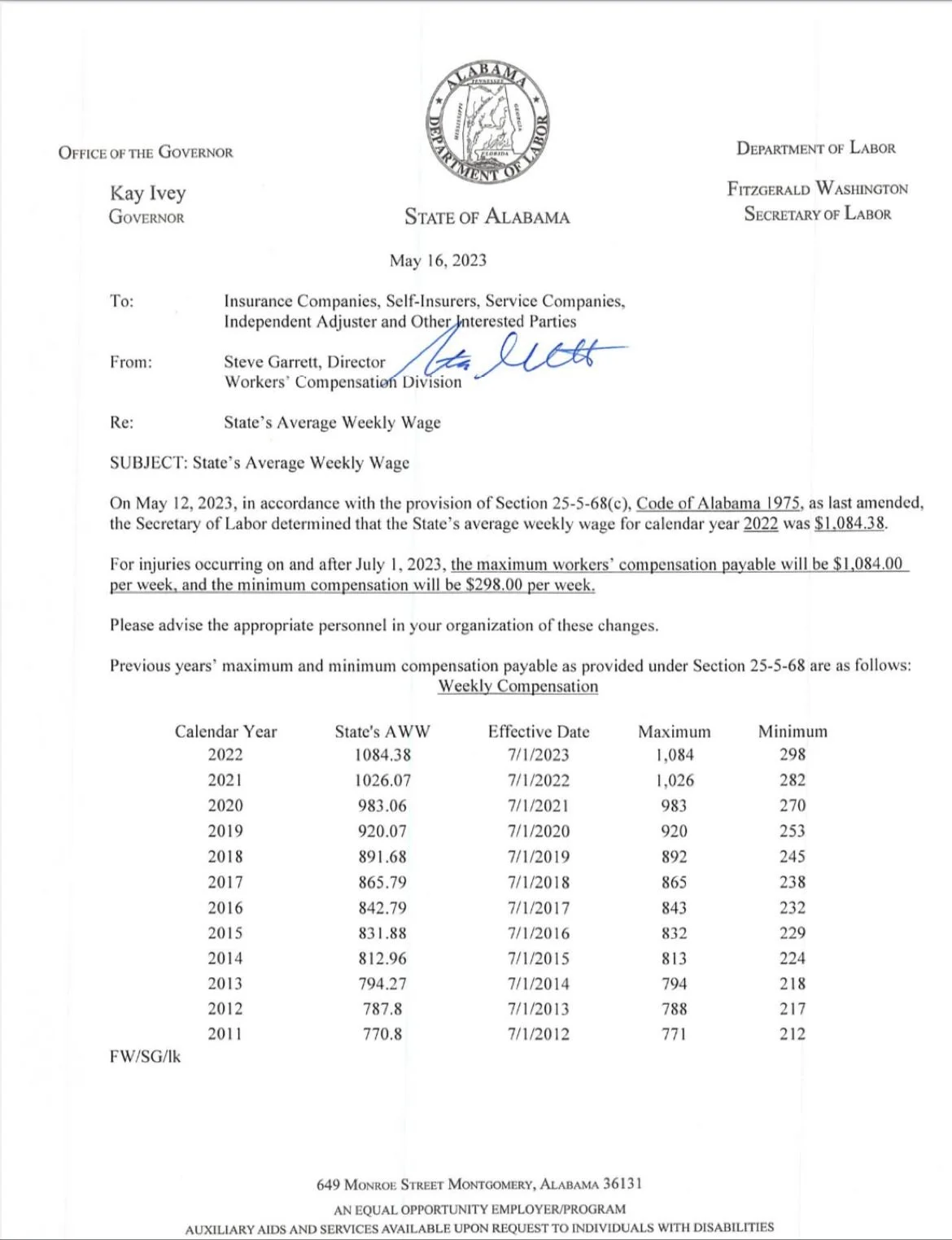
| Wage Replacement | Typically 66 2/3% of average weekly wages | Subject to state-mandated maximum and minimum weekly limits. |
| Waiting Period | 3-day waiting period for temporary disability | Retroactive to day one if disability extends beyond 21 days. |
| Legal Representation | Minors must act through a parent or legal guardian | Attorney fees in Alabama workers' compensation are capped by statute (usually 15%). |
The Impact of Illegal Employment on Youth Claims
One of the most complex dimensions of Alabama workers' compensation for youth is the status of minors working in violation of child labor laws. While some states completely exclude illegally employed minors from workers' compensation—forcing them to rely entirely on civil personal injury lawsuits—Alabama's legal structure treats workers' compensation as the exclusive remedy in most employment relationships, but with distinct statutory penalties.
Under Alabama Code § 25-5-50 and related provisions, the fact that a minor was illegally employed (e.g., working without required documentation or performing tasks prohibited for their age) does not automatically strip them of workers' compensation benefits. In many instances, the courts have ruled that the workers' compensation act applies to minor employees even if the hiring violated child labor statutes.
However, employers who hire minors unlawfully face severe regulatory penalties from the Alabama Department of Labor and potential civil liabilities. If a minor is injured while performing duties prohibited by law, the employer may face administrative fines, stop-work orders, and in specific scenarios involving gross negligence or intentional misconduct, supplementary legal actions outside the standard administrative workers' compensation cap. Parents and guardians navigating these situations should consult with a qualified workers' compensation attorney to determine whether standard administrative claims or alternative legal avenues apply.
Steps to Take Following a Workplace Injury Involving a Minor
When a young worker is injured on the job, immediate and methodical action is required to preserve their health and protect their legal entitlement to benefits. Delaying reporting or failing to follow procedural rules can jeopardize a claim.
1. Seek Immediate Medical Attention
For emergency situations, the youth worker should be taken to the nearest emergency room immediately. For non-emergency injuries, the employer must be notified promptly so they can direct the injured worker to an authorized physician panel. Under Alabama law, employers generally have the right to choose the treating physician. Seeking treatment outside this authorized network without approval can lead to denied medical bills.
2. Report the Injury to the Employer in Writing
Alabama law requires an injured employee to provide written notice of the accident to their employer within five days of the incident, or as soon as practicable. Failing to notify the employer within 90 days can completely bar the worker from recovering benefits. The notification should detail the date, time, location, and nature of the injury.
3. File the Appropriate State Forms
The employer is responsible for filing a First Report of Injury with their workers' compensation insurance carrier and the Alabama Department of Labor when an injury results in more than three days of lost time or medical treatment beyond first aid. If the insurance carrier denies the claim or disputes benefits, the injured minor (through a parent or guardian) can file a verified complaint with the circuit court to initiate formal dispute resolution.
Common Challenges and Pitfalls in Youth Claims
Youth workers and their families frequently encounter specific obstacles when filing and managing workers' compensation claims in Alabama. Being aware of these pitfalls helps prevent costly mistakes.
- Misclassification as an Independent Contractor: Some employers attempt to classify teenage workers—such as delivery drivers, landscapers, or freelance helpers—as independent contractors rather than W-2 employees. Independent contractors are generally excluded from Alabama workers' compensation. If the employer exercises control over the minor's hours, methods, and tools, the worker is legally an employee entitled to coverage, regardless of what an agreement states.
- Failure to Report Minor Injuries: Teens may fear losing their jobs or disappointing their managers, leading them to downplay injuries or fail to report them immediately. A delayed report gives insurance adjusters grounds to argue that the injury occurred outside of work.
- Navigating Authorized Physician Networks: Utilizing a family doctor rather than the employer's approved panel physician is a frequent reason for claim denial. Adhering strictly to the employer's designated medical providers is mandatory in Alabama.
- Inadequate Wage Calculations: Because youth workers often have erratic schedules, part-time hours, or seasonal employment, calculating their average weekly wage can be contentious. Insurance carriers may attempt to minimize payouts by using baseline formulas that do not accurately reflect the minor's earning capacity.
Frequently Asked Questions
Are part-time youth workers eligible for workers' compensation in Alabama?
Yes. Employment status, rather than full-time or part-time categorization, determines eligibility. If an employer has five or more employees and exercises control over the worker, part-time minor employees are covered under the Alabama Workers' Compensation Act.
What happens if a teenager was injured while working without a required work permit?
Even if a minor was working without proper documentation or in technical violation of child labor laws, Alabama courts have generally held that they remain covered under the workers' compensation system. However, the employer may face significant state penalties and fines for violating child labor regulations.
Can a parent file a workers' compensation claim on behalf of an injured minor?
Yes. Because minors lack the legal capacity to enter into binding legal settlements or file lawsuits independently, a parent or court-appointed legal guardian must act on their behalf to manage the claim, authorize medical treatment, and approve any settlement agreements.
Who pays for the medical treatment of an injured youth worker?
The employer's workers' compensation insurance carrier is responsible for 100% of the cost for authorized medical treatment, medications, and rehabilitation services resulting from the workplace injury. The injured worker or their family should not have to pay out-of-pocket for approved care.
What is the time limit for filing a workers' compensation claim in Alabama?
In Alabama, an injured worker generally has two years from the date of the accident—or two years from the last payment of workers' compensation benefits—to file a formal claim in circuit court if a dispute arises with the insurance carrier. Notice to the employer must still be given within the much shorter 90-day statutory window.
Next Actions and Professional Guidance
If a youth worker has sustained a workplace injury in Alabama, the immediate priority is ensuring they receive proper medical evaluations through the employer's authorized channels. Following that, document every detail of the accident, preserve all communication with the employer and insurance adjusters, and ensure written notice is delivered within the statutory timeframe. Because insurance companies often attempt to minimize payouts or dispute the employment parameters of minor workers, consulting with an experienced Alabama workers' compensation attorney is strongly advised for complex injuries, denied claims, or cases involving potential child labor violations.