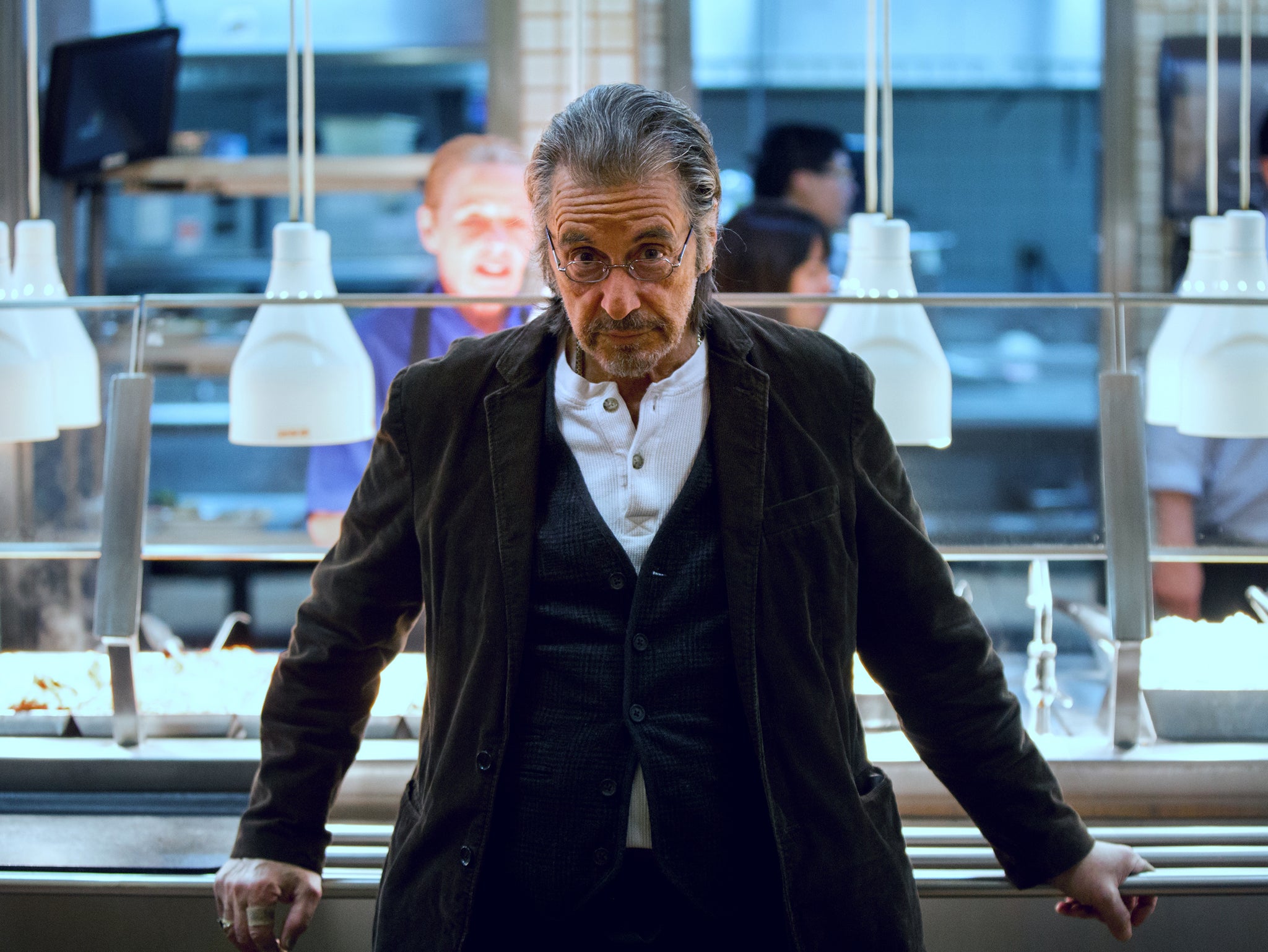
Al Pacino is an American citizen of 100% Italian descent. While born and raised in New York City, both of his parents were of Sicilian heritage. His father emigrated from San Fratello, while his maternal grandparents originated from the town of Corleone, the namesake of his most famous character.
The Sicilian Roots: A Deep Dive into the Pacino Genealogy
To understand if Al Pacino is Italian, one must look beyond his American passport and into the specific geography of his bloodline. Alfredo James Pacino was born on April 25, 1940, in the East Harlem neighborhood of Manhattan. However, his genetic and cultural blueprint is entirely Sicilian. His father, Salvatore Pacino, was born in San Fratello, a small town in the province of Messina, Sicily. Salvatore moved to the United States and eventually worked as an insurance salesman and restaurateur.
On his mother’s side, the connection to Italy is equally profound and almost eerily prophetic. His mother, Rose Gerardi, was born in New York, but her parents—Al’s grandparents—James and Agnes Gerardi, were immigrants from the town of Corleone, Sicily. In a remarkable twist of fate, several decades before Al Pacino would become a household name playing Michael Corleone in Francis Ford Coppola's The Godfather, his own ancestors were walking the streets of the real-world Corleone.
This 100% Sicilian ancestry makes Pacino a first-generation and second-generation Italian-American. In the context of Italian law (jus sanguinis), individuals with Italian ancestors can often claim citizenship, though Pacino has lived his entire life as a primary citizen of the United States. His identity is firmly rooted in the Italian-American experience of the mid-20th century, a subculture defined by strong family ties, specific linguistic dialects, and the immigrant struggle in New York’s urban landscape.
The Irony of Corleone: Life Imitating Art
The fact that Al Pacino’s maternal grandparents came from the town of Corleone is often cited as one of the most interesting coincidences in cinematic history. When Francis Ford Coppola was casting for The Godfather, he fought the studio executives who wanted a more "conventionally handsome" or established star like Robert Redford or Warren Beatty for the role of Michael. Coppola insisted on Pacino because he wanted an actor who looked like he actually came from the rugged terrain of Sicily.
At the time of casting, Coppola was unaware that Pacino’s family actually hailed from the town of Corleone. This biological link provided an unspoken authenticity to his performance. When Michael Corleone flees to Sicily in the film, the landscapes he traverses are the same regions where Pacino's ancestors lived. This heritage allowed Pacino to tap into a specific "old-world" intensity that many critics believe a non-Italian actor would have struggled to replicate.
The town of Corleone itself has become synonymous with the Mafia in popular culture, largely due to Mario Puzo's novel and Coppola's films. However, for Pacino, the name represents a literal family history. This connection helped bridge the gap between the fictional Corleone family and the real-world Sicilian diaspora that settled in New York’s East Harlem and the Bronx.
Growing Up Italian-American in New York
While his blood is Sicilian, Al Pacino’s "Italian-ness" was forged in the melting pot of New York City. After his parents divorced when he was two years old, he and his mother moved to the South Bronx to live with her parents (the Gerardis from Corleone). This upbringing was quintessential to the Italian-American narrative of the era.
In the 1940s and 50s, the Bronx was a hub for Italian immigrants. Pacino grew up in a household where the cultural values of the "Old Country" were constantly in friction with the realities of urban American life. He was often referred to by his friends as "Sonny," and he has frequently spoken about how the "theatricality" of Italian-American life influenced his desire to act. In Italian-American households of that period, communication was often physical, loud, and deeply emotional—traits that Pacino would later refine into his signature "Method" acting style.
The influence of his grandfather, James Gerardi, was particularly significant. James was a hardworking immigrant who provided a stable male figure in Pacino’s early life. The work ethic and the stoicism of the Sicilian immigrant generation are often reflected in Pacino's more grounded roles, where silence and "the stare" communicate more than dialogue ever could.
The "Italian" Method: How Heritage Shaped His Acting Style
Al Pacino is often categorized alongside Robert De Niro and Dustin Hoffman as the vanguard of "Method Acting" in the 1970s. However, Pacino’s approach has a specific operatic quality that many theorists attribute to his Italian roots. Italian culture, particularly Southern Italian and Sicilian culture, is historically rooted in melodrama, grand gestures, and high-stakes emotional expression.
In films like The Godfather, Serpico, and Dog Day Afternoon, Pacino displays a volatility that feels deeply connected to the Italian concept of "la via vecchia" (the old way). There is a sense of honor, omertà (silence), and explosive passion. Even in his later, more "heightened" performances—such as in Scent of a Woman or Any Given Sunday—the cadence of his speech reflects the rhythmic, hand-gesture-heavy communication styles of the Italian-American streets.
His ability to play Italian characters is not merely a matter of "casting to type." It is an internal understanding of the social structures of Italian families. In The Godfather Part II, his portrayal of Michael Corleone's descent into a cold, calculating leader is often viewed as a commentary on the "Americanization" of the Italian immigrant—losing the warmth of the village (Sicily) in exchange for the cold power of the American empire.
Language and Fluency: Does Al Pacino Speak Italian?
A common question among fans is whether Al Pacino is fluent in the Italian language. Despite his 100% Italian heritage, Pacino is not fully fluent in standard Italian. Growing up in the Bronx, he was exposed to a specific Sicilian dialect and "Italo-American" slang, which differs significantly from the formal Tuscan-based Italian spoken in Rome or Milan today.
In his film roles, Pacino has frequently used Italian, most notably in The Godfather, where he had to speak Sicilian during the scenes filmed in Italy. For these scenes, he worked with dialect coaches to ensure the accent was authentic to the region. While he can understand a fair amount of the language and can speak phrases, he primarily identifies as an English speaker.
This linguistic gap is common among second and third-generation Italian-Americans. During the mid-20th century, many immigrant families encouraged their children to speak English exclusively to facilitate assimilation and avoid the stigma often associated with immigrant communities at the time. Nevertheless, the "music" of the Italian language is evident in Pacino's vocal delivery—his use of pauses, crescendos, and staccato phrasing mimics the natural flow of Italian speech.
Comparing the Greats: Italian-American Icons of the Silver Screen
Al Pacino belongs to a prestigious group of actors who defined the "Italian-American" era of Hollywood. To understand his place in this hierarchy, it is helpful to compare his heritage and career focus with his contemporaries.
| Actor | Specific Ancestry | Place of Birth | Notable "Italian" Role | Language Skills |
|---|---|---|---|---|
| Al Pacino | Sicily (San Fratello & Corleone) | Manhattan, NY | Michael Corleone (The Godfather) | Conversational/Dialect |
| Robert De Niro | Italy (Molise), Ireland, France | Manhattan, NY | Vito Corleone (The Godfather Part II) | Fluent in specific dialects |
| Joe Pesci | Italy (Turin & Aquilonia) | Newark, NJ | Tommy DeVito (Goodfellas) | High proficiency |
| Sylvester Stallone | Italy (Apulia) | Manhattan, NY | Rocky Balboa (Rocky) | Limited |
| John Travolta | Italy (Sicily) | Englewood, NJ | Tony Manero (Saturday Night Fever) | Limited |
This table illustrates that while many actors share Italian heritage, Pacino’s ancestry is uniquely concentrated in Sicily, which has historically been the primary source of Italian immigration to New York. This specific "Sicilian-ness" distinguishes him from actors with Northern Italian or mixed European roots.
Cultural Legacy and the "Italian" Archetype in Film
As of 2026, Al Pacino’s legacy is inextricably linked to the evolution of the Italian-American archetype in global media. Before the 1970s, Italian characters in Hollywood were often reduced to caricatures—either the "buffoon" or the "mindless thug." Pacino, along with directors like Francis Ford Coppola and Martin Scorsese, helped transition these roles into complex, Shakespearean figures.
Pacino’s Michael Corleone is arguably the most important Italian-American character in film history because he presented an intellectual, tragic, and multi-dimensional view of the immigrant experience. He wasn't just "Italian"; he was an American war hero grappling with the weight of his father’s "Old World" legacy.
Furthermore, Pacino has explored various facets of the Italian identity throughout his career. In The Irishman (2019), he played Jimmy Hoffa, but did so within a cinematic world deeply rooted in Italian-American mob culture. In House of Gucci (2021), he played Aldo Gucci, delving into the high-fashion, Northern Italian aristocracy, showing his range beyond the "Brooklyn/Bronx" persona he was known for in his youth.
Common Questions Regarding His Citizenship and National Identity
Given his deep ties to Italy, many wonder if Al Pacino holds dual citizenship. While many celebrities of Italian descent have applied for an Italian passport later in life to honor their roots, Pacino has not publicly confirmed holding dual nationality. In the eyes of the Italian government, he is an oriundo—a person of Italian descent living abroad.
Another common misconception is that Pacino’s "darker" features or intense demeanor are purely a result of his ethnicity. While his Sicilian bloodline certainly accounts for his physical appearance, Pacino himself often credits the "theatre of the New York streets" for his personality. He views himself primarily as an American actor who happens to be of Italian descent, rather than an "Italian actor" in the sense of Marcello Mastroianni or Sophia Loren.
As we look at his career from the vantage point of 2026, it is clear that Pacino’s "Italian-ness" was a tool—a set of cultural colors he used to paint some of the most enduring portraits in the history of the moving image. He remains the definitive face of the Sicilian-American dream, representing the journey from the poverty of Corleone to the heights of Hollywood royalty.
Frequently Asked Questions
Is Al Pacino's real name Italian? Yes, his birth name is Alfredo James Pacino. "Alfredo" is a traditional Italian name, and "Pacino" is a common surname in Sicily. Throughout his career, he has never used a stage name, choosing to keep his Italian identity at the forefront of his professional brand.
Are both of Al Pacino's parents from Italy? Not directly. His father, Salvatore, was born in Sicily and moved to America. His mother, Rose, was born in the United States, but both of her parents (Al’s grandparents) were immigrants from Sicily. This makes him 100% of Italian blood, regardless of where the births took place.
Does Al Pacino have family still living in Italy? It is highly likely. The town of San Fratello and the city of Corleone still have many residents with the surnames associated with his family tree. While Pacino has visited Italy many times for film festivals and vacations, he generally maintains a private life regarding his extended relatives in Sicily.
Was Al Pacino born in Italy? No. Al Pacino was born in the East Harlem neighborhood of New York City, New York. He is a natural-born U.S. citizen. His connection to Italy is through his ancestry and heritage rather than his place of birth.
Did Al Pacino have to learn Italian for The Godfather? He had to learn specific Sicilian dialogue for the scenes where his character, Michael Corleone, is in exile in Sicily. While he grew up hearing the language, he worked extensively with coaches to master the specific cadence and vocabulary required for the film's historical setting.
Practical Recommendation for Fans and Researchers
If you are interested in exploring Al Pacino’s Italian heritage further, the best resource is his 2024 memoir, Sonny Boy. In this autobiography, he provides unprecedented detail about his childhood in the Bronx, his relationship with his Sicilian grandparents, and how his identity as an Italian-American influenced his career choices. For those interested in the genealogy aspect, the civil records of San Fratello and Corleone are available through various Italian heritage databases, which confirm the migration of the Pacino and Gerardi families to New York in the early 20th century.