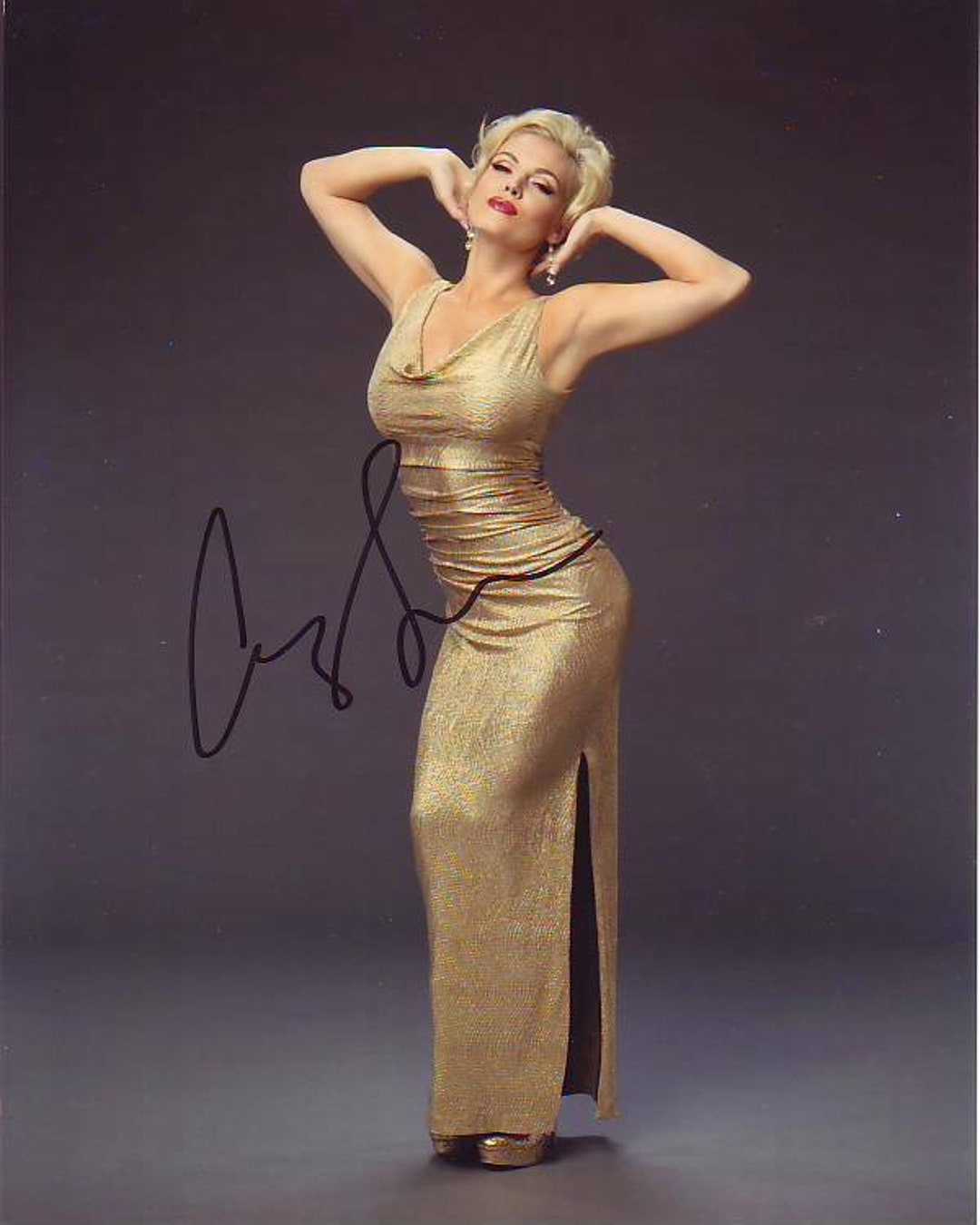
Agnes Bruckner played the lead role of Anna Nicole Smith in the 2013 Lifetime original movie titled The Anna Nicole Story. Directed by Mary Harron, the film follows the life of Vickie Lynn Hogan from her humble beginnings in Texas to her rise as a Playboy Playmate, her controversial marriage to billionaire J. Howard Marshall, and her tragic death in 2007.
The portrayal of Anna Nicole Smith by Agnes Bruckner remains one of the most significant milestones in the actress's career. When the film was first announced, there was considerable skepticism regarding whether a Lifetime production could capture the nuance and tragedy of such a polarizing figure. However, under the direction of Mary Harron—best known for American Psycho and The Notorious Bettie Page—the project aimed for a more psychological and empathetic lens than typical tabloid fodder. As we look back from the vantage point of 2026, the film serves as a crucial piece of media in the ongoing reappraisal of how the public and the press treated female celebrities in the 1990s and early 2000s.
The Casting of Agnes Bruckner: Preparation and Transformation
Casting the role of Anna Nicole Smith was a daunting task for the production team. The actress needed to possess not only the physical presence of a woman who became a global sex symbol but also the emotional range to portray a mother grieving the loss of her son and a woman spiraling into substance abuse. Agnes Bruckner, who had gained critical acclaim for her work in independent films like Blue Car (2002), was selected for her ability to project vulnerability beneath a hardened or glamorous exterior.
The Physical Evolution
To inhabit the role, Bruckner underwent a significant physical transformation. This wasn't merely about wearing blonde wigs; it involved a complex regimen of makeup and prosthetics to mirror Anna Nicole’s changing appearance across three decades.
- The Texas Years: Bruckner played Vickie Lynn Hogan as a fresh-faced, dark-haired girl working at a fried chicken shack. This required a minimalist approach to emphasize her natural beauty before the "Anna Nicole" persona was manufactured.
- The Playboy Era: The transformation into the Guess? Jeans model required the use of heavy prosthetics, specifically to mimic Smith’s surgically enhanced physique, which was a defining characteristic of her image.
- The Later Years: To depict Smith’s final years, Bruckner wore prosthetics that simulated the weight fluctuations and the physical toll of long-term prescription drug use.
Mastering the Persona
Beyond the physical, Bruckner spent weeks studying Smith’s unique vocal patterns. Anna Nicole Smith was famous for her "baby-doll" voice—a high-pitched, often breathless way of speaking that she used both as a charm tactic and a defense mechanism. Bruckner’s performance was noted for capturing the evolution of this voice, from a genuine Texas drawl to the slurred, often incoherent speech seen in Smith's later reality television appearances.
Directorial Vision: Mary Harron’s Influence
The choice of Mary Harron as director was a signal that The Anna Nicole Story would be more than a sensationalist biopic. Harron is known for her interest in the intersection of fame, identity, and the male gaze. In this film, she focused on the "constructed" nature of Anna Nicole Smith.
The movie explores how Vickie Lynn Hogan essentially "invented" Anna Nicole Smith as a character to escape poverty. Harron’s direction emphasized the tragedy of a woman who became trapped in her own creation. By 2026, critics have increasingly compared Harron’s work on this film to later "reclamation" biopics that seek to humanize women who were mocked by the media during their lifetimes. The film avoids painting Smith as a mere gold-digger, instead focusing on her genuine—albeit complex—affection for J. Howard Marshall and her devastating bond with her son, Daniel.
Plot Architecture: From Texas to the Bahamas
The narrative of the movie is structured chronologically, providing a comprehensive look at the milestones that defined Smith’s public life. It begins in Mexia, Texas, highlighting the fractured relationship between Vickie Lynn and her mother, Virgie Arthur (played by Virginia Madsen). This early segment is crucial for understanding Smith’s lifelong search for validation and family.
The J. Howard Marshall Era
A significant portion of the film is dedicated to the relationship between the 26-year-old Smith and the 89-year-old oil tycoon J. Howard Marshall, played by Academy Award winner Martin Landau. Landau’s performance added a layer of prestige to the film, portraying Marshall not as a victim of a "honey trap," but as a lonely man who found genuine joy in Smith’s company. The film depicts their marriage and the subsequent, grueling legal battle over his estate, which lasted long after both of them had passed away.
Fame and the Reality TV Downward Spiral
As the movie progresses into the late 90s and early 2000s, it documents Smith’s transition from high-fashion modeling to reality television stardom. The film recreates scenes from The Anna Nicole Show, illustrating the public’s fascination with her apparent instability. This section of the movie is particularly difficult to watch, as Bruckner portrays the isolation of fame and the increasing influence of Howard K. Stern (played by Adam Goldberg).
The Final Tragedy
The climax of the film centers on the birth of Smith’s daughter, Dannielynn, followed almost immediately by the death of her 20-year-old son, Daniel, from an accidental overdose in her hospital room. Bruckner’s performance in these scenes is visceral, capturing the total psychological collapse of a mother who had centered her entire world around her child. The film concludes shortly after Smith’s own death in a Florida hotel room in February 2007.
Key Cast and Character Comparison
The effectiveness of The Anna Nicole Story relied heavily on the chemistry between Bruckner and her supporting cast. The following table highlights the primary actors and the real-life figures they portrayed.
| Actor | Real-Life Figure | Role in the Narrative |
|---|---|---|
| Agnes Bruckner | Anna Nicole Smith | The protagonist; follows her life from age 17 to 39. |
| Martin Landau | J. Howard Marshall | The billionaire husband; provides the emotional anchor of her mid-life. |
| Virginia Madsen | Virgie Arthur | Anna's mother; represents the cycle of family trauma and estrangement. |
| Adam Goldberg | Howard K. Stern | Anna's lawyer and companion; depicted as a polarizing figure in her life. |
| Graham Patrick Martin | Daniel Smith | Anna's son; his life and death are the emotional core of the film. |
| Cary Elwes | E. Pierce Marshall | J. Howard’s son; the primary antagonist in the legal battles. |
Critical Reception and Legacy in 2026
When it premiered on June 22, 2013, the film received mixed but generally positive reviews, particularly for the lead performance. Agnes Bruckner was praised for her "fearless" approach to the role, avoiding the temptation to turn Smith into a caricature. While some critics felt the Lifetime format limited the film's ability to explore the darker aspects of the legal system, most agreed that Mary Harron's direction elevated the material.
In the years since its release, and especially looking back from 2026, the film is viewed as a precursor to the modern "sympathetic biopic" movement. It predated the massive shift in public opinion regarding figures like Britney Spears and Pamela Anderson—women who were similarly hounded by the paparazzi. Bruckner’s portrayal is now cited as a nuanced study of how the American Dream can turn into a nightmare when fame is the primary currency.
Agnes Bruckner’s Career Trajectory
For Agnes Bruckner, playing Anna Nicole Smith was a high-profile role that showcased her ability to lead a major production. Prior to this, she was known for "indie darling" roles and television appearances in shows like Private Practice and Once Upon a Time.
Taking on the role of a woman as famous as Smith was a significant risk; many actresses have been pigeonholed after playing such iconic figures. However, Bruckner used the project to demonstrate her range. In the decade following the film, she continued to work steadily in both television and film, often choosing roles that required the same emotional intensity she brought to The Anna Nicole Story. Her performance remains the gold standard for dramatic portrayals of Smith, even as new documentaries and biographies continue to emerge.
How to Watch 'The Anna Nicole Story'
For those interested in viewing Bruckner’s performance in 2026, the film is readily available through various platforms. While its primary home remains the Lifetime network's digital archives, it has been licensed to several major streaming services.
- Lifetime Movie Club: The most direct way to access the film, often featuring behind-the-scenes interviews with Agnes Bruckner and Mary Harron.
- Digital Retailers: The movie is available for purchase or rental on platforms like Amazon Prime Video, Apple TV, and Vudu.
- Ad-Supported Streaming: Occasionally, the film appears on free platforms such as Tubi or Pluto TV, reflecting its status as a cult favorite in the biographical drama genre.
The film is typically presented in high definition, which allows viewers to appreciate the detailed prosthetic work and period-specific costume design that helped Bruckner disappear into the role.
Frequently Asked Questions
Did Agnes Bruckner actually sing or use her own voice in the movie?
Agnes Bruckner used her own voice to recreate the speaking patterns of Anna Nicole Smith. This involved extensive dialect coaching to master the transition from a Texas accent to the breathy "baby voice" Smith used later in life. While the film features music from the era, Bruckner's primary focus was on the vocal mannerisms and speech cadence that defined Smith's public persona.
How accurate is 'The Anna Nicole Story' compared to real events?
The film is generally accurate regarding the major milestones of Smith’s life, such as her marriage to Marshall, her son’s tragic death, and her legal battles. However, like most biopics, it condenses timelines and combines certain minor characters for narrative clarity. It draws heavily from public records, interviews, and the various court cases that surrounded Smith’s life.
How did Agnes Bruckner get the role?
Bruckner was chosen after a wide casting search. Director Mary Harron specifically looked for an actress who could portray Smith’s "inner life" rather than just someone who looked like her. Bruckner’s previous work in heavy dramas convinced the producers that she could handle the emotional weight of the script.
Was the real Smith family involved in the production?
The film was not an "authorized" biopic in the sense that it was not produced by the Smith estate. However, it was based on the widely documented public record of her life. Some family members, including Smith's mother Virgie Arthur, had expressed varying opinions on how the family was depicted in the media at large during that time.
Who directed the movie?
The movie was directed by Mary Harron. Her involvement is often cited as the reason the film has a more sophisticated and empathetic tone than many other television biopics. Harron has a history of exploring the lives of controversial female figures, making her a natural fit for Anna Nicole Smith's story.
Practical Recommendation for Viewers
If you are interested in the life of Anna Nicole Smith or the craft of biographical acting, The Anna Nicole Story is a mandatory watch. To get the most out of the experience, it is recommended to watch the film in conjunction with the 2023 documentary Anna Nicole Smith: You Don't Know Me. Comparing Agnes Bruckner's dramatized performance with actual archival footage provides a fascinating look at how an actor translates real-life tragedy into a cinematic narrative. Bruckner’s performance succeeds because it looks past the "bimbo" caricature and finds the human being underneath, making it a definitive piece of entertainment history.