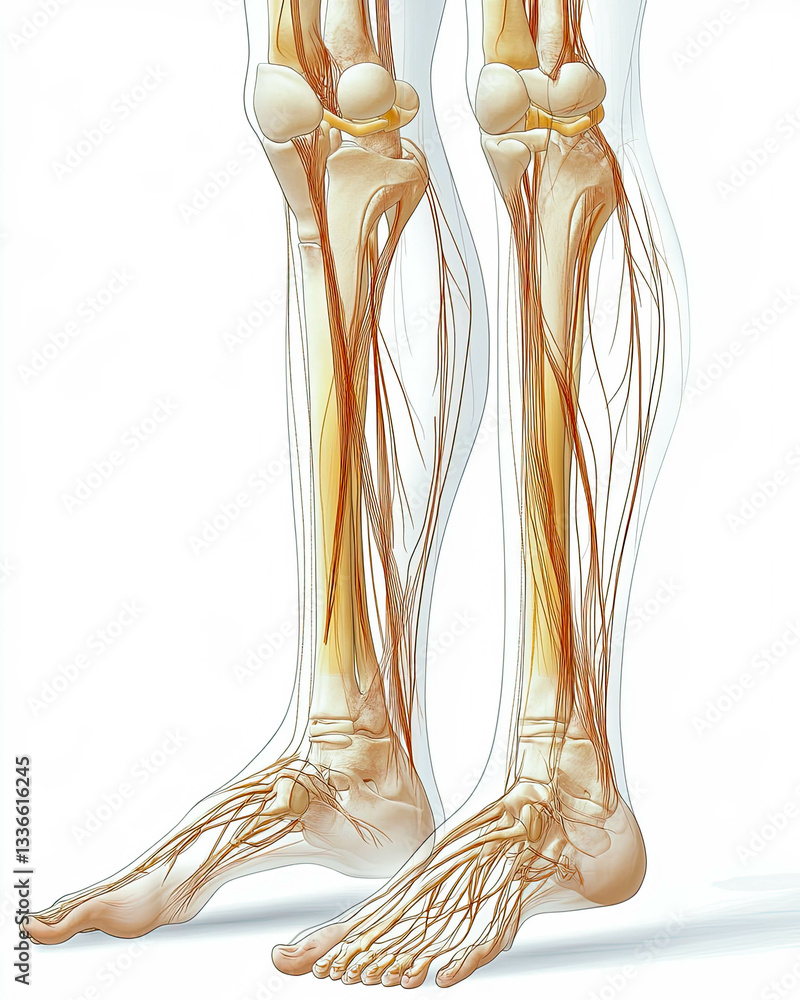
The "Achilles" in the context of feet refers to the Achilles tendon, the thickest and strongest tendon in the human body, which serves as the critical bridge connecting the calf muscles—specifically the gastrocnemius and soleus—to the calcaneus, or heel bone. This connection is fundamental to human locomotion, enabling the explosive movements required for running, jumping, and the essential act of walking by converting muscular contraction into foot plantarflexion.
The Anatomy of the Achilles-Foot Complex
To understand the connection between the Achilles tendon and the foot, one must view the lower limb as a kinetic chain. The gastrocnemius and soleus muscles join at the lower calf to form the Achilles tendon, which descends and inserts onto the posterior aspect of the calcaneus. This anatomical bridge is not merely a passive tether but a dynamic spring mechanism.
When the calf muscles contract, they exert a massive pulling force on the calcaneus. This force acts through the lever arm of the heel bone, rotating the foot downward. This motion, known as plantarflexion, is the primary driver of the "push-off" phase of the gait cycle. Without this specific structural connection, humans would be unable to propel themselves forward efficiently, as the ankle joint would lack the mechanical advantage required to lift the body's weight.
The Role of the Calcaneus
The calcaneus acts as the fulcrum for this system. The distance between the insertion point of the Achilles tendon and the center of the ankle joint determines the mechanical advantage of the calf muscles. A longer calcaneus provides a more efficient lever arm, which is why structural variations in foot anatomy can significantly alter an individual's susceptibility to tendon strain or injury.
Biomechanical Significance in Gait
During the gait cycle, the Achilles-foot connection undergoes several distinct phases of loading. During the initial heel strike, the tendon is relatively relaxed. As the foot moves into the stance phase and the body weight shifts forward, the tendon begins to store elastic energy.
This energy storage is vital for economy of motion. As the foot prepares to leave the ground, the tendon releases that stored energy, providing a passive recoil that assists the muscles in propelling the body forward. Research suggests that this elastic recoil accounts for a significant percentage of the metabolic energy saved during running and walking. If the Achilles tendon is compromised, the foot must compensate by recruiting auxiliary muscles, leading to premature fatigue and potential secondary injuries in the arch and midfoot.
Common Pathologies and Structural Links
Because the Achilles tendon is subjected to forces often exceeding several times an individual's body weight during vigorous activity, the connection point at the foot is highly susceptible to specific clinical conditions. Understanding these conditions requires looking at the interplay between tendon health and foot alignment.
Achilles Tendinopathy
This is an umbrella term for persistent pain and irritation of the tendon. It often results from overuse, where the frequency of stress exceeds the tendon's capacity for repair. Patients frequently experience stiffness in the morning or pain during the initial steps of the day, indicating that the tendon-foot connection is struggling to manage the load placed upon it.
Retrocalcaneal Bursitis and Haglund’s Deformity
The area where the Achilles tendon meets the heel bone is cushioned by a small fluid-filled sac called a bursa. If the bone at the back of the heel is prominent—a condition known as Haglund’s deformity—it can compress the bursa and the tendon against the shoe. This creates a painful cycle of inflammation at the direct point of connection between the tendon and the foot.
Sever’s Disease
Common in adolescents, this condition involves inflammation of the growth plate at the back of the heel where the Achilles tendon attaches. As the bone grows faster than the tendon can stretch, the constant pulling of the tendon on the immature bone causes pain at the insertion point, highlighting the sensitivity of this anatomical bridge during developmental years.
Comparison of Footwear Impact on the Achilles-Foot Connection
| Footwear Type | Impact on Achilles Tendon | Primary Mechanism |
|---|---|---|
| High-heeled shoes | Shortens/Tightens | Maintains the tendon in a shortened, static position. |
| Zero-drop running shoes | Increases Stretch | Requires more eccentric loading from the calf complex. |
| Supportive orthotics | Modulates Alignment | Corrects excessive pronation that twists the tendon. |
| Minimalist footwear | Enhances Loading | Increases the demand on the natural elastic recoil mechanism. |
Assessing Risks and Seeking Professional Advice
Maintaining the integrity of the Achilles-foot connection depends on managing both acute and chronic stressors. Factors such as a sudden increase in physical activity, improper footwear, or biomechanical imbalances (such as severe overpronation or underpronation) can place excessive strain on the tendon.
If you experience persistent pain at the back of the heel or within the tendon, it is essential to consult a podiatrist or orthopedic specialist. Diagnosis typically involves a physical examination of the gait, an assessment of the range of motion at the ankle, and potentially diagnostic imaging such as ultrasound or MRI to visualize the tendon structure.
Note: This information is for educational purposes only. If you are experiencing severe pain, inability to bear weight, or a popping sensation at the back of the ankle, seek immediate medical attention, as these may be signs of a complete tendon rupture, which is a medical emergency requiring urgent evaluation.
Preventive Strategies and Maintenance
Protecting the Achilles-foot connection requires a balanced approach to strength, flexibility, and gradual loading.
- Eccentric Loading Exercises: Controlled lowering of the heel off a step helps strengthen the tendon-muscle unit and promotes collagen fiber alignment, which is essential for resisting future strain.
- Dynamic Warm-ups: Engaging in calf raises and light ankle rotations before intense activity ensures the tendon-foot complex is prepared for rapid force absorption.
- Gradual Progression: When starting a new exercise program, limit the intensity and duration of impact activities to allow the tissue to adapt to the load over weeks rather than days.
- Appropriate Footwear: Ensure that your footwear matches your foot arch type. Those with flat feet or high arches often benefit from orthotic inserts that stabilize the heel, thereby preventing the Achilles tendon from being subjected to torsional forces.
Frequently Asked Questions
Can flat feet cause Achilles tendon problems?
Yes. Flat feet (pes planus) cause the foot to roll inward, known as overpronation. This movement forces the Achilles tendon to twist as it attaches to the heel, creating uneven tension across the fibers. Over time, this mechanical imbalance often leads to chronic tendinopathy.
Is the Achilles tendon part of the foot or the leg?
Anatomically, the Achilles is the termination point of the calf muscles, which are leg muscles. However, because it inserts into the calcaneus, it is functionally and physically part of the foot complex. It serves as the bridge between the lower leg's motor power and the foot's structural base.
Why does my Achilles feel tight when I wake up?
The tendon is often in a shortened position while you sleep. Upon waking, the sudden transition to stretching the tendon during the first few steps causes pain if the tendon has underlying inflammation or micro-tears. Consistent morning stiffness is a hallmark symptom of Achilles tendinitis.
Can stretching prevent an Achilles rupture?
While maintaining flexibility is important, aggressive "ballistic" stretching of a cold tendon can actually be counterproductive. Focused, controlled eccentric strengthening is more effective than passive stretching alone for long-term health and injury prevention.
How do I know if I have a tear vs. tendinitis?
Tendinitis is generally a chronic, aching discomfort that develops over time. A rupture is typically an acute, sudden event often described as a "pop" or the sensation of being kicked in the back of the leg, followed by an immediate inability to push off the ground while walking.
Next Steps for Foot Health
To maintain the health of your Achilles-foot connection, start by evaluating your current activity level and footwear. If you are currently asymptomatic, focus on consistent, low-intensity calf-strengthening exercises twice a week. If you are experiencing discomfort, begin by identifying potential sources of irritation—such as poorly fitted shoes or a sudden increase in your training volume. Transitioning to more supportive footwear or incorporating professional-grade orthotics can often relieve the pressure on the tendon-heel junction, allowing the natural healing processes to occur. Always prioritize a gradual increase in physical stress, as the tendon-foot connection is highly responsive to the consistency and load of your daily habits.