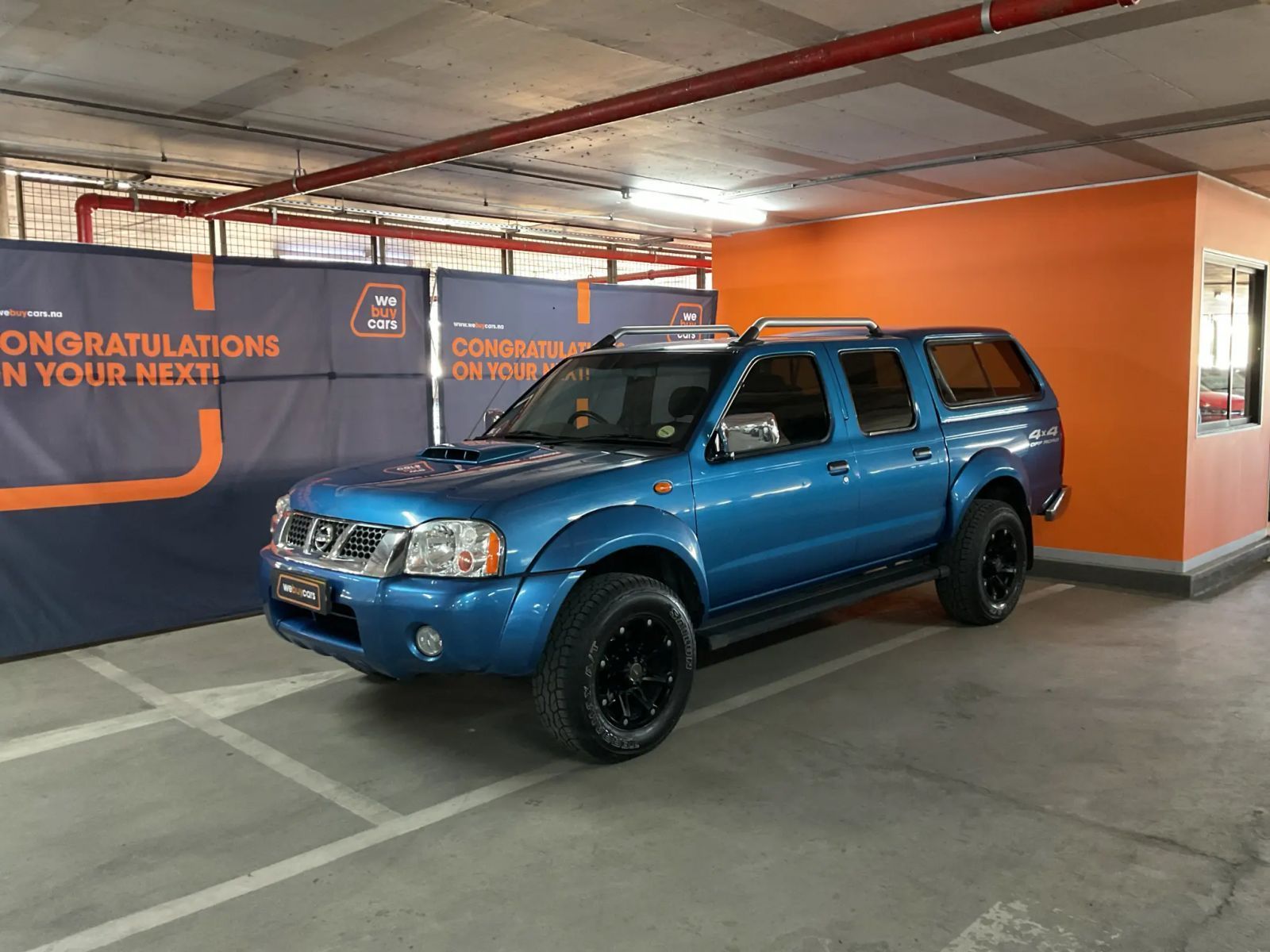
In 2026, the Nissan NP300 Diesel 4x4 stands as a unique proposition in the mid-size pickup market, offering a specific blend of mechanical durability and sophisticated suspension engineering. It is considered a rare pick because it bridges the gap between old-school utilitarian workhorses and modern lifestyle trucks, providing a five-link coil rear suspension and a highly efficient twin-turbo diesel engine that many competitors moved away from or never adopted.
The Evolution of the Nissan NP300 Identity
To understand why the Nissan NP300 is a rare pick, one must first navigate the naming conventions that have defined this vehicle across different global markets. Historically, the NP300 designation has been applied to two distinct platforms. In many emerging markets, particularly in Africa and parts of Latin America, the NP300 referred to the venerable D22 platform—a rugged, no-frills pickup that stayed in production for decades due to its "unbreakable" reputation.
In most other global markets, including Australia, Europe, and Southeast Asia, the NP300 became the moniker for the D23 generation Navara. By 2026, the D23 has matured into a sought-after vehicle on the secondary market and in specific "new-old-stock" contexts. It represents a pivot point where Nissan attempted to civilize the pickup truck without sacrificing its 4x4 credentials. This duality—being both a sophisticated multi-link cruiser and a heavy-duty diesel hauler—is the primary reason it remains a niche, "rare" choice for enthusiasts who understand its engineering nuances.
1. The Sophistication of the Five-Link Coil Rear Suspension
The most significant technical reason the NP300 (D23) is a rare pick is its departure from traditional leaf-spring rear suspension. While almost every other mid-size 4x4 pickup—including the Toyota Hilux and the Ford Ranger—stuck with leaf springs for their perceived load-bearing superiority, Nissan introduced a five-link coil-spring rear end for the NP300.
This engineering choice was aimed at solving the "unladen bounce" characteristic of traditional trucks. In a leaf-spring setup, the ride is often harsh and unsettled when the bed is empty. The NP300’s coil setup allows for much better articulation and a ride quality that mimics a large SUV rather than a commercial vehicle. In 2026, as more owners use their 4x4s as daily drivers and family vehicles, this "rare" suspension configuration makes the NP300 a standout for those prioritizing comfort and on-road handling without wanting to move to a full-size American pickup.
2. The Proven Reliability of the YS23DDTT Twin-Turbo Diesel
Under the hood, the NP300 features the YS23DDTT, a 2.3-liter four-cylinder twin-turbocharged diesel engine. This engine is a product of the Renault-Nissan-Mitsubishi Alliance and is a masterpiece of thermal efficiency and torque delivery. While many manufacturers have moved toward smaller displacement engines or hybrid powertrains by 2026, the NP300's diesel remains a "rare pick" for its pure mechanical focus.
The twin-turbo setup uses a small turbo for low-end response and a larger turbo for high-end power. This eliminates much of the "turbo lag" common in older diesel 4x4s. Delivering approximately 140kW (188hp) and 450Nm of torque, the engine is tuned for longevity. In an era where emissions equipment has become increasingly complex, the YS23 series has earned a reputation for being relatively manageable for long-term owners, provided that high-quality low-sulfur diesel is used.
3. Global Market Scarcity and Regional Discontinuation
One of the factors making the NP300 a "rare pick" is its availability. In 2022, Nissan made the strategic decision to exit the pickup market in Europe and the United Kingdom, closing the Barcelona plant where many NP300s were produced. This has created a vacuum in those markets, where the NP300 is now a highly prized used vehicle.
In North America, the NP300 (D23) was never officially sold; the US market retained the older D40 platform until the arrival of the dedicated 2022 Frontier. This means for North American enthusiasts, the NP300 is a "forbidden fruit," often seen only through the lens of international overlanding builds. The combination of high demand in regions like Australia and Southeast Asia, coupled with its withdrawal from Western Europe, ensures its status as a rare and distinct choice in the global 4x4 landscape of 2026.
4. The "Hardbody" Heritage and Long-Term Value
In markets where the NP300 D22 (the "Hardbody") was sold alongside the newer D23, the name NP300 carries a weight of legendary reliability. The D22 NP300 is a rare pick today because it represents the "last of the analog trucks." It lacks the complex infotainment systems and driver-assist sensors that have become standard by 2026.
For farmers, miners, and serious off-roaders, the older NP300 is a rare find because of its simplicity. You can fix it with basic tools in the middle of a desert. This heritage has bled over into the reputation of the newer D23 NP300, giving it a "halo effect" of perceived durability that helps it hold its value better than more tech-heavy competitors.
5. Optimized Payload and Towing Efficiency
Despite the controversy surrounding its coil-spring suspension, the NP300 maintained a competitive 1-ton payload capacity and a 3,500kg (7,716 lbs) braked towing capacity. Many early critics believed the coils would sag under pressure, but Nissan's inclusion of dual-rate springs in later revisions (post-2017) addressed these concerns.
By 2026, the NP300 is recognized as a rare pick for those who need to tow heavy trailers but don't want the massive footprint of a Ford F-150 or RAM 1500. It offers a "sweet spot" of power-to-weight ratio that makes it more efficient than larger V6 diesel or gasoline alternatives, especially when navigating tight off-road trails where a smaller body is an advantage.
6. A Premier Platform for Overlanding Modifications
The NP300 has become a darling of the overlanding community. Its rarity compared to the ubiquitous Toyota Hilux means that NP300 owners often belong to a more tight-knit, enthusiast-driven community. The aftermarket support for the NP300 is extensive, ranging from GVM (Gross Vehicle Mass) upgrades to specialized snorkel kits and long-range fuel tanks.
The truck's chassis design allows for significant suspension lifts while maintaining the geometry needed for high-speed corrugated road travel. Because the D23 was a global platform (also serving as the base for the Mercedes-Benz X-Class and the Renault Alaskan), the engineering documentation available to aftermarket companies is vast. Choosing an NP300 in 2026 is often a deliberate choice by an owner who intends to build a bespoke expedition vehicle.
7. The Shift Toward Electrification and Hybridization
As we navigate 2026, the automotive industry is in the midst of a massive shift toward Battery Electric Vehicles (BEVs) and Plug-in Hybrid Electric Vehicles (PHEVs). This makes a dedicated, high-torque diesel 4x4 like the NP300 an increasingly rare pick.
Many new 4x4s in 2026 feature "mild-hybrid" systems or downsized gasoline engines with heavy electrification. While these are efficient, they often lack the "unstoppable" feel of a diesel engine in deep mud or high-altitude climbing. The NP300 represents one of the final generations of trucks where the mechanical connection between the engine, the transfer case, and the wheels remains the primary focus.
Technical Specifications: Nissan NP300 (D23) Diesel 4x4
The following table outlines the core specifications of the D23 NP300 Diesel 4x4, illustrating why its performance metrics remain relevant in 2026.
| Feature | Specification (High-Output Variant) |
|---|---|
| Engine Type | 2.3L YS23DDTT Twin-Turbo Diesel |
| Cylinders | 4-Cylinder, 16-Valve DOHC |
| Horsepower | 188 hp (140 kW) @ 3,750 RPM |
| Torque | 332 lb-ft (450 Nm) @ 1,500–2,500 RPM |
| Transmission | 6-speed Manual or 7-speed Automatic |
| Drive System | Part-time 4WD with High/Low Range |
| Rear Suspension | Five-link Coil Spring (with stabilizer bar) |
| Payload Capacity | Approx. 1,000 kg (2,205 lbs) |
| Towing Capacity | 3,500 kg (7,716 lbs) Braked |
| Fuel Tank Capacity | 80 Liters (21.1 Gallons) |
Maintenance and Long-Term Ownership Considerations
Owning a "rare pick" like the NP300 requires a specific maintenance mindset, particularly in 2026 as these vehicles age. The YS23 engine is timing-chain driven, which is a major plus for longevity compared to belt-driven engines. However, owners should be aware of the following:
- DPF (Diesel Particulate Filter) Health: Like all modern diesels, the NP300 requires regular highway driving to perform DPF regenerations. In 2026, secondary market buyers should verify the DPF service history to avoid costly replacements.
- Intercooler Cleaning: The twin-turbo setup can lead to oil mist accumulation in the intercooler over high mileages. Periodic cleaning ensures the air-to-fuel ratio remains optimal.
- Suspension Bushings: Because of the complex five-link rear end, there are more bushings than a standard leaf-spring truck. Regular inspection of these rubber components is necessary to maintain the "SUV-like" ride quality the truck is famous for.
Comparisons with 2026 Competitors
When compared to the 2026 Toyota Hilux or the Ford Ranger, the Nissan NP300 holds its ground through specialized value. The Ranger has moved toward high-tech V6 options and large tablet interiors. The Hilux remains the king of resale and ubiquity. The NP300 sits in the middle: it offers better ride comfort than the Hilux and more "proven" mechanical simplicity than the high-tech Ranger.
For many, the NP300 is the "smart" choice—a vehicle that provides 90% of the capability of its rivals at a price point that often allows for more significant aftermarket customization.
Frequently Asked Questions
Is the Nissan NP300 diesel engine reliable for high mileage?
The 2.3L twin-turbo diesel (YS23DDTT) is widely considered reliable for over 300,000 kilometers if maintained correctly. Its use of a timing chain rather than a belt reduces the risk of catastrophic engine failure, though regular oil changes are critical to protect the twin turbochargers.
Why did Nissan stop selling the NP300 in Europe?
Nissan shifted its focus in Europe toward electrification and SUVs (like the Qashqai and X-Trail). The cost of updating the NP300 to meet increasingly stringent Euro 7 emissions standards, combined with a shrinking market for mid-size pickups in that region, led to its discontinuation in 2022.
Can the NP300 coil suspension handle heavy loads?
Yes, the five-link coil suspension is rated for a 1-ton payload. While early models (2015-2016) were criticized for sagging under maximum load, Nissan updated the spring rates in 2017 and 2021. For consistent heavy hauling, many owners choose to install "airbag" helpers or heavy-duty aftermarket coils.
What is the fuel economy of the NP300 Diesel 4x4?
In real-world conditions, the NP300 typically achieves between 7.0L/100km and 9.5L/100km (approx. 25-33 MPG), depending on the load and driving style. This remains very competitive even by 2026 standards for non-hybrid diesel trucks.
Is the NP300 the same as the Nissan Frontier?
It depends on the region. In most of the world, the NP300 is the Navara. In Mexico and parts of South America, it is sold as the Frontier. However, the "Nissan Frontier" sold in the United States and Canada from 2022 onwards is a completely different, larger vehicle built on a separate platform (D41).
Does the NP300 have a locking rear differential?
Most 4x4 variants of the NP300, especially the higher trims like the ST-X or PRO-4X, come equipped with an electronic rear differential lock as standard. This is a critical feature for low-speed technical off-roading where wheel lift occurs.
Final Recommendation
If you are looking for a 4x4 that balances daily comfort with legitimate off-road chops, the Nissan NP300 Diesel 4x4 remains a top-tier "rare pick" in 2026. It is ideally suited for the driver who finds the Toyota Hilux too stiff and the modern Ford Ranger too complex. When purchasing, prioritize models produced after 2017 to ensure you receive the updated suspension tuning, and always verify the service history of the twin-turbo system. With the right care, the NP300 is a vehicle that can serve as a dependable companion for both the urban commute and the most remote wilderness trails.