For a 52-year-old, the cheapest whole life insurance options are typically fully underwritten policies from mutual companies like MassMutual or New York Life. By undergoing a medical exam, healthy applicants can secure lower rates than simplified issue "final expense" plans, which charge a premium for the convenience of no-exam approval.
Why Age 52 is a Critical Junction for Life Insurance
Entering your early 50s marks a significant transition in the actuarial world. At age 52, you are in a unique "sweet spot" for permanent life insurance. You are young enough that insurers still view you as a relatively low risk, yet you are old enough to begin seeing the tangible necessity of estate planning and final expense coverage.
In 2026, the life insurance market continues to prioritize age-based pricing. Every year you wait after age 50, premiums for whole life insurance typically increase by 5% to 8%. By locking in a policy at 52, you effectively freeze your premium for the remainder of your life. Unlike term insurance, which will expire and become prohibitively expensive to renew in your 70s, whole life provides a guaranteed death benefit and level premiums that never increase, regardless of how your health changes in the future.
Furthermore, 52-year-olds are often at their peak earning years. This allows for the "overfunding" of whole life policies, which can maximize the cash value accumulation component of the contract. This cash value grows tax-deferred and can serve as a supplementary source of liquidity during retirement, providing a financial safety net that term insurance simply cannot offer.
Identifying the Lowest Cost Whole Life Structures
To find the "cheapest" option, you must first distinguish between the various structures of whole life insurance. The price is not just a reflection of the death benefit; it is a reflection of the risk the insurance company assumes and the speed at which you are approved.
Fully Underwritten Whole Life
This is almost always the least expensive way to purchase whole life insurance at age 52. "Fully underwritten" means the insurance company will require a medical exam (paramedical), including blood work, urinalysis, and a review of your attending physician's statements (APS).
If you are in excellent health—specifically with well-controlled blood pressure and a healthy Body Mass Index (BMI)—you can qualify for "Preferred" or "Preferred Plus" rate classes. These classes offer the lowest possible cost per thousand dollars of coverage. While the process can take 4 to 8 weeks, the long-term savings over 30 or 40 years are substantial.
Simplified Issue (Final Expense)
Simplified issue policies are often marketed as "burial insurance" or "final expense" plans. These do not require a medical exam; instead, you answer a series of health questions. Because the insurer has less data about your health, they charge a higher premium to offset the increased risk. These policies are generally "cheapest" only if you need a small amount of coverage (under $50,000) and want to avoid the hassle of a medical exam, or if you have minor health issues that might complicate a fully underwritten application.
Guaranteed Issue Whole Life
Guaranteed issue is the most expensive type of whole life insurance. There are no health questions and no medical exams. At age 52, you should only consider this if you have been denied coverage elsewhere due to serious chronic conditions like active cancer, recent heart failure, or end-stage renal disease. These policies usually have a "graded death benefit," meaning if you pass away within the first two years of the policy, your beneficiaries only receive a return of premiums plus interest, rather than the full face amount.
Top Providers for 52-Year-Olds in 2026
The following companies are recognized in 2026 for offering competitive whole life rates and strong financial stability, which is essential for a policy meant to last decades.
- MassMutual: As a mutual company, MassMutual is owned by its policyholders. They are consistently a leader in dividend payments. For a 52-year-old looking for "participating" whole life (where dividends can be used to reduce premiums), MassMutual often provides the best long-term value.
- Mutual of Omaha: Known for their robust "Living Promise" final expense product. This is frequently the cheapest option for 52-year-olds seeking smaller death benefits ($10,000 to $25,000) with simplified underwriting.
- State Farm: Offers a "Whole Life 100" policy that is highly competitive for those who prefer working with a local agent. Their underwriting for 50+ applicants is often more lenient regarding common age-related issues like mild hypertension.
- New York Life: Similar to MassMutual, they offer high-quality participating policies. They are ideal for 52-year-olds who want a "custom" whole life policy where they can choose the length of the premium-paying period (e.g., paying off the policy by age 65).
- Globe Life: Frequently marketed to the 50+ demographic, Globe Life offers "no-medical-exam" coverage with a unique introductory rate. While the initial cost is low, it is vital to compare the long-term cumulative premiums against underwritten policies.
Average Monthly Premium Comparisons (2026 Estimates)
Below is a comparison of estimated monthly premiums for a 52-year-old non-smoker in "Standard" health. Rates will vary based on gender and specific health markers.
| Coverage Amount | Policy Type | Male (Monthly) | Female (Monthly) |
|---|---|---|---|
| $10,000 | Final Expense (Simplified) | $32 - $40 | $26 - $34 |
| $25,000 | Final Expense (Simplified) | $72 - $88 | $58 - $72 |
| $50,000 | Fully Underwritten | $110 - $135 | $95 - $115 |
| $100,000 | Fully Underwritten | $210 - $260 | $180 - $220 |
| $250,000 | Fully Underwritten | $510 - $630 | $440 - $540 |
Note: These figures are based on 2026 market averages for permanent whole life. Guaranteed issue rates for the same amounts would typically be 30% to 50% higher.
Key Riders that Add Value to a 52-Year-Old's Policy
A "rider" is an add-on that customizes your policy. At age 52, certain riders are more valuable than others because they address the specific risks of aging.
- Accelerated Death Benefit (ADB): This is often included at no extra cost. It allows you to access a portion of the death benefit while you are still alive if you are diagnosed with a terminal illness. In 2026, many carriers have expanded this to include "Chronic Illness" triggers, which can help pay for long-term care.
- Waiver of Premium: If you become totally disabled and unable to work before a certain age (usually 60 or 65), the insurance company pays the premiums for you. At 52, you still have over a decade of prime working years, making this a prudent safeguard.
- Guaranteed Insurability Rider: This allows you to purchase additional coverage at specific intervals without undergoing a new medical exam. This is useful if you expect your estate planning needs to grow but fear your health might decline.
- Paid-Up Additions (PUA) Rider: This allows you to "overfund" the policy. The extra money goes directly toward increasing the death benefit and the cash value. For a 52-year-old with excess cash flow, this is the most efficient way to grow the policy's internal value.
Tax Implications and Cash Value Accumulation
One of the primary reasons whole life is more expensive than term insurance is the cash value component. According to the Internal Revenue Code Section 7702, life insurance contracts receive favorable tax treatment as long as they meet specific requirements.
For the 52-year-old buyer, this means:
- Tax-Deferred Growth: The cash value grows without being subject to annual income taxes.
- Tax-Free Loans: You can borrow against your cash value. These loans are generally not considered taxable income, providing a strategic source of funds for emergencies or retirement.
- Income Tax-Free Death Benefit: Your beneficiaries will receive the death benefit free of federal income tax, which is a cornerstone of efficient wealth transfer.
However, be cautious of the Modified Endowment Contract (MEC) rules. If you put too much money into a policy too quickly, it loses its tax advantages. Most reputable insurers have automated systems to prevent this, but it is a critical factor to discuss with a financial advisor when looking for the cheapest high-cash-value options.
Common Mistakes to Avoid When Buying at 52
1. Overestimating the Need for "No Exam" Policies
Many 52-year-olds assume that because they take a medication for cholesterol or blood pressure, they won't qualify for traditional coverage. This is a costly mistake. Modern underwriting is very sophisticated; well-managed common conditions often still qualify for "Standard" or even "Standard Plus" rates. Choosing a "no-exam" policy by default can result in paying 20% to 40% more than necessary.
2. Ignoring the "Mutual" vs. "Stock" Distinction
A "stock" insurance company is beholden to shareholders. A "mutual" company is beholden to policyholders. While stock companies might offer a slightly lower initial premium, mutual companies pay dividends. Over 20 years, those dividends can be used to pay your premiums entirely, making the mutual policy much cheaper in the long run.
3. Under-insuring
At 52, you might think a $10,000 policy is enough to "cover the basics." However, inflation by the time you reach 82 or 92 will significantly erode the purchasing power of that benefit. It is often cheaper on a "per-thousand" basis to buy a $25,000 or $50,000 policy than a $10,000 one because of the fixed administrative costs insurers build into every contract.
4. Failing to Compare "A-Rated" Companies
Price is important, but a whole life policy is a 30-to-50-year commitment. Ensure the company has an "A" rating or higher from agencies like A.M. Best or S&P Global. A cheap policy from a financially unstable company is no bargain. You can verify these ratings through the National Association of Insurance Commissioners (NAIC).
Frequently Asked Questions
Can I get whole life insurance at 52 if I smoke?
Yes, but it will not be the "cheapest" option. Smokers typically pay 2x to 3x more than non-smokers. However, many companies will allow you to re-apply for non-smoker rates if you have quit for at least 12 to 24 months. Some "Simplified Issue" carriers have more competitive rates for cigar or pipe smokers compared to cigarette smokers.
Is it better to get Term or Whole Life at age 52?
It depends on your goal. If you only need to cover a mortgage for 15 years, term is cheaper. If you want to ensure your spouse has money for final expenses, or if you want to leave a legacy regardless of when you die, whole life is the appropriate tool. Many 52-year-olds choose a "laddered" approach: a large term policy for their remaining working years and a smaller whole life policy for permanent needs.
How do dividends work in a whole life policy?
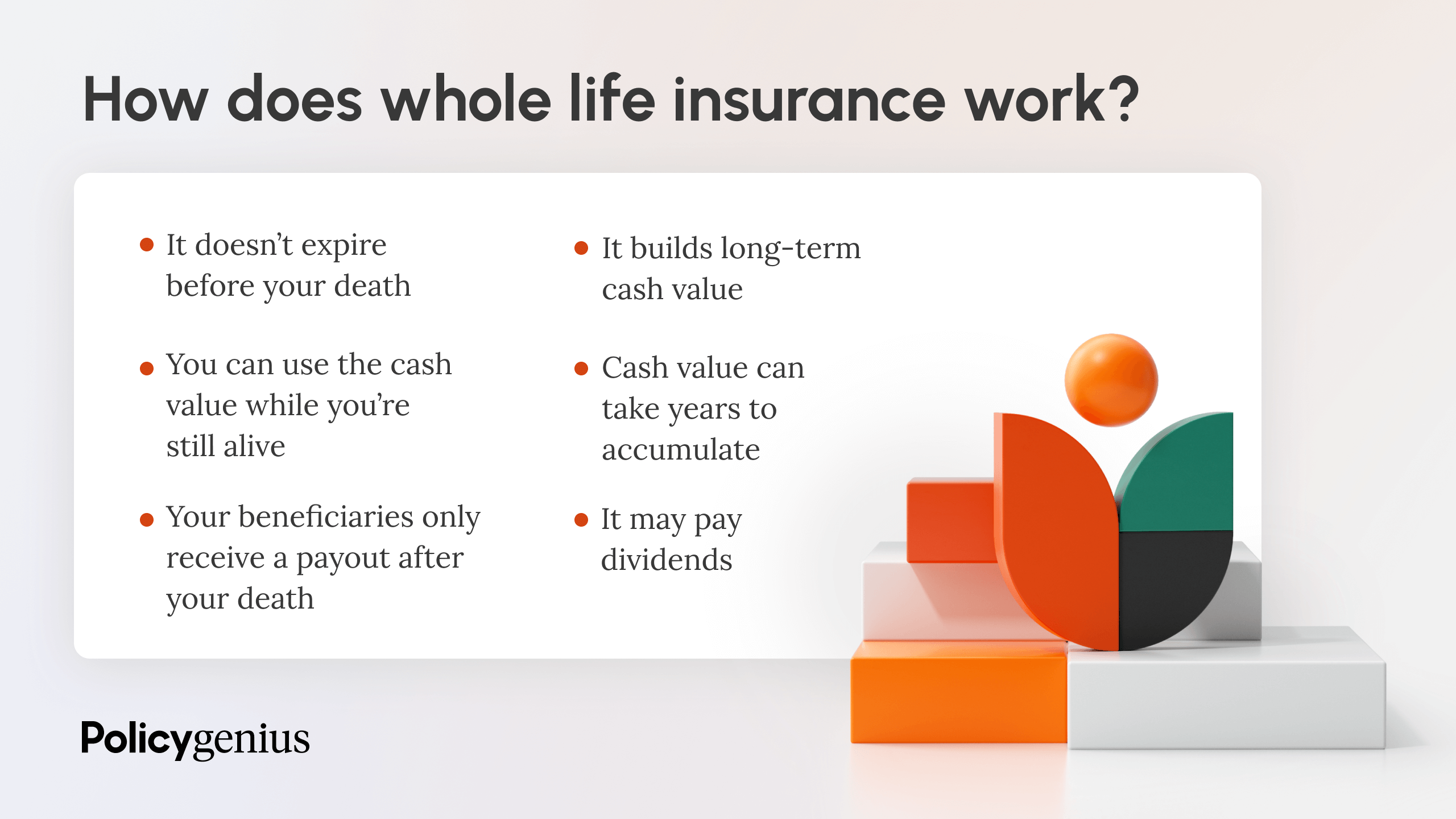
Dividends are essentially a return of a portion of your premium. If the insurance company’s mortality experience was better than expected or their investments performed well, they distribute a surplus. You can take these dividends as cash, use them to reduce your premium, or—most commonly—use them to buy "Paid-Up Additions," which increases both your death benefit and cash value without requiring more out-of-pocket payments.
Will my premiums go up as I get older?
No. One of the defining characteristics of whole life insurance is the "Level Premium" guarantee. The amount you agree to pay at age 52 is the same amount you will pay at age 92. This is why it is vital to lock in a policy as soon as possible, as the entry price only increases with age.
Can I cancel my whole life policy and get my money back?
Whole life policies have a "Cash Surrender Value." If you decide you no longer need the coverage, you can cancel the policy and receive the accumulated cash value, minus any surrender charges or outstanding loans. In the early years (years 1-10), the surrender value is often low, but after year 15, it can represent a significant portion of the premiums paid.
Final Recommendation for 52-Year-Olds
To secure the cheapest whole life insurance at age 52, your first step should be to request a fully underwritten quote from at least two major mutual insurers. If you have significant health concerns, pivot toward a simplified issue final expense policy from a provider like Mutual of Omaha. Always ask for a "ledger illustration," which shows how the cash value and death benefit are projected to grow over the next 30 years. This document reveals the true cost of the insurance better than a simple monthly premium quote. Avoid "Guaranteed Issue" unless you have no other options, and always verify the financial strength of the carrier through the Insurance Information Institute before signing a contract.