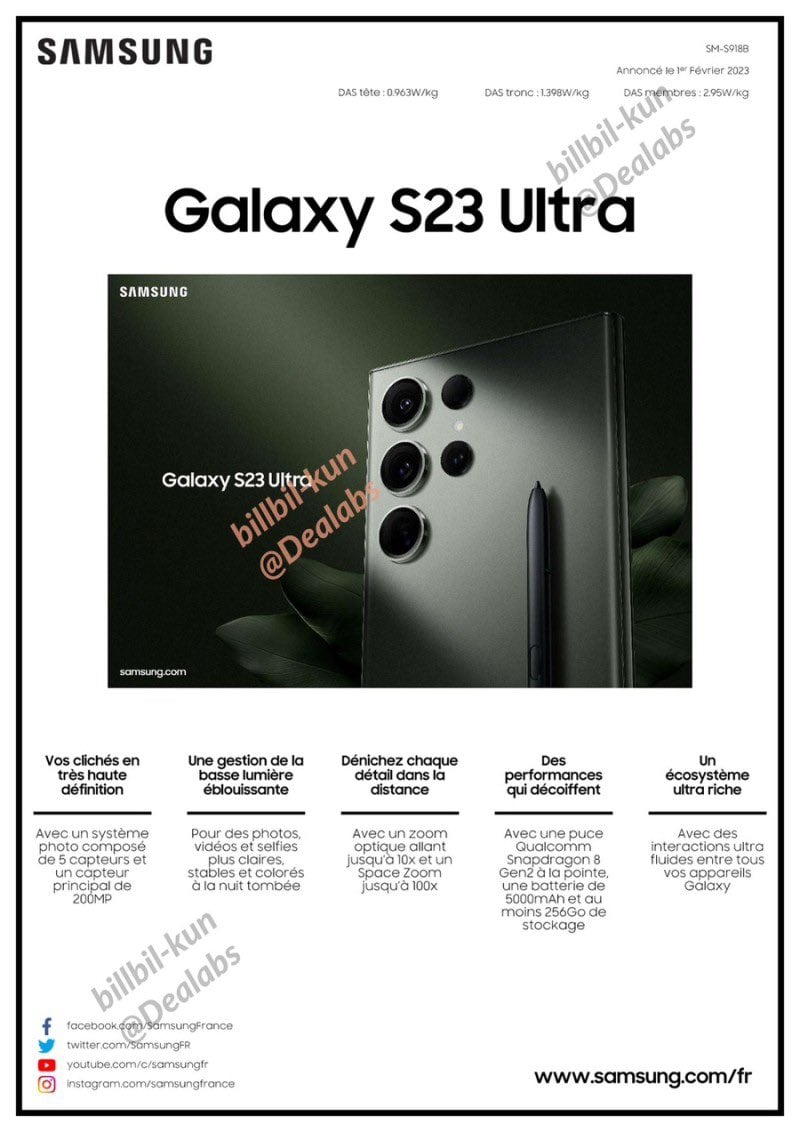
The Samsung Galaxy S23 FE bridges the gap between flagship performance and accessible pricing by retaining core design elements, camera hardware, and ecosystem features from the standard S23 line while making calculated compromises in processing silicon, bezels, and thermal management.
The Fan Edition (FE) strategy from Samsung has always focused on delivering the most requested features by smartphone users at a more palatable price point. When evaluating the Samsung Galaxy S23 FE, prospective buyers are usually looking to understand how it differentiates itself from both its predecessor, the Galaxy S21 FE, and its higher-end sibling, the Galaxy S23. Rather than offering a complete ground-up redesign, the device borrows heavily from the flagship playbook while carefully selecting areas where component costs can be trimmed without ruining the day-to-day user experience.
Understanding these specifications requires looking beyond marketing terms and analyzing how choices regarding processing power, display technology, optics, build materials, and battery architecture translate to real-world performance. Whether you are upgrading from an older mid-range handset or searching for a cost-effective route into the modern Android ecosystem, breaking down the core technical specifications provides the clarity needed to make an informed purchasing decision.
1. Processor Performance: Regional Variants and Silicon Capabilities
At the heart of any modern smartphone lies its system-on-chip (SoC), which dictates processing speed, gaming capabilities, power efficiency, and on-device machine learning tasks. The Galaxy S23 FE introduces a notable regional bifurcation in its processing hardware, utilizing either the Qualcomm Snapdragon 8 Gen 1 or the Samsung Exynos 2200, depending on the market of purchase.
Both chips are built on a 4-nanometer manufacturing process and represent the flagship generation immediately preceding the current standard. However, they carry distinct architectural characteristics:
- Qualcomm Snapdragon 8 Gen 1: Features an octa-core CPU layout comprising one Cortex-X2 performance core, three Cortex-A710 performance cores, and four Cortex-A510 efficiency cores, paired with an Adreno 730 GPU. This variant is typically found in North American models.
- Samsung Exynos 2200: Also features an octa-core layout with a similar core distribution, but integrates an Xclipse 920 GPU developed in collaboration with AMD. This graphics architecture brings mobile hardware-accelerated ray tracing capabilities to the device. It is commonly shipped in European and Asian markets.
While both processors handle intensive multitasking, social media navigation, and heavy productivity applications smoothly, thermal management plays a critical role in sustained performance. The S23 FE incorporates a vapor chamber cooling system that is notably larger than the one found in the S21 FE, helping to mitigate thermal throttling during extended gaming sessions or video recording. Despite these improvements, sustained peak performance under heavy loads may dip slightly compared to the standard Galaxy S23, which utilizes the newer Snapdragon 8 Gen 2 for Galaxy chip.
2. Display Technology: Dynamic AMOLED 2X and Panel Trade-offs
The visual interface of the Galaxy S23 FE relies on a 6.4-inch Dynamic AMOLED 2X flat panel, striking a middle ground between the compact 6.1-inch Galaxy S23 and the expansive 6.6-inch Galaxy S23+.
The display supports a variable refresh rate ranging from 60Hz to 120Hz. Unlike the lower-tier A-series devices that rely on fixed or two-step refresh rates, the S23 FE can scale its refresh rate dynamically based on the content on the screen, dropping down during static reading to preserve battery and ramping up to 120Hz during scrolling or gaming.
| Specification Feature | Samsung Galaxy S23 FE | Samsung Galaxy S23 |
|---|---|---|
| Display Size | 6.4 inches | 6.1 inches |
| Panel Type | Dynamic AMOLED 2X | Dynamic AMOLED 2X |
| Refresh Rate | 60Hz – 120Hz (Adaptive) | 48Hz – 120Hz (Adaptive) |
| Peak Brightness | 1,450 nits | 1,750 nits |
| Glass Protection | Corning Gorilla Glass 5 | Corning Gorilla Glass Victus 2 |
As detailed in the comparison table, while the display shares the core vibrant color reproduction and deep contrast ratios characteristic of Samsung's AMOLED panels, it involves specific compromises. The peak brightness tops out at 1,450 nits, which is bright enough for comfortable outdoor visibility under direct sunlight, though slightly lower than the 1,750-nit ceiling of the standard S23.
Additionally, the bezels surrounding the S23 FE display are visibly thicker and more symmetrical than those on the base S23 model. This gives the device a slightly wider footprint relative to its screen size and contributes to its heavier overall weight. The screen is protected by Corning Gorilla Glass 5 rather than the newer Gorilla Glass Victus 2, meaning users should exercise standard care regarding drop protection and scratch resistance.
3. Camera System: Upgraded Hardware and Versatile Optics
Camera capabilities often dictate a smartphone's value proposition, and the S23 FE upgrades several sensor components compared to its predecessor. The rear camera array consists of a triple-lens configuration designed to cover standard, ultra-wide, and telephoto focal lengths.
- Primary Sensor: 50-megapixel wide lens with an f/1.8 aperture, Dual Pixel autofocus, and Optical Image Stabilization (OIS). This sensor is capable of pixel binning to output detailed 12.5-megapixel images in low-light environments while maintaining high dynamic range.
- Ultra-Wide Sensor: 12-megapixel ultra-wide lens with an f/2.2 aperture and a 123-degree field of view, ideal for landscape photography and group shots without noticeable edge distortion.
- Telephoto Sensor: 8-megapixel telephoto lens offering 3x optical zoom, backed by OIS to keep distant subjects steady.
- Front-Facing Sensor: 10-megapixel selfie camera housed in a centered punch-hole cutout.
The inclusion of a dedicated 3x optical zoom lens distinguishes the FE line from many mid-range competitors that rely on digital crop zoom or macro sensors of questionable utility. Image processing benefits from Samsung's Nightography algorithms, allowing for cleaner low-light shots with reduced noise. For video enthusiasts, the device supports recording up to 8K resolution at 24 frames per second, as well as 4K video at 60 frames per second with steady Super Steady stabilization modes enabled.
4. Build Quality, Materials, and IP Rating
To achieve a more accessible price point without sacrificing durability, Samsung adjusted the material selection for the Galaxy S23 FE while retaining a premium look and feel that mirrors the design language of the flagship S23 family.
The device features an armor aluminum frame sandwiched between glass panels. However, while the standard S23 uses Gorilla Glass Victus 2 on both front and back, the S23 FE utilizes Corning Gorilla Glass 5 on the rear panel. The rear glass has a smooth, matte finish that resists fingerprint smudges effectively, though it lacks the absolute scratch resistance of newer glass iterations.
Durability is reinforced with an IP67 rating for dust and water resistance. This certification means the phone can withstand accidental immersion in freshwater up to 1 meter deep for up to 30 minutes, protecting against common mishaps such as spills or unexpected rain exposure. While it falls just short of the IP68 rating found on the mainline S-series, an IP67 rating provides robust peace of mind for daily use. The physical dimensions—measuring 158.0 x 76.5 x 8.2 mm and weighing 209 grams—make it a substantial, sturdy device in the hand, though users preferring lightweight, compact phones may notice the heft.
5. Battery Capacity, Charging Speeds, and Software Longevity
Power management and software support lifecycle are critical considerations for long-term smartphone ownership. The Galaxy S23 FE is equipped with a 4,500 mAh battery, sitting comfortably between the 3,900 mAh cell of the standard S23 and the 4,700 mAh cell of the S23+.
In practical terms, the 4,500 mAh capacity is sufficient to comfortably clear a full day of mixed-use productivity, including web browsing, messaging, streaming media, and moderate camera use. However, because the 4-nanometer processors (Snapdragon 8 Gen 1 and Exynos 2200) are slightly less power-efficient than the newer Snapdragon 8 Gen 2, screen-on time may lag marginally behind the standard S23 model.
Charging speeds support 25W wired fast charging using a compatible USB-PD PPS charger, which can replenish the battery from zero to approximately 50 percent in roughly 30 minutes. It also supports 15W fast wireless charging and Wireless PowerShare, enabling reverse wireless charging to top up accessories like Galaxy Buds or smartwatches. Note that a wall charging adapter is not included in the retail box, requiring users to supply their own compatible brick.
On the software front, Samsung provides a robust update policy for the device. The S23 FE ships with a commitment to multiple generations of major Android operating system upgrades and extended security patches, ensuring the hardware remains secure and up-to-date with modern software features for years following purchase.
Frequently Asked Questions
Is the Samsung Galaxy S23 FE waterproof?
The Samsung Galaxy S23 FE carries an IP67 dust and water resistance rating. This means the device is fully protected against dust ingress and can survive submersion in up to 1 meter of fresh water for up to 30 minutes. It is resilient against accidental spills, rain, and brief drops in water, though it is not designed for sustained underwater use or exposure to saltwater.
Does the S23 FE support expandable storage via microSD?
Like the rest of the modern Samsung flagship and Fan Edition lineup, the Galaxy S23 FE does not include a microSD card slot for expandable storage. Buyers must choose between internal storage tiers—typically 128GB or 256GB—at the time of purchase and rely on cloud storage solutions for additional file management.
Which processor does the Galaxy S23 FE use?
The processor depends on the region in which the device is purchased. North American models feature the Qualcomm Snapdragon 8 Gen 1 processor, while European and global models are equipped with the Samsung Exynos 2200 processor. Both are built on a 4nm architecture and offer high-end performance, though thermal behavior and graphical nuances differ slightly between the two chips.
Does the retail box include a wall charger?
No, the retail packaging for the Galaxy S23 FE includes only the handset and a USB Type-C to Type-C data cable. To achieve maximum charging speeds, users must separately purchase a 25W (or higher) USB-PD PPS compatible wall charger.
How many software updates will the S23 FE receive?
Samsung's support policy for the Fan Edition line promises multiple generations of major Android operating system upgrades alongside extended security maintenance patches, matching the lifecycle commitment provided to many of its flagship counterparts.
Practical Next Actions
If you are considering purchasing the Samsung Galaxy S23 FE, start by verifying which regional processor variant (Snapdragon or Exynos) is distributed in your local market, as benchmark results and thermal profiles can vary. Next, evaluate your storage needs carefully since the lack of a microSD slot makes internal capacity permanent. Compare current retail pricing against sales for the base Galaxy S23; if price gaps narrow during promotional periods, the smaller flagship may offer a superior display and processor package, whereas a discounted S23 FE remains an exceptional value for users prioritizing a larger screen, a dedicated telephoto lens, and robust everyday performance.