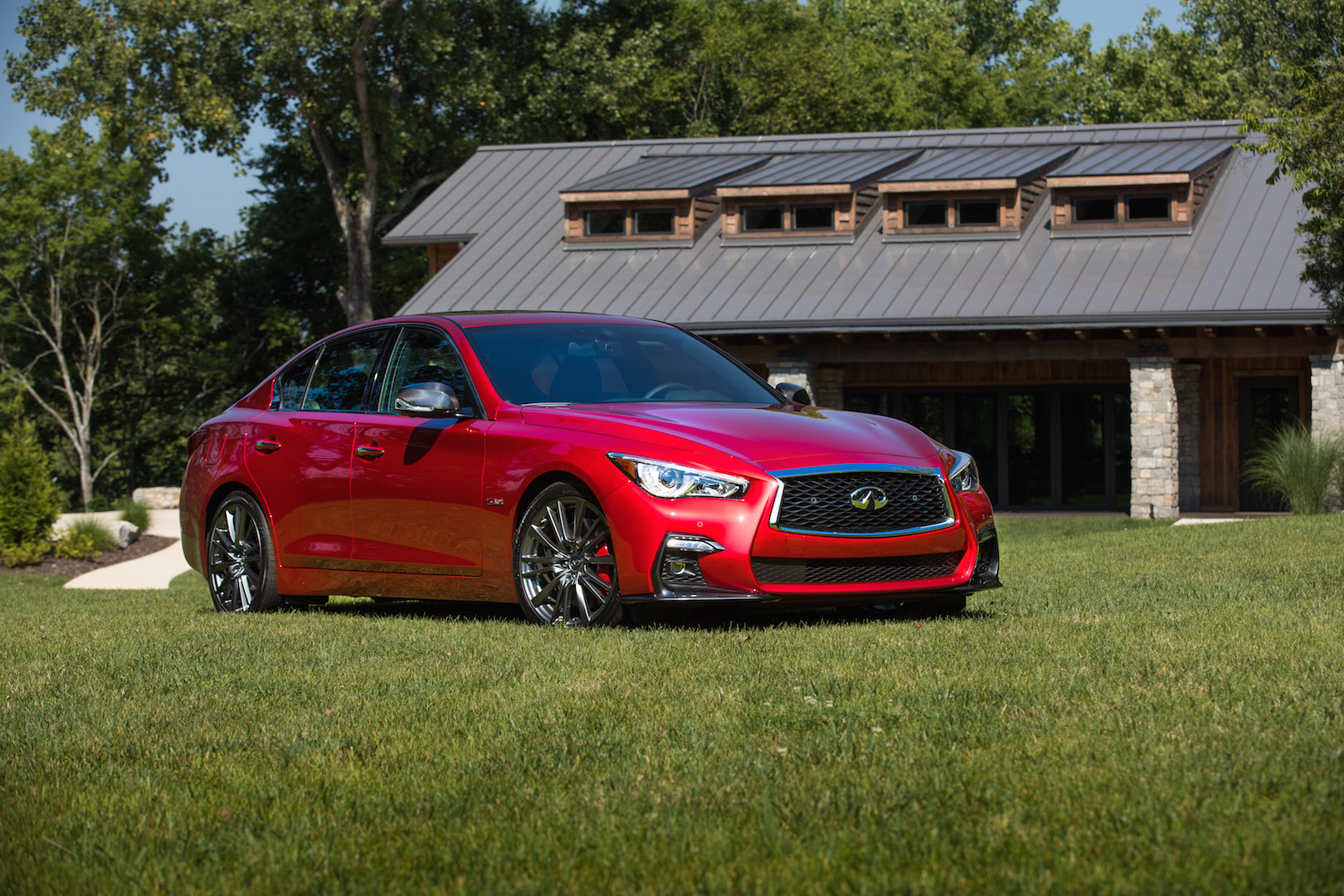
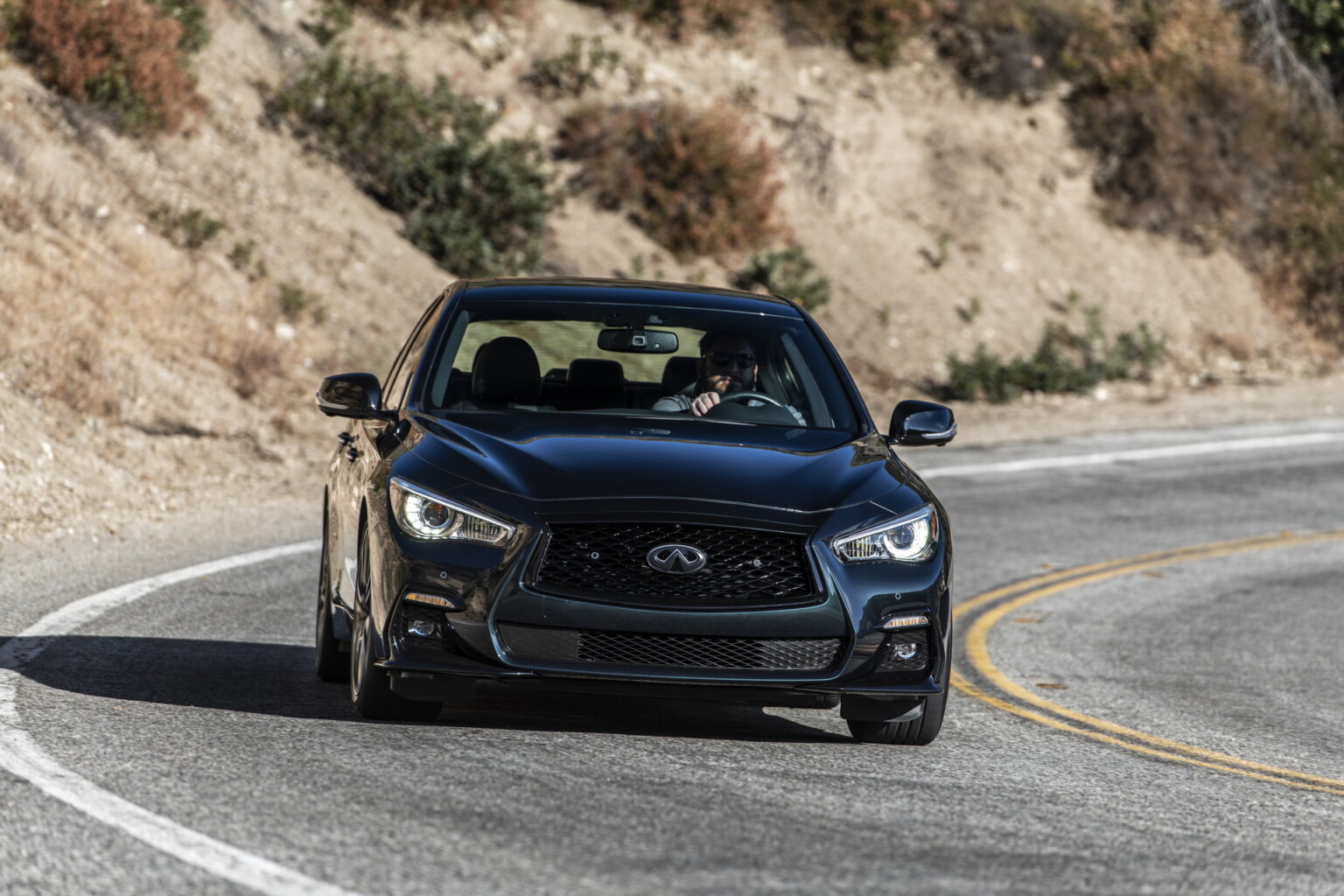
Tuning an Infiniti Q50 Red Sport 400 involves selecting between a modular piggyback system like the Burger Motorsports JB4 for flexible, warranty-conscious gains or a comprehensive ECU flash via EcuTek for maximum power. While stock units deliver 400 crank horsepower, aftermarket tuning can unlock over 500 wheel horsepower with supporting hardware.
The Infiniti Q50 Red Sport 400 has solidified its reputation as one of the most tunable luxury sedans on the market in 2026. At the heart of this performance potential is the VR30DDTT engine—a 3.0-liter twin-turbocharged V6 that serves as a modern successor to the legendary VQ series. While the "Red Sport" badge signifies a factory-tuned 400 horsepower output, enthusiasts know this is merely the baseline. The engine architecture shares nearly everything with the "Silver Sport" 300 hp variant, with the primary differences being a higher boost pressure and the addition of optical turbo speed sensors. This means the overhead for aftermarket tuning is substantial.
When exploring tune options for the Q50 Red Sport, owners must navigate a landscape of hardware prerequisites, software platforms, and specialized tuners. This guide provides a technical deep dive into the most effective ways to increase power, improve drivability, and maintain the longevity of the VR30 platform.
The Two Primary Tuning Paths: Piggyback vs. ECU Flash
The first decision any Q50 owner must make is whether to use a piggyback device or a full engine control unit (ECU) flash. As of 2026, the technology for both has matured significantly, but they serve different goals.
Piggyback Tuning (The JB4 Approach)
The Burger Motorsports JB4 remains the dominant choice for owners who are concerned about vehicle warranty or those who have leased their vehicles. A piggyback system does not actually change the code on the car's ECU. Instead, it plugs into sensors (primarily the MAP and TMAP sensors) and "tricks" the ECU into seeing lower boost levels than what are actually occurring. The ECU then compensates by increasing boost to meet its targets.
Pros of Piggyback Tuning:
- Plug-and-Play: It can be removed in minutes before a dealership visit.
- Safety Features: The JB4 monitors AFR (Air-Fuel Ratio) and can kick the car back to a stock map if it detects a lean condition.
- Mobile Integration: Most units use a Bluetooth connect kit to allow smartphone-based logging and map switching.
Cons of Piggyback Tuning:
- Limited Control: It cannot adjust ignition timing or cam phasing directly.
- Refinement: Since it works by "tricking" the car, the power delivery can sometimes feel less smooth compared to a factory-mapped ECU.
ECU Flash Tuning (The EcuTek Standard)
EcuTek is widely considered the industry standard for the VR30DDTT platform. Unlike a piggyback, EcuTek allows a tuner to rewrite the logic within the ECU. This provides total control over every parameter of the engine’s operation, including boost, timing, fueling, wastegate duty cycles, and even the transmission's behavior.
Pros of ECU Flash Tuning:
- Maximum Power: Because the tuner can optimize timing and fuel, the ceiling for power is significantly higher.
- Advanced Features: Custom features like "Rolling Launch," "Map Switching" via steering wheel buttons, and "Burble/Flame" maps are only possible here.
- TCU Integration: EcuTek allows for Transmission Control Unit (TCU) tuning, which is vital for the 7-speed automatic's longevity at high torque levels.
Cons of ECU Flash Tuning:
- Warranty Risks: Flashing the ECU leaves a footprint (a "flash counter") that dealerships can often detect, even if the car is flashed back to stock.
Top Tuning Platforms and Brands for 2026
Several specialized tuning houses have spent years perfecting the VR30 platform. Choosing a reputable tuner is just as important as choosing the hardware.
AMS Performance (Red Alpha)
AMS Performance is the "official" partner of Infiniti for performance parts. Their Red Alpha program is designed to provide an OEM-plus experience. Their tunes are known for being incredibly smooth and reliable, prioritizing engine safety over "bleeding edge" numbers. If you want a car that feels like it came from the factory with 480 horsepower, AMS is the go-to choice.
Racebox
Racebox has earned a reputation for producing some of the quickest Q50s in the world. They offer remote tuning services where you send them data logs of your car driving, and they send back revised maps. Their custom EcuTek tunes are highly optimized for specific fuel types, such as E30 (30% ethanol) or 93 octane.
Z1 Motorsports
Based in Georgia, Z1 Motorsports is a titan in the Nissan/Infiniti world. They offer both shelf tunes and custom tuning. Their expertise extends to the entire drivetrain, making them a one-stop shop for owners who want to pair their tune with physical hardware like upgraded heat exchangers and intakes.
Specialty Z
Led by tuning veteran Sebastian, Specialty Z is often cited for having the most refined throttle mapping in the community. Their tunes focus on the "area under the curve," ensuring the car feels powerful during daily driving, not just at wide-open throttle.
Essential Supporting Hardware (Stages 1 and 2)
A tune alone on a Red Sport 400 will yield gains, but the VR30 engine is notoriously heat-sensitive. To maintain 400+ wheel horsepower consistently, certain hardware upgrades are required.
| Component | Purpose | Requirement Level |
|---|---|---|
| Upgraded Heat Exchanger | Prevents heat soak in the water-to-air intercooler system. | Mandatory for any tune. |
| Lower Downpipes (LDPs) | Replaces the restrictive secondary catalytic converters. | Recommended for Stage 1. |
| Full Downpipes | Replaces both primary and secondary cats (requires ECU flash). | Mandatory for Stage 2. |
| Cold Air Intakes | Improves airflow to the turbos and provides "turbo spool" sound. | Optional / Recommended. |
| LPFP / HPFP | Upgraded fuel pumps for running high ethanol (E85) blends. | Required for 550+ whp. |
| TCU Tune | Increases line pressure in the transmission to prevent clutch slip. | Highly Recommended. |
The Heat Management Issue
The Q50 Red Sport uses a water-to-air intercooling system. The stock heat exchanger (the radiator for the intercoolers) is remarkably small. After just one or two pulls on a tuned car, the intake air temperatures (IATs) will skyrocket, causing the ECU to pull timing and reduce power. Installing a high-capacity heat exchanger from a brand like Mishimoto or AMS is the single most important modification you can make alongside a tune.
The Path to 500+ Wheel Horsepower: Fueling and Ethanol
For many Q50 owners, the goal is "500 whp." Achieving this on the Red Sport platform requires moving beyond standard 91 or 93 octane pump gas. The VR30 engine responds exceptionally well to ethanol.
Flex Fuel Kits
By installing a Flex Fuel sensor, the EcuTek system can monitor the ethanol content in the fuel line in real-time. The tuner creates a "scaling" map that automatically adjusts timing and boost based on the ethanol percentage.
- E30 Mixes: On stock fuel pumps, most Red Sports can handle an E30 blend (roughly 4-5 gallons of E85 mixed with 93 octane). This typically adds 40-60 lb-ft of torque over a standard 93 tune.
- Full E85: To run straight E85, you must upgrade the High-Pressure Fuel Pump (HPFP) and the Low-Pressure Fuel Pump (LPFP). Companies like Spool Performance provide the hardware necessary to support the massive fuel volume E85 requires.
Transmission Longevity and the 7-Speed Automatic
The Jatco 7-speed automatic transmission in the Q50 is the "weak link" once you exceed 500 lb-ft of torque. While the Red Sport's transmission is identical to the base models, the increased torque from a tune can cause the clutches to slip over time.
A TCU Tune (Transmission Control Unit) is essential for any high-torque application. By increasing the internal line pressure, the transmission can clamp the clutches harder, preventing slippage and heat buildup. It also allows for faster shift points and a more aggressive "Sport+" mode. If you are planning on drag racing or frequent "roll racing," do not skip the TCU tune.
Maintenance and Reliability for Tuned VR30s
Tuning increases the stress on engine components. To ensure your Q50 Red Sport remains reliable in 2026 and beyond, follow an accelerated maintenance schedule:
- Oil Changes: Reduce the interval to every 3,000–5,000 miles. Use a high-quality 0W-20 or 5W-30 synthetic oil.
- Spark Plugs: Tuned engines run higher cylinder pressures. You should gap your spark plugs tighter (usually around 0.022") or switch to one-step colder plugs like those from HKS or NGK.
- Turbo Inspection: The VR30 turbos are small and spin at extremely high RPMs (up to 220,000 RPM). Ensure you have no oil leaks at the turbo seals, especially if you are running higher-than-stock boost (18+ PSI).
- Belt Alignment: The Q50 is known for "shredding" serpentine belts if the pulley alignment is slightly off. Check your belt condition every 10,000 miles.
Frequently Asked Questions
Does a tune void my Infiniti factory warranty?
Legally, a dealership cannot void your entire warranty because of a tune (per the Magnuson-Moss Warranty Act). However, they can deny a specific claim—such as a blown turbo or engine—if they can prove the tune caused the failure. Piggyback systems like the JB4 are harder for dealerships to detect once removed, whereas EcuTek flashes are usually visible to corporate-level scanners.
How much horsepower does a stock Q50 Red Sport actually make?
While rated at 400 hp at the crank, most Red Sports put down between 340 and 360 wheel horsepower (whp) on a Dynojet. A simple Stage 1 EcuTek tune on 93 octane typically brings this to 420–440 whp.
Can I tune my Q50 myself?
While you can purchase the hardware and "off-the-shelf" maps (OTS maps) from companies like AMS, it is highly recommended to work with a professional tuner. Every engine is slightly different, and a custom remote tune ensures that your specific car is running safely under your local environmental conditions and fuel quality.
Will tuning my car ruin my gas mileage?
Under normal cruising conditions, a tune can actually improve fuel economy slightly by optimizing the air-fuel ratios. However, because a tune encourages more aggressive driving and uses higher boost pressures, most owners see a net decrease in average MPG.
What is the difference between Lower Downpipes and Full Downpipes?
The Q50 has two sets of catalytic converters. Lower downpipes replace the second set and do not require a tune to avoid a "Check Engine Light" (CEL). Full downpipes (upper and lower) replace all cats. These provide the most power but require an EcuTek tune to disable the CEL and are often for "off-road use only" due to emissions regulations.
Final Recommendations for Owners
For the average owner looking for a reliable boost in performance, the AMS Red Alpha EcuTek Tune paired with an upgraded heat exchanger is the most balanced option. It preserves the luxury feel of the Q50 while providing a significant "kick in the pants."
If you are a lease-holder or want to stay as close to stock as possible, the Burger Motorsports JB4 is the undisputed king of convenience. However, if your goal is to compete with modern supercars and maximize the potential of the VR30 platform, a custom EcuTek tune from Racebox or Specialty Z using an E30 ethanol blend will transform the Q50 Red Sport into a 500+ whp monster. Always prioritize cooling and transmission health before chasing high horsepower numbers to ensure your vehicle remains a reliable daily driver.