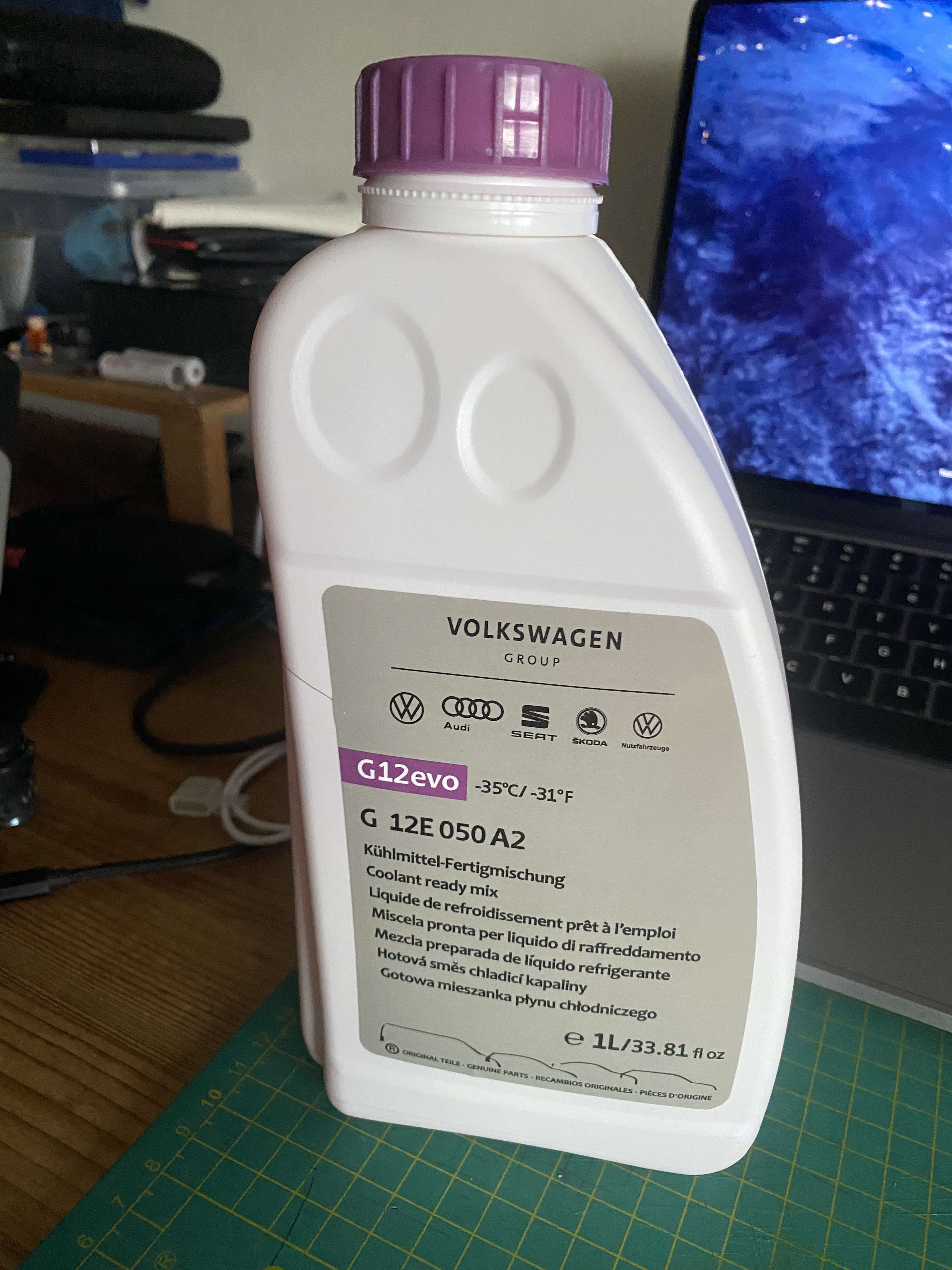
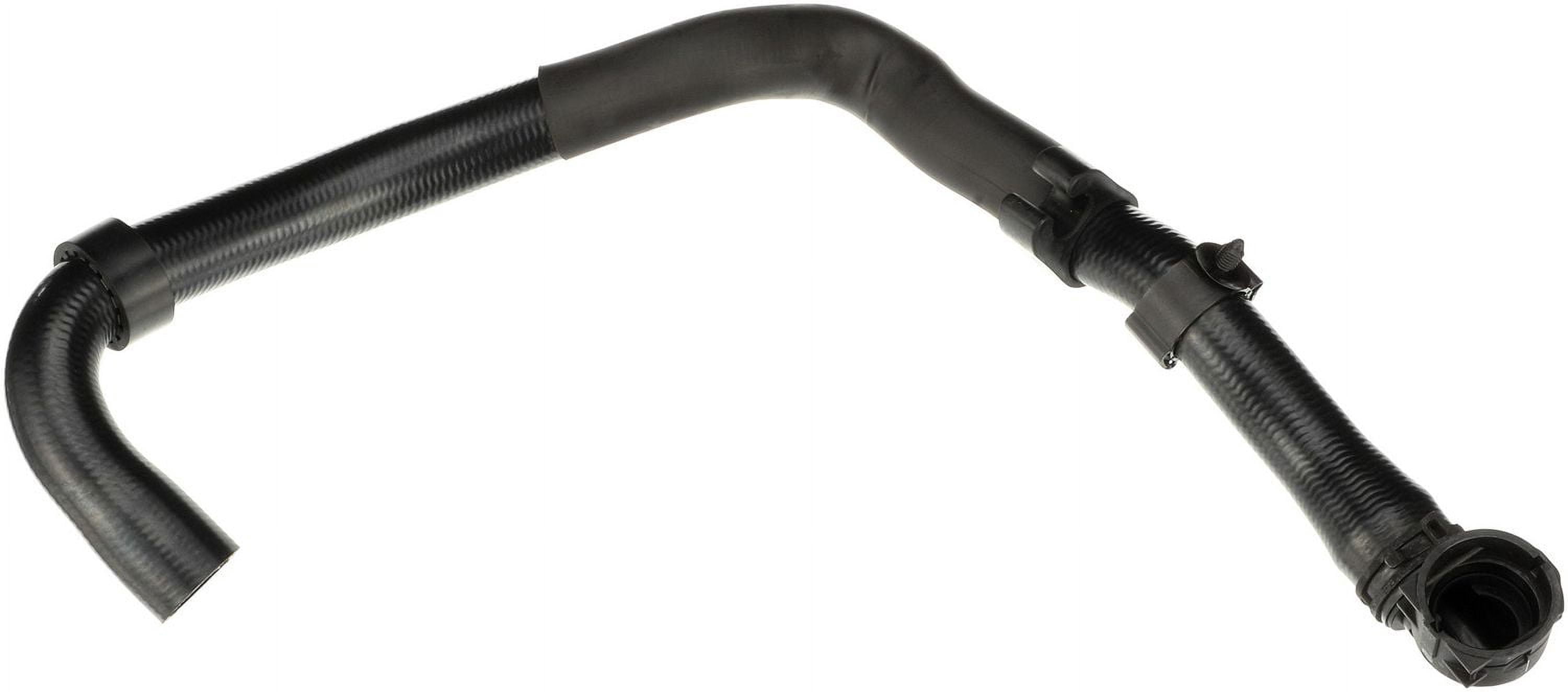
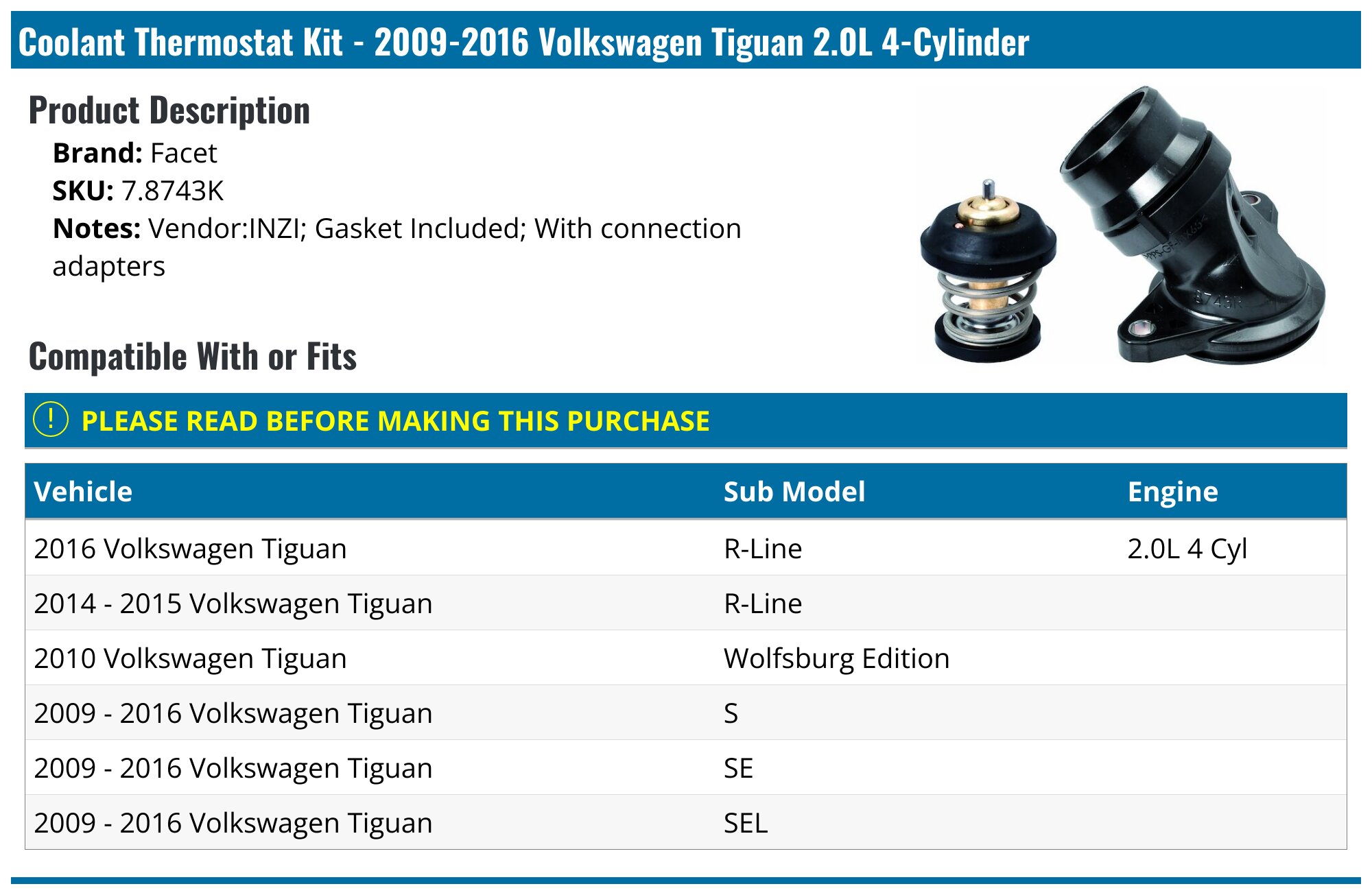
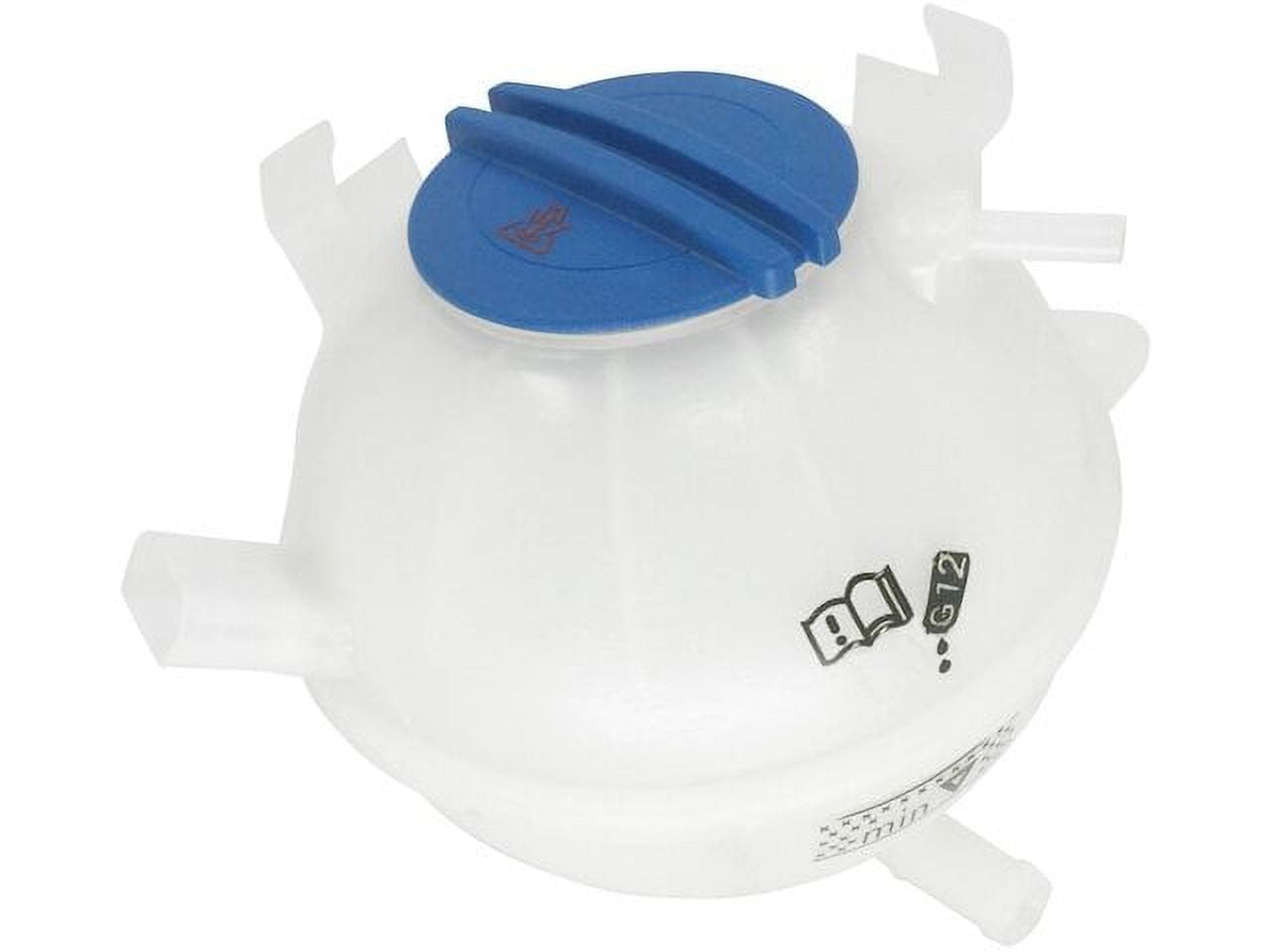
The 2019 Volkswagen Tiguan requires coolant meeting the VW TL 774-J (G13) or VW TL 774-L (G12evo) engineering specification, recognizable by its distinct violet, magenta, or pink color. While original factory fills used G13, Volkswagen has superseded G13 with G12evo for all modern service refills and complete cooling system flushes across the MQB platform.
Official Volkswagen Coolant Specifications for the 2019 Tiguan
Selecting the correct engine coolant for a 2019 Volkswagen Tiguan (equipped with the 2.0-liter turbocharged EA888 Generation 3B TSI engine) is critical to the longevity of the vehicle's complex thermal management system. Unlike older engine designs that utilized basic cast-iron blocks and simple mechanical thermostats, the 2019 Tiguan features an all-aluminum construction, an integrated exhaust manifold inside the cylinder head, an electronically controlled dual-thermostat rotary valve water pump module, and an auxiliary electric water pump dedicated to cooling the turbocharger after engine shutdown.
Factory Fill Spec: VW TL 774-J (G13)Current Service Replacement: VW TL 774-L (G12evo)Approved Coolant Chemistry: Lobrid (Si-OAT / P-OAT hybrid)Standard Mixture: 50/50 mix with distilled water
The Transition from G13 to G12evo
When the second-generation Volkswagen Tiguan entered the market, the factory standard across all Volkswagen Auto Group (VAG) vehicles was G13. Formulated with a glycerin base blended with traditional ethylene glycol to reduce manufacturing carbon footprints, G13 was designed to provide long-term corrosion resistance for aluminum, magnesium, and cast-iron components.
However, over extended service lives, G13 demonstrated a tendency to degrade faster under high thermal loads, occasionally causing additive fallout and premature acidity. In response, Volkswagen transitioned factory assembly lines and dealership service networks to G12evo (VW TL 774-L). G12evo returns to an enriched ethylene glycol base while enhancing the lobrid silicate-organic acid technology package. If you bring a 2019 Tiguan to an authorized Volkswagen dealership for cooling system service, the technicians will refill the vehicle using G12evo.
Decoding VW TL Standards
Volkswagen establishes proprietary engineering standards known as Technischer Lieferant (TL) codes. For the 2019 Tiguan, you should look for the following codes on fluid containers:
- VW TL 774-J (G13): Safe to use for top-offs if your system still contains the original factory fill. It carries an OEM part number prefix of
G 013. - VW TL 774-L (G12evo): The preferred, modern replacement standard. Fully backward-compatible and miscible with G13, carrying the OEM part number prefix of
G 12E.
Using fluids that simply state "compatible with all makes and models" risks introducing incompatible chemistry into your cooling loop. Generic green or universal yellow coolants lack the tailored corrosion inhibitors required by Volkswagen's metallurgy and plastic composite seals.
Coolant Color, Chemical Base, and Additive Chemistry
Automotive coolant color is determined by artificial dyes added by manufacturers. While color offers a quick visual cue, relying strictly on color can lead to catastrophic mistakes because different manufacturers use similar dyes for entirely incompatible chemical formulations.
Why Coolant Color Can Be Deceptive
In Volkswagen applications:
- G12++ (TL 774-G): Violet / Pinkish-Purple
- G13 (TL 774-J): Violet / Bright Purple
- G12evo (TL 774-L): Pinkish-Violet or Lilac
Certain Asian automotive brands use a pink fluid that relies on Phosphated Organic Acid Technology (P-OAT) without any silicates, while certain American domestic brands use an orange OAT coolant that contains sebacate or 2-EHA (2-ethylhexanoic acid). Introducing 2-EHA into a Volkswagen cooling system can soften and degrade internal silicone seals, plastic heater core tanks, and the composite water pump housing. Always prioritize the VW TL 774-J or VW TL 774-L specification on the label over fluid color.
Lobrid Technology: Si-OAT Explained
The 2019 Tiguan cooling circuit relies on Si-OAT (Silicated Organic Acid Technology), often referred to as "lobrid" coolant. Lobrid fluids merge the rapid, surface-passivating benefits of inorganic mineral inhibitors (silicates) with the long-lasting, stable protection of organic carboxylic acids.
- Fast Protection: Silicates quickly coat raw aluminum surfaces, shielding engine components, cylinder head coolant passages, and the heater core against micro-cavitation and localized boiling corrosion.
- Long-Term Durability: The organic acids target microscopic corrosion spots over thousands of operating hours without depleting rapidly, ensuring extended service intervals.
The Critical Role of Distilled Water
When buying concentrated coolant (undiluted), always mix it exclusively with deionized or distilled water. Tap water, well water, and generic bottled spring water contain dissolved minerals such as calcium, magnesium, chlorides, and carbonates.
When exposed to the extreme temperatures of the turbocharger cooling passages and the cylinder head exhaust runners, hard water minerals precipitate out of solution, forming hard scale inside the thin passages of the radiator and heater core. Chlorides also attack aluminum alloys, causing pitting corrosion that can breach head gaskets and internal seals.
Comparison of Volkswagen Coolant Formulations
The table below outlines how various Volkswagen coolant generations interact with the 2019 VW Tiguan cooling system.
| Coolant Generation | VW Specification Code | Primary Color | Inhibitor Technology | Compatibility with 2019 Tiguan |
|---|---|---|---|---|
| G11 | VW TL 774-C | Blue / Green | Inorganic Acid (IAT, Silicates) | Incompatible. Rapidly degrades aluminum components and clogs modern heater cores. |
| G12 | VW TL 774-D | Red / Pink | Organic Acid (OAT, Silicate-Free) | Incompatible. Cannot be mixed with G13 or G12evo; forms thick gel deposits. |
| G12+ | VW TL 774-F | Pink / Violet | Organic Acid (OAT, 2-EHA) | Emergency Only. Miscible, but lacks the high-performance silicate barrier needed by EA888 Gen 3B. |
| G12++ | VW TL 774-G | Violet | Lobrid (Si-OAT with Ethylene Glycol) | Compatible. Fully miscible with G13 and G12evo; excellent aluminum protection. |
| G13 | VW TL 774-J | Violet / Magenta | Lobrid (Si-OAT with Glycerin/Glycol base) | Direct Factory Match. Original specification; safe to mix and top off. |
| G12evo | VW TL 774-L | Pinkish-Violet / Lilac | Enhanced Lobrid (Si-OAT with high thermal stability) | Factory-Approved Upgrade. The recommended fluid for all top-offs and complete flushes. |
The "Mit Silikat" Reservoir Issue in MQB Platforms
Owners of a 2019 Tiguan must understand the operational design of the expansion tank (coolant reservoir). On many vehicles assembled on Volkswagen’s MQB platform, the expansion tank bears the German inscription "Mit Silikat" printed directly on the translucent plastic body.
- EXPANSION TANK CAP
- Translucent Tank "Mit Silikat"
- Silicate Sachet (Inside Baffle) — Vulnerable component: can burst and deposit beads into heater core
- Cooling Circuit / Heater Core
The Silicate Bag Inside the Expansion Tank
Because G13 lobrid coolant relied on a steady supply of silicates to maintain protective film barriers on raw aluminum, Volkswagen engineers placed a porous sachet (bag) containing silicate beads inside a plastic chamber within the coolant expansion tank. Over thousands of heating and cooling cycles, this bag slowly released silicates into the fluid to replenish the chemistry.
Why the Bag Fails and Clogs the Heater Core
Over time, the flexible silicate sachet is subjected to extreme thermal expansion, engine vibrations, and chemical aging. In many vehicles, the sachet ruptures.
When the sachet tears open:
- Small silicate beads escape directly into the cooling system.
- The beads circulate down the lower reservoir hose into the engine block.
- The beads aggregate in the vehicle's narrowest fluid passages: the heater core matrix.
- This causes a loss of cabin heat (predominantly on the passenger side first) and forces an expensive mechanical replacement of the heater core and the thermostat housing.
How to Safely Address the Expansion Tank
If your 2019 Tiguan expansion tank is marked "Mit Silikat":
- Inspect the tank: Shine a bright light through the reservoir. Look for a small cartridge or internal plastic double-wall containing the fabric bag.
- Proactive Upgrade: Many technicians and Volkswagen specialists recommend replacing the original reservoir with a newer, non-silicate expansion tank (OEM VW part numbers often transition away from internal bags).
- Transition to G12evo: When flushing the system and switching to G12evo, the internal silicate bag is no longer required because G12evo possesses superior chemical stability without requiring passive sachet replenishment.
Fluid Capacity and Dilution Ratios
Knowing the exact volume requirements ensures you purchase the correct amount of concentrated or pre-mixed fluid before beginning maintenance.
Total System Capacity vs. Service Refill Volume
- Total Dry System Capacity: Approximately 8.0 to 9.0 liters (8.5 to 9.5 US quarts). This figure applies to an entirely dry engine, including the cylinder block, cylinder head, main radiator, turbocharger cooling lines, auxiliary coolers, and internal cabin heater core.
- Standard Service Drain and Refill Volume: Approximately 4.0 to 5.0 liters (4.2 to 5.3 US quarts). When you pull the lower radiator hose or engine block drain, significant fluid remains trapped behind the closed thermostat valves, inside the heater core matrix, and within the lower channels of the heater circuits.
If you are performing a standard drain and refill, purchasing one 1-gallon (3.78-liter) jug of concentrated G12evo alongside a gallon of distilled water provides ample fluid to complete the task.
Recommended Dilution Ratios by Climate
Never run concentrated coolant at 100% strength; pure ethylene glycol freezes at a higher temperature than a properly mixed solution and lacks adequate heat-carrying capacity. Always maintain these ratios:
- Standard Protection (50% Coolant / 50% Distilled Water): Freezing protection down to -37°C (-35°F) and boiling protection up to 108°C (226°F) under normal atmospheric pressure (higher under a pressurized 1.4-bar cap). This is the optimal balance for most global climates.
- Extreme Cold Protection (60% Coolant / 40% Distilled Water): Freezing protection down to -52°C (-62°F). Never exceed a 60/40 concentration, as higher levels of glycol reduce cooling efficiency and elevate engine operating temperatures during summer highway driving.
Step-by-Step Guide: Checking, Topping Off, and Flushing
Modern European cooling systems operate under high pressure and rely on specific bleeding procedures to prevent air pockets from damaging cylinder heads and turbochargers.
- Preparation & Safety Check
- Fluid Inspection & Level Check (Min/Max Cold)
- Add 50/50 G12evo or G13 (Never overfill)
- Vacuum Bleed System (Purge air locks)
- Post-Drive Level Verification
Safety Prerequisites and Personal Protective Equipment
- Never open the expansion tank on a hot engine. The cooling system on the 2019 Tiguan operates at pressures reaching 1.4 to 1.6 bar (20 to 23 psi). Removing the pressure cap while the coolant is hot causes the pressurized liquid to instantly boil, resulting in severe burns.
- Wear safety glasses and nitrile gloves. Ethylene glycol is toxic and harmful to human skin and domestic animals.
- Park the vehicle on a level surface and switch off the ignition for at least one hour before servicing.
Checking Level and Assessing Fluid Condition
- Locate the translucent spherical coolant expansion tank on the passenger (right) side of the engine bay.
- Inspect the fluid level against the molded "MIN" and "MAX" witness marks on the side of the tank. With the engine cold, the level should sit precisely halfway between the lines or right at the "MAX" line.
- Check fluid clarity:
- Normal: Bright violet, magenta, or clear pink with no particulate matter.
- Contaminated/Degraded: Brownish, cloudy, milky, or containing dark sediment. Brown coolant indicates severe oxidation or inadvertent cross-mixing with generic coolants. Milky coolant signals oil contamination, typically from a failed engine oil cooler.
Proper Topping-Off Procedure
- Wrap a thick rag over the expansion tank cap. Slowly turn the cap counterclockwise roughly one-quarter turn to release residual vapor pressure.
- Once venting stops, completely unscrew and remove the cap.
- Insert a dedicated, clean automotive funnel.
- Add a premixed 50/50 solution of G12evo (or G13) and distilled water until the meniscus reaches the "MAX" indicator line.
- Reinstall the reservoir cap and turn it clockwise until you feel and hear it firmly click into its seated detent.
Vacuum Filling vs. Manual Bleeding on the 2.0L TSI
Due to the complex routing of the auxiliary cooling lines and the electronically controlled rotary valve thermostat, manual bleeding (running the engine with the cap off) frequently leaves air trapped inside the turbocharger jacket or heater core.
The Professional Method: Vacuum Purge and Refill
- Connect a pneumatic cooling system vacuum refilling tool (such as an Airlift kit) directly to the mouth of the expansion tank.
- Apply shop air to draw the entire cooling system into a deep vacuum (around 24–26 inches of mercury).
- Observe the vacuum gauge for two minutes. If the vacuum drops, a leak exists within the hoses, radiator, or water pump module that must be repaired before filling.
- Switch the tool's control valve to introduce the pre-mixed G12evo fluid. The vacuum draws the fluid into every recess, eliminating air pockets without running the engine.
The Manual Bleed Alternative (If vacuum equipment is unavailable):
- Fill the reservoir to the "MAX" line.
- Reinstall the cap securely.
- Set the interior cabin HVAC controls to HI temperature and set the fan speed to low.
- Start the engine and run it at 1,500–2,000 RPM until the radiator cooling fan cycles on (indicating the primary thermostat has opened).
- Allow the vehicle to cool down completely (4–6 hours). Check the reservoir level and top off fluid to replace displaced air.
Common Cooling System Symptoms and Troubleshooting on the 2019 Tiguan
The 2019 Tiguan exhibits several known mechanical patterns related to cooling performance. Identifying these symptoms early prevents roadside breakdowns and engine overheating.
Common 2019 Tiguan Cooling Issues:
- Water Pump / Thermostat Housing Plastic Warping (External Leak)
- Ruptured Silicate Sachet (Heater Core Blockage / Cold Cabin Air)
- Auxiliary Turbo Coolant Pump Electrical Failure
- Low Coolant Sensor False Positives (Mineral buildup on prongs)
The EA888 Water Pump and Thermostat Housing Leak
The single most frequent cooling failure on the 2019 Tiguan involves the combined water pump and thermostat housing assembly. Constructed from composite plastic and mounted directly beneath the intake manifold, this assembly is exposed to intense engine heat cycles and oil vapor.
- Symptoms: A persistent sweet, maple-syrup smell under the hood after driving, small drops of pinkish fluid on the ground beneath the center of the engine bay, or a coolant level dropping from MAX to MIN every few weeks.
- The Cause: The plastic housing warps or the elastomer seal degrades—often accelerated if oil leaks from the upper timing cover onto the water pump gasket.
- Solution: Replacement of the entire thermostat assembly, ideally with an updated OEM revision featuring reinforced seals and improved composite materials.
No Heat on the Passenger Side (Heater Core Blockage)
When the internal matrix of the heater core clogs—either due to broken silicate sachet beads or aged, degraded G13 coolant that has gelled—the Tiguan displays uneven heat distribution.
- Diagnostic Test: Set both dual-zone climate zones to high. Measure the air discharge temperature at the driver's center vent versus the passenger side vent using an infrared thermometer. A disparity greater than 15–20°F (8–11°C) typically indicates that half the heater core channels are blocked.
- Remedy: Try a reverse flush of the heater core using specialized scale-dissolving flushing agents. If flushing fails to restore flow, the heater core must be removed and replaced.
Low Coolant Warning Light
A red flashing warning light on the instrument cluster accompanied by an audible chime indicates low fluid levels.
Inside the expansion tank sit two parallel metal sensor prongs. Over time, thin mineral films or silicate deposits can coat these prongs, preventing electrical continuity even when fluid is present. If the tank is full but the warning light persists, clean the prongs carefully with an abrasive wire brush or swap in a new expansion tank.
Approved Aftermarket Brands vs. Genuine OEM Fluid
While picking up fluid at a dealership parts counter guarantees an exact match, several reputable aftermarket manufacturers offer chemically identical fluids meeting the VW TL 774-J and TL 774-L specifications.
Genuine Volkswagen OEM Products
- Volkswagen G12evo Premix: Part Number
G 12E 050 A2(pre-diluted 50/50 ready to pour). - Volkswagen G13 Concentrate: Part Number
G 013 A8J 1G(must be diluted with distilled water).
Certified Aftermarket Equivalents
- Pentosin Pentofrost E: A high-grade German concentrate formulated to VW TL 774-J (G13) specifications, providing identical silicate-organic acid protection.
- Valvoline Zerex G40: Formulated for modern European vehicles requiring Si-OAT protection. Complies directly with VW TL 774-G (G12++) and is fully compatible with G13 systems.
- Valvoline Zerex G65: Specially designed to meet the newer VW TL 774-L (G12evo) standard. Excellent choice for complete system flushes.
- Motul Inugel G13: A high-performance pre-mixed lobrid coolant designed specifically for VAG group passenger cars requiring TL 774-J.
- Febi Bilstein / SWAG: Readily available from European automotive parts specialists under specification reference numbers matching G13 and G12evo.
Frequently Asked Questions
Can I use universal green or yellow coolant in my 2019 VW Tiguan?
No. Never pour universal green, yellow, or generic all-makes coolants into a 2019 Tiguan. These generic fluids rely on chemical additives that do not protect aluminum at high turbocharged operating temperatures. Mixing universal coolants with G13 or G12evo causes additive dropout, resulting in a gelatinous sludge that blocks the radiator and cabin heater core.
What should I do if I put the wrong coolant in my Tiguan?
Do not start the engine. If the vehicle has not been driven, the incorrect fluid remains in the expansion tank and can be extracted using a hand siphon. If the engine has been run and the fluid has circulated, tow the vehicle to a qualified repair facility to have the cooling system thoroughly flushed with demineralized water and refilled with approved G12evo fluid.
How often should the coolant be replaced in a 2019 Tiguan?
Volkswagen considers factory G13 and G12evo coolants to be "lifetime" fills under standard operating conditions. However, real-world experience shows that the corrosion inhibitors deplete over time. Automotive specialists recommend performing a comprehensive drain and refill every 5 years or 60,000 miles (whichever occurs first) to preserve the water pump seals, auxiliary turbo pump, and heater core.
Is G12evo backward-compatible with the factory G13 in my 2019 Tiguan?
Yes, G12evo (VW TL 774-L) is fully backward-compatible with G13 (VW TL 774-J). You can safely use G12evo to top off an existing G13 system without causing chemical precipitation, foaming, or loss of corrosion protection.
Can I top off my coolant with plain water in an emergency?
If you experience a roadside drop in coolant level and do not have access to approved VW fluid, you can add clean distilled water (or clean bottled drinking water if stranded) to limp the vehicle to safety. Doing so dilutes the glycol concentration and reduces both freeze and boilover protection. Have the system inspected for leaks, tested with a refractometer, and corrected with concentrated G12evo as soon as possible.
Final Maintenance Recommendations
When maintaining the cooling system of your 2019 Volkswagen Tiguan, adhere to the following checklist:
- Check Fluid Semiannually: Inspect your expansion tank fluid level and clarity every spring and autumn when the engine is completely cold.
- Verify the Spec: Look specifically for VW TL 774-L (G12evo) or VW TL 774-J (G13) on the bottle before adding any fluid to the tank.
- Inspect the Expansion Tank: If your vehicle's reservoir has the "Mit Silikat" marking, consider replacing the tank with an updated non-silicate unit during your next service to protect your heater core from catastrophic clogging.
- Use Distilled Water: Always maintain a precise 50/50 mixture using pure distilled water when diluting concentrated coolants.
- Address Leaks Immediately: If you detect a recurring low-coolant warning or smell sweet coolant vapors, inspect the composite water pump module under the intake manifold for signs of weeping or cracking.