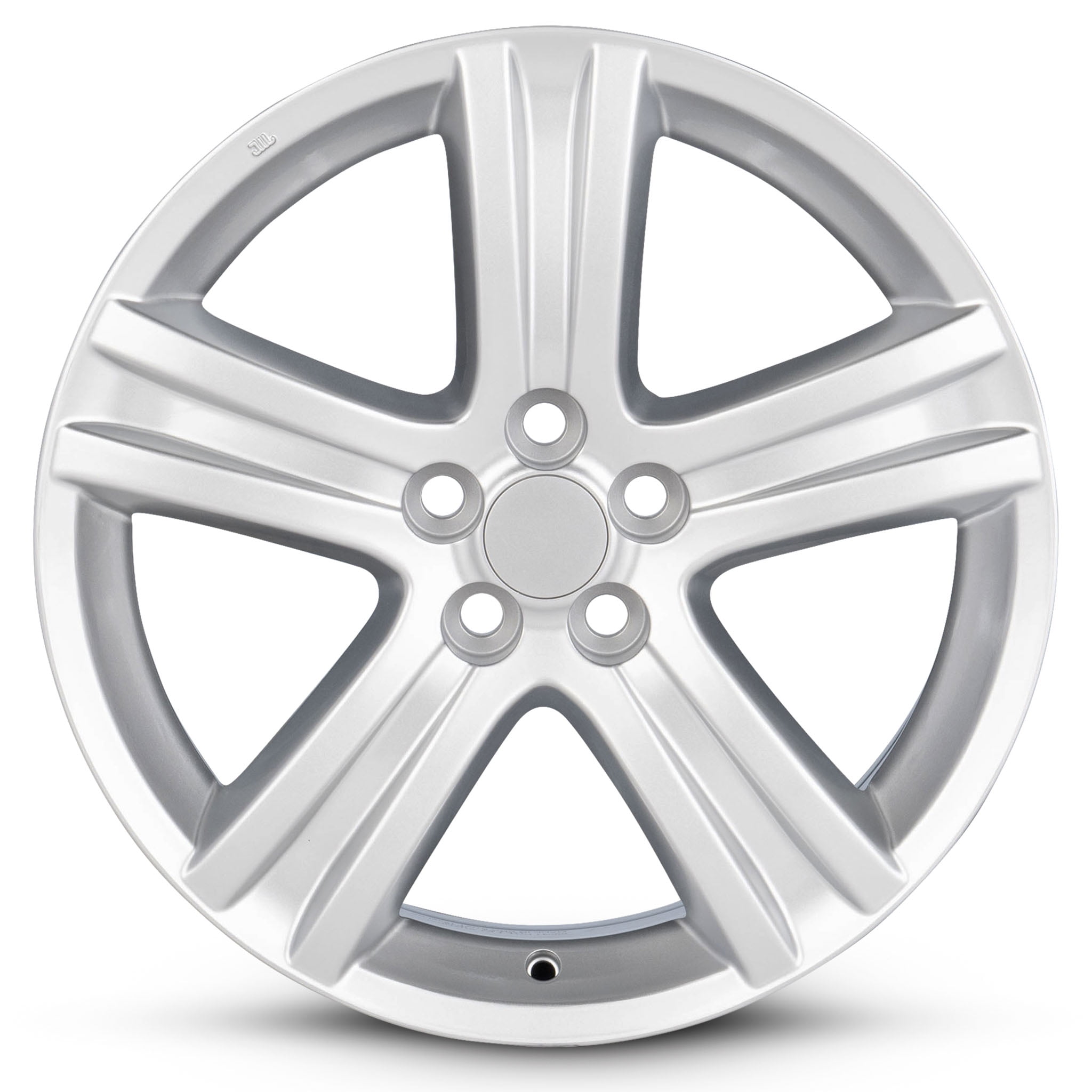
The 2009 Toyota Corolla features a wheel bolt pattern of 5x100mm, meaning it uses five lug nuts arranged in a circle with a 100-millimeter diameter. Understanding this specification is essential when purchasing replacement wheels, aftermarket rims, or winter tire packages to ensure proper safety, balance, and mechanical compatibility with your vehicle.
Selecting the correct wheels for a vehicle involves far more than simply bolting them onto the hub. For owners of the 2009 Toyota Corolla—the launch year of the tenth generation (E150)—knowing the exact bolt pattern is the first step in a broader technical evaluation. Factors such as center bore diameter, thread pitch, offset, and wheel width dictate whether a set of rims will clear the brake calipers, align correctly with the suspension geometry, and prevent premature wear on wheel bearings and steering components. Whether you are replacing a bent factory steel wheel, upgrading to alloy rims, or sourcing a secondary set of winter tires, adherence to factory specifications prevents dangerous mechanical failures.
Understanding Wheel Specifications for the 2009 Toyota Corolla
When automotive enthusiasts or everyday drivers refer to a "bolt pattern," they are describing the pitch circle diameter (PCD) combined with the number of lug holes. For the tenth-generation Toyota Corolla spanning model years 2009 through 2013, Toyota utilized a specific metric configuration that differs significantly from older ninth-generation (2003–2008) models.
What Does 5x100mm Mean?
The notation 5x100mm breaks down into two distinct measurements:
- 5: The total number of bolt holes (or lug studs) drilled into the wheel and matched on the vehicle's wheel hub.
- 100mm: The diameter of an imaginary circle drawn through the center of all the lug holes, measured in millimeters.
Measuring a 5-lug pattern accurately requires measuring from the outer edge of one hole to the center of the opposite hole, unlike a 4-lug pattern where you measure center-to-center across opposite holes. For the 2009 Corolla, attempting to install wheels with a 5x114.3mm (5x4.5") pattern—common on larger vehicles like the Toyota Camry or RAV4—will result in a complete mismatch, as the studs will not align with the wheel's mounting holes.
Factory Wheel and Tire Configurations by Trim Level
The 2009 Toyota Corolla was offered in several distinct trim levels, including the base Standard, LE, XLE, S (Sport), and XRS. Depending on the specific trim package chosen from the showroom floor, the factory equipped the vehicle with varying wheel diameters, widths, and tire sizes.
Despite differences in rim diameter and aesthetic design across these trims, the underlying hub assembly and bolt pattern remain uniform across the entire 2009 Corolla lineup. This standardization simplifies cross-trim wheel swapping, provided the overall rolling diameter of the tire remains close to factory specifications.
| Trim Level | Factory Wheel Size | Stock Tire Size | Bolt Pattern | Thread Pitch | Center Bore |
|---|---|---|---|---|---|
| Standard / CE | 15 x 6.0J | P195/65R15 | 5x100mm | M12 x 1.5 | 54.1 mm |
| LE / XLE | 16 x 6.5J | P205/55R16 | 5x100mm | M12 x 1.5 | 54.1 mm |
| S (Sport) | 16 x 6.5J | P205/55R16 | 5x100mm | M12 x 1.5 | 54.1 mm |
| XRS | 17 x 7.0J | P215/45R17 | 5x100mm | M12 x 1.5 | 54.1 mm |
Critical Fitment Parameters Beyond the Bolt Pattern
Knowing that your 2009 Corolla has a 5x100mm bolt pattern is vital, but ignoring other critical wheel dimensions can lead to severe rubbing, vibrations, or unsafe mounting. When sourcing aftermarket wheels, you must verify three additional measurements: center bore, wheel offset, and thread pitch.
Center Bore Diameter
The center bore is the machined hole in the exact center of the wheel that centers the wheel onto the vehicle's hub.
- The 2009 Corolla center bore is 54.1mm.
- Hub-Centric vs. Lug-Centric: Factory Toyota wheels are "hub-centric," meaning the weight of the vehicle rests directly on the raised lip of the hub, while the lug nuts hold the wheel flat against the mounting face. If you purchase aftermarket wheels with a larger center bore (e.g., 73.1mm), you must use hub-centric rings to bridge the gap. Failing to use these rings can cause high-speed steering wheel vibrations and place excessive shear stress on the wheel studs.
Wheel Offset (ET)
Offset is the distance from the mounting surface of the wheel (where it bolts to the hub) to the true centerline of the wheel.
- The factory offset for the 2009 Corolla typically ranges between 35mm and 45mm, depending on the wheel width (usually 39mm to 45mm for factory configurations).
- A lower offset pushes the wheel further outward toward the fender, while a higher offset tucks the wheel inward toward the suspension struts. Deviating significantly from factory offset can cause tires to rub against the inner plastic fender liners or outer quarter panels during cornering or when hitting bumps.
Thread Pitch and Lug Nuts
Toyota vehicles utilize a specific thread pitch for their wheel studs and lug nuts.
- Thread Pitch: M12 x 1.5
- Seat Type: Factory Toyota alloy wheels generally require a mag-style (shank) lug nut with a flat washer, whereas factory steel wheels and most aftermarket alloy wheels require a conical (tapered) 60-degree seat. Never mix seat types, as improper seating can cause lug nuts to loosen while driving.
Compatibility Across Generations and Brands
Owners frequently look to source used wheels from other vehicles to save money. Understanding which cars share the same platform specifications helps expand your search pool at junkyards or online marketplaces.
Cross-Generation Interchangeability
The tenth-generation Corolla (2009–2013) shares its 5x100mm bolt pattern and 54.1mm center bore with several other Toyota and Scion models of the same era:
- Toyota Corolla: 2009–2019 (Note: Gen 11 and 12 retain 5x100mm for most standard trims, though higher-performance models or regional variants may differ).
- Toyota Matrix: 2003–2014 (Base and S models; check XR/XRS AWD variants which historically differed in earlier generations, but second-gen Matrix shares 5x100mm).
- Toyota Prius: 2004–2015 (Gen 2 and Gen 3 models utilize 5x100mm, though rim widths and offsets should be verified).
- Scion xB: 2008–2015 (Second generation shares the 5x100mm pattern and 54.1mm center bore).
- Scion tC: 2005–2010 (First generation).
Warning: While older Toyota Corollas from 2003 to 2008 featured a 4-lug pattern (4x100mm), 2009 marked the shift to the 5-lug configuration. Do not attempt to mount wheels from a 2008 Corolla onto a 2009 model.
Step-by-Step Guide: Verifying and Installing New Wheels
If you are replacing your wheels or installing a new set of rims and tires on your 2009 Corolla, follow a methodical process to ensure safety and correct installation geometry.
1. Preparation and Inspection
- Park the vehicle on a flat, level surface, engage the emergency brake, and wedge wheel chocks against the tires opposite the corner you are lifting.
- Loosen the lug nuts slightly using a 21mm socket (or matching socket for aftermarket hardware) while the vehicle is still on the ground.
- Raise the vehicle securely using a hydraulic floor jack at factory-approved pinch weld lift points and support it with sturdy jack stands.
2. Hub Cleaning and Measurement
- Remove the old wheel and inspect the wheel hub face. Rust, corrosion, and brake dust buildup on the hub can prevent the new wheel from sitting completely flush.
- Use a wire brush or sandpaper to clean the hub mating surface. Apply a thin skim of anti-seize compound to the hub ring (avoiding the threaded studs and brake rotor friction surface) to prevent future wheel seizure.
- If installing aftermarket wheels, test-fit the hub-centric ring onto the vehicle hub to verify a snug, friction-fit transition before mounting the wheel.
3. Mounting and Torque Sequence
- Lift the wheel onto the hub, aligning the bolt holes with the wheel studs. Hand-thread all five lug nuts to ensure they catch cleanly without cross-threading.
- Lower the vehicle until the tire makes firm contact with the ground, preventing the wheel from spinning while you torque the hardware.
- Using a calibrated torque wrench, tighten the lug nuts in a star pattern (cross-sequence) to ensure even clamping pressure across the wheel face.
- Torque Specification: Tighten factory wheel lug nuts to 76 ft-lbs (103 Nm). For aftermarket wheels, consult the wheel manufacturer's specific instructions, as torque requirements can occasionally differ.
- Recheck torque specifications after driving the vehicle for 50 to 100 miles, as new wheels and studs can experience minor settling.
Frequently Asked Questions
Can I use wheel spacers on my 2009 Toyota Corolla?
Yes, you can use wheel spacers, but you must select hub-centric spacers matching the 5x100mm bolt pattern and 54.1mm center bore. Thin slip-on spacers (3mm to 5mm) are generally safe, but thicker spacers require bolt-on styles with integrated studs to ensure the factory lug nuts maintain adequate thread engagement (at least 6–7 full turns).
Are 2009 Corolla wheels interchangeable with the Toyota Camry?
Generally, no. Most Toyota Camry models (except for specific older generations or specialized trims) utilize a larger 5x114.3mm bolt pattern and a larger center bore (60.1mm). Always verify the exact specifications of donor wheels rather than assuming interchangeability based on brand alone.
What happens if I install a wheel with the wrong center bore?
If you install a wheel with a center bore larger than 54.1mm without hub-centric rings, the wheel will center itself entirely on the lug nuts rather than the hub. This misalignment causes high-speed vibrations, uneven tire wear, and places excessive cyclic stress on the wheel studs, which can lead to stud fatigue and shear failure.
Do aftermarket rims require different lug nuts?
Most aftermarket alloy wheels feature tapered (conical) seat holes, whereas factory Toyota alloy wheels use a flat washer (mag-style) seat. Reusing factory flat-seat lug nuts on tapered aftermarket wheels will prevent proper clamping force and creates an extreme safety hazard. Always purchase the correct lug nut seat style specified by your wheel manufacturer.
How do I check if my current wheel pattern is 5x100mm?
If markings on the inner rim barrel are worn off, you can measure a 5-lug pattern by measuring from the outer edge of one hole to the center of the third hole across the hub, or by using a specialized 5-lug bolt pattern measurement gauge tool available at most automotive supply stores.
Final Recommendation
When modifying or replacing the wheels on a 2009 Toyota Corolla, safety and precision take priority over aesthetics. Always confirm that any replacement wheels match the 5x100mm bolt pattern, feature a 54.1mm center bore (or utilize proper hub-centric adapter rings), maintain a safe offset range to prevent rubbing, and use the correct M12 x 1.5 thread pitch hardware with matching seat styles. Taking these technical precautions guarantees reliable daily driving performance and protects your vehicle's suspension and steering components from premature wear.