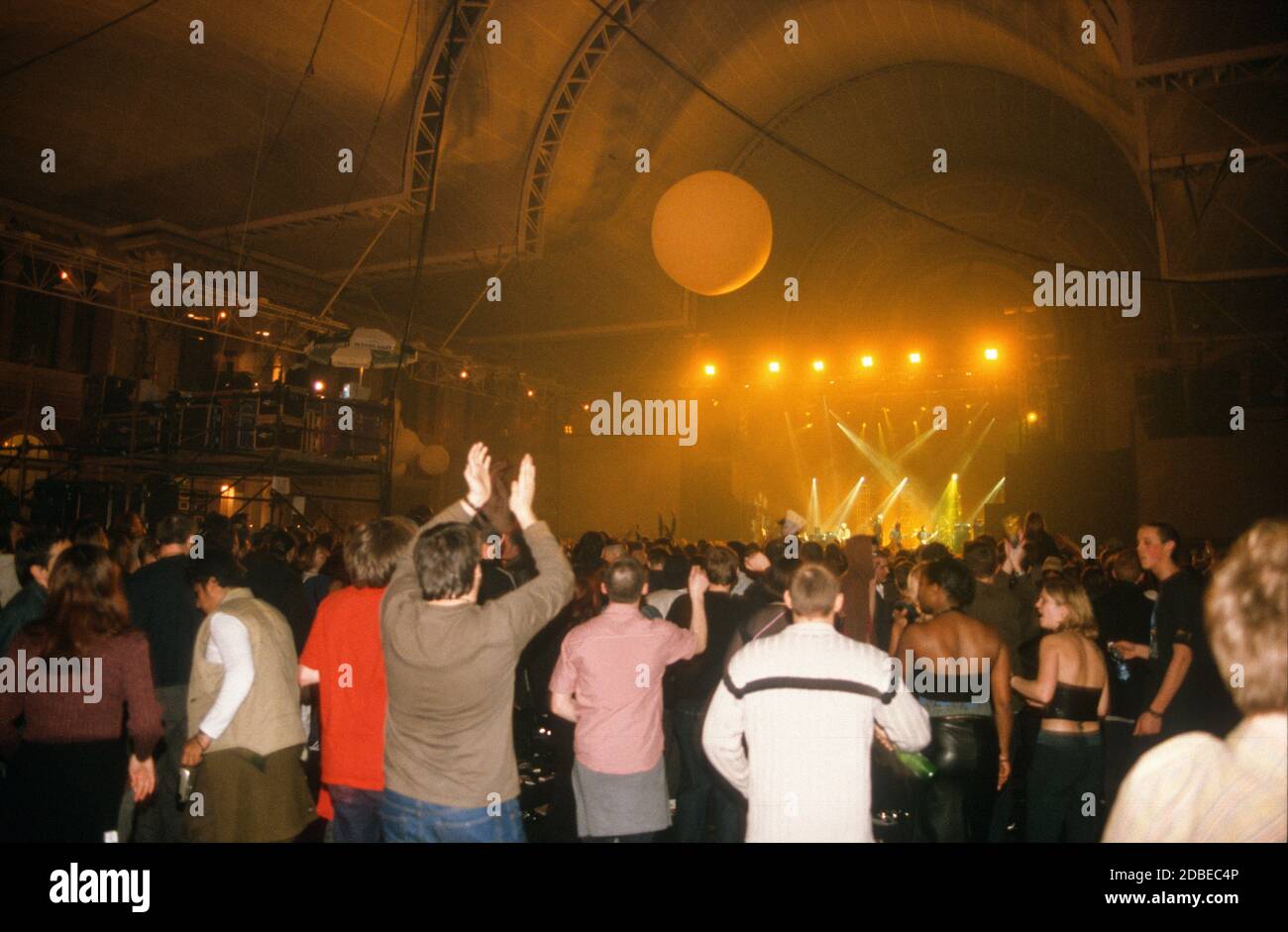
The global transition into January 1, 2001, marked the official arrival of the 21st century and the third millennium, bringing millions of people together for landmark public celebrations, large-scale municipal fireworks displays, and cultural events across every continent to mark the historical shift.
Introduction: Contextualizing the Millennial Shift of 2001
While global celebrations reached a symbolic peak twelve months earlier with the turn of the calendar year to 2000, astronomers, historians, and official timekeeping standards noted that the actual third millennium and the 21st century began on January 1, 2001. Because the Gregorian calendar commenced with year 1 AD and lacked a year zero, the completion of the first 2,000 years occurred at the conclusion of December 31, 2000.
Consequently, the arrival of 2001 carried profound cultural, scientific, and civic significance. Cities worldwide, having already rehearsed large-scale logistical operations the previous year, implemented sophisticated crowd control, telecommunications broadcasts, and security measures. This comprehensive guide explores how major global regions orchestrated their 2001 New Year’s celebrations, the technological and broadcasting milestones achieved, and the enduring legacy of this pivotal rollover.
Asia-Pacific: The First Major Welcomes
As the Earth's rotation carried time zones across the International Date Line, the Asia-Pacific region initiated the global chain of celebrations for 2001. Nations throughout Oceania and East Asia prepared months in advance to manage monumental public gatherings.
Sydney and Melbourne, Australia
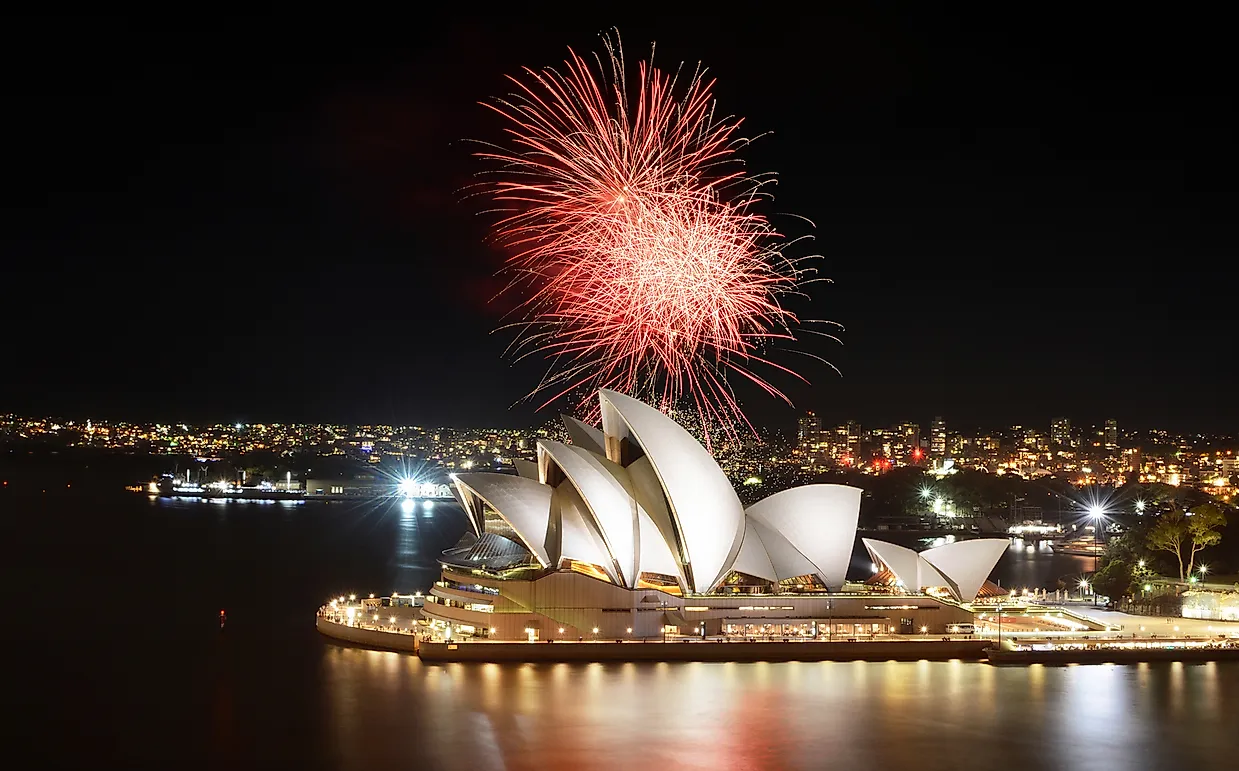
Australia entered 2001 amidst intense global media attention. Sydney, having served as the host city for the 2000 Summer Olympic Games just months prior, utilized its established harbor infrastructure to stage a magnificent fireworks display. Over one million spectators lined the foreshores of Sydney Harbour. Pyrotechnicians launched cascading waterfalls of fire from the Sydney Harbour Bridge, illuminating the Sydney Opera House and creating an iconic visual of the early 21st century.
Tokyo and the Rest of Japan
In Japan, the arrival of 2001 observed a unique blend of ancient spiritual traditions and ultra-modern neon-lit urban festivities. Millions of citizens participated in Hatsumode, the first Shinto shrine or Buddhist temple visit of the new year, queuing up at historic sites such as Meiji Shrine in Tokyo to ring temple bells exactly 108 times at midnight to dispel earthly desires. Simultaneously, urban centers like Shibuya and Shinjuku hosted massive secular countdowns featuring digital displays, massive street concentrations, and live musical performances broadcast nationally.
Europe: Historic Capitals and Architectural Backdrops
European celebrations for 2001 combined centuries-old architectural heritage with cutting-edge lighting design, creating visually stunning backdrops across historic plazas and riverbanks.
London and the River Thames
In the United Kingdom, the arrival of 2001 was greeted with immense public enthusiasm, centered primarily around the River Thames. While the controversial Millennium Dome in Greenwich had concluded its primary operational year in late 2000, Londoners and international visitors gathered along the Victoria and South Bank embankments. Big Ben chimed in the midnight hour, followed by extensive fireworks launched near the newly constructed London Eye, which had become a permanent fixture of the capital's skyline after its temporary installation for the previous year's events.
Paris and the Eiffel Tower
Paris welcomed 2001 with artistic flair and architectural illuminations. The Eiffel Tower served as the focal point, outfitted with thousands of strobe lights and specialized fixtures that transformed the iron lattice structure into a beacon visible across the French capital. Millions gathered along the Champs-Élysées and the banks of the Seine, raising glasses of champagne and celebrating the dawn of the new century in mild winter weather.
Moscow and Red Square
Russia ushered in 2001 against the backdrop of political transition and historic change. In Moscow, Red Square drew massive crowds who watched the Kremlin clock tower chime midnight. The celebrations carried deep historical resonance as citizens reflected on the dramatic socio-political transformations of the preceding decade and looked forward to economic and cultural stabilization in the new century.
The Americas: Mega-Events from New York to Rio de Janeiro
The Americas provided grand spectacles characterized by massive commercial operations, broadcast innovations, and culturally distinct regional traditions.
New York City and Times Square
In the United States, New York City’s Times Square remained the epicentric focal point for North American celebrations. An estimated two million revellers packed the Midtown Manhattan crossroads to witness the descent of the traditional Waterford Crystal ball. Security protocols were rigorous, involving thousands of New York City Police Department officers, barricades, and newly implemented surveillance and coordination infrastructure designed to ensure public safety during a historic gathering.
Rio de Janeiro and Copacabana Beach
In South America, Rio de Janeiro hosted one of the largest beach parties in human history. Over two million people gathered on Copacabana Beach, dressed predominantly in traditional white clothing to honor Yemanjá, the Afro-Brazilian goddess of the sea. The celebration featured massive floating barge fireworks displays anchored off the Atlantic coast, samba music stages spanning miles of coastline, and an electric atmosphere that lasted until dawn.
Comparative Overview of 2001 Global Celebrations
| Region / City | Primary Venue | Estimated Crowd Size | Defining Feature / Landmark |
|---|---|---|---|
| Sydney, Australia | Sydney Harbour | 1,000,000+ | Harbour Bridge waterfall fireworks |
| Tokyo, Japan | Meiji Shrine / Shibuya | Millions (National) | Traditional bell ringing (Joyanokane) |
| London, United Kingdom | River Thames / London Eye | 500,000+ | Illuminated London Eye and Big Ben |
| Paris, France | Champs-Élysées / Eiffel Tower | Millions | Strobe-lit Eiffel Tower displays |
| New York City, USA | Times Square | 2,000,000 | Waterford Crystal ball drop |
| Rio de Janeiro, Brazil | Copacabana Beach | 2,000,000+ | Massive coastal fireworks and white attire |
Technological and Broadcasting Milestones
The 2001 New Year’s Eve celebrations occurred during a transformative era in global telecommunications, bridging the gap between traditional analog television broadcasting and the emerging internet age.
Global Television Syndication
Networks worldwide collaborated on massive multi-country broadcasts, most notably the 2000 Today and subsequent millennium transition broadcasts coordinated by the European Broadcasting Union (EBU) and international partners. These broadcasts linked time zones sequentially, allowing viewers in the Americas to watch live feeds of celebrations in Asia, the Middle East, and Europe hours before local midnight arrived.
The Y2K Aftermath and Digital Stability
A critical technical context for the 2001 celebrations was the successful avoidance of computer failures related to the Year 2000 (Y2K) bug. Following years of intensive software remediation, auditing, and infrastructure upgrades executed globally by government agencies and corporate IT departments throughout 1998 and 1999, the transition into 2001 proceeded without major digital disruptions. Critical infrastructure, including municipal power grids, air traffic control systems, and financial networks, operated smoothly, reinforcing public confidence in global technological resilience as the new century began.
Frequently Asked Questions
Why did celebrations for 2001 mark the new millennium?
While many global celebrations occurred on January 1, 2000, chronologists, astronomers, and historians note that the first century and the first millennium began with year 1 AD because the calendar lacked a year zero. Therefore, the completion of 2,000 full years concluded on December 31, 2000, making January 1, 2001, the official first day of the 21st century and third millennium.
How did major cities handle security for the 2001 celebrations?
Municipalities worldwide deployed enhanced security measures, utilizing lessons learned from previous large-scale events. Police departments established pedestrian-only zones, implemented strict bag checks, and coordinated intelligence sharing with federal law enforcement agencies to protect high-density public squares and waterfronts.
Were there any major technical failures during the transition?
No widespread technical failures occurred. The robust remediation efforts deployed globally to address potential Y2K computer software issues successfully prevented disruptions to power grids, telecommunications networks, and transportation systems during the transition into 2001.
How was the media able to broadcast celebrations globally in real time?
International broadcasting unions and satellite networks utilized coordinated fiber-optic and satellite relay links to pool camera feeds from participating cities, creating uninterrupted, multi-hour global television events that tracked the midnight hour across the globe.
What was the economic impact of the 2001 New Year celebrations?
Major metropolitan areas experienced significant economic boosts in the hospitality, tourism, and entertainment sectors. Hotels, restaurants, and transport networks operated at full capacity, generating substantial revenue for local businesses and capitalizing on international tourism.
Practical Recommendations for Studying Historical Events
When researching historical global events like the turn of the millennium and the 2001 celebrations, researchers and historians should consult primary archival materials, contemporary newspaper editions from January 2001, and official municipal after-action reports. Cross-referencing broadcast recordings with government transit data ensures an accurate, well-documented understanding of how major public spectacles were managed on a global scale.