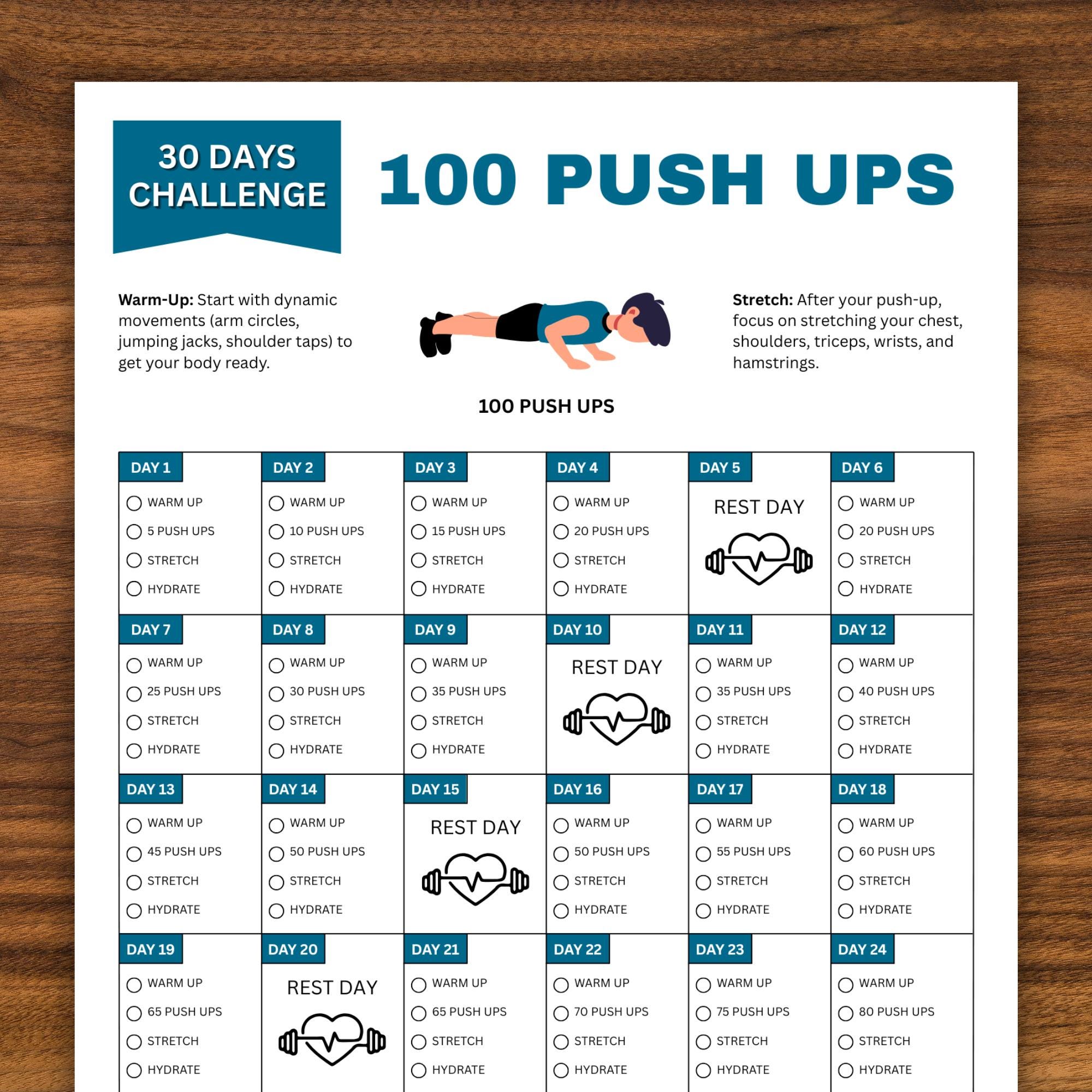
Achieving a consecutive set of 100 push-ups and 50 pull-ups is an elite milestone in bodyweight conditioning that demands progressive overload, meticulous joint health management, and structured programming. Reaching this target requires transitioning from basic volume accumulation to advanced muscular endurance protocols, demanding months or even years of deliberate physical preparation.
The Anatomy of Elite Calisthenics Performance
The combination of 100 push-ups and 50 pull-ups in a single workout session tests two distinct yet complementary vectors of human movement: horizontal pushing and vertical pulling. While push-ups primarily target the pectoralis major, anterior deltoids, and triceps brachii, pull-ups recruit the latissimus dorsi, teres major, rhomboids, biceps brachii, and forearm flexors. Balancing these opposing muscle groups is critical to prevent postural imbalances, joint impingement, and chronic overuse injuries.
For most intermediate trainees, performing 100 push-ups and 50 pull-ups consecutively feels entirely out of reach when first attempted. A standard gym-goer might manage 30 clean push-ups and 10 strict pull-ups before hitting neuromuscular fatigue. Bridging the gap requires an understanding of volume distribution, recovery capacity, and central nervous system adaptation.
Prerequisites and Baseline Assessments
Before embarking on a specialized program to hit high-repetition bodyweight milestones, you must establish a safe and sustainable baseline. Jumping straight into high-volume routines without adequate connective tissue conditioning invites tendonitis, particularly in the elbows and shoulders.
Minimum Baseline Requirements
- Strict Pull-Ups: At least 10 unbroken, dead-hang repetitions with full range of motion.
- Strict Push-Ups: At least 35 unbroken repetitions with a rigid core and chest-to-floor descent.
- Shoulder Mobility: Overhead mobility that allows the arms to clear the ears without lower-back arching.
- Grip Endurance: The ability to hang passively from a pull-up bar for a minimum of 45 seconds.
If you cannot meet these baseline metrics, attempting to program for 100 push-ups and 50 pull-ups will likely lead to compromised form, momentum-driven reps (such as kipping pull-ups), and potential injury. Spend a preliminary phase building foundational strength through isometric holds, resistance bands, and weighted calisthenics before shifting focus strictly to endurance.
Programming Strategies: Greasing the Groove vs. Volume Blocks
Two primary training methodologies dominate the pathway to high-repetition bodyweight feats: high-frequency sub-maximal training and structured threshold volume blocks. Choosing the right approach depends on your current recovery capacity and schedule.
1. Greasing the Groove (GTG)
Popularized by Pavel Tsatsouline, the Greasing the Groove method involves performing sub-maximal sets multiple times throughout the day, every day, without ever reaching muscular failure.
- How it works: If your max pull-up set is 12, you perform sets of 6 throughout the day, totaling 30 to 50 reps daily.
- Benefits: Trains the nervous system to recruit motor units efficiently without inducing excessive muscle damage or soreness.
- Cautions: Requires strict discipline to avoid overtraining the joints and connective tissues, as rest days are effectively eliminated.
2. Structured Volume Blocks (Periodization)
Dedicated calisthenics days integrated into a 3-to-4-day weekly split allow for adequate recovery. This method uses pyramid sets, descending ladders, and fixed-rest intervals to build work capacity progressively.
Week 1-4: Build base volume (e.g., 5 sets of 15 push-ups, 5 sets of 5 pull-ups) Week 5-8: Increase density (e.g., 8 sets of 12 push-ups, 8 sets of 4 pull-ups) Week 9-12: Peak intensity (e.g., test max unbroken sets, reduce total sets)
Form Execution and Joint Preservation
When performing high repetitions, form degradation is the primary enemy. As fatigue sets in, the body naturally seeks paths of least resistance, shifting load away from target muscles and onto vulnerable joints.
Push-Up Mechanics
- Hand Placement: Slightly wider than shoulder-width, with fingers pointing forward or slightly outward to optimize external shoulder rotation.
- Core Rigidity: The pelvis must remain posterior-tilted (glutes squeezed) to prevent the lumbar spine from sagging, which places undue stress on the lower back.
- Elbow Angle: Keep elbows tucked at a 45-degree angle relative to the torso rather than flaring them outward at 90 degrees, which protects the rotator cuff.
- Full Range: The chest must descend until it breaks the plane of the elbows, followed by complete elbow lockout at the top.
Pull-Up Mechanics
- Grip Width: Pronated (overhand) grip slightly wider than shoulder-width maximizes lat engagement.
- Dead Hang Initiation: Every single repetition must start from a dead hang with fully extended arms and scapulae depressed (pulled down and back).
- Avoiding Momentum: Strict form forbids swinging, kipping, or using knee drive. Your torso should remain as vertical as possible throughout the pull.
- Clearance: Pull until the chin clearly passes over the bar, or the upper chest makes contact with the bar.
Comparative Training Methodologies
| Methodology | Best For | Recovery Demand | Injury Risk |
|---|---|---|---|
| Greasing the Groove | Neurological efficiency & daily practice | Low-Moderate | Low if intensity stays low |
| Pyramid Sets | Building work capacity & mental toughness | High | Moderate |
| EMOM (Every Minute on the Minute) | Lactate threshold & pacing control | High | Moderate-High |
| Descending Ladders | High total volume with strict form | Moderate | Low |
Structuring the Milestone Workout
When you are finally ready to test or execute the full 100 push-ups and 50 pull-ups in a single session, pacing is critical. Attempting to complete 50 pull-ups in your first three sets will trigger acute forearm pump and neuromuscular exhaustion, making the remaining 35 reps impossible.
Recommended Pacing Strategy (The 10x10 / 5x10 Approach)
To minimize failure, break the volume into manageable, repeatable chunks with controlled rest periods.
- Superset or Alternate Rounds: Alternate between push-ups and pull-ups to allow opposing muscle groups brief recovery periods, or complete them in blocks.
- Block Structure:
- Block 1: 4 sets of 15 push-ups / 4 sets of 5 pull-ups (60 push-ups, 20 pull-ups)
- Rest: 2 minutes between blocks.
- Block 2: 4 sets of 10 push-ups / 4 sets of 5 pull-ups (40 push-ups, 20 pull-ups)
- Block 3: 2 sets of 5 pull-ups to finish the remaining pull-up volume (10 pull-ups).
- Total Output: Exactly 100 push-ups and 50 pull-ups completed with clean, repeatable mechanics.
Common Mistakes and Troubleshooting
Plateaus and injuries are common when chasing high-repetition milestones. Recognizing roadblocks early allows for effective troubleshooting.
- Elbow Tendonitis (Golfer's or Tennis Elbow): Caused by excessive gripping volume or rapid eccentric loading without adequate forearm conditioning. Solution: Incorporate wrist curls, reverse curls, and take additional rest days.
- Shoulder Impingement: Often caused by excessive pushing volume without proportional pulling or upper back work. Solution: Maintain a 1:1 or 2:1 pulling-to-pushing volume ratio in your overall weekly programming to balance the shoulder girdle.
- Premature Grip Failure: Forearms give out before the lats during pull-ups. Solution: Use fat grip training, farmer's carries, or chalk to enhance grip endurance. Avoid wearing lifting straps if your goal is raw calisthenics mastery.
- Stalling Out at Rep 70 (Push-Ups): Local muscular endurance fatigue sets in rapidly. Solution: Introduce deficit push-ups or pause push-ups during training phases to build resilience at the bottom of the movement.
Practical Next Actions
To successfully reach your goal of 100 push-ups and 50 pull-ups, record your current maximum unbroken sets for both exercises this week. Use those numbers to establish a baseline, map out a 12-week progressive volume block, and prioritize strict form over speed. Commit to consistency, protect your joints through proper warm-ups, and track your weekly volume increases meticulously.