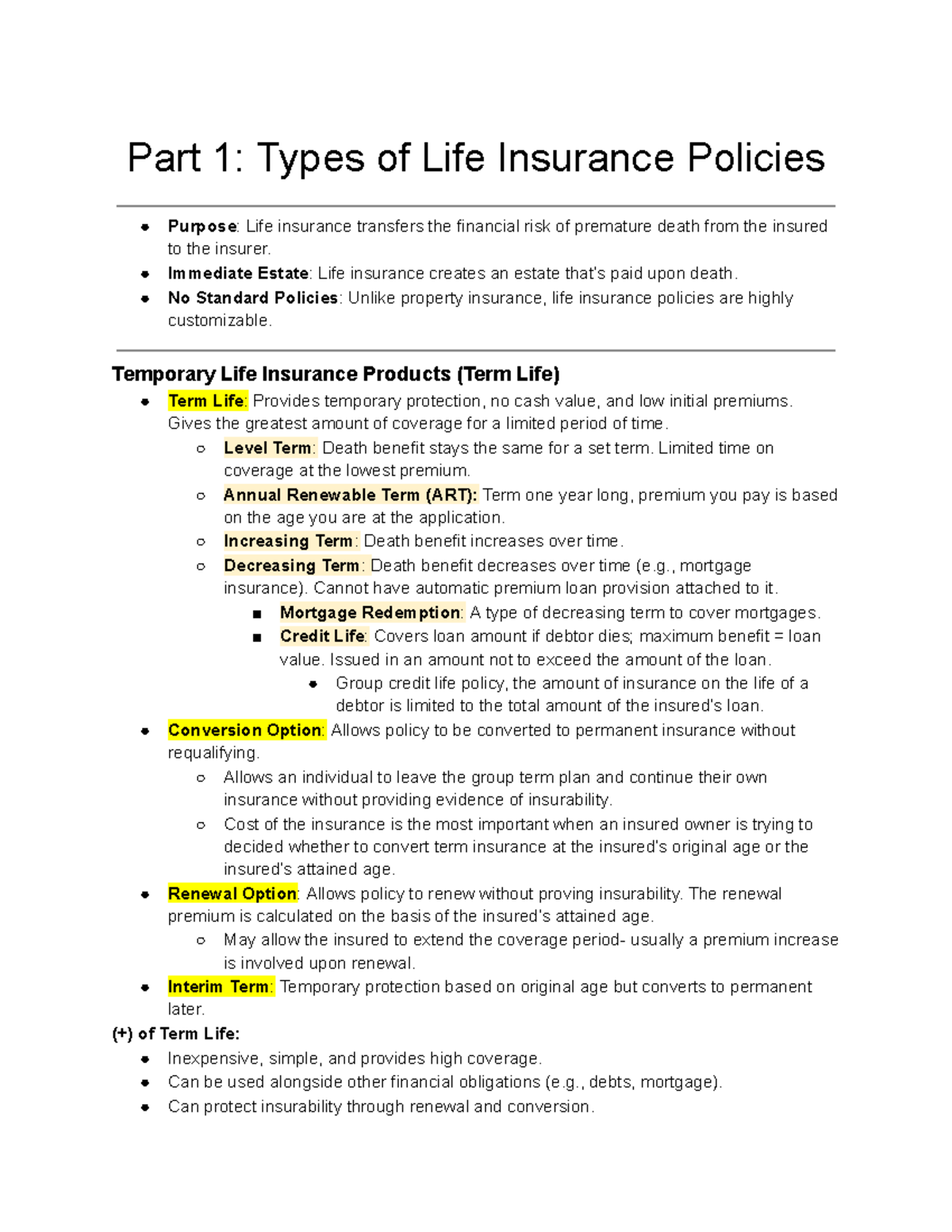
Straight life policies, also known as whole life insurance, provide permanent death benefit protection alongside a cash value savings component that grows at a guaranteed rate. These financial instruments combine lifetime security with forced savings, allowing policyholders to accumulate tax-deferred assets that can be borrowed against or withdrawn during their lifetimes.
Understanding the Foundation of Straight Life Insurance
Straight life insurance stands as one of the most traditional forms of permanent life insurance. Unlike term life insurance, which expires after a set number of years, a straight life policy remains in force for the entire life of the insured, provided that the required premiums are paid. The defining characteristic of this policy structure is the combination of a guaranteed death benefit paid to beneficiaries upon the insured's passing and an internal cash value account that functions as a savings mechanism.
The mechanism is built on level premium payments. In the early years of the policy, the cost of the actual insurance protection is significantly lower than the premium paid. The insurance company invests this excess money. In later years, as the insured ages and the actual cost of mortality rises, the accumulated savings and its investment earnings help offset the escalating cost of coverage. This ensures that the policyholder does not experience sudden, prohibitive premium spikes as they grow older, setting straight life apart from renewable term alternatives.
Furthermore, straight life policies offer a degree of predictability that appeals to conservative planners. Both the premium amount and the death benefit are locked in at the time of purchase and will not change unless the policyholder voluntarily alters the contract. This stability makes straight life a foundational tool for individuals looking to secure long-term financial protection while simultaneously building a liquid asset reserve within a single contract.
The Dual Nature: Permanent Protection and Cash Value Accumulation
The dual nature of straight life policies rests on the separation and interaction of the death benefit and the cash value account. Understanding how these two components interact is essential for anyone evaluating the product for long-term financial strategy.
The Guaranteed Death Benefit
The death benefit represents the core insurance function of the policy. When the insured passes away, the insurer pays a tax-free lump sum to the designated beneficiaries. This money can be used to replace lost income, pay off a mortgage, cover estate taxes, or fund final expenses. Because the policy is permanent, beneficiaries are virtually guaranteed to receive this payout, barring instances of policy lapse or surrender.
The Cash Value Savings Component
Simultaneously, a portion of every premium payment is directed into a cash value account. This account grows on a tax-deferred basis, meaning the policyholder does not pay annual income taxes on the interest or dividends credited to the account.
- Guaranteed Growth: Most traditional straight life policies feature a minimum guaranteed interest rate set by the insurance carrier, ensuring that the cash value will grow regardless of broader economic downturns.
- Dividends: If purchased through a mutual life insurance company, the policy may also be eligible for annual dividends. While not guaranteed, these dividends can be taken in cash, used to reduce premium payments, left to accumulate interest, or used to purchase paid-up additions that increase both the cash value and the overall death benefit.
- Liquidity and Access: The accumulated cash value is an asset belonging to the policyholder. Individuals can access these funds during their lifetimes through policy loans or withdrawals, providing a financial cushion for emergencies, retirement income supplementation, or business opportunities.
Financial Mechanics: Premiums, Dividends, and Costs
Analyzing the financial mechanics of a straight life policy reveals why these products are more expensive than term insurance upfront. The premium is calculated based on the insured's age, health status, gender, and the face amount of the policy. Because the policy is designed to last indefinitely, the pricing reflects the certainty of a claim eventually being paid.
| Feature | Straight Life (Whole Life) | Term Life Insurance |
|---|---|---|
| Duration | Lifetime (to age 100 or 121) | Specified term (10, 20, 30 years) |
| Cash Value | Builds tax-deferred savings over time | None (pure protection) |
| Premium Structure | Level and fixed for life | Rises upon term renewal |
| Cost | Significantly higher initial cost | Lower initial cost |
| Policy Loans | Permitted against cash value | Not applicable |
The expense structure requires careful long-term commitment. In the first few years of the policy, administrative fees, commissions, and underwriting costs consume a large portion of the premiums paid. Consequently, the cash value starts near zero and takes several years to build meaningful momentum. Policyholders who surrender their contracts early often receive little to no cash value back, making straight life a poor choice for short-term savings goals.
Strategic Advantages of Combining Coverage and Savings
Integrating insurance coverage with a savings vehicle provides distinct structural advantages for individuals with specific estate planning and wealth preservation needs.
First, the tax advantages are substantial. The cash value grows tax-deferred, and beneficiaries generally receive the death benefit completely free of income tax. Additionally, if structured correctly, policy loans can be taken out tax-free because the loan is technically an advance against the policy's equity rather than taxable income.
Second, straight life policies offer protection from creditors in many jurisdictions. Because state laws often protect life insurance cash values from lawsuits and bankruptcy proceedings, business owners and professionals prone to liability risks frequently use permanent insurance as a safe harbor for a portion of their liquid assets.
Third, it instills forced savings discipline. For individuals who struggle to set aside money in traditional taxable accounts or retirement vehicles, the mandatory nature of a life insurance premium ensures that a portion of their income is systematically saved every month or year.
Potential Drawbacks and Operational Limitations
Despite the structured benefits, straight life policies are not universally appropriate and come with notable limitations that require careful scrutiny.
- Opportunity Cost: The premiums for straight life insurance are typically five to fifteen times higher than the equivalent amount of term insurance. Critics often argue that policyholders could achieve higher long-term returns by buying term insurance and investing the price difference in a diversified stock and bond portfolio (frequently summarized as "buy term and invest the difference").
- Complexity and Fees: The internal fee structures of permanent life insurance policies are opaque compared to mutual funds or exchange-traded funds. Front-end loads, administrative charges, and mortality fees reduce the net yield of the savings component.
- Inflexibility: While level premiums provide stability, they also represent a rigid financial obligation. If a policyholder faces financial hardship and cannot make the premium payment, they risk lapsing the policy and losing both their coverage and accumulated value, unless they utilize built-in non-forfeiture options like reduced paid-up insurance.
Common Mistakes When Purchasing Straight Life Policies
Navigating the permanent insurance market requires avoiding several pitfalls that can undermine the financial utility of the contract.
A frequent error is underestimating the long-term financial commitment. Entering into a straight life contract with the expectation of dropping it after three or five years almost always results in a financial loss due to high initial acquisition costs. Buyers must treat the policy as a multi-decade commitment.
Another mistake is purchasing policies based solely on projected dividend scales. Insurance agents often illustrate future cash values using current, optimistic dividend interest rates. Because economic conditions fluctuate, these projections are not guarantees. Buyers should examine the guaranteed minimum values in the contract rather than relying on non-guaranteed illustrations.
Finally, failing to align the policy type with the correct life stage can be costly. Straight life is designed for permanent needs, such as lifelong dependents, estate liquidity, or final expenses. Using permanent insurance to cover temporary liabilities—such as a 15-year mortgage or children who will be independent in a decade—misallocates financial resources that could be deployed more efficiently elsewhere.
Frequently Asked Questions
Can I lose money in a straight life insurance policy's cash value account?
No, the cash value in a traditional straight life policy generally cannot decrease due to market performance, provided the policy remains in force and premiums are paid. The insurance carrier guarantees a minimum interest rate on the savings portion. However, fees, withdrawals, or unpaid policy loans can reduce the net cash value balance.
What happens if I stop paying premiums on a straight life policy?
If you stop paying premiums, you have several options built into the contract. You can surrender the policy for its current cash surrender value, convert the policy to a reduced paid-up insurance policy with a smaller guaranteed death benefit, or use the accumulated cash value to pay premiums automatically via extended term insurance until the funds are exhausted.
Are the loans taken against straight life cash value required to be paid back?
Policy loans do not legally have to be repaid during your lifetime, but any outstanding loan balance plus accumulated interest will be permanently deducted from the death benefit when the insured passes away. If the loan balance exceeds the total cash value, the policy will lapse, which can trigger a significant taxable event.
How do mutual companies differ from stock companies regarding straight life policies?
Mutual insurance companies are owned by their policyholders, meaning policyholders are eligible to receive annual dividends. Stock insurance companies are owned by shareholders, and their policies may not offer dividends, relying instead on guaranteed fixed growth structures.
Is straight life insurance considered a good retirement planning vehicle?
Straight life can serve as a conservative asset class within a diversified retirement portfolio, offering tax-free liquidity and downside protection. However, because its long-term growth rate is generally lower than equities, financial planners usually recommend it as a supplementary vehicle rather than a primary retirement account replacement for vehicles like 401(k)s or IRAs.
Practical Next Actions and Professional Guidance
Evaluating whether a straight life policy fits your personal financial strategy requires a comprehensive assessment of your long-term liabilities, tax situation, and estate planning objectives. Begin by calculating your permanent versus temporary financial obligations. If your dependents require lifetime financial support, or if you have exhausted traditional tax-advantaged retirement accounts and seek additional tax-deferred asset placement, permanent insurance warrants investigation.
Consult with an independent financial advisor or a fee-only fiduciary who is not tied to a single insurance carrier. Ask for a policy ledger that details both the guaranteed values and the non-guaranteed dividend scales, and request a comparison against alternative wealth-accumulation strategies to ensure the structure aligns with your comprehensive financial plan.