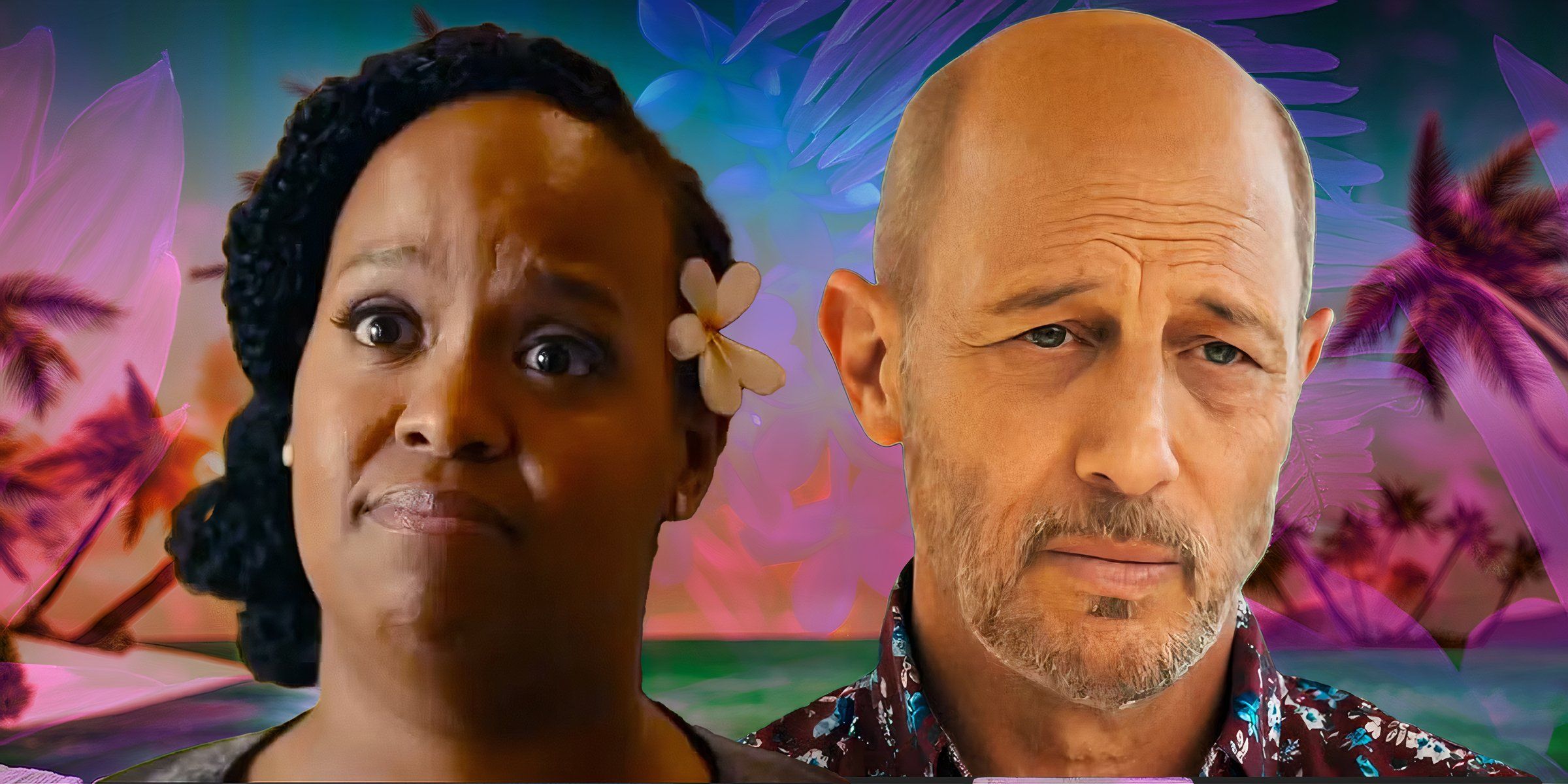
Quinn Mossbacher, the teenage son of the Mossbacher family in The White Lotus Season 1, serves as the narrative’s most significant symbol of personal transformation and moral clarity. Initially presented as a tech-addicted introvert, his journey from the isolation of digital screens to an authentic connection with the Hawaiian landscape provides a hopeful counter-narrative to the cynical, extractive behavior of the other wealthy guests.
Character Analysis: Who is Quinn Mossbacher?
Played with a subtle, evolving vulnerability by Fred Hechinger, Quinn Mossbacher arrives at the White Lotus resort in Maui as the quintessential "forgotten" child of a high-power American family. As of 2026, looking back at the series' debut, Quinn remains one of the most discussed characters due to the sheer radicalism of his ending compared to the stagnation of his peers.
Quinn is the younger brother to the sharp-tongued, performatively woke Olivia and the son of Nicole, a high-ranking "girl boss" CEO, and Mark, a father spiraling through a mid-life crisis and health scare. Within this family unit, Quinn is physically and emotionally marginalized. He is forced to sleep on a pull-out chair in the suite’s kitchen and later on the beach, a literal displacement that mirrors his status within the family hierarchy.
His initial personality is defined by total digital immersion. He is rarely seen without his smartphone, Nintendo Switch, or noise-canceling headphones. This digital armor serves as a defense mechanism against the constant bickering of his parents and the relentless bullying of his sister. However, this same armor prevents him from experiencing the beauty of his surroundings, making him a passive observer of his own life.
The Catalyst of Transformation: The Loss of the Digital Tether
The turning point for Quinn’s character—and arguably the emotional core of the season—occurs when his electronics are lost to the tide. After being exiled from the hotel room by Olivia and her friend Paula, Quinn takes his gear to the beach. When the tide comes in, his gadgets are ruined, stripping him of his primary coping mechanism.
The Symbolism of the Screen
In the context of the show’s critique of modern privilege, Quinn’s screens represented a barrier to reality. The loss of his phone is not merely a plot device; it is a forced "re-wilding." Without the constant stimulation of gaming and social media, Quinn is forced to confront the vastness of the Pacific Ocean and the emptiness of his family’s interactions.
Boredom as a Precursor to Growth
Writer and director Mike White uses Quinn’s subsequent boredom to illustrate a profound psychological shift. While the other guests fill their time with expensive dinners, spa treatments, and interpersonal drama, Quinn’s lack of distractions allows him to develop an observational eye. He begins to see the beauty of the whales breaching in the distance and the rhythmic labor of the local Hawaiian men who row the voyaging canoes. This transition from "consumer" to "observer" is the first step in his rejection of the Mossbacher family values.
Family Dynamics: The Outsider Within
Quinn’s impact on the story is deeply intertwined with his role as a foil to his family members. By 2026 standards, the Mossbacher family remains a classic case study in the "dysfunctional elite" trope, but Quinn is the only member who successfully breaks the cycle.
The Sibling Rivalry: Quinn vs. Olivia
Olivia Mossbacher, played by Sydney Sweeney, represents a specific type of cynical youth that was prevalent in the early 2020s. She uses social justice language as a weapon but remains firmly entrenched in her privilege. Quinn, conversely, lacks Olivia’s verbal agility but possesses a sincerity she finds repulsive. Her mockery of him is a way to maintain the status quo; if Quinn is "weird" or "incel-adjacent," then Olivia’s cynicism remains the dominant family frequency. Quinn’s eventual departure is the ultimate "win" over Olivia’s nihilism.
Paternal Disconnect: The Search for a Role Model
Quinn’s relationship with his father, Mark (Steve Zahn), is initially fraught with awkwardness. Mark, grappling with his own father’s secrets and a cancer scare, tries to bond with Quinn through forced "manly" activities and inappropriate TMI (Too Much Information) conversations about his infidelity.
However, there is a pivotal scene where Quinn asks his father why they are even alive if the world is ending due to climate change. Mark’s response is a bleak defense of the status quo, essentially telling Quinn to enjoy the spoils of their privilege while they last. This moment of intellectual honesty from Mark ironically pushes Quinn further away from his father’s world and toward the local paddlers, who seem to have a more grounded, communal purpose.
The Cultural Intersection: Joining the Hawaiian Voyaging Canoe
The most significant story impact Quinn has involves his interaction with the local Hawaiian community. Unlike the other guests, who treat the staff and locals as invisible service providers or romanticized objects, Quinn approaches the paddlers with genuine curiosity and humility.
Escaping the "Resort Bubble"
The "White Lotus" itself is a bubble designed to keep the reality of Hawaii at bay. Quinn is the only guest who consistently leaves the bubble. By asking to join the paddlers, he moves from a space of "being served" to a space of "contribution." The labor required to paddle a voyaging canoe is a stark contrast to the sedentary luxury of the resort.
The Respectful Outsider
It is crucial to note that the show portrays Quinn’s integration not as a "white savior" narrative, but as an "apprentice" narrative. He is the one who has to learn from the locals. He has to keep up, show up at dawn, and earn his place. His desire to stay in Hawaii is not about owning a piece of it, but about belonging to a community that values physical effort and collective synchronicity over individualistic wealth.
Analyzing the Story Impact and Thematic Weight
Quinn’s arc provides the only "happy" ending in a season otherwise defined by tragedy and the reinforcement of the status quo. While the character Armond ends up dead and Rachel Patton decides to stay in a hollow marriage for financial security, Quinn chooses a path of uncertainty and physical labor.
A Critique of Colonialism
The show as a whole critiques the colonial history of Hawaii and the ongoing exploitation of the islands by tourism. Quinn’s decision to stay is a complicated part of this theme. On one hand, he is another white person taking up space in Hawaii. On the other, his rejection of his family’s wealth and his willingness to work alongside the locals represents a "defection" from the ruling class. He chooses the "vessel" (the canoe) over the "resort."
The "Zoomer" Evolution
In the cultural landscape of 2021-2026, Quinn represents the potential for a generation to disconnect from the digital "matrix" and reconnect with the physical world. His character arc suggests that the malaise of the modern youth is not a lack of interest in the world, but a lack of meaningful ways to engage with it.
| Feature/Aspect | Initial State (Arrival) | Final State (Departure) | Story Impact |
|---|---|---|---|
| Primary Tool | Smartphone/Nintendo Switch | Hawaiian Canoe Paddle | Symbolizes shift from digital to physical. |
| Sleeping Arrangement | Pull-out chair in kitchen | On the beach under the stars | Shows his detachment from luxury. |
| Family Role | The ignored, tech-addicted son | The defector who escapes the family | Breaks the cycle of the "unhappy elite." |
| Social Interaction | Silent, avoids eye contact | Collaborative effort with locals | Highlights the value of communal labor. |
| Outlook on Life | Nihilistic and bored | Purposeful and determined | Provides the season's only hopeful arc. |
Performance and Reception: Fred Hechinger’s Portrayal
Fred Hechinger’s performance was essential to making Quinn’s transformation believable. In the early episodes, Hechinger uses minimal dialogue, relying on slumped posture and darting eyes to convey Quinn’s discomfort. As the character finds the paddling crew, his physical presence changes; he stands taller, his movements become more deliberate, and his voice gains a quiet confidence.
Critics and audiences alike pointed to Quinn as the "stealth" protagonist of Season 1. While the louder characters (like Armond or Tanya McQuoid) drew immediate attention, Quinn’s slow-burn development provided the narrative’s moral compass. His silence wasn't emptiness; it was a space for observation.
Comparing the "Son" Archetype in Subsequent Seasons
As The White Lotus evolved into an anthology series, the archetype of the "son" or "young man" has been revisited, but never quite in the same way as Quinn.
- Season 2 (Sicily): Albie Di Grasso represented a different kind of young man—the "Nice Guy" who is hyper-aware of gender politics but still trapped by his family’s legacy and his own naivety. Unlike Quinn, Albie remains within the system, returning home at the end of the trip.
- Season 3 (Thailand): Without spoiling the later iterations (now well-known by 2026), the "youth" characters have often leaned more toward the cynicism of Olivia than the earnestness of Quinn.
This makes Quinn’s Season 1 ending stand out as a unique moment of genuine "escape" in the series' history. He didn't just survive the White Lotus; he let it change him into someone who no longer belonged there.
Detailed FAQ
Did Quinn Mossbacher actually stay in Hawaii?
Yes, in the final moments of the Season 1 finale, Quinn flees the airport as his family is boarding their flight back to the mainland. He is last seen joining the Hawaiian paddling crew as they launch their boat into the ocean. The show concludes his arc there, suggesting he successfully followed through on his desire to leave his old life behind.
How old was Quinn in Season 1?
Quinn is portrayed as a 16-year-old high school student. His age adds to the radical nature of his decision, as he is technically a minor "running away," though the show treats his departure as a spiritual awakening rather than a legal crisis.
Why did Quinn's sister, Olivia, treat him so poorly?
Olivia’s treatment of Quinn was a mixture of typical sibling rivalry and a deeper ideological projection. Olivia viewed Quinn’s lack of social awareness as a liability and his gender as an inherent flaw. By belittling him, she reinforced her own sense of intellectual and social superiority.
Does Fred Hechinger return as Quinn in later seasons?
As of 2026, Quinn Mossbacher has not returned to the series. The White Lotus is an anthology, and while some characters (like Tanya McQuoid) have spanned multiple seasons, Quinn’s story was considered complete by the end of Season 1. His return would likely undermine the finality of his decision to stay in Hawaii.
What was the significance of the "End of the World" conversation?
The conversation between Quinn and Mark about climate change and the "death of the reefs" was a moment of rare honesty. It established Quinn’s motivation: if the world is dying, he doesn't want to spend his remaining time in a corporate office or a digital vacuum. He wants to experience the natural world before it's gone.
Practical Recommendation for Viewers
When re-watching The White Lotus Season 1 in 2026, pay close attention to the sound design in Quinn’s scenes. Notice how the chaotic, percussive score often fades into the natural sounds of the ocean when Quinn is alone or with the paddlers. This auditory shift mirrors his internal journey from the "noise" of modern civilization to the "rhythm" of the natural world. For those analyzing the series for its social commentary, Quinn’s arc is the most effective lens through which to view the theme of authentic vs. performative living.