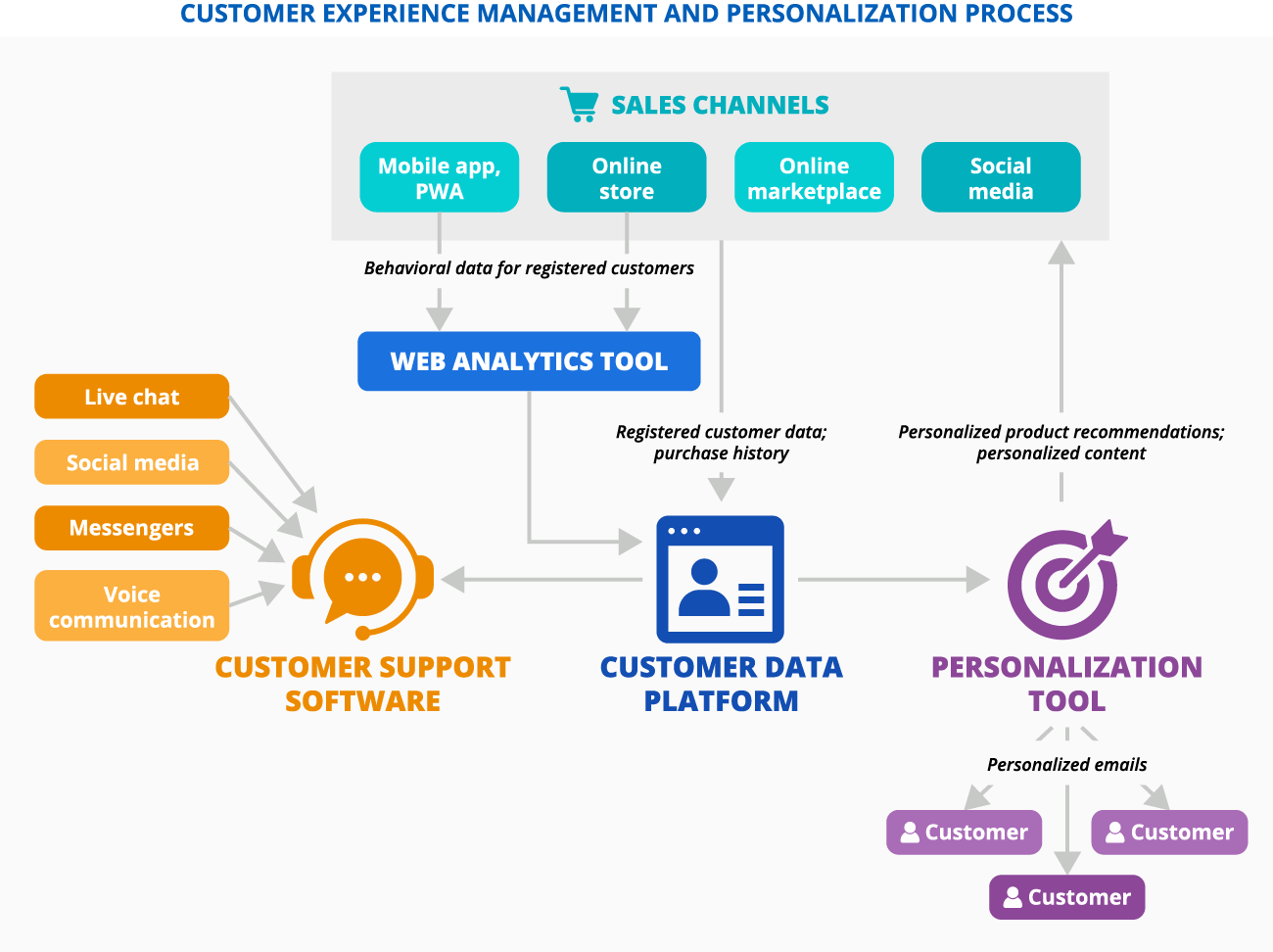
A multi-channel ecommerce solution is a centralized software platform that allows retailers to list, manage, and sell products across multiple digital storefronts and marketplaces simultaneously. By synchronizing inventory, orders, and customer data in real-time, these systems eliminate manual data entry and prevent overselling across diverse platforms such as Amazon, Walmart, TikTok Shop, and independent web stores.
The Evolution of Multi-Channel Selling
As of 2026, the retail landscape has shifted from a "web-first" approach to a "distributed commerce" model. Consumers no longer follow a linear path to purchase; they might discover a product on a social feed, research it on a marketplace, and eventually purchase it through a voice assistant or a dedicated mobile app. A multi-channel ecommerce solution serves as the "brain" of this operation, ensuring that no matter where the customer interacts with the brand, the product information, pricing, and availability remain consistent.
The primary challenge this technology solves is fragmentation. Without a centralized system, a merchant selling on five different platforms would need to update five different inventory counts every time a single unit is sold. This manual process is prone to human error, leading to stockouts, cancelled orders, and damaged seller ratings. Modern solutions utilize sophisticated API (Application Programming Interface) integrations to automate these updates in milliseconds.
Core Components of a Robust Multi-Channel System
To be effective in the current market, a multi-channel solution must go beyond simple listing tools. It requires a deep architectural integration across four primary pillars: inventory management, order orchestration, product information management (PIM), and shipping logistics.
Inventory Synchronization and Buffer Logic
Real-time synchronization is the baseline requirement. However, advanced solutions in 2026 now employ "buffer logic." This allows merchants to set aside specific stock for high-priority channels or set "safety levels" that mark an item as out-of-stock on volatile marketplaces like eBay while keeping it available on the brand's primary site. This prevents the "overselling" crisis that occurs during flash sales or viral social media moments.
Order Orchestration and Routing
When an order is placed on Amazon, the multi-channel solution must not only record the sale but also route the fulfillment instructions to the correct warehouse or Third-Party Logistics (3PL) provider. Modern systems use "distributed order management" (DOM) to determine the most cost-effective or fastest shipping location based on the customer’s proximity to the inventory.
Centralized Product Information Management (PIM)
Each marketplace has its own unique requirements for titles, descriptions, and image dimensions. A multi-channel solution provides a single source of truth where a merchant can store high-resolution assets and core data, which the system then "translates" and optimizes for each specific channel’s requirements.
Technical Architectures: Monolithic vs. Composable
When selecting a solution, businesses generally choose between two architectural philosophies. Understanding these is critical for long-term scalability.
- Monolithic Suites: These are all-in-one platforms where the ecommerce storefront, inventory management, and shipping tools are built into a single piece of software. These are often easier to set up but can become rigid as a business grows.
- Composable (Headless) Commerce: In 2026, this is the preferred route for enterprise-level brands. It involves "stacking" specialized tools—using one service for the checkout, another for the multi-channel inventory, and a third for the CRM—connected via APIs. This allows for maximum flexibility, enabling a brand to swap out one component without rebuilding the entire system.
The W3C Commerce Communications groups continue to emphasize the importance of standardized data exchange to ensure these various components can "talk" to each other without friction.
Key Features to Prioritize in 2026
The criteria for a "top-tier" solution have evolved. Beyond basic listings, look for the following high-value capabilities:
- AI-Driven Demand Forecasting: Top solutions now analyze historical sales data and seasonal trends to predict when a merchant will run out of stock on specific channels, often suggesting proactive reorders weeks in advance.
- Social Commerce Native Integration: Integration with TikTok Shop, Instagram Shopping, and YouTube Shopping must be bi-directional, managing not just the sale but also the creator commissions and social-specific promotions.
- Automated International Localization: For global brands, the solution should automatically adjust currency, tax (VAT/GST), and language based on the channel’s region, ensuring compliance with local regulations like the EU’s Digital Services Act.
- Returns Management Orchestration: Multi-channel selling often results in multi-channel returns. A central solution should track a return from a marketplace back to the warehouse, automatically updating the "resellable" inventory count once the item is inspected.
Comparative Analysis of Multi-Channel Categories
Choosing the right tool depends on your annual GMV (Gross Merchandise Volume) and the complexity of your supply chain.
| Solution Category | Target Business Size | Primary Benefit | Typical Cost Structure |
|---|---|---|---|
| SaaS Integrated (e.g., Shopify, BigCommerce) | Small to Mid-Market | Ease of use; everything in one dashboard. | Monthly subscription + transaction fees. |
| Marketplace Specialist (e.g., ChannelAdvisor, Linnworks) | Mid-Market to Enterprise | Deepest integrations with global marketplaces. | High monthly retainer + % of GMV. |
| ERP-Centric (e.g., NetSuite, Microsoft Dynamics) | Enterprise | Unified financials and supply chain logic. | High implementation cost; annual licensing. |
| Open Source/Custom | High-Tech Enterprise | Total control over data and custom workflows. | High development and maintenance costs. |
Implementation Roadmap: From Selection to Launch
Successfully deploying a multi-channel solution requires a structured approach to avoid data corruption and operational downtime.
Step 1: Data Audit and Cleaning
Before importing data into a new solution, you must audit your existing SKUs (Stock Keeping Units). Ensure that every product has a unique identifier, such as a GTIN or UPC, as recognized by GS1 standards. Inconsistent SKU naming is the leading cause of failed multi-channel implementations.
Step 2: Mapping and Categorization
You must map your internal product categories to the specific taxonomies of each marketplace. For example, a "Men's Jacket" on your site might need to be mapped to "Apparel > Outerwear > Coats" on Amazon. High-quality solutions offer "auto-mapping" features to speed up this process.
Step 3: Channel Prioritization and Phasing
Do not attempt to launch on five new marketplaces at once. Start with your primary storefront, then integrate your largest secondary channel (typically Amazon or Walmart). Stabilize the order flow for 30 days before adding the next channel.
Step 4: Testing the "Sync Loop"
Verify the synchronization loop by placing test orders on each channel. Ensure the inventory deducts correctly across all other channels and that tracking information flows back from your warehouse to the customer.
Common Pitfalls and Troubleshooting
Even with a high-end solution, technical friction is common. Understanding these hurdles can prevent costly mistakes.
- API Rate Limits: Marketplaces limit how many requests a software can make per hour. If your solution attempts to update 10,000 SKUs every minute, the marketplace may "throttle" or block the connection. Ensure your provider uses "delta updates" (only sending changes) rather than full catalog refreshes.
- Shadow Inventory: This occurs when items are physically in the warehouse but not reflected in the system due to a sync lag. In 2026, many merchants use "Buffer Stock" settings of 5-10% to account for this latency.
- Listing Errors (Attribute Mismatch): Marketplaces frequently change their required attributes (e.g., adding a "Material Composition" requirement for apparel). A good solution will provide a "Health Dashboard" that flags these errors before they result in a delisted product.
Financial Considerations and ROI
A multi-channel solution is an investment, not just an expense. To justify the cost, businesses should measure three key metrics:
- Labor Savings: Calculate the hours spent manually updating stock or copy-pasting orders before and after implementation.
- Overselling Reduction: Track the cost of marketplace penalties and lost customers due to "out of stock" cancellations.
- Marketplace Growth: Monitor the revenue generated from new channels that would have been impossible to manage manually.
Most mid-market solutions in 2026 range from $500 to $5,000 per month, depending on order volume and the number of connected channels. Enterprise implementations involving ERP integration can exceed $100,000 in initial setup fees but offer significant long-term efficiency for brands doing over $50M in annual sales.
Frequently Asked Questions
Does a multi-channel solution replace my existing online store?
No. A multi-channel solution typically sits "behind" or "above" your store. It connects to your existing platform (like Shopify or Magento) and bridges it to other marketplaces. It acts as the central hub for inventory and orders while your online store remains the customer-facing "home" for your brand.
How does a multi-channel solution handle sales tax?
Most modern solutions integrate with tax automation services like Avalara or Vertex. While the marketplaces themselves (Amazon, eBay) often collect and remit "Marketplace Facilitator" taxes, the solution ensures that sales from your own site are calculated correctly and that all data is aggregated for your year-end reporting.
Can I manage international marketplaces through one solution?
Yes, but you must ensure the solution supports "multi-currency" and "multi-language" data fields. It also needs to be able to route international orders to specific global 3PLs or handle the documentation required for cross-border shipping, such as HS codes for customs.
What is the difference between multi-channel and omni-channel?
Multi-channel refers to selling on several different digital platforms (e.g., website + Amazon + TikTok). Omni-channel goes a step further by bridging the gap between digital and physical, such as "Buy Online, Pick Up In-Store" (BOPIS). An omni-channel solution requires deep integration with physical Point of Sale (POS) systems in brick-and-mortar locations.
How long does it take to see a return on investment (ROI)?
Most businesses see a return within 6 to 12 months. The initial ROI comes from reduced labor costs and fewer shipping errors. Longer-term ROI is driven by the ability to scale to new marketplaces quickly—a process that takes days with a solution compared to months without one.
Final Recommendation
For businesses operating in 2026, a multi-channel ecommerce solution is no longer a luxury—it is a foundational requirement for survival. If you are currently managing more than two sales channels manually, the risk of operational failure is high.
Next Steps: Begin by documenting your current "order-to-ship" workflow. Identify the specific marketplaces you intend to enter over the next 18 months, and prioritize solutions that offer native, deep-API integrations for those specific platforms. Prioritize data integrity at the SKU level before turning on synchronization, and always maintain a small inventory buffer to protect your seller ratings during the initial transition period.