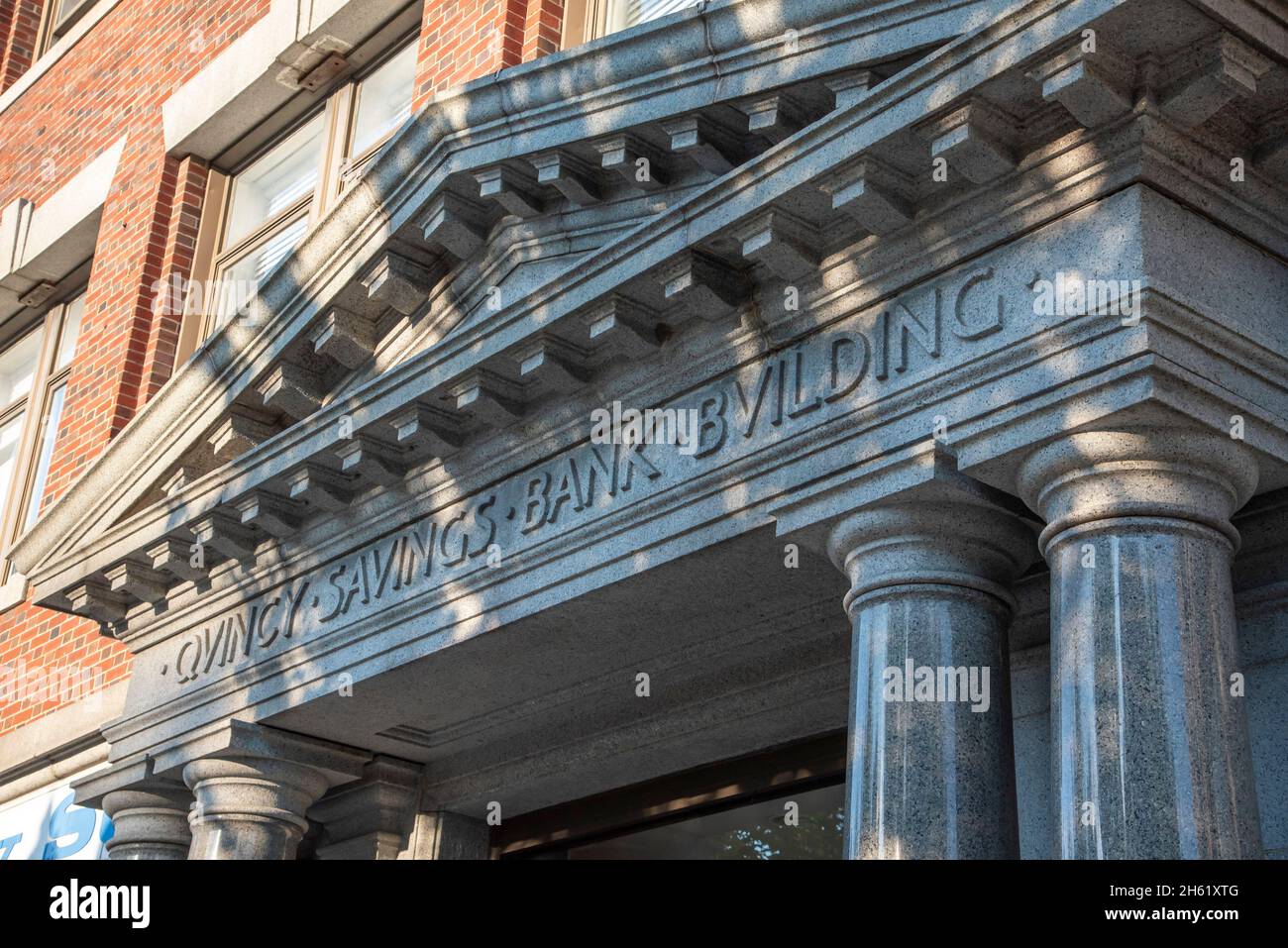
The Colonial Federal Savings Bank of Quincy serves as a notable example of a community-focused mutual institution that has maintained a consistent presence in the South Shore region of Massachusetts. Originally established to foster local homeownership and provide reliable savings vehicles for residents, the bank represents a specific model of neighborhood banking that prioritizes regional service and historical stability over the aggressive expansion patterns seen in larger national financial entities.
Understanding the Roots of Mutual Savings Institutions
To understand the Colonial Federal Savings Bank of Quincy, one must first recognize the historical context of mutual savings banks in New England. Unlike commercial banks, which are typically owned by shareholders seeking dividends, mutual savings banks are technically owned by their depositors. This structure inherently aligns the bank's objectives with the long-term financial health of its customer base.
The evolution of such institutions in Quincy, Massachusetts, mirrors the growth of the city itself. As Quincy transitioned from a granite-exporting center and industrial hub into a diverse residential and professional community, the local financial landscape required institutions that could provide reliable mortgages and basic deposit services. Colonial Federal emerged to fill this niche, establishing a brand identity built on local trust and physical accessibility.
The Strategic Value of Community-Based Banking
The primary service model for an institution like Colonial Federal involves personalized mortgage lending and the management of traditional savings products. For the residents of Quincy and the surrounding South Shore areas, the value of this bank lies in its responsiveness to the specific economic conditions of the region.
Community banks often operate with a lower degree of administrative abstraction compared to national entities. When a consumer deals with a local savings institution, the underwriting process for home loans is frequently handled by professionals who possess a nuanced understanding of local property values and neighborhood-specific trends. This can be a distinct advantage for first-time homebuyers or those seeking financing for property types that might not fit the standardized, automated criteria used by large-scale, national financial technology firms.
Key Financial Products and Services
Colonial Federal Savings Bank generally mirrors the standard offerings of a traditional savings institution. These services are designed for stability and risk management rather than high-frequency day trading or complex derivatives.
- Residential Mortgages: The core offering includes fixed-rate and adjustable-rate mortgages tailored for the local housing market. Because the bank operates locally, the loan origination process is often characterized by a higher level of direct communication between the borrower and the loan officer.
- Savings and Checking Accounts: These accounts are designed to provide basic liquidity and interest-bearing growth. They are typically insured through the Federal Deposit Insurance Corporation (FDIC) or, in the case of certain Massachusetts mutuals, the Depositors Insurance Fund (DIF), which covers all deposits in full.
- Home Equity Lines of Credit (HELOCs): These products allow homeowners to leverage the equity in their properties for renovations or significant life expenses, with terms based on the bank's internal lending guidelines.
Comparing Local Savings Banks to National Financial Institutions
For consumers evaluating their banking options in 2026, the choice between a regional player like Colonial Federal and a national bank is often a trade-off between technological convenience and localized accountability.
| Feature | Local Savings Institution | National/Global Bank |
|---|---|---|
| Decision Making | Local/Branch Level | Centralized/Algorithmic |
| Loan Approval | Contextual/Personal | Data-Driven/Automated |
| Customer Service | Highly Personalized | Standardized/Tiered |
| Service Reach | Regional/Community | National/International |
| Technology/UI | Basic/Functional | Advanced/Integrated |
As shown in the table above, while a national bank might offer a more sophisticated mobile application or a broader array of investment products, the local savings bank provides a higher degree of institutional stability regarding loan servicing and personal attention.
Regulatory Environment and Deposit Security
One of the most significant aspects of banking with a state-chartered institution in Massachusetts is the layer of deposit protection provided by the Depositors Insurance Fund (DIF). While the FDIC covers deposits up to $250,000 per ownership category, the DIF serves as a private industry-funded entity that provides excess coverage for all deposits held in member banks.
This means that for residents or businesses keeping significant capital within the bank, there is effectively no limit on the amount insured. In 2026, this remains a critical factor for risk-averse savers who prioritize the safety of their principal over the pursuit of high-yield, high-risk investment vehicles. Understanding this distinction is essential for those who are considering moving funds from larger institutions to smaller local ones.
Challenges Facing Local Institutions in 2026
Despite the benefits of community banking, institutions like Colonial Federal face significant headwinds in the current economic landscape. The primary challenge is the "digital divide." As consumers increasingly prioritize instant, mobile-first banking experiences, smaller banks must invest heavily in cybersecurity, user interface design, and cloud-based infrastructure to remain competitive.
Additionally, the regulatory burden on small financial institutions has grown. Maintaining compliance with federal and state regulations requires a significant allocation of human and financial resources, which can put pressure on the bank's net interest margin. For a smaller bank, these costs cannot be spread across as large a customer base as they can for a national entity, creating an ongoing tension between the need to modernize and the need to maintain low-cost, traditional services.
Navigating the Mortgage Process
For those looking to engage the bank for a mortgage, the process generally follows a standard, albeit localized, path:
- Pre-Qualification: Contacting a loan officer to discuss financial history and determine borrowing capacity based on current income and debt.
- Property Appraisal: The bank utilizes local appraisers who understand the Quincy real estate market, ensuring the valuation aligns with current market realities.
- Underwriting: Documentation is reviewed by local staff who can discuss unique financial situations, such as self-employment or complex asset structures, that might otherwise be rejected by automated systems.
- Closing: The finalization of the loan, often handled within the community, ensuring transparency throughout the legal documentation process.
Common Questions Regarding Local Banking
Does Colonial Federal offer competitive interest rates? Interest rates at local savings banks are often tied to the cost of funds and regional lending competition. While they may not always lead the market in promotional teaser rates, they are typically stable and lack the "hidden" predatory fee structures found in some national lending products.
Is it difficult to manage an account from outside of the South Shore? While modern digital banking allows for remote management, the primary advantage of this bank is its local physical footprint. If you do not reside in or conduct business in the Massachusetts area, the bank’s traditional service model may not offer the accessibility you require.
Are there differences in insurance coverage compared to big banks? Yes. In Massachusetts, member banks of the Depositors Insurance Fund provide full insurance for all deposits, regardless of the amount. This exceeds the standard $250,000 FDIC limit and is a key feature for those with significant cash balances.
Can I get the same mobile banking features as a large national bank? Most regional banks have updated their digital offerings, but they may lack the rapid release cycles of large national banks. Expect standard mobile check deposit and account transfer capabilities, but perhaps fewer third-party integrations.
What should I bring to open an account? Typically, you will need two forms of government-issued identification, a Social Security number, and an initial deposit. It is advisable to contact a local branch to confirm if an appointment is necessary for specific services.
Practical Recommendation for Prospective Customers
If you are considering banking with an institution like Colonial Federal, your first action should be to verify your specific financial needs against their product lineup. If you are a resident of the Quincy area looking for a stable mortgage partner or a secure location for your deposits, schedule an appointment to speak with a branch representative. Discussing your financial goals in person provides a clear indication of whether their culture of local service aligns with your expectations for account management and lending support. Prioritize understanding their fee structure and the specific requirements for the type of account or loan you are seeking, and ensure you are comfortable with both their digital and physical service capabilities.