Life insurance dividends are not guaranteed. While participating whole life insurance policies provide the potential for dividend payments based on the insurer's financial performance, they are considered discretionary distributions of surplus rather than contractual obligations. Policyholders should view dividends as a variable benefit that fluctuates based on mortality experience, investment returns, and operational expenses.
The Nature of Participating Whole Life Insurance
To understand why dividends are not guaranteed, one must first understand the structure of a "participating" policy. Participating whole life insurance is a type of permanent coverage offered by mutual insurance companies and certain stock-based insurers. The term "participating" refers to the policyholder's ability to participate in the surplus earnings of the insurance company's "participating fund."
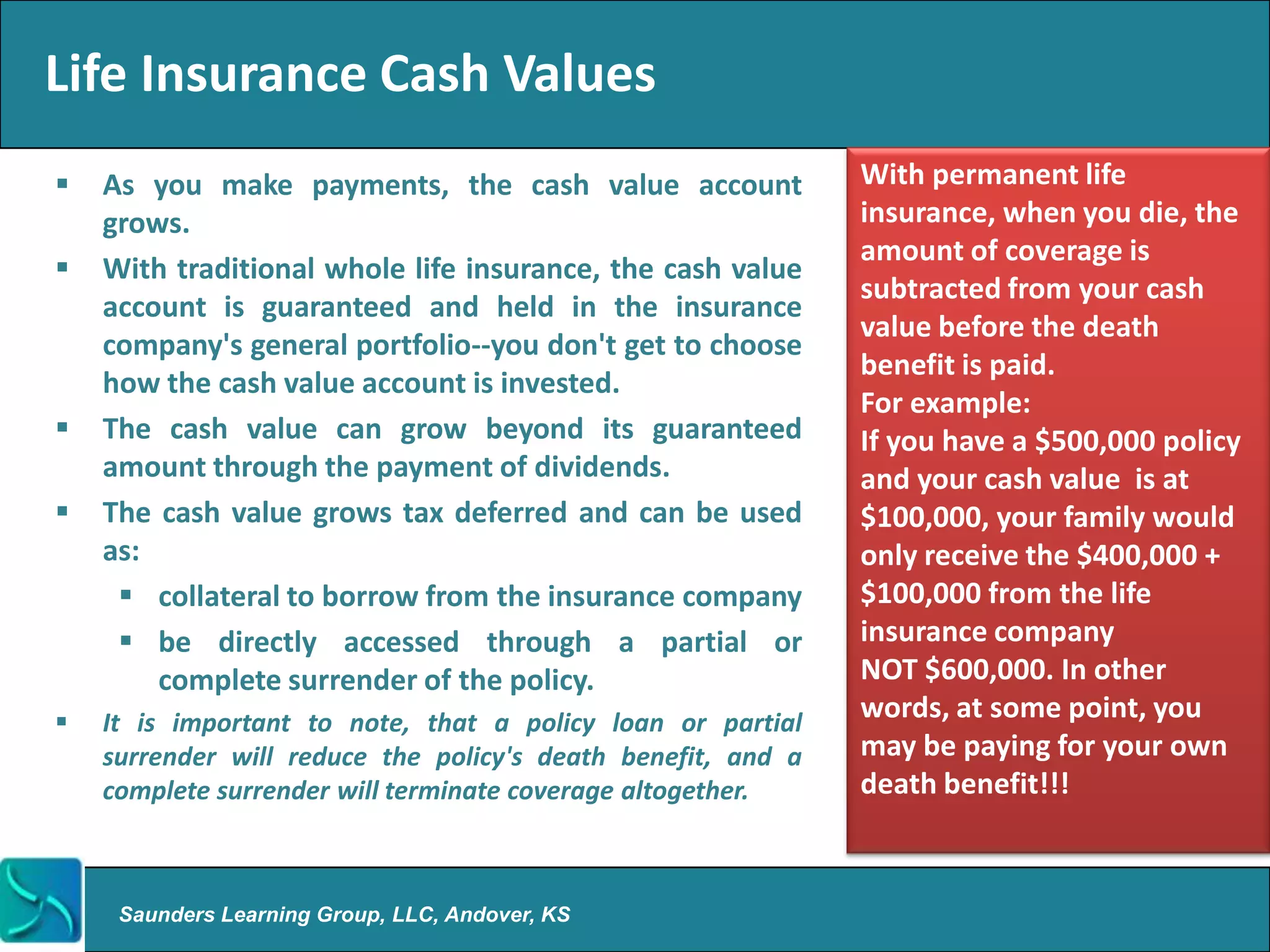
When you purchase a participating policy, you are essentially entering a contract where you pay a fixed premium in exchange for a guaranteed death benefit and a guaranteed cash value growth rate. The "guaranteed" elements of the policy are fixed by contract regardless of how the insurance company performs in the marketplace. Dividends, however, are an additional layer of potential value that sits on top of these contractual guarantees. They represent the return of a portion of the premium if the insurer's actual experience is more favorable than what was projected when the premium was calculated.
Why Dividends Are Never Guaranteed
Insurance companies operate on the principle of conservatism. When they set premiums, they use actuarial assumptions—essentially "worst-case" or "cautious" projections—regarding three primary factors:
1. Investment Returns
Insurance companies invest the premiums they collect into conservative portfolios, such as high-grade bonds, real estate, and other stable assets. If the company achieves a higher return on these investments than was required to maintain the guaranteed cash value and death benefit, that excess gain may contribute to a surplus. Because financial markets are inherently volatile, there is no guarantee that an insurer will always outperform its internal projections.
2. Mortality Experience
Actuaries calculate premiums based on expected life spans. If the pool of policyholders lives longer, on average, than the projections suggested, the insurance company does not have to pay out death benefits as quickly as anticipated. This favorable mortality experience can result in a surplus. Conversely, if a catastrophic event or widespread health crisis leads to a higher-than-expected mortality rate, the surplus shrinks, directly impacting the ability to pay dividends.
3. Operational Expenses
Insurance companies incur costs for administration, underwriting, and distribution. If a company operates more efficiently than it projected—keeping administrative costs lower than anticipated—the savings contribute to the divisible surplus. Like investment returns and mortality, these costs are subject to inflation, regulatory changes, and economic shifts, making them variable rather than fixed.
Because all three of these pillars (investments, mortality, and expenses) are subject to change, the "divisible surplus" is not a fixed number. Consequently, the board of directors of an insurance company holds the ultimate authority to declare whether a dividend will be paid and at what amount.
Contractual Guarantees vs. Dividend Projections
It is critical to distinguish between the "guaranteed" values of a policy and the "non-guaranteed" illustrations provided by an agent.
- Guaranteed Values: These are the death benefit and cash value amounts that the insurer is legally bound to provide, provided the policy remains in force and premiums are paid. These values are often displayed in a table within the policy contract itself.
- Non-Guaranteed Illustrations: When you are presented with a life insurance proposal, the agent may show you an "illustrated" version of the policy that includes projected dividends. These projections are based on current dividend scales. While they provide a historical look at how the company has performed, they are not a promise of future performance. Insurance regulations generally require that any illustration showing dividends must also display a "zero-dividend" scenario to demonstrate how the policy would perform if no dividends were ever paid.
How Dividends Are Typically Used
When a company does declare a dividend, policyholders often have several options for how that capital is applied. These choices can significantly impact the long-term growth and utility of the policy.
- Cash Payments: The policyholder can opt to receive the dividend as a check or a direct deposit. This is the simplest method but often results in the slowest long-term growth of the policy’s cash value.
- Premium Reduction: The dividend can be applied to pay down the annual premium, effectively reducing the policyholder’s out-of-pocket costs for that year.
- Paid-Up Additions (PUA): This is widely considered the most efficient use of dividends for long-term growth. The dividends are used to purchase small increments of fully paid-up permanent insurance. Each addition increases both the total death benefit and the total cash value of the policy. Because these additions are "paid-up," they also generate their own dividends in future years, creating a compounding effect.
- Accumulation at Interest: The dividends are left with the insurance company to earn interest at a rate declared by the insurer. While this is safer than market-based investments, the interest rate may be subject to change and is generally conservative.
Comparison Table: Guaranteed Elements vs. Dividend Components
| Feature | Guaranteed Elements | Dividend Components |
|---|---|---|
| Legal Status | Contractual Obligation | Discretionary Distribution |
| Primary Driver | Actuarial Conservatism | Company Surplus Performance |
| Fluctuation | Fixed by Policy Schedule | Fluctuates annually |
| Impact on Cash Value | Predictable growth | Enhances growth through compounding |
| Authority | Policy Terms | Board of Directors Declaration |
Common Misconceptions
One of the most frequent mistakes policyholders make is assuming that because a company has paid a dividend for 100 consecutive years, it is "effectively guaranteed." While a long history of dividend payments—often referred to as a "dividend streak"—is a positive indicator of a company’s financial strength and management, it does not legally bind the company to continue the streak.
Another misconception is that dividends are a "return of profit" in the same sense as a stock dividend. In reality, for a mutual insurance company, dividends are technically a return of "overpaid premium." Because the company collected more than was necessary to cover the actual costs and the guaranteed benefits, the surplus is returned to the policyholders who contributed to the pool.
Factors to Evaluate Before Choosing a Participating Policy
When evaluating whether a participating whole life policy is appropriate for your financial plan, consider the following:
- Company Financial Strength: Look for insurers with strong ratings from independent agencies like AM Best, Moody's, or Standard & Poor's. A company with high capital reserves is better equipped to maintain dividend scales even during economic downturns.
- Long-Term Horizon: Whole life insurance is a multi-decade commitment. If you are looking for short-term liquidity, the slow early-year cash value accumulation might make this product unsuitable.
- Dividend History: While past performance does not guarantee future results, a history of stable dividends during different economic cycles is a reliable proxy for management quality.
- Purpose of Coverage: If your primary goal is low-cost death benefit protection, a term policy may be more appropriate. If your goal is to create a long-term, tax-advantaged asset that compounds through dividends, participating whole life is the intended vehicle.
Frequently Asked Questions
1. Does the insurance company's stock price affect my dividends?
If the insurance company is a mutual company, it is owned by the policyholders, not shareholders, so there is no stock price. If the company is a stock-based insurer, dividends paid to policyholders are separate from dividends paid to the company's stock investors. Policyholder dividends come from the participating fund, which is distinct from the general corporate earnings distributed to shareholders.
2. Can my dividends ever be negative?
No. Dividends are declared as a positive amount or not declared at all. You will never receive a "negative dividend" that requires you to pay the insurance company extra money. If the company's surplus is insufficient, they will simply declare a dividend of zero.
3. Are dividends from life insurance taxable?
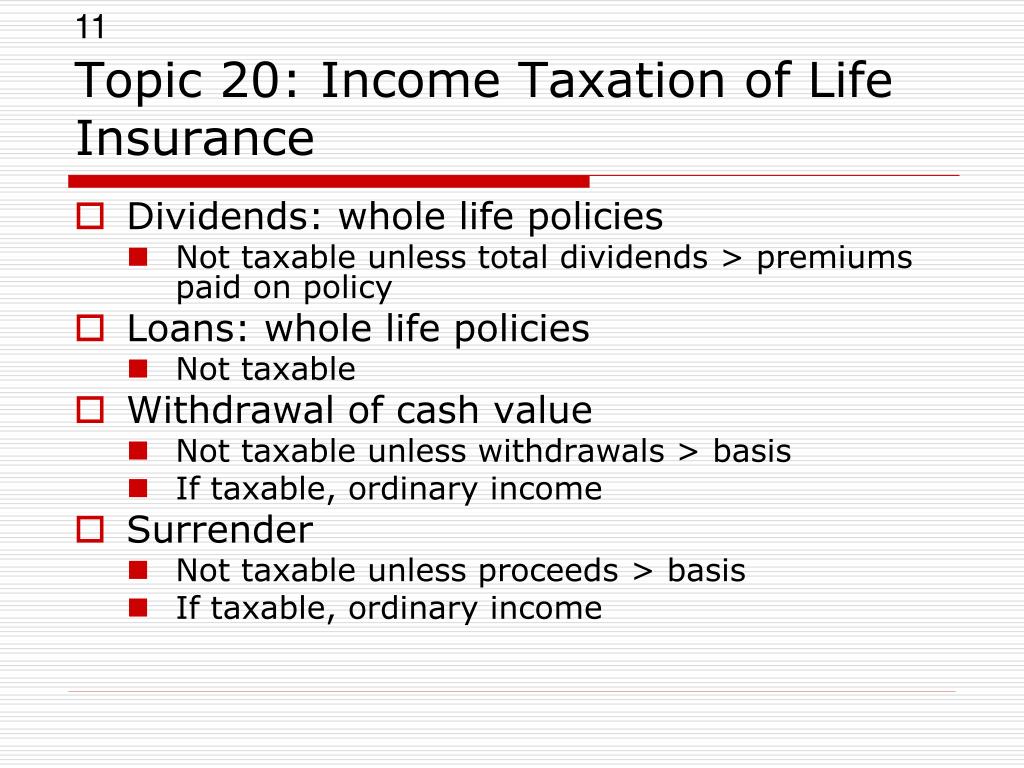
In the United States, dividends are generally considered a return of your own premium payments. As long as the total dividends received do not exceed the total premiums you have paid into the policy, they are usually received tax-free. If dividends exceed the total premiums paid, the excess is generally taxable as ordinary income.
4. What happens to my dividends if I stop paying premiums?
If you stop paying premiums and choose to keep the policy in force through "reduced paid-up" insurance, your ability to continue earning dividends may be limited or stop entirely, depending on the specific contract terms. Always review the policy's non-forfeiture options before ceasing premium payments.
5. Are dividends higher during times of high interest rates?
Generally, yes. Because insurance companies hold a significant portion of their assets in bonds, a rising interest rate environment typically allows the insurer to earn more on new investments, which can lead to a larger divisible surplus and higher potential dividends over time. However, this is a slow process, as the insurer’s portfolio consists of many bonds purchased years prior at different rates.
Next Steps for Policyholders
If you currently own a participating whole life insurance policy, request an updated "in-force illustration" from your agent or the company's policyholder service department. This document will show you exactly how your current cash value is growing and provide a current projection of how your dividends are being applied. Use this document to verify that your chosen dividend option (e.g., Paid-Up Additions) still aligns with your current financial goals. If you are considering purchasing a new policy, ensure the agent provides you with both the base guaranteed values and the projected dividend scales, and review the "zero-dividend" disclosure to understand the minimum performance of the contract.