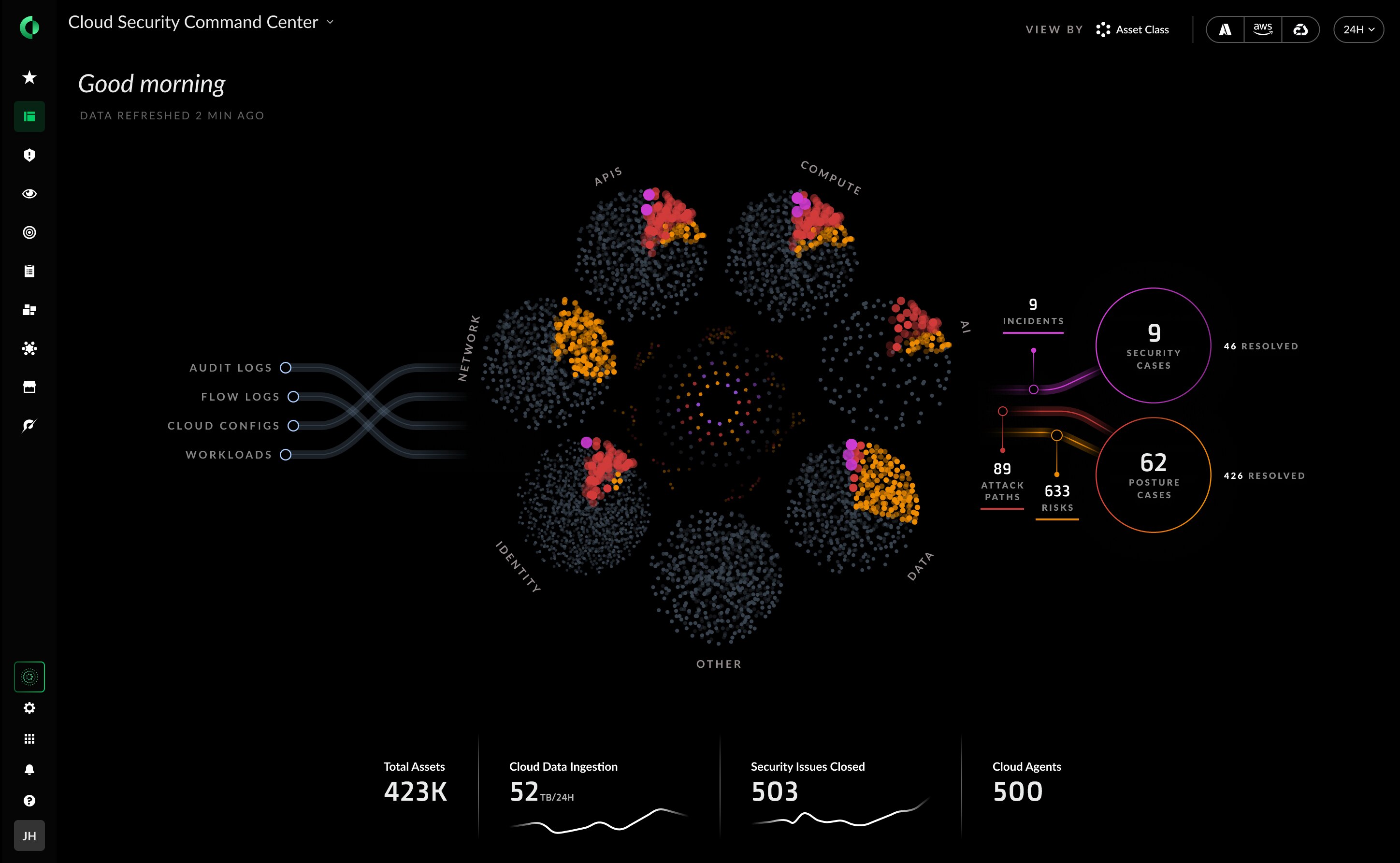
Palo Alto Networks remains a dominant force in cloud security through its Prisma Cloud platform, offering the most comprehensive Cloud Native Application Protection Platform (CNAPP) available in 2026. While it provides unmatched depth in visibility and protection from "code to cloud," its significant cost and operational complexity mean it is best suited for large-scale enterprises managing complex, multi-cloud environments rather than smaller, lean organizations.
Understanding the Prisma Cloud Ecosystem
To evaluate Palo Alto Networks' cloud security effectively, one must look specifically at Prisma Cloud. In 2026, the platform has moved beyond being a collection of acquired tools to a more unified architecture. It is designed to address the "fragmentation tax"—the hidden cost of managing multiple point solutions for security.
The platform is built on the philosophy of CNAPP, which combines several legacy categories into a single interface. By integrating Cloud Security Posture Management (CSPM), Cloud Workload Protection (CWPP), and Cloud Infrastructure Entitlement Management (CIEM), Palo Alto Networks attempts to provide a "single pane of glass" for security operations center (SOC) teams.
However, the "honesty" in this review requires acknowledging that this breadth comes with baggage. Because much of the platform was built through high-profile acquisitions (such as RedLock, Twistlock, Bridgecrew, and Cider Security), users still occasionally encounter different UI workflows and logic when moving between deep workload inspection and high-level posture management, although the 2025-2026 updates have significantly smoothed these transitions.
Core Capabilities: From Code to Cloud
Palo Alto Networks categorizes its cloud security into several functional areas. Understanding these is essential for determining if the platform solves your specific security gaps.
Cloud Security Posture Management (CSPM)
The CSPM module is the foundation of Prisma Cloud. It monitors your cloud environment (AWS, Azure, GCP, and OCI) against hundreds of out-of-the-box policies. In 2026, the standout feature is graph-based visualization. Instead of a simple list of misconfigurations, the platform maps how a misconfigured S3 bucket connects to an internet-facing EC2 instance with an overly permissive IAM role. This "attack path analysis" is critical for prioritizing alerts in environments that generate thousands of daily notifications.
Cloud Workload Protection (CWPP)
While many competitors focus on "agentless" scanning, Palo Alto Networks continues to champion a hybrid approach. Their CWPP provides deep visibility into VMs, containers, and serverless functions. By using Defenders (agents), the platform can perform real-time blocking of malicious processes and network traffic. In an era where ransomware targets cloud workloads directly, the ability to stop a process mid-execution—rather than just alerting you that it happened an hour ago—remains a major competitive advantage.
Cloud Infrastructure Entitlement Management (CIEM)
Identity is the new perimeter in cloud security. Prisma Cloud’s CIEM module calculates "effective permissions." It looks at what a user or service account can do versus what it actually does. In 2026, the platform’s AI-driven recommendations for achieving Least Privilege are highly automated, often providing Terraform or CloudFormation snippets to remediate over-privileged accounts instantly.
Software Supply Chain Security
With the integration of Bridgecrew and Cider Security, Palo Alto Networks has pushed its security "left" into the development pipeline. It scans GitHub/GitLab repositories for secrets, hardcoded passwords, and vulnerabilities in Infrastructure as Code (IaC) templates. This prevents insecure configurations from ever reaching the production cloud environment.
Practical Performance: The User Experience in 2026
From a practitioner's perspective, using Prisma Cloud is a high-reward, high-effort endeavor. The platform provides a level of detail that is arguably unmatched. For example, if a vulnerability is detected in a container image, Prisma Cloud doesn't just flag the CVE; it tells you if that specific package is actually loaded in memory and running, which helps security teams ignore "noise" and focus on reachable risks.
However, the learning curve is steep. Setting up the platform requires a sophisticated understanding of cloud architecture. Unlike some "plug-and-play" SaaS security tools, getting the most out of Palo Alto Networks involves configuring service accounts, deploying defenders, and tuning policies to avoid overwhelming your team with alerts.
In 2026, the introduction of the Copilot interface has improved the experience. Security analysts can now use natural language queries, such as "Show me all internet-facing databases with high-severity vulnerabilities," and receive a visualized map and a remediation plan. This has mitigated some of the complexity, but it hasn't eliminated the need for expert oversight.
Deployment and Integration Hurdles
Deploying Prisma Cloud in a massive organization is a multi-month project. While the "agentless" onboarding for CSPM is fast (taking minutes to connect an AWS Organization), the "agent-based" CWPP deployment requires coordination with DevOps teams.
One common friction point is the performance overhead of agents. While Palo Alto Networks has optimized the Defender agents to use minimal CPU and memory, any agent-based approach introduces a non-zero risk to application stability. Organizations must decide where they need the "Gold Standard" protection of an agent and where agentless scanning is sufficient.
Integrations with third-party tools like Jira, ServiceNow, and Slack are robust. The API-first design allows for sophisticated automation, such as automatically opening a ticket and assigning it to the specific developer who committed an insecure piece of code.
Pricing and Total Cost of Ownership (TCO)
Palo Alto Networks uses a credit-based pricing model. You purchase a pool of "Prisma Cloud Credits" and consume them based on the resources you protect.
- A small VM might consume 0.5 credits.
- A container host might consume 1.5 credits.
- Advanced features like Web Application and API Protection (WAAP) add further consumption.
This model offers flexibility but makes budgeting difficult. As your cloud footprint grows or fluctuates, your credit burn rate can change unexpectedly. Compared to competitors like Wiz or Orca Security, Palo Alto Networks generally sits at the higher end of the price spectrum. However, the argument for the higher TCO is the consolidation of tools. By replacing a separate CSPM, a separate container security tool, and a separate CI/CD scanner, the total spend might be lower than managing five different vendors.
Comparison: Prisma Cloud vs. Leading Competitors
| Feature | Prisma Cloud (PANW) | Wiz | CrowdStrike Falcon Cloud |
|---|---|---|---|
| Primary Strength | Comprehensive "Code to Cloud" | Ease of Use / Agentless Scanning | Endpoint & Workload Integration |
| Detection Method | Agentless + Agent-based | Primarily Agentless | Agent-based |
| Supply Chain Security | Integrated (Cider/Bridgecrew) | Growing, but less mature | Focused on Runtime |
| Learning Curve | High | Low to Medium | Medium |
| Best For | Large, complex Enterprises | Fast-moving cloud-native teams | Existing CrowdStrike customers |
| Remediation | Automated + Manual | High-context guidance | Incident Response focused |
Pros and Cons: An Honest Assessment
Pros
- Breadth of Coverage: No other platform covers as many "pillars" of cloud security in such depth.
- Regulatory Compliance: Excellent out-of-the-box reporting for SOC2, HIPAA, PCI-DSS, and GDPR.
- Shift-Left Integration: Truly integrates security into the developer's IDE and CI/CD pipeline.
- Real-time Protection: The agent-based approach allows for active blocking of attacks, not just detection.
Cons
- Complexity: The platform is massive and can be intimidating for smaller teams.
- Cost: Premium features come at a premium price; it is rarely the "budget" choice.
- UI Consistency: Despite improvements, some modules still feel like the separate companies they once were.
- Noisy Defaults: Without proper tuning, the volume of alerts can lead to "alert fatigue."
Is it Right for Your Organization?
Choosing Palo Alto Networks for cloud security is a strategic decision rather than a tactical one.
You should choose Prisma Cloud if:
- You operate in a highly regulated industry (finance, healthcare, government) where deep compliance auditing is mandatory.
- You have a dedicated Cloud Security or DevSecOps team that can manage and tune a complex platform.
- You have a "Multi-Cloud" strategy and need consistent policy enforcement across AWS, Azure, and on-premises environments.
You should look elsewhere if:
- You are a small startup with a limited security budget and only a handful of cloud assets.
- You do not have the personnel to manage a sophisticated security platform.
- You only require basic visibility and "low-hanging fruit" misconfiguration detection.
Frequently Asked Questions
Does Prisma Cloud replace the need for a Cloud Firewall?
Not entirely. While Prisma Cloud includes Web Application and API Protection (WAAP) and identity-based microsegmentation, it does not replace a dedicated Next-Generation Firewall (NGFW) like Palo Alto Networks’ VM-Series for organizations that require deep packet inspection at the network layer. Most enterprises use them in tandem.
How does the 2026 version handle AI-generated code?
In 2026, Prisma Cloud has specific modules designed to scan code generated by AI assistants. It checks for "AI-introduced vulnerabilities," such as the use of deprecated libraries or insecure logic patterns that Large Language Models (LLMs) occasionally suggest.
Is the agentless scanning as good as the agent-based version?
Agentless scanning is excellent for visibility and posture (finding misconfigured buckets or unpatched OS versions). However, it cannot provide runtime protection (stopping a SQL injection attack in real-time). Palo Alto Networks allows you to mix both, using agentless for your entire estate and agents for your most mission-critical workloads.
How does Prisma Cloud impact cloud performance?
The agentless portion has zero impact on performance as it scans cloud APIs and disk snapshots. The Defender agents are designed to be lightweight, typically consuming less than 1-3% of CPU, but they should be tested in a staging environment before a full production rollout to ensure no conflicts with your specific application stack.
Does it support hybrid cloud environments?
Yes. One of the strongest selling points of Palo Alto Networks is its ability to protect on-premises data centers (using the same Defender agents) alongside public cloud environments, providing a unified security posture across the entire hybrid estate.
Final Recommendation
In 2026, Palo Alto Networks remains the "heavyweight champion" of cloud security. If your goal is to have the most robust, feature-rich protection available and you have the budget and team to support it, Prisma Cloud is the correct choice. It provides a level of security "insurance" that simpler, agentless-only tools cannot match. However, for organizations that prioritize simplicity and speed over deep, granular control, the platform may be more tool than they truly need.
Before committing, perform a Proof of Concept (PoC) that includes both the "Shift Left" (code scanning) and "Shield Right" (runtime protection) capabilities to ensure your team is prepared for the operational requirements of the platform.