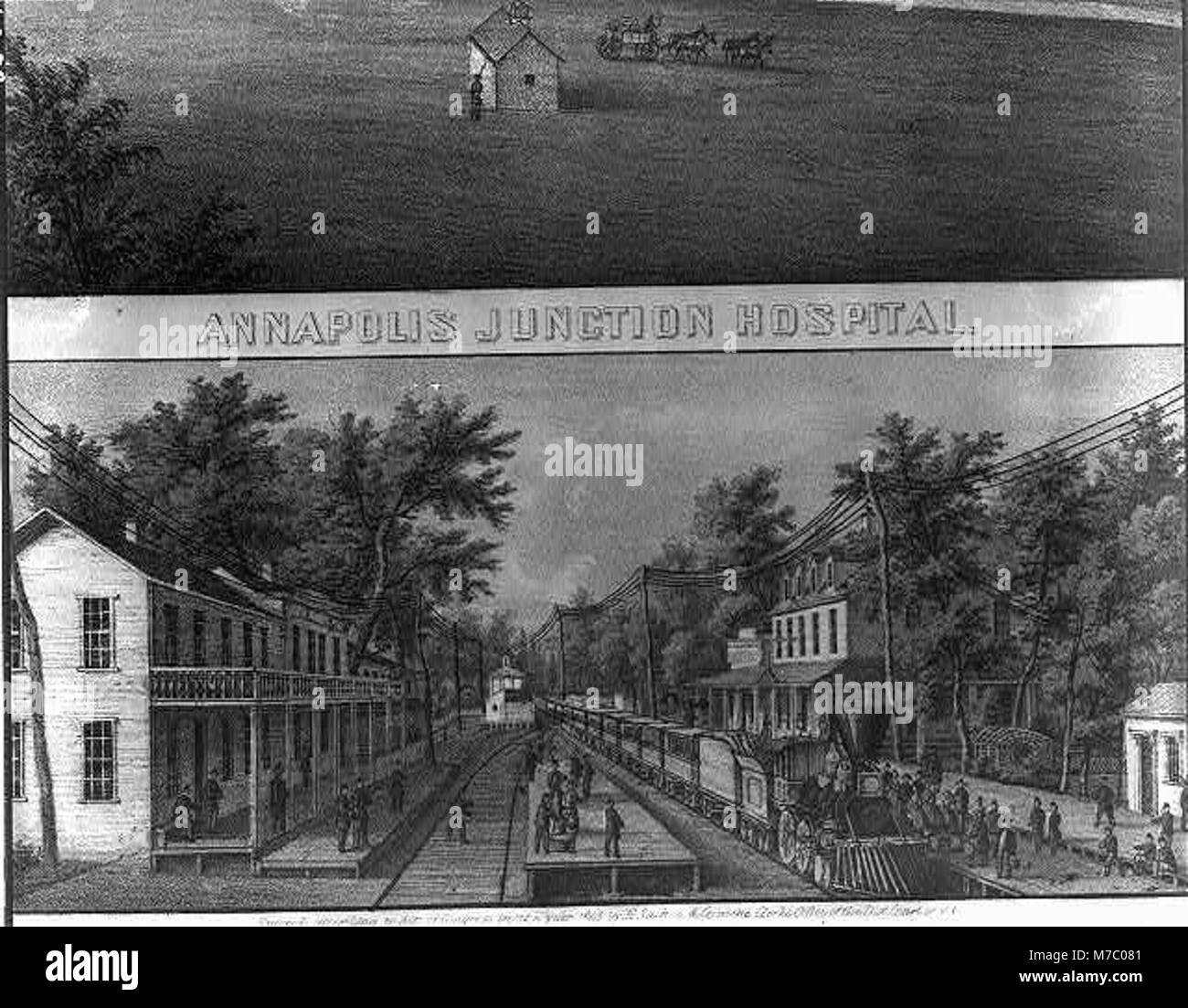
Annapolis, the capital of Maryland, serves as a living museum of American history. Originally settled in 1649, it briefly served as the nation’s capital from 1783 to 1784 and remains the site where George Washington famously resigned his military commission. Today, its preserved 18th-century architecture and maritime traditions define its unique national identity.
The Foundations of Providence and the Rise of Annapolis
The historical trajectory of Annapolis began not with a royal charter, but with a search for religious freedom. In 1649, a group of Puritans, fleeing Virginia due to religious restrictions, established a settlement on the northern shore of the Severn River. They named this initial community Providence. As the settlement grew and trade patterns shifted, the community moved to the southern shore, a location that offered a better natural harbor for the burgeoning tobacco trade of the Chesapeake Bay.
By 1694, the settlement was designated as the capital of the Maryland colony, replacing St. Mary’s City. Sir Francis Nicholson, the Royal Governor at the time, was responsible for the city's unique urban design. Influenced by the Baroque styling found in Europe, Nicholson laid out the city using a system of circles—specifically Church Circle and State Circle—with streets radiating outward toward the waterfront. This layout was intended to symbolize the union of church and state, a design philosophy that remains visible to this day. It was at this time that the town was renamed Annapolis in honor of Princess Anne, who would later become the Queen of Great Britain.
The early 18th century saw Annapolis transform into a sophisticated social and political center. Often referred to as the "Athens of America," the city became a hub for wealthy planters, merchants, and legal professionals. The presence of the colonial government fostered a culture of high society, characterized by theater, horse racing, and lavish social gatherings. This era also saw the construction of many of the grand Georgian mansions that still line the city's narrow streets.
The Revolutionary Era and the "Peggy Stewart" Incident
Annapolis played a pivotal role in the American Revolution, mirroring the tensions found in other major colonial ports like Boston and Philadelphia. One of the most significant events in local revolutionary lore is the "Peggy Stewart" incident of October 1774. Following the Boston Tea Party, Annapolis residents were equally incensed by British taxes on tea. When the brig Peggy Stewart arrived in Annapolis harbor carrying more than 2,000 pounds of taxed tea, the owner, Anthony Stewart, was forced by local patriots to burn the ship and its cargo to the water's edge to avoid further violence.
This act of defiance solidified Annapolis as a center of revolutionary fervor. Maryland's leaders, many of whom resided in or near the city, were instrumental in the Continental Congress. The city’s status as a political epicenter was cemented by the presence of four signers of the Declaration of Independence: William Paca, Samuel Chase, Charles Carroll of Carrollton, and Thomas Stone. Their homes, preserved as historic landmarks, offer a window into the lives of the men who risked their fortunes and lives for American independence.
Annapolis as the Temporary Capital of the United States
Few people realize that for a brief but critical period, Annapolis served as the capital of the United States. From November 26, 1783, to August 13, 1784, the Continental Congress met in the Maryland State House. This period was marked by two events of immense national importance that occurred within the Old Senate Chamber.
On December 23, 1783, George Washington appeared before Congress to resign his commission as Commander-in-Chief of the Continental Army. This act was revolutionary in itself, as it established the precedent of civilian control of the military—a cornerstone of American democracy. Shortly thereafter, on January 14, 1784, Congress ratified the Treaty of Paris, officially ending the Revolutionary War and recognizing the United States as a sovereign nation.
The Maryland State House, which housed these events, remains a marvel of colonial architecture. Completed in 1779 (though the dome was finished later), it is the oldest state house in continuous legislative use in the United States and the only one to have served as the nation's capitol. The timber-framed dome, constructed without nails, remains a masterpiece of 18th-century engineering.
The Architectural Heritage: A Living Museum
One of the most remarkable aspects of Annapolis is its high concentration of original 18th-century buildings. Unlike many American cities that underwent massive urban renewal in the 20th century, Annapolis preserved its colonial footprint. This preservation was largely thanks to the efforts of the Historic Annapolis Foundation, which has worked since 1952 to protect the city's historic fabric.
The city’s architecture is dominated by the Georgian style, characterized by symmetry, brickwork, and ornate entryways. Notable examples include:
- The Hammond-Harwood House (1774): Renowned for having what is often called "the most beautiful door in America," this house represents the pinnacle of colonial craftsmanship.
- The William Paca House and Garden: This five-part Georgian mansion includes a restored two-acre wilderness garden, providing insight into the lifestyle of the colonial elite.
- The Chase-Lloyd House: Commenced by Samuel Chase, this house features a grand scale and a notable cantilevered staircase.
The 18th-century street plan, with its circles and narrow lanes, creates a "pedestrian-scale" environment that allows visitors to experience the city much as it appeared 250 years ago. This commitment to preservation earned the city designation as a National Historic Landmark District in 1965.
Maritime Legacy and the U.S. Naval Academy
While politics and law shaped the city’s upper circles, the Chesapeake Bay shaped its soul. Annapolis has always been a maritime town. In the 18th and 19th centuries, it was a major port of entry for goods and enslaved people, and later, a thriving center for the oyster and crabbing industries.
In 1845, the city’s identity was further linked to the water with the establishment of the United States Naval Academy. Founded by Secretary of the Navy George Bancroft, the academy was built on the site of Fort Severn. Over the decades, the "Yard" (as the campus is known) has grown to include stunning Beaux-Arts architecture, most notably the Main Chapel, which houses the crypt of naval hero John Paul Jones.
The Naval Academy is not just a school; it is a vital part of the Annapolis community. The presence of thousands of midshipmen in their formal uniforms is a daily sight on the city’s streets. The Academy’s rigorous academic and physical programs have produced some of the nation’s most notable leaders, including presidents, astronauts, and military commanders.
African American History and the Kunta Kinte-Alex Haley Memorial
A comprehensive look at Annapolis history must acknowledge the darker chapters of its past, specifically its role in the transatlantic slave trade. The city's dock was a primary point of arrival for ships carrying enslaved Africans. Among them was Kunta Kinte, whose arrival in 1767 was immortalized by his descendant Alex Haley in the book and television series Roots.
Today, the Kunta Kinte-Alex Haley Memorial at the City Dock serves as a poignant reminder of this history. It is the only memorial in the United States that commemorates the name and place of arrival of an enslaved African. The memorial features a bronze statue of Alex Haley reading to children, symbolizing the power of storytelling and the importance of ancestral roots.
Furthermore, the Banneker-Douglass Museum, located in the former Mt. Moriah African Methodist Episcopal Church, serves as the state's official museum of African American heritage. It documents the contributions of Black Marylanders from the colonial era through the Civil Rights Movement and into the present day.
Economic Shifts and the "Sailing Capital of the World"
As the 19th century progressed, Annapolis saw a shift from international trade to local industry. The oyster industry, in particular, became a massive economic driver. The "Chesapeake skipjacks" and "bugeyes"—specialized fishing boats—filled the harbor, and packing houses lined the waterfront.
In the 20th century, as commercial fishing declined due to environmental changes and over-harvesting, Annapolis reinvented itself as a premier destination for recreational boating. It is now widely regarded as the "Sailing Capital of the World." The city hosts the United States Powerboat and Sailboat Shows, the largest in-water boat shows in the world. This maritime culture continues to drive the local economy, supporting world-class sailmakers, boatyards, and yacht clubs.
Historical Milestones of Annapolis
The following table summarizes key historical sites in Annapolis and their significance to American history.
| Historic Site | Year Established/Built | Primary Historical Significance |
|---|---|---|
| Maryland State House | 1772 | Oldest state house in use; site of Washington’s resignation and Treaty of Paris ratification. |
| St. Anne's Church | 1692 | Original parish of the city; central landmark of Church Circle. |
| William Paca House | 1763 | Home of a Declaration signer; features a restored 18th-century garden. |
| U.S. Naval Academy | 1845 | Premier institution for training Navy and Marine Corps officers. |
| Hammond-Harwood House | 1774 | Exemplar of Georgian architecture; features world-renowned woodcarving. |
| Banneker-Douglass Museum | 1984 (as museum) | Official state museum for African American history and culture. |
| City Dock | 17th Century | Historical port of entry and current center of maritime activity. |
Preservation Challenges and the Future of the Past
As of 2026, Annapolis continues to face the delicate challenge of balancing historical preservation with modern urban needs. The city’s low-lying waterfront makes it particularly vulnerable to rising sea levels and land subsidence. In recent years, significant infrastructure projects have been initiated to protect the historic City Dock from nuisance flooding while maintaining its aesthetic and historical character.
The city’s preservation strategy has also evolved to include a more inclusive narrative. Modern historical interpretation now places greater emphasis on the lives of marginalized communities, including the enslaved individuals and working-class immigrants who built and maintained the city. This holistic approach ensures that the "glimpse" into Annapolis history is not just a look at the elite, but a comprehensive view of the diverse people who shaped the Chesapeake region.
Frequently Asked Questions
Why is Annapolis called the "Athens of America"? The nickname originated in the 18th century when Annapolis was known for its high level of cultural and social sophistication. With its grand architecture, active theater scene, and concentration of wealthy, educated residents, it was considered the intellectual and social heart of the colonies, much like Athens was to ancient Greece.
Is the Maryland State House still used by the government? Yes, the Maryland State House is the oldest state house in continuous legislative use in the United States. It houses the Maryland General Assembly, as well as the offices of the Governor and Lieutenant Governor. While modern offices have been added, the historic sections are preserved and open to the public for tours.
What is the significance of the circles in the Annapolis street plan? The circles—State Circle and Church Circle—were designed by Governor Francis Nicholson in 1694. This Baroque-inspired layout was meant to physically represent the importance of the government and the church in colonial life. The streets radiating from these circles created vistas that emphasized these central institutions.
Can the public visit the U.S. Naval Academy? Yes, the U.S. Naval Academy is open to the public, though security requirements vary. Visitors can take guided tours that cover the history of the institution, the life of a midshipman, and visits to the Naval Academy Chapel and the crypt of John Paul Jones.
What was the "Annapolis Convention" of 1786? The Annapolis Convention was a formal meeting of commissioners from five states (New Jersey, New York, Pennsylvania, Delaware, and Virginia) held at Mann's Tavern. The delegates discussed the fragile state of trade and commerce under the Articles of Confederation. Although it had low attendance, it was the crucial precursor to the 1787 Philadelphia Convention, where the U.S. Constitution was drafted.
Recommendation for Visitors and Researchers
To truly understand the depth of Annapolis history, one should begin at the Museum of Historic Annapolis at 99 Main Street. This facility provides a chronological overview that sets the stage for visiting the actual historic sites. For those interested in primary research, the Maryland State Archives, located nearby on Rowe Boulevard, holds the definitive collection of records dating back to the proprietary era of the 1600s. Whether walking the cobblestone streets or touring the State House, visitors are encouraged to look beyond the surface to see how the city's past continues to influence its modern identity as a center of governance and maritime excellence.