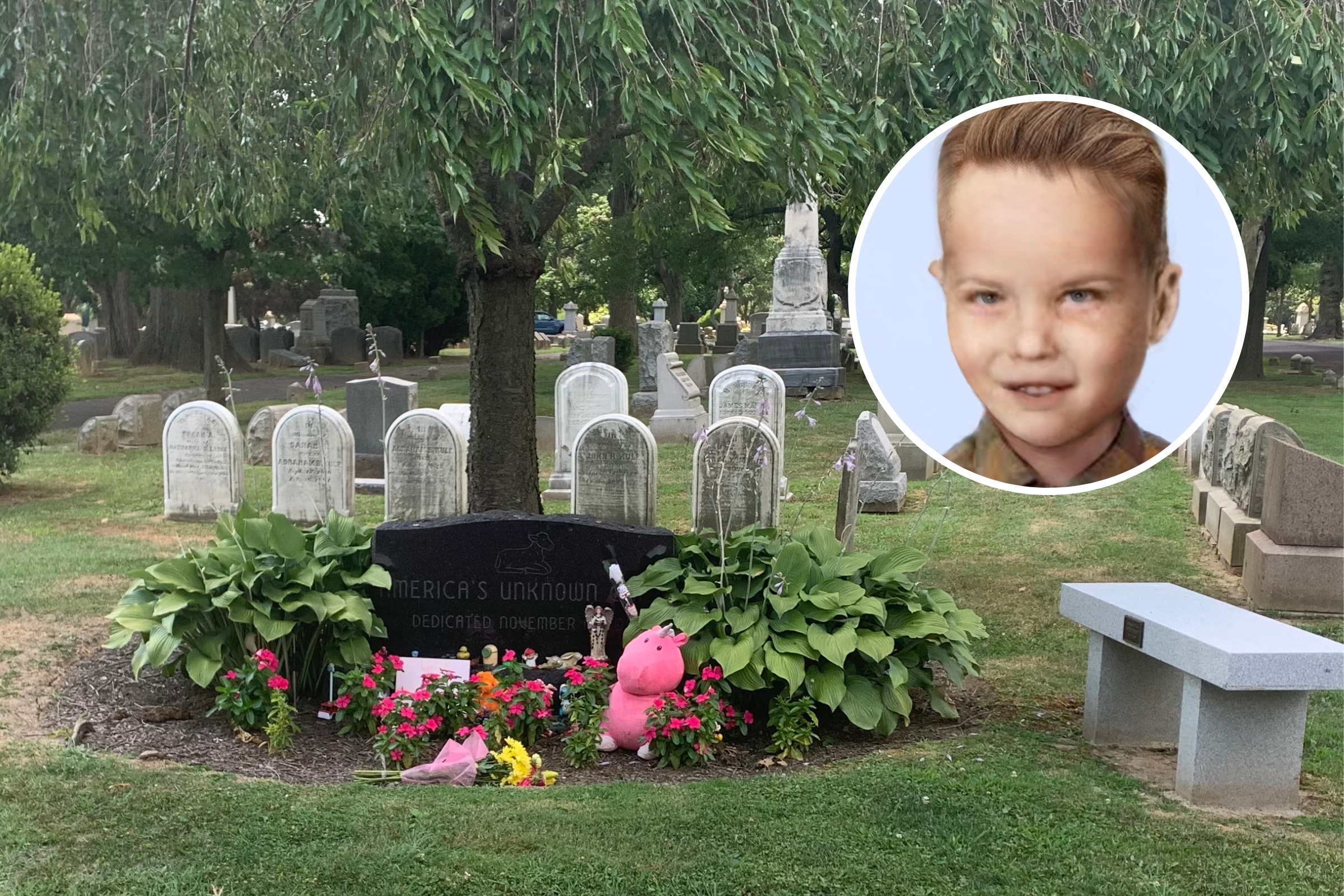
The "Boy in the Box" refers to the long-unidentified victim of a 1957 homicide in Philadelphia, Pennsylvania. After 65 years as "America’s Unknown Child," the victim was identified in December 2022 through forensic genetic genealogy as Joseph Augustus Zarelli. While his identity is now known, the investigation into his death remains an active cold case as of 2026.
The Discovery of America’s Unknown Child
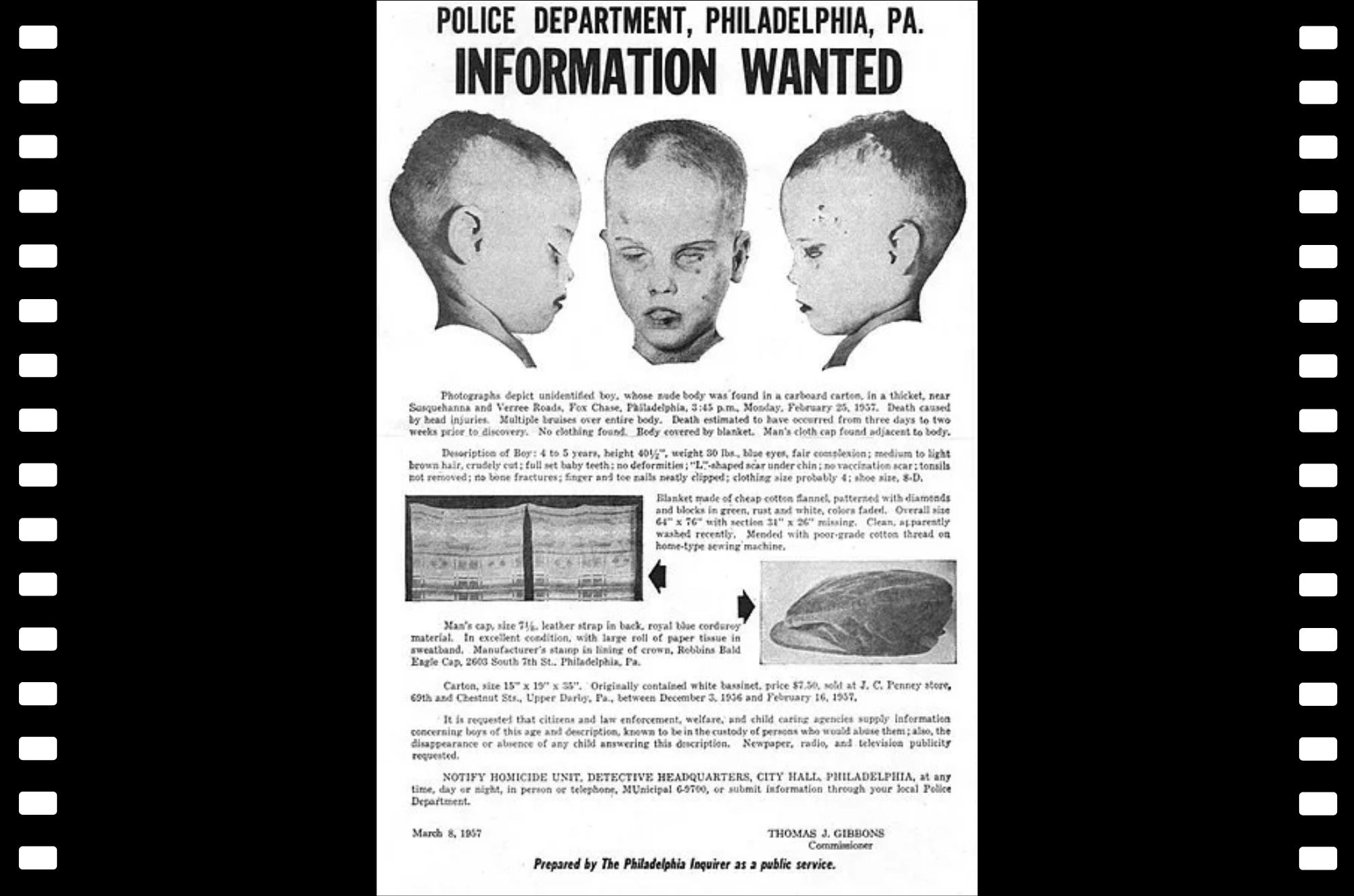
On February 25, 1957, the body of a young boy was discovered in a wooded area off Susquehanna Road in the Fox Chase neighborhood of Philadelphia. The remains were found inside a cardboard box that had once contained a J.C. Penney baby bassinet. The child was naked, wrapped in a piece of flannel blanket, and showed signs of severe neglect and physical abuse.
The initial discovery was made by a young man checking muskrat traps, who initially did not report the finding to police out of fear that his traps would be confiscated. A few days later, a college student named Frederick Benonis spotted a rabbit running into the underbrush and discovered the box. After initially hesitating, Benonis reported the find to the Philadelphia Police Department on February 26, 1957.
The crime scene provided very few clues. The J.C. Penney box was one of only a few distributed in the Upper Darby area, but the sale could not be traced to a specific purchaser. The flannel blanket was a common item, and the boy's hair had been crudely cut shortly before or after his death, as clumps of hair still clung to his body.
Forensic Profile and Early Investigation
The medical examiner’s report in 1957 painted a tragic picture of the child's short life. The "Boy in the Box" was estimated to be between four and six years old. He was severely malnourished, weighing only 30 pounds—nearly 20 pounds below the average for his age group. His body was covered in surgical scars on his ankle, groin, and chin, suggesting he had received some level of medical care in the past, yet he also bore numerous bruises and signs of blunt force trauma, particularly to the head.
Key Physical Characteristics:
- Age: Approximately 4 to 6 years old.
- Eyes: Blue.
- Hair: Light brown, recently cropped in a "butch" or "crew cut" style.
- Skin: Evidence of "washerwoman’s hands," suggesting he had been submerged in water for a long period shortly before death.
Despite the distribution of 400,000 flyers across the country and the involvement of the Vidocq Society—a prestigious organization of forensic experts—no one came forward to claim the child. His fingerprints and footprints did not match any records at local hospitals or missing persons databases.
Major Theories and Leads Throughout the Decades
For over half a century, several prominent theories dominated the investigation. Each lead was meticulously followed by the Philadelphia Police and independent investigators, yet none resulted in a definitive identification until the 2020s.
The Foster Home Theory
One of the most persistent theories involved a foster home located approximately 1.5 miles from the discovery site. An investigator named Remington Bristow spent years attempting to link the boy to the family running the home. Bristow discovered a bassinet similar to the one sold in the J.C. Penney box at the house, as well as blankets similar to the one found with the boy. However, DNA testing in the late 1990s and early 2000s eventually cleared the foster family of direct biological involvement.
The "M" or Martha Testimony
In 2002, a woman identified only as "M" or "Martha" came forward with a harrowing account. She claimed her abusive mother had "purchased" the boy (whom she called Jonathan) from his biological parents in 1954. According to M, the boy was subjected to extreme physical and sexual abuse. She claimed he died after vomiting in the bathtub, which led her mother to beat him severely. While M’s story accounted for many details—including the "washerwoman’s hands" and the haircut—investigators were unable to fully corroborate her claims due to her history of mental illness and the fact that no records of "Jonathan" existed.
The Ohio Connection
In the mid-2000s, leads suggested the boy might have been from a family in Ohio. Investigators traveled to the Midwest to interview potential relatives and compare DNA samples, but these efforts yielded no matches.
The 2022 Breakthrough: Forensic Genetic Genealogy
The turning point in the case occurred when the Philadelphia Police Department, in collaboration with Identifinders International and the National Center for Missing & Exploited Children (NCMEC), utilized modern forensic genetic genealogy (FGG). This process involves uploading the victim's DNA profile to public genealogical databases (such as GEDmatch or FamilyTreeDNA) to find biological relatives.
The process was exceptionally difficult because the DNA extracted from the boy's remains was highly degraded. Two exhumations—one in 1998 and another in 2019—were necessary to obtain sufficient genetic material.
In December 2022, Philadelphia Police Commissioner Danielle Outlaw announced that the boy had been identified as Joseph Augustus Zarelli.
The Identification Process:
- DNA Extraction: Forensic experts extracted mitochondrial and nuclear DNA from bone fragments.
- SNP Profile: A Single Nucleotide Polymorphism (SNP) profile was created, allowing for deep genealogical searching.
- Genealogical Research: Genealogists tracked down third and fourth cousins, eventually narrowing the search to a specific family in Delaware County, Pennsylvania.
- Vital Records: Investigators cross-referenced birth certificates and social security records to identify a male child born to the family in 1953.
Who Was Joseph Augustus Zarelli?
Joseph Augustus Zarelli was born on February 13, 1953. At the time of his identification, authorities confirmed that both of his biological parents were deceased. He had several living half-siblings, who were reportedly unaware of his existence.
The identification revealed that Joseph lived in West Philadelphia for the duration of his short life. His family resided in the 61st and Market Street area. The revelation of his name provided a vital missing link: investigators could finally trace the boy’s social and familial environment to understand who was responsible for his care—and his death.
| Feature | Details |
|---|---|
| Full Name | Joseph Augustus Zarelli |
| Date of Birth | February 13, 1953 |
| Date of Death | Circa February 1957 |
| Discovery Date | February 25, 1957 |
| Original Burial | Potter's Field (Unmarked) |
| Current Burial | Ivy Hill Cemetery (Identified Headstone) |
| Case Status (2026) | Active Homicide Investigation |
The Status of the Investigation in 2026
As of 2026, the investigation has shifted from a missing person's case to a focused homicide inquiry. Although the passage of time—now nearly 70 years—makes prosecution difficult, the Philadelphia Police Department continues to pursue leads regarding the individuals who had custody of Joseph in 1957.
Current Investigative Focus
- Custodial Records: Detectives are looking into informal "under the table" adoptions or foster care arrangements that may not have been officially recorded.
- Neighbor and Witness Interviews: Even in 2026, information from elderly residents who lived in West Philadelphia in the late 1950s remains a priority.
- Biological Family History: While his parents are deceased, investigators are examining their social circles to determine if Joseph was placed in the care of others.
The challenge remains that many of the most likely suspects or witnesses have passed away. However, the identification of Joseph Augustus Zarelli has allowed the city of Philadelphia to provide the child with the dignity he was denied for over six decades. His headstone at Ivy Hill Cemetery, which once read "America’s Unknown Child," has been updated to reflect his true name.
Impact on Forensic Science and Missing Persons
The "Boy in the Box" case has become a landmark in forensic history. It served as one of the first major cases to use widespread public outreach and flyer campaigns. More importantly, its resolution via genetic genealogy has paved the way for solving hundreds of other "John Doe" and "Jane Doe" cases.
The case also highlighted the need for better centralized records for child welfare and birth registrations. In the 1950s, it was significantly easier for a child to "disappear" without a trace if they were never enrolled in school or if their birth was not properly documented.
Advancements Spurred by the Case:
- DNA Databases: The successful identification of Joseph Zarelli reinforced the utility of forensic genealogy for law enforcement.
- Cold Case Units: The Philadelphia Police Department’s dedicated cold case unit continues to use the Zarelli case as a model for inter-agency cooperation.
- Public Awareness: The case remains a staple in true crime discourse, ensuring that even the oldest cases are not forgotten by the public or the authorities.
Frequently Asked Questions
Why did it take 65 years to identify the Boy in the Box?
The primary delay was the lack of available technology. In 1957, DNA profiling did not exist. By the time it was developed, the biological samples were heavily degraded. It wasn't until the advent of forensic genetic genealogy and more sensitive SNP testing that a match could be found through distant relatives.
Are the parents of Joseph Augustus Zarelli still alive?
No. At the time of the 2022 identification, Philadelphia authorities confirmed that both biological parents were deceased. Out of respect for the privacy of the surviving family members who were not involved in the crime, the names of the parents have not been widely publicized in an official capacity by the police.
Was anyone ever arrested for his murder?
As of 2026, no arrests have been made. The investigation is ongoing, but the significant time gap presents a hurdle, as most individuals who would have been of adult age in 1957 are now deceased.
Where is Joseph Augustus Zarelli buried?
Joseph is buried at Ivy Hill Cemetery in Philadelphia. For years, he was buried under a stone that read "Heavenly Father, Bless This Unknown Boy." Following his identification, a new headstone was installed that includes his full name and birth date.
How did the box provide a lead?
The box was a J.C. Penney bassinet box from a store in Upper Darby, PA. Only 12 of these specific bassinets were sold. While the police tracked down 8 of the 12 purchasers, they could not link the remaining boxes to the victim, and the store did not keep detailed records for cash transactions.
Summary of Next Actions for Researchers
For those interested in cold case advocacy or genealogical research, the following actions are recommended:
- Support Organizations: Organizations like the Vidocq Society and the National Center for Missing & Exploited Children continue to work on similar cases.
- Genetic Advocacy: If you use services like AncestryDNA or 23andMe, consider uploading your raw data to GEDmatch and opting into law enforcement matching to help identify other "John Does."
- Historical Archives: Reviewing the Philadelphia Police Department's official releases on the Zarelli case provides the most accurate and updated information regarding the progress of the homicide investigation.