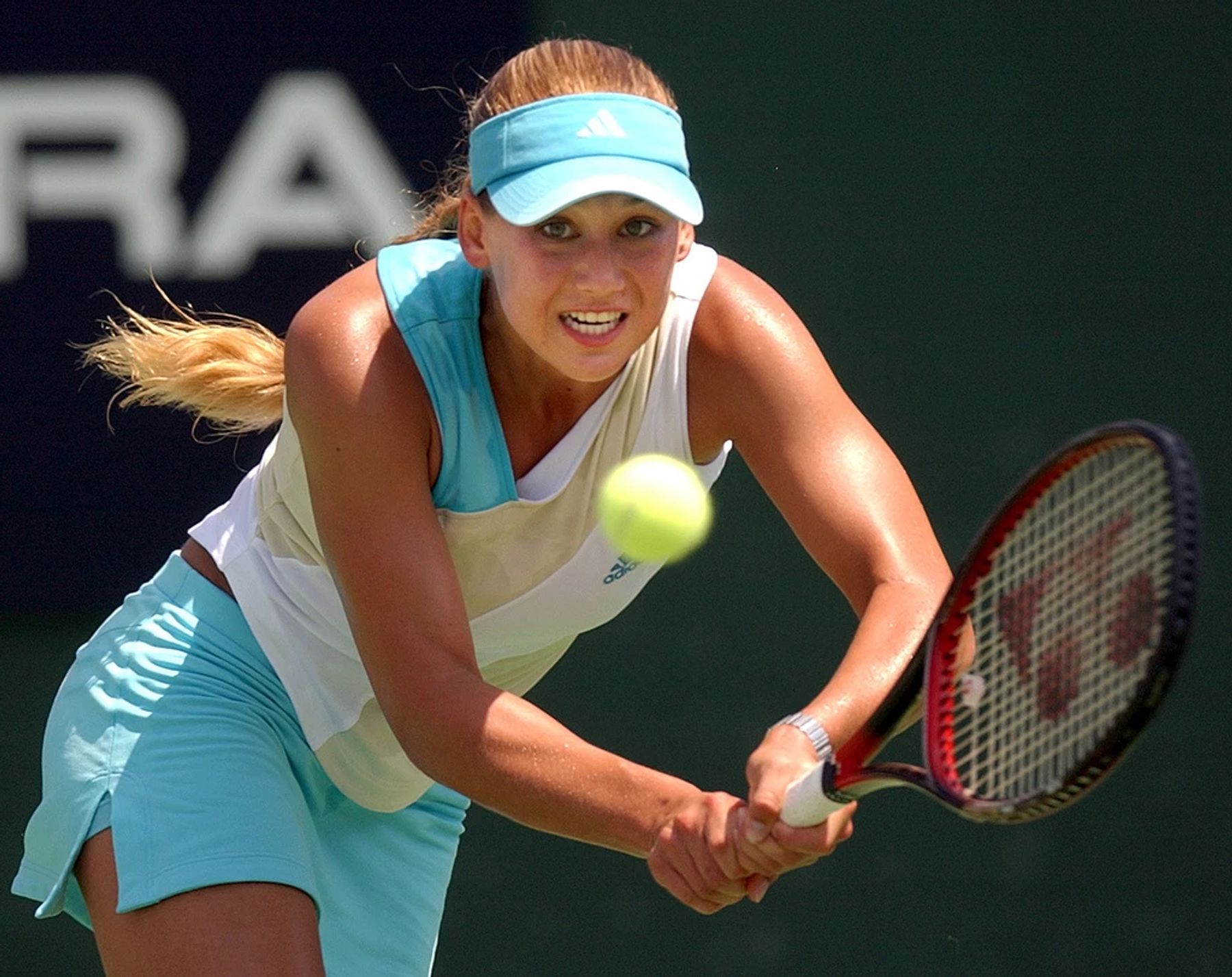
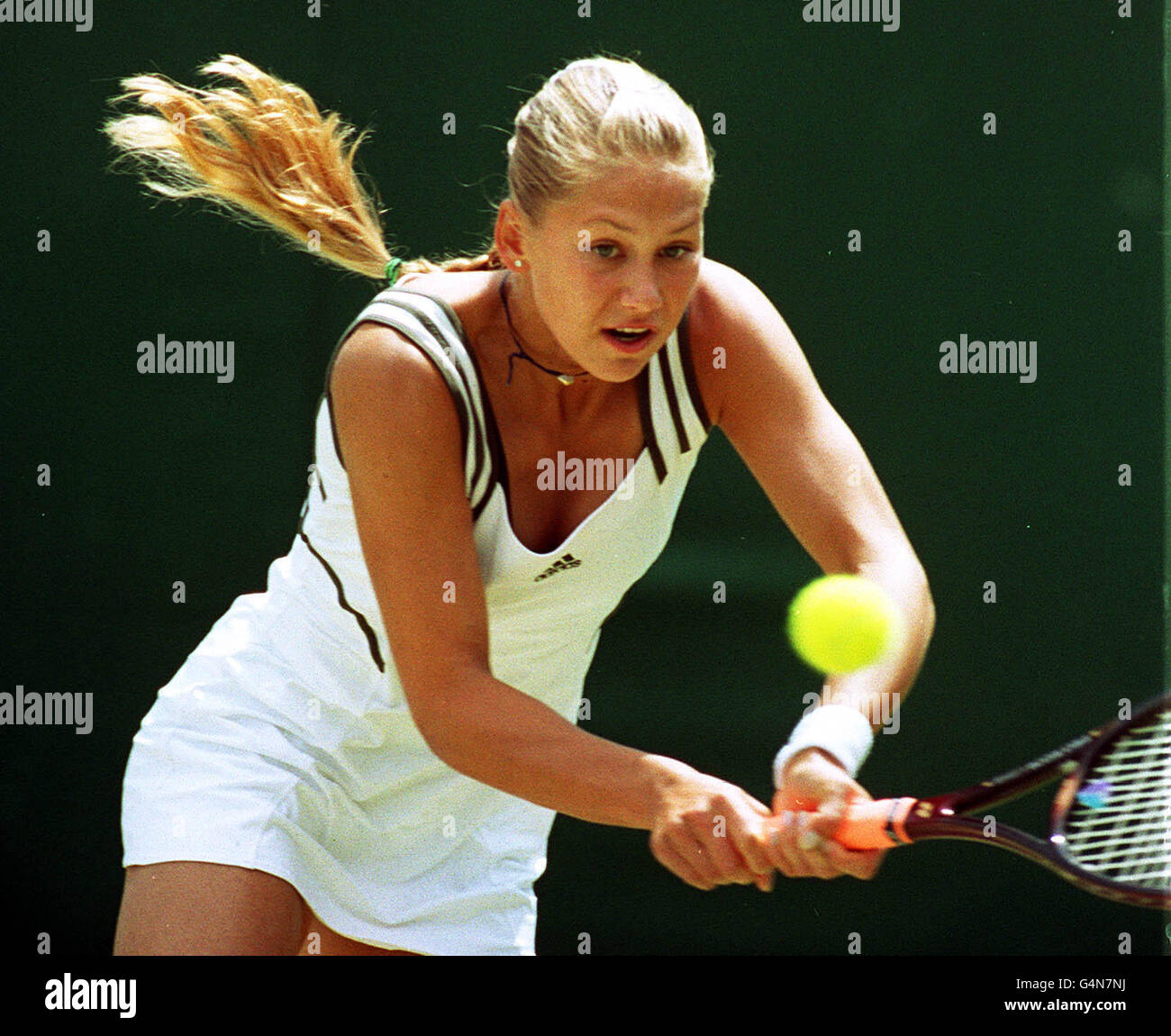
Anna Kournikova emerged onto the international sports scene in the late 1990s as a teenage prodigy, transforming from a promising junior champion into one of the most recognizable global sports icons in history. While her professional career concluded without a coveted Women's Tennis Association singles title, her profound impact on the sport's commercial landscape, her elite prowess in doubles competition, and her enduring cultural footprint established a complex legacy that continues to define modern athletic celebrity.
Early Life and Rise Through the Junior Ranks
Born on June 7, 1981, in Moscow, Soviet Union, Anna Sergeyevna Kournikova displayed an early affinity for physical coordination and athletics. Her father, Sergei Kournikov, was a Greco-Roman wrestling champion and sports science professor, while her mother, Alla Kournikova, worked as a track coach. This athletic pedigree laid a rigorous foundation for Kournikova's development. She received her first tennis racket as a gift at the age of five and quickly transitioned from recreational play to structured training sessions at a local sports club in Moscow.
Recognizing her exceptional hand-eye coordination and rapid progression, her parents made the critical decision to enroll her in the prestigious Spartak Tennis Club in Moscow. This facility had produced numerous tennis luminaries and provided Kournikova with access to advanced coaching methodologies. However, the political and economic climate of the crumbling Soviet Union in the early 1990s presented severe training limitations, including a lack of adequate court time, modern equipment, and international travel opportunities.
At the age of ten, Kournikova accepted an invitation to train at Nick Bollettieri's renowned tennis academy in Bradenton, Florida. Relocating to the United States with her mother marked a major turning point in her development. The academy environment exposed her to intensive, professional-grade training regimens alongside other world-class prospects. Her rapid adaptation paid immediate dividends on the junior circuit:
- She captured the European Under-14 Championship in 1992.
- She became the youngest player to win the prestigious Junior Orange Bowl Under-12 tournament at age 11.
- She reached the junior finals of the prestigious Orange Bowl Under-18 event as a 13-year-old.
- She was crowned the International Tennis Federation Junior World Champion in 1995, ending the year as the top-ranked junior female player globally.
Professional Breakthrough and Singles Career Dynamics
Kournikova turned professional in October 1995 at the age of 14, immediately entering Women's Tennis Association events. Her professional debut signaled the arrival of a dangerous baseliner equipped with a potent, flat two-handed backhand, exceptional court coverage, and an aggressive style of play.
Her breakthrough on the senior tour occurred in 1996 at the US Open, where she reached the fourth round as a qualifier, defeating several established players before falling to top-ranked Steffi Graf in a hard-fought match. This performance propelled her into the global spotlight, signaling that the teenage phenom could compete effectively against the world's elite. Throughout her singles career, Kournikova achieved notable milestones, including:
- Reaching a career-high singles ranking of World No. 8 in November 2000.
- Reaching the semi-finals of Wimbledon in 1997 as a 16-year-old, echoing the youthful success of Martina Hingis.
- Securing victories over almost every top-ranked player of her era, including Martina Hingis, Lindsay Davenport, Lindsay Pierce, and Justine Henin.
- Consistently maintaining a position within the top 20 of the WTA singles rankings for multiple consecutive seasons during her physical peak.
Despite these notable achievements, a persistent debate followed Kournikova's singles career due to the absence of a WTA singles title. Critics frequently pointed out the disparity between her immense global fame, commercial marketability, and her lack of a singles trophy. Analysts and sports psychologists often attributed this statistical anomaly to a combination of factors:
- Injuries: A series of severe back, foot, and spinal injuries significantly curtailed her training consistency and explosive lateral movement after 2001.
- Media Pressure: The relentless tabloid scrutiny and media circus surrounding her personal life created immense psychological pressure that few athletes at that age were equipped to manage.
- Playing Style Adjustments: Her aggressive, high-risk baseline game often produced high unforced error counts against defensively sound, top-tier opponents who neutralized her pace.
Dominance in Professional Doubles
While her singles career is often scrutinized through the lens of unfulfilled potential, Kournikova's doubles career stands among the most successful of her generation. She found a natural synergy in team competition, utilizing her sharp volleying instincts, exceptional anticipation, and powerful serve to excel in partnership with some of the greatest players in the history of the sport.
Her most celebrated and enduring partnership was with Swiss star Martina Hingis. Dubbed the "Spice Girls of Tennis" by the media due to their youthful charisma, global popularity, and dominant play, the duo formed an unbeatable tandem on hard courts and grass. Together, Kournikova and Hingis achieved monumental success:
- Captured two Grand Slam women's doubles titles at the Australian Open (1999 and 2002).
- Won the prestigious WTA Tour Championships doubles title in 1999 and 2000.
- Achieved the coveted World No. 1 individual and team doubles ranking in November 1999.
- Reached multiple additional Grand Slam finals and semi-finals throughout the late 1990s and early 2000s.
Beyond her partnership with Hingis, Kournikova also experienced success in mixed doubles, reaching the final of the 1999 US Open alongside partner. Her tactical awareness and quick reflexes at the net made her one of the most feared and respected doubles competitors on the professional tour, cementing her legacy in tennis history regardless of her singles statistics.
| Tournament / Milestone | Singles Achievement | Doubles Achievement |
|---|---|---|
| Highest WTA Ranking | World No. 8 (November 2000) | World No. 1 (November 1999) |
| Grand Slam Best Result | Semi-Finals (Wimbledon 1997) | Winner (Australian Open 1999, 2002) |
| Year-End Championships | Qualifier | Winner (1999, 2000) |
| WTA Career Titles | 0 Singles Titles | 16 Doubles Titles |
Cultural Impact, Media Phenomenon, and Commercial Legacy
Anna Kournikova occupies a unique intersection in sports history as one of the very first athletes to leverage the emerging internet culture and global media landscape to achieve crossover pop-culture celebrity status. Long before social media platforms allowed athletes to curate their own personal brands, Kournikova's name was a dominant search engine query, frequently topping global lists for internet searches ahead of political leaders, actors, and historical figures.
Her photogenic appeal, combined with her fierce competitive drive on the court, made her a darling of the global advertising industry. She secured multi-million dollar endorsement portfolios with global conglomerates, including sportswear giants, watchmakers, cosmetics brands, and technology companies. These partnerships fundamentally altered how female athletes were marketed, proving that athletic prowess and high fashion could intersect to generate unprecedented commercial value.
However, this hyper-visibility came with a cost. The mainstream media frequently focused more on her physical appearance than her athletic achievements, leading to unfair characterizations that often overshadowed her technical skill, dedication, and competitive grit. Despite these external narratives, Kournikova remained remarkably focused on her training and maintained professional relationships with her peers on the tour.
Retirement and Post-Tennis Endeavors
Chronic back injuries, including a severe stress fracture in her lumbar spine, ultimately forced Kournikova to prematurely retire from professional tennis in 2003 at the age of 21. Rather than lingering on the tour in a diminished physical capacity, she made the definitive choice to step away from competitive sport entirely and transition into philanthropic work, media appearances, and private life.
In the years following her retirement, Kournikova dedicated substantial time to charitable causes. She served as an ambassador for Population Services International (PSI), working on HIV/AIDS prevention initiatives, and supported various children's health organizations, including the Ronald McDonald House and the Elizabeth Glaser Pediatric AIDS Foundation.
In 2011, she expanded her media presence by joining the television show The Biggest Loser as a celebrity trainer for Season 12, bringing her disciplined athletic background and motivational approach to health and wellness to a mainstream television audience. Since then, Kournikova has maintained a private life, residing in Miami with her partner, Spanish singer Enrique Iglesias, and raising their children away from the relentless glare of the tabloid media that defined her formative years.
Frequently Asked Questions
Did Anna Kournikova ever win a professional singles title?
No, Anna Kournikova never won a WTA-sanctioned professional singles title during her career. However, she reached four singles finals and achieved a career-high singles ranking of World No. 8, while also securing 16 professional doubles titles, including two Grand Slam championships.
What caused Anna Kournikova to retire so early from tennis?
Kournikova retired from professional tennis in 2003 at the age of 21 primarily due to chronic and severe back injuries, including spinal disc issues and lumbar stress fractures. These physical ailments severely impacted her ability to train and compete at the elite level required on the professional tour.
How many Grand Slam titles did Anna Kournikova win?
Kournikova won two Grand Slam titles in women's doubles, both at the Australian Open in partnership with Martina Hingis (in 1999 and 2002). She also reached the final of the 1999 US Open in mixed doubles alongside partner.
What is Anna Kournikova's legacy in tennis?
Her legacy is dual-faceted: she is remembered as an elite doubles player who reached the World No. 1 ranking, and as a cultural pioneer who transformed the commercial marketability of female athletes and shaped the modern era of sports celebrity.
Is Anna Kournikova still involved in tennis?
Kournikova is no longer active in professional tennis or coaching circuits. Following her retirement, she transitioned into philanthropic work, television media projects, and private family life, largely stepping away from the public spotlight.
Next Steps and Further Exploration
For sports enthusiasts and researchers interested in the evolution of women's tennis, exploring the historical matches of the late 1990s provides valuable context regarding the transition from traditional baseline play to the modern, power-driven game. Examining the broader history of doubles partnerships in the WTA offers additional insight into the strategic depth required to achieve elite team rankings.