Allstate’s mileage-based insurance, primarily known as Milewise, is a pay-per-mile telematics program designed for low-mileage drivers. Unlike traditional policies with fixed premiums, Milewise calculates your cost based on a daily base rate plus a per-mile fee, allowing drivers who travel less than 10,000 miles annually to significantly reduce their monthly insurance expenses.
Understanding the Allstate Milewise Program Structure
In the landscape of 2026 insurance products, the shift toward personalization has made mileage-based coverage a cornerstone for major carriers. Allstate Milewise represents a departure from the "actuarial average" model, where low-risk, low-mileage drivers effectively subsidize the risks of high-mileage commuters. By utilizing real-time data, the program aligns the cost of coverage directly with the frequency of road exposure.
The financial structure of a Milewise policy is divided into two distinct components. The daily base rate functions similarly to a subscription fee. This rate covers the "static" risks associated with owning a vehicle, such as theft, vandalism, or damage from extreme weather events—incidents that can occur even when the car is parked in a garage. The per-mile rate covers the "dynamic" risks associated with active driving, such as collisions or liability for accidents. Typically, these rates are deducted from a prepaid account that the policyholder maintains, which automatically replenishes once it reaches a certain minimum balance.
This model provides a level of transparency that traditional policies lack. Instead of waiting for a semi-annual renewal to see how your habits affect your costs, you can see the financial impact of every trip through the Allstate mobile application. For a driver who only uses their vehicle for weekend errands or short trips to the train station, the savings can reach upwards of 30% to 50% compared to a standard comprehensive policy.
How Milewise Calculates Your Premium in 2026
To understand if this coverage is financially viable, one must look at the specific arithmetic Allstate employs. While individual rates are determined by standard factors—such as age, driving record, vehicle make and model, and credit score (where permitted by law)—the variable component is strictly mathematical.
Consider a hypothetical driver in 2026 with the following Milewise rates:
- Daily Base Rate: $1.50
- Per-Mile Rate: $0.07
If this driver travels 10 miles in a day, their total cost for that day is $2.20 ($1.50 + $0.70). If the car remains parked all day, the cost is simply $1.50. Over a 30-day month with 300 miles driven, the total premium would be $66.00. In contrast, a traditional policy for the same driver might cost $110.00 per month, regardless of whether they drove 300 miles or 1,300 miles.
One critical feature of the Allstate mileage-based insurance system is the Daily Mile Cap. Allstate understands that even low-mileage drivers occasionally take long trips or vacations. To prevent a single road trip from becoming prohibitively expensive, Milewise typically caps the charged miles at 250 miles per day. If you drive 400 miles in a single day, you are only charged for the first 250 miles at your per-mile rate, plus your daily base rate. This safety net makes the program flexible enough for the occasional cross-state journey without necessitating a switch back to a traditional policy.
Technical Requirements and Tracking Methods
Participation in Allstate’s mileage-based program requires a method of data transmission to track distance accurately. As of 2026, Allstate utilizes three primary methods for data collection, depending on the vehicle's age and the policyholder's preference.
The OBD-II Plug-in Device
For older vehicles (typically those manufactured between 1996 and 2023), Allstate provides a small telematics device that plugs into the On-Board Diagnostics (OBD-II) port. This port is usually located under the dashboard on the driver’s side. The device contains a GPS chip and a cellular transmitter that sends mileage data directly to Allstate. It is important to note that the device must remain plugged in at all times; removing it can result in a loss of coverage or a default to a higher "untracked" mileage rate.
The Allstate Mobile App
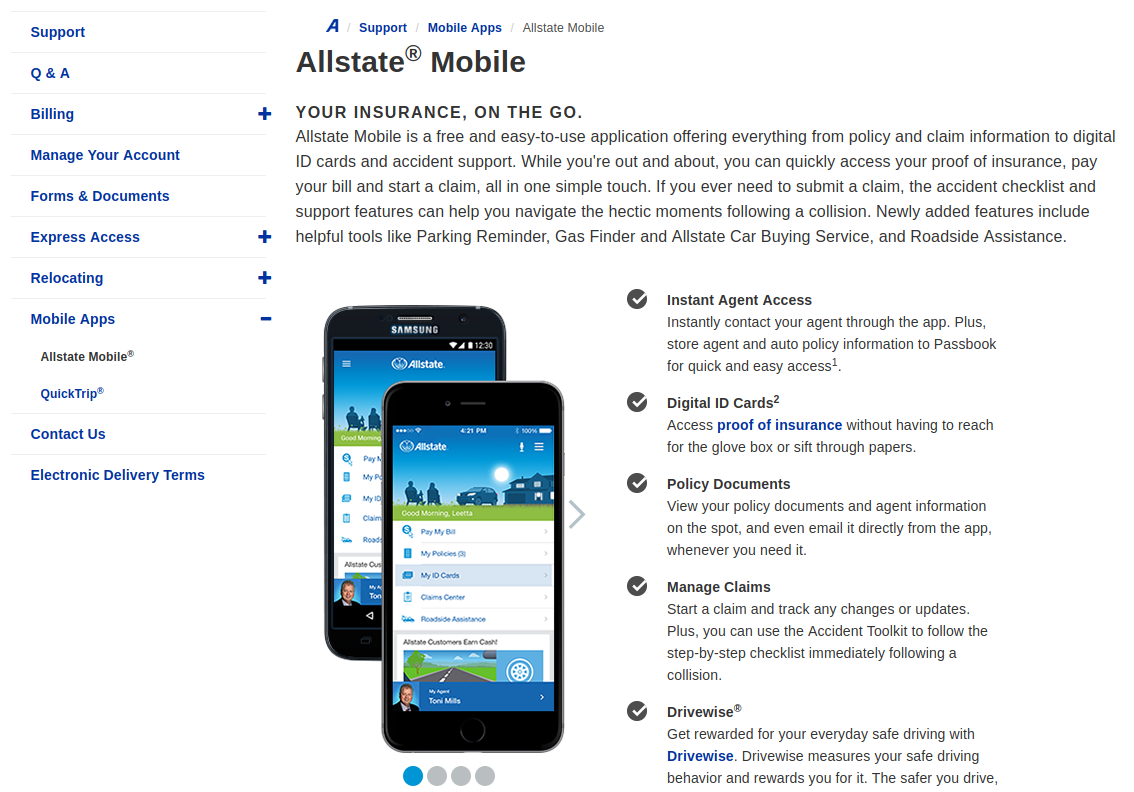
Many users prefer a "device-free" experience. Allstate’s mobile application can use the smartphone’s internal sensors (GPS, accelerometer, and gyroscope) to track trips. The app distinguishes between driving a car and being a passenger on a bus or train by analyzing movement patterns and speed profiles. However, this method requires the user to keep their phone charged and location services enabled at all times.
Connected Car Integration
For newer vehicles equipped with built-in telematics (such as FordPass Connect, Toyota Connected Services, or GM’s OnStar), Allstate can often pull mileage data directly from the manufacturer’s cloud. This eliminates the need for extra hardware or smartphone tracking, providing the most seamless experience for the user.
Who Should Choose Mileage-Based Insurance?
Mileage-based insurance is not a universal solution. It is a niche product designed for a specific demographic of drivers. Identifying whether you fit this profile is essential before switching from a traditional policy.
- Remote and Hybrid Workers: With the permanent shift toward remote work that solidified in the mid-2020s, many professionals no longer commute daily. If your car sits in the driveway five days a week, you are an ideal candidate for Milewise.
- Retirees: Seniors who no longer have a daily commute and primarily use their vehicles for local shopping and social visits often fall well below the 10,000-mile-per-year threshold.
- Urban Dwellers and Transit Users: If you live in a city with robust public transportation and only use your car for "big" grocery runs or visiting relatives outside the city, pay-per-mile is likely cheaper.
- Multi-Vehicle Households: Many families have a primary vehicle for commuting and a secondary "utility" vehicle (like a truck for hauling or a convertible for summer weekends). Placing the secondary vehicle on a mileage-based plan can reduce the total household insurance burden.
- College Students: Students living on campus who rarely drive except for trips home during holidays can save significantly, especially since young drivers often face the highest traditional insurance rates.
Comparative Analysis: Milewise vs. Drivewise
It is common for consumers to confuse Allstate Milewise with Allstate Drivewise. While both are telematics-based programs, they serve different purposes and use data in different ways.
Allstate Drivewise is a "behavior-based" program. It is an add-on to a traditional insurance policy. It tracks how you drive—looking for hard braking, high speeds (above 80 mph), and late-night driving. If you drive safely, you receive a discount on your existing premium. Your premium will not go up based on your mileage; it only goes down based on your safety score.
Allstate Milewise is a "usage-based" program. While it may monitor some safety behaviors (depending on the state), its primary function is to determine the quantity of your driving. In some states, Milewise also incorporates Drivewise-style safety feedback, meaning safe driving habits could potentially lower your per-mile rate, but the fundamental billing unit remains the mile.
| Feature | Allstate Milewise | Allstate Drivewise |
|---|---|---|
| Primary Metric | Number of miles driven | Safety of driving habits |
| Pricing Model | Daily Base + Per-Mile Fee | Fixed Premium - Safe Driving Discount |
| Best For | Low-mileage drivers (<10k miles/year) | Safe drivers with any mileage |
| Billing Frequency | Pay-as-you-go (Prepaid) | Standard Monthly/Semi-Annual |
| Hardware Required | Yes (Device, App, or Connected Car) | Yes (App or Device) |
| Max Savings Potential | Very high for low mileage | Up to 40% discount on traditional policy |
Pros and Cons of Allstate Mileage-Based Coverage
The Advantages
The most immediate benefit is financial control. Drivers have the power to lower their bills simply by choosing to walk, bike, or take the bus. Furthermore, Milewise provides an incredibly detailed log of your driving history. This can be useful for budgeting or for parents who want to monitor the driving habits of their teenagers. The transparency of the daily billing cycle also means there are no surprises at the end of the month; you know exactly what you owe as you go.
The Disadvantages
The primary concern for most users is privacy. To track mileage, Allstate must know when and, in some cases, where the vehicle is moving. While Allstate maintains strict data privacy protocols and claims they do not sell individual location data to third parties, the mere existence of a digital trail of one’s movements is a deal-breaker for some.
Another drawback is the risk of high costs during lifestyle changes. If a driver suddenly takes a job with a long commute or begins a high-mileage hobby, the Milewise policy can quickly become more expensive than a traditional one. Monitoring the "break-even point" is a continuous responsibility for the policyholder.
State Availability and Legal Considerations
As of 2026, mileage-based insurance is subject to varying state regulations. Not all states have approved pay-per-mile models, as some insurance commissioners have concerns regarding "fairness" and "predictability" for consumers.
Milewise is currently available in approximately 20 to 25 states, including major markets like Texas, Florida, Illinois, and Ohio. However, states like California have historically had stricter regulations regarding how telematics data can be used to set rates, often requiring different versions of these programs or prohibiting them entirely.
Before enrolling, it is vital to verify that the program is active in your specific ZIP code. You can check the current availability through the Allstate Milewise official portal. Additionally, users should be aware that the terms of the "Daily Mile Cap" and "Safety Surcharges" can vary significantly by state based on local insurance laws.
Step-by-Step Guide to Enrolling in Milewise
- Request a Quote: Visit Allstate’s website and select the Milewise option. You will need your Vehicle Identification Number (VIN) and current odometer reading.
- Establish the Prepaid Account: Once approved, you will be asked to fund a prepaid account (usually starting at $50 or $100). This account is used to pay your daily and per-mile rates.
- Install the Tracking Technology: If you are using a plug-in device, Allstate will mail it to you. You must plug it into the OBD-II port within a specific timeframe (usually 7-14 days) to keep the policy active. If using the app or connected car, you will follow the digital prompts to sync the vehicle.
- Monitor Your Balance: Ensure your "Always On" replenishment is set up. This automatically pulls funds from your bank or credit card when your insurance balance runs low, preventing a lapse in coverage.
- Review the Monthly Statement: Each month, Allstate provides a summary of your trips, miles, and costs. Review this to ensure all trips were categorized correctly.
Frequently Asked Questions
Does Milewise track where I drive or just how far?
While the primary purpose of Milewise is to track distance (how far), the technology used (GPS in the device or smartphone) technically tracks location (where). Allstate uses this location data to verify mileage and, in some states, to provide "location-based services" like roadside assistance. However, the billing is strictly based on distance, not the specific routes taken.
What happens if I forget to plug in the device?
If the device is unplugged, Allstate will send you an alert via email or the mobile app. If it remains unplugged for an extended period, the company may charge a default high-mileage rate (often 100 miles per day) or cancel the policy for non-compliance with the program's terms.
Can I switch back to a traditional Allstate policy?
Yes. If your driving habits change—for example, if you move from an urban center to a suburb—you can contact your Allstate agent to transition back to a standard fixed-premium policy. There is typically no penalty for switching, though your new rate will be based on traditional actuarial data.
Is the coverage the same as a regular policy?
Yes. Allstate Milewise provides the same coverage options as a traditional policy, including Bodily Injury Liability, Property Damage Liability, Collision, Comprehensive, and Uninsured/Underinsured Motorist coverage. The only difference is the method of calculating the premium.
Does it cost extra to have the Milewise device?
No, Allstate provides the OBD-II device and the mobile app at no additional cost to the policyholder. The "cost" is effectively built into the daily base rate.
Practical Recommendation: Is Milewise Right for You?
The transition to mileage-based insurance is a data-driven decision. If your annual mileage is under 8,000 miles, Milewise is almost certainly a financial win. Between 8,000 and 10,000 miles, the savings become more marginal, and you should compare your Milewise quote against a traditional quote with a "Low Mileage Discount." If you drive more than 12,000 miles per year, stay with a traditional policy, as the per-mile fees will likely exceed the cost of a fixed premium.
For those concerned about privacy, the connected car integration is the preferred route, as it limits the data stream to odometer readings rather than continuous GPS pings from a smartphone app. Regardless of the method, Milewise represents the future of equitable insurance, where you finally stop paying for the miles you don't drive.