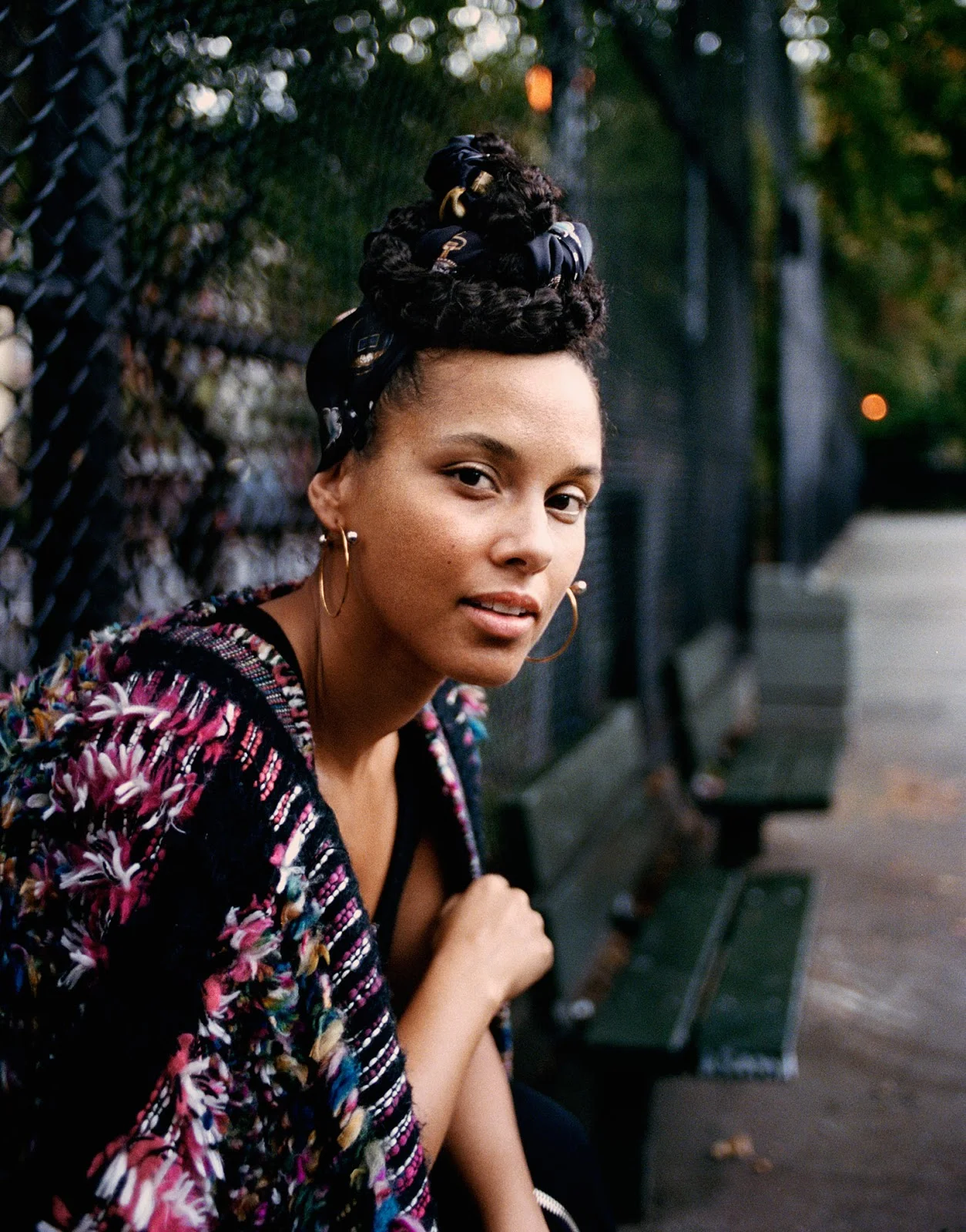
The Alicia Keys no makeup movement began in May 2016 when the Grammy-winning singer-songwriter publicly pledged to stop wearing cosmetic products, challenging systemic beauty standards that equate female worth with physical perfection. What started as a personal quest for self-acceptance evolved into a widespread cultural conversation about bodily autonomy, skincare, and authentic self-expression.
The Origins: "Time to Uncover" and the 2016 Turning Point
In May 2016, Alicia Keys published an essay in Lena Dunham and Jenni Konner's feminist newsletter, Lenny Letter, titled "Time to Uncover." In the piece, Keys detailed the persistent psychological pressure she felt since entering the music industry as a teenager. She described the constant anxiety of leaving her home without cosmetics, fearing public scrutiny, paparazzi photographs, and the judgment of an industry obsessed with immaculate surfaces.
The catalyst for her decision occurred during a photo shoot for her sixth studio album, Here (2016). Photographer Paola Kudacki insisted on photographing Keys immediately after she arrived from the gym—sweaty, wearing a sweatshirt, and completely bare-faced. Despite initial discomfort, Keys described the experience as deeply empowering. The resulting portrait became the album's official artwork, signaling a decisive break from the airbrushed, hyper-stylized visual language typical of mainstream pop and R&B music.
Keys wrote that she did not want to cover up anymore: not her face, her mind, her soul, her thoughts, her dreams, or her emotional growth. The essay struck an immediate chord across digital media, igniting what journalists and cultural commentators quickly labeled the "Alicia Keys no makeup movement."
Deconstructing the Pressure: Why the Statement Resonated
To understand why Keys' decision provoked such an intense global reaction, it is necessary to consider the visual culture of 2016. The mid-2010s represented the peak of "Instagram glam"—an aesthetic defined by full-coverage matte foundation, aggressive contouring, razor-sharp "Instagram brows," heavy baking with translucent powder, and dramatic liquid matte lipstick. Popularized by beauty influencers and reality television icons, this labor-intensive approach to cosmetics had become the baseline expectation for women in public and professional spheres.
Keys' public refusal of this routine challenged several interconnected social norms:
- The Professional Requirement of Polish: For decades, women in corporate and entertainment environments faced unwritten rules requiring cosmetic enhancement as a prerequisite for appearing "professional," "put-together," or "presentable."
- The Eradication of Flaws: Mainstream photography and social media algorithms heavily favored poreless, homogenized complexions, pathologizing normal human skin texture, hyperpigmentation, and fine lines.
- The Time and Financial Tax: Maintaining an elaborate cosmetic regimen demands substantial daily time and financial investment, a burden distributed unevenly across gender lines.
By walking onto international stages without cosmetics, Keys disrupted the assumption that a woman's public presentation requires aesthetic self-policing.
High-Profile Appearances: Testing the Resolve in Public Arenas
Keys did not confine her bare-faced stance to magazine articles or private settings. She systematically brought her unadorned appearance to major, televised media events, proving that her statement was not an ephemeral marketing gimmick.
The 2016 MTV Video Music Awards
In August 2016, Keys appeared on the red carpet and the main stage of the MTV Video Music Awards with a bare face, dressed in a red and black vintage Just Cavalli gown. While presenting the award for Best Male Video, she delivered a poem honoring Martin Luther King Jr.'s "I Have a Dream" speech and sang a cappella. Her appearance generated intense polarized commentary across social platforms, demonstrating how radical a bare face remained in high-glamour entertainment spaces.
Coaching on NBC's The Voice
During Seasons 11 and 12 of NBC's The Voice, Keys occupied one of the iconic red coach chairs without traditional television makeup. High-definition television broadcasting had long relied on heavy foundation, primers, and powder to combat bright studio lighting. Keys' appearance on prime-time network television demonstrated that natural skin could exist in broadcast environments without diminishing a performer's stature or screen presence.
Major Red Carpets and the Grammy Awards
Keys maintained her minimalist aesthetic through subsequent appearances at the Met Gala, the UEFA Champions League Final opening ceremony, and the Grammy Awards, which she hosted in 2019 and 2020. During these broadcasts, her visual styling centered on clear skin, natural curls, statement jewelry, and high-fashion tailoring, presenting a coherent counter-narrative to traditional evening-wear conventions.
Public Backlash and Clarifying the Stance
As the movement gained international momentum, it encountered scrutiny and misinterpretation from critics, industry insiders, and consumers alike.
The "Anti-Makeup" Misconception
A prominent criticism held that Keys was implicitly shaming women who enjoy wearing cosmetics, framing makeup wearers as insecure or superficial. In response, Keys took to social media to clarify her position, stating: "Y'all, me choosing to be makeup free doesn't mean I'm anti-makeup. Do you!"
Keys consistently reiterated that her movement was centered on choice and autonomy rather than dogmatic purity. Her critique targeted the obligation to wear makeup, not makeup itself. She advocated for a cultural paradigm where wearing cosmetics is an intentional, creative choice rather than an involuntary social tax imposed to conceal perceived deficiencies.
The Privilege Critique
Another sustained critique involved the financial and genetic privilege required to comfortably go bare-faced. Critics noted that Keys possessed symmetrical facial features and access to elite dermatologists, high-end facialists, and specialized treatments—resources inaccessible to the average person dealing with chronic acne, rosacea, or severe discoloration.
This critique led to greater transparency regarding the labor and investment behind her bare skin. Keys' long-time makeup artist and aesthetician, Dotti, publicly outlined the comprehensive regimen used to prepare Keys' complexion for high-profile events. The routine incorporated:
- Facial Acupuncture and Lymphatic Drainage: Techniques aimed at stimulating blood circulation and reducing inflammation.
- Cryotherapy Treatments: Rolling the skin with chilled ice spheres to tighten tissue and calm redness.
- Natural Topical Applications: Using grated organic cucumber masks to draw heat and fluid out of stressed skin.
- Targeted Facial Oils: Utilizing jojoba and rosehip seed oils to maintain skin barrier health without heavy silicone-based primers.
By acknowledging the dedicated care behind her skin, the conversation shifted from an unrealistic standard of "effortless perfection" toward practical dermatological health and barrier preservation.
The Evolution of Celebrity Beauty Norms
The Alicia Keys no makeup movement established a precedent that reverberated through the beauty and entertainment industries over the ensuing decade. While full-coverage cosmetics remain a viable creative medium, the cultural expectation of mandatory coverage significantly eroded.
| Dimension | Mid-2010s "Instagram Glam" | Alicia Keys' Bare-Faced Pivot (2016–2018) | Modern Skin Minimalism (2020s–2026) |
|---|---|---|---|
| Complexion Goal | Matte, full-coverage, poreless, heavily baked | Completely bare, natural texture, freckles visible | Hydrated, sheer tints, skin barrier-first approach |
| Eye & Brow Styling | Intricate cut-creases, dramatic liner, block brows | Natural, brushed-up brows, bare eyelashes | Laminated or soft brows, light mascara or tint |
| Social Expectation | Mandatory coverage for formal and red-carpet events | Deliberate disruption of red-carpet norms | Total flexibility: full glam or completely bare accepted |
| Primary Category Spend | Palettes, setting powders, high-coverage concealers | Clean cleansers, natural oils, cryo tools | Multi-use barrier balms, SPF serums, gentle actives |
| Celebrity Precedent | Reality TV-driven aesthetic standardization | Alicia Keys' high-profile awards show appearances | Pamela Anderson, Gwyneth Paltrow, and casual red carpets |
Following Keys' groundwork, numerous public figures embraced bare-faced public appearances. Notably, Pamela Anderson made headlines in 2023 and 2024 by attending Paris Fashion Week completely bare-faced, explicitly echoing Keys' philosophy of embracing one's current stage of life without cosmetic camouflage.
From Statement to Industry: The Launch of Keys Soulcare
Rather than leaving her movement as an abstract social commentary, Keys channeled her philosophy into the beauty marketplace. In late 2020, in partnership with e.l.f. Beauty, she launched Keys Soulcare.
The brand was strategically positioned not as a conventional cosmetics enterprise or a purely corrective skincare line, but as a "soulcare" ritual. Formulated in collaboration with board-certified dermatologist Dr. Renée Snyder, the product line emphasized skin health, clean formulations, and mindfulness.
Strategic Distinctions of Keys Soulcare
- Dermatologist-Developed Clean Formulations: Products were created following stringent European Union standards, avoiding parabens, phthalates, and sulfates, with an emphasis on gentle ingredients like bakuchiol, malachite, and manuka honey.
- Affirmation-Based Rituals: Every product package included a written affirmation (e.g., "I welcome all possibilities," "I am strong and capable"), intentionally reconnecting personal grooming with mental well-being.
- Expansion into Hybrid Color (2022–2026): Over time, the brand introduced subtle, skin-enhancing color products—such as tinted lip balms and sheer cheek flushes. This expansion concretely reflected Keys' nuanced message: cosmetics can serve as optional self-expression rather than a corrective mask.
Practical Application: Adopting a Skin-First Routine
For individuals seeking to embrace their natural skin and reduce reliance on heavy cosmetic products, the shift requires strategic adjustments in both skincare methodology and psychological expectations.
Step 1: Repair and Fortify the Skin Barrier
Heavy cosmetic application is often used to mask irritation, dehydration, or unevenness caused by harsh skincare practices. Transitioning to a bare or minimalist complexion requires prioritizing barrier health:
- Switch from stripping, foaming cleansers to hydrating, non-foaming cream or oil-based cleansers.
- Incorporate humectants like glycerin and hyaluronic acid on damp skin to maintain cellular hydration.
- Seal hydration using physiological lipids, including ceramides, squalane, and fatty acids.
Step 2: Implement Targeted Skin-Prep Techniques
Instead of relying on heavy primers and silicones to smooth texture, incorporate physical preparation methods used by celebrity aestheticians:
- Cold Therapy: Apply chilled facial rollers or ice globes for two to three minutes in the morning to reduce lymphatic fluid pooling and soothe surface erythema.
- Facial Massage: Dedicate three to five minutes to manual upward lymphatic drainage massage, stimulating local circulation and imparting natural luminescence.
Step 3: Shift from Masking to Targeted Spot-Treating
Transitioning away from a full face of foundation does not demand an all-or-nothing approach. A gradual, sustainable transition involves:
- Replacing medium-to-full coverage foundations with sheer skin tints, hybrid serums, or tinted mineral sunscreens containing iron oxides.
- Using a high-pigment, precise pin-point concealer applied solely to areas of active inflammation or deep hyperpigmentation, leaving the surrounding 90% of the skin bare.
Step 4: Manage the Psychological Adjustment
Going bare-faced in professional or social settings often triggers initial self-consciousness. Habituate gradually by wearing bare skin in low-stakes environments (e.g., weekend errands or casual dinners) before transitioning to high-stakes professional meetings or formal evening events.
Frequently Asked Questions
Did Alicia Keys permanently stop wearing makeup?
No. Alicia Keys clarified that her decision was not a permanent, dogmatic vow never to use cosmetics again. Rather, it was a refusal to feel obligated to wear makeup to meet society's expectations. While she frequently attends red carpet events and television tapings completely bare-faced, she also wears minimalist, artistic, or hybrid cosmetic products when she chooses to do so for creative self-expression.
Why did Alicia Keys' movement cause controversy?
The controversy stemmed from two primary factors. First, some commentators interpreted her statement as an implicit moral judgment against women who enjoy wearing cosmetics. Second, critics pointed out that going bare-faced is significantly easier for high-profile celebrities with symmetrical features, wealthy lifestyles, and access to world-class aestheticians, dermatologists, and facial treatments than it is for the average consumer dealing with untreated dermatological conditions.
What was the name of the essay that started the movement?
The movement was ignited by Keys' essay titled "Time to Uncover," published in May 2016 in Lena Dunham's feminist digital publication, Lenny Letter. In the piece, Keys detailed her exhaustion with unrealistic beauty standards and described the liberation of being photographed without cosmetics for her album Here.
What skincare products did Alicia Keys use to achieve her bare-faced look?
During her initial transition, her aesthetician Dotti utilized a combination of natural holistic treatments and performance skincare. This included regular jade-rolling, facial acupuncture, cold therapy with ice spheres, grated cucumber masks to reduce heat and redness, and pure botanical oils like jojoba and rosehip seed. Later, Keys developed her own brand, Keys Soulcare, formulating products with ingredients like oat milk, malachite, and bakuchiol.
How did the movement impact the broader beauty industry?
Keys' high-profile stance accelerated the transition toward "skinimalism" and the "clean beauty" category. Her actions contributed to a market shift away from heavy, full-coverage 2016-era "Instagram glam" toward skin barrier repair, sheer coverage tints, tinted sunscreens, and hybrid skincare-makeup products. It also broadened the cultural acceptance of bare skin on major red carpets and in high-fashion contexts.
Moving Forward: Redefining Your Relationship with Beauty
The ultimate legacy of the Alicia Keys no makeup movement is not the eradication of cosmetics, but the reclaiming of personal agency. True confidence does not stem from adhering strictly to bare skin, nor does it stem from hiding behind a full-coverage mask. It resides in the freedom to choose your self-presentation daily without fear of social judgment.
To implement this philosophy in your own life, evaluate your morning routine: identify which steps are driven by genuine joy or creative expression, and which are dictated by fear or perceived social obligation. Systematically eliminate the steps driven by anxiety, invest in your foundational skin health, and allow your natural skin texture to exist in the world without apology.