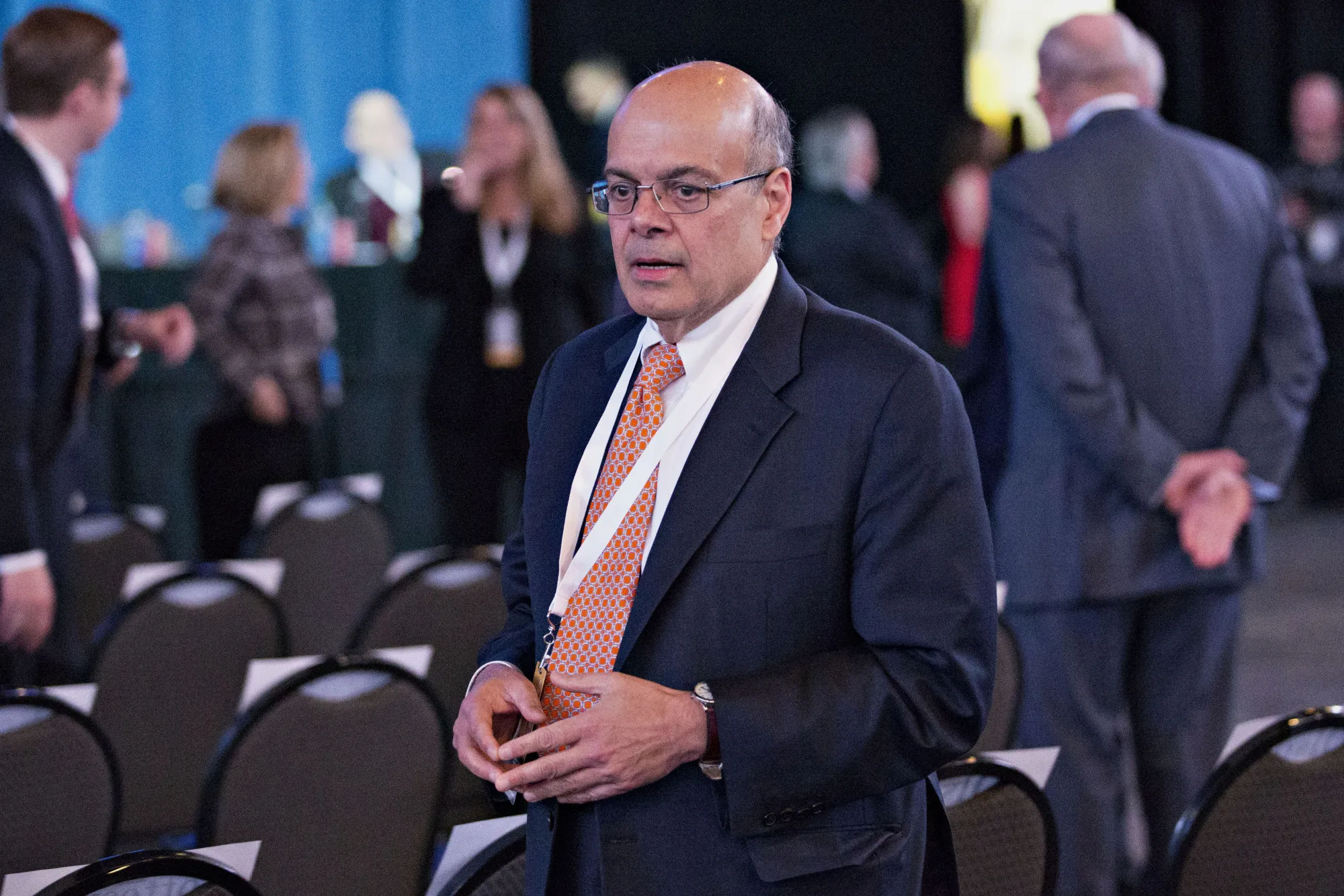
In September 2024, Ajit Jain, Berkshire Hathaway’s Vice Chairman of Insurance Operations, sold 200 of his Class A shares for approximately $139 million. This transaction represented a liquidation of more than 50% of his direct holdings and occurred while the stock was trading near record highs, signaling potential concerns regarding the company’s valuation.
The sale by Ajit Jain stands as one of the most significant insider transactions in the history of Berkshire Hathaway. As of 2026, market analysts continue to view this event as a critical benchmark for evaluating the intrinsic value of the conglomerate and the personal financial planning of its top leadership. To understand the gravity of this move, one must examine the specific mechanics of the trade, the role Jain plays within the organization, and the broader economic environment that precipitated such a large-scale exit of capital by a key executive.
The Specifics of the September 2024 Transaction
On September 9, 2024, Ajit Jain executed the sale of 200 Berkshire Hathaway Class A shares (BRK.A). According to the Form 4 filings submitted to the Securities and Exchange Commission (SEC), the shares were sold at an average price of $695,418 per share. The total proceeds from the sale amounted to roughly $139.1 million.
Before this transaction, Jain held a substantial stake in the company he helped build over nearly four decades. Following the sale, his direct ownership was reduced to 61 Class A shares. Additionally, he maintained indirect ownership of 55 shares through family trusts and a non-profit corporation (the Jain Foundation). While a sale of $139 million is massive by any standard, it is the percentage of the stake sold—well over half of his direct holdings—that caught the attention of institutional investors and Berkshire enthusiasts alike.
The timing of the sale was particularly noteworthy. Berkshire Hathaway’s stock had recently surpassed a $1 trillion market capitalization, a milestone that few non-technology companies have achieved. By offloading shares at these levels, Jain capitalized on a valuation that many fundamental analysts categorized as "rich" relative to the company’s historical price-to-book ratios.
Who is Ajit Jain? The Architect of Berkshire’s Insurance Engine
To appreciate why a share sale by Ajit Jain is more impactful than a typical executive liquidation, one must understand his unique position. Warren Buffett has famously stated that if he, Charlie Munger, and Ajit Jain were on a sinking boat and only one could be saved, the choice should be Ajit.
Jain joined Berkshire Hathaway in 1986. At the time, the insurance operations were significant but not the global behemoth they are today. Jain specialized in "super-catastrophe" insurance—taking on massive risks that other insurers were too afraid to touch, provided the premium was right. Under his leadership, National Indemnity and Berkshire’s reinsurance divisions became the primary engines of "float."
Float is the money that insurance companies hold between the time premiums are collected and claims are paid. At Berkshire, this float serves as the low-cost (often no-cost) capital that Warren Buffett uses to acquire other companies and invest in the stock market. As of the mid-2020s, Berkshire’s float has exceeded $160 billion, a staggering sum that is largely credited to Jain’s disciplined underwriting and risk assessment. Unlike many competitors, Jain has a reputation for willing to walk away from business if the pricing does not reflect the risk, a philosophy that has protected Berkshire from catastrophic losses during major global events.
Analyzing the "Why": Valuation and Market Signals
Insider sales occur for many reasons: diversification, tax planning, philanthropy, or personal liquidity. However, when an insider of Jain's caliber sells more than half of their position at a record high, the market naturally looks for deeper signals regarding the company’s valuation.
Price-to-Book Ratio Considerations
For decades, the primary metric for valuing Berkshire Hathaway was its price-to-book (P/B) ratio. Historically, Warren Buffett suggested that the company would buy back its own shares if the P/B ratio fell below 1.2x. In the period leading up to Jain’s sale in 2024, Berkshire’s P/B ratio had climbed toward 1.6x.
While the company has become more complex—with massive non-insurance earnings from BNSF Railway and Berkshire Hathaway Energy—the P/B ratio remains a "sanity check" for insiders. A sale at 1.6x book value suggests that an executive may believe the stock is fully valued, if not slightly overvalued, relative to its immediate growth prospects.
Estate Planning and Age
In 2024, Ajit Jain was 73 years old. For an individual with the vast majority of their net worth tied up in a single, highly illiquid asset (Class A shares), a sale of this magnitude is often a standard component of estate planning. Converting $139 million into cash or more diversified assets allows for easier distribution to heirs or charitable foundations. Given Jain’s long tenure and his age, analysts in 2026 look back at this as a pragmatic financial move rather than a "vote of no confidence" in the company's long-term future.
The Tax Environment
Executive decisions are rarely made in a vacuum regarding tax policy. Anticipation of changes in capital gains tax rates or estate tax laws often triggers large-scale liquidations. By locking in gains at the 2024 rates, Jain may have been insulating his estate from future fiscal shifts.
The Difference Between Class A and Class B Shares
It is essential to distinguish between the shares Jain sold and the more common Class B shares (BRK.B). Berkshire Hathaway Class A shares are the "original" shares. They have never undergone a stock split. Because of their high price (exceeding $700,000 at points), they are primarily held by institutional investors and long-term insiders.
- Class A (BRK.A): Carry 1 vote per share. They cannot be split but can be converted into Class B shares at any time.
- Class B (BRK.B): Carry 1/1,500th of the economic interest of a Class A share and 1/10,000th of the voting rights. These were created to allow smaller investors to own a piece of the company.
Jain’s sale of Class A shares is a "heavyweight" move. In the world of corporate governance, the liquidation of Class A shares by a Vice Chairman is a much louder signal than a retail-oriented sale of Class B shares. It reflects a shift in the core capital structure of the company's insiders.
Comparing Insider Holdings: Then and Now
The following table outlines the change in Ajit Jain's reported holdings during the pivotal 2024 period.
| Holding Type | Pre-Sale (Sept 2024) | Post-Sale (Sept 2024) | Percentage Change |
|---|---|---|---|
| Direct Class A Shares | 261 | 61 | -76.6% |
| Indirect (Trusts/Foundations) | 55 | 55 | 0% |
| Total Class A Equivalence | 316 | 116 | -63.3% |
| Estimated Market Value* | ~$219 Million | ~$80 Million | - |
*Based on an approximate price of $695,000 per share.
This table highlights that while Jain remains a significant shareholder, he moved a majority of his personal "skin in the game" to the sidelines. For external investors, this raises the question of whether the leadership team sees the same "limitless" upside that the stock’s momentum might suggest to the general public.
Succession Dynamics and Executive Stability
The sale also invited scrutiny regarding the succession plan at Berkshire. While Greg Abel was officially designated as the successor to Warren Buffett as CEO, Ajit Jain has always been the "indispensable" partner on the insurance side.
In 2026, we can see that the transition has remained stable, but Jain’s share sale was a reminder that the "Golden Era" of Berkshire—defined by the Buffett-Munger-Jain-Abel quartet—is naturally entering a new phase. When a key architect of the company’s success reduces their stake, it forces the market to consider what the "post-Jain" insurance operations might look like. Although Jain has not retired, the liquidation provided him with the flexibility to do so whenever he chooses without the pressure of managing a massive, concentrated position in the public eye.
Institutional Response and Market Sentiment
Following the news of the sale, Berkshire Hathaway shares experienced minor volatility, but there was no "panic sell." This is due to the unique shareholder base of Berkshire, which is composed largely of "permanent capital" investors—individuals and institutions who hold for decades rather than quarters.
However, professional money managers used the sale as a prompt to re-evaluate their own positions. When an insider of Jain's caliber sells, it often acts as a "soft ceiling" for the stock price in the short term. It suggests that the people with the most intimate knowledge of the company’s books do not believe the stock is a bargain at current prices. For value investors, who follow the Buffett mantra of buying at a discount to intrinsic value, Jain’s sale was a clear indicator that the "discount" had vanished.
Practical Guidance for Berkshire Shareholders
For those holding Berkshire Hathaway shares in 2026, the historical context of Ajit Jain’s sale offers several lessons in portfolio management and executive monitoring.
- Monitor Price-to-Book Ratios: If insiders are selling when the P/B ratio exceeds 1.5x or 1.6x, it is a signal to be cautious about adding new positions.
- Differentiate Between Sales: A sale for "personal reasons" is common, but a sale of more than 50% of a stake is rare and should be treated as a significant data point.
- Evaluate the Insurance Float: Since Jain’s department generates the capital for the rest of the business, any change in his status or his confidence (as reflected in share ownership) should lead to a closer look at the underwriting margins of GEICO and the reinsurance groups.
- Look at the Macro Picture: Jain’s sale happened as the Federal Reserve was navigating a complex interest rate environment. Insurance companies are highly sensitive to interest rates because their float is often invested in fixed-income securities.
Frequently Asked Questions
Did Ajit Jain leave Berkshire Hathaway after the sale?
No. As of the latest filings in 2026, Ajit Jain continues to serve as the Vice Chairman of Insurance Operations. The sale of shares was a financial transaction and did not coincide with a resignation or a change in his operational responsibilities.
Is it common for Berkshire insiders to sell shares?
It is relatively uncommon. Historically, Berkshire Hathaway insiders have been known for their "buy and hold" mentality. Warren Buffett himself has famously never sold a share of his personal holdings for any reason other than philanthropy. Therefore, when a top-tier executive like Jain sells a majority of his stake, it is considered a major outlier event.
Does the sale mean Berkshire stock is a bad investment?
Not necessarily. An insider sale suggests that the executive believes the stock is currently fairly valued or richly valued, not that the company is failing. For a long-term investor, the health of the underlying businesses (the "moat") is more important than the timing of one executive's personal liquidity event.
How do I track future insider sales at Berkshire?
All trades by officers and directors of publicly traded companies must be reported to the SEC via a Form 4 filing within two business days of the transaction. Investors can access these filings through the SEC’s EDGAR database or through various financial news aggregators.
What was Warren Buffett's reaction to the sale?
Consistent with his past behavior, Warren Buffett did not comment extensively on the personal financial decisions of his partners. Buffett has always maintained that his executives are free to manage their personal finances as they see fit, provided they continue to perform their professional duties with excellence.
Final Recommendation
Investors should view the Ajit Jain share sale as a valuation signal rather than an operational red flag. While the loss of "alignment" (insiders owning significant stock) is a valid concern, Jain remains a pivotal leader with a vestigial stake that still aligns him with shareholders. If you are a current shareholder, the move suggests that while the long-term outlook for Berkshire remains robust, the era of significant "undervaluation" may be in the rearview mirror. Monitor the company's price-to-book ratio and underwriting profitability in the insurance segment to ensure the core engine remains as efficient as it was during Jain’s era of maximum ownership.