With over 150 million records sold worldwide and 66.5 million certified album units in the United States alone, Aerosmith holds the record as the best-selling American hard rock band in history. Their commercial trajectory is unique in modern music: rather than experiencing a single peak followed by a long decline, Aerosmith achieved two separate multi-platinum eras—first in the mid-1970s and again during a massive late-1980s and 1990s comeback.
Understanding Aerosmith's album sales requires looking beyond raw units to examine how changes in the record industry, MTV video rotation, songwriting partnerships, and physical-to-digital format shifts influenced their commercial footprint over five decades.
The Macro Picture: Aerosmith’s Place in Rock History
According to the Recording Industry Association of America (RIAA), Aerosmith stands as the highest-certified American hard rock group of all time. Their catalog includes 12 multi-platinum albums, 18 platinum certifications, and 25 gold releases. Only a tiny echelon of rock acts—such as the Eagles, Led Zeppelin, AC/DC, and the Beatles—outrank or rival Aerosmith in total physical and digital album shipments in the Western hemisphere.
- 1973 - 1979: Early Golden Era
- Top Sellers: 'Toys in the Attic' (9x Multi-Platinum), 'Rocks' (4x Multi-Platinum)
- 1980 - 1985: Commercial Slump & Transition
- Friction, line-up shifts, lower sales ('Done with Mirrors')
- 1986 - 1993: The Great Comeback & MTV Era
- 'Permanent Vacation' (5x), 'Pump' (7x), 'Get a Grip' (7x US / 20M World)
- 1997 - Present: Late Superstardom & Legacy Catalog
- 'Nine Lives' (2x), 'Armageddon' OST single impact, digital catalog stability
What distinguishes Aerosmith from contemporaries like Van Halen or Guns N' Roses is their sustained commercial durability across distinct musical revolutions. While many 1970s arena rock acts struggled to adapt to the synth-pop early 1980s or the grunge explosion of the early 1990s, Aerosmith adapted to both, generating millions of album sales in periods when hard rock was supposedly out of mainstream favor.
Era 1: The 1970s Foundation (1973–1979)
Aerosmith signed with Columbia Records in 1972 under the guidance of Clive Davis. Their early sales record shows a slow-burn trajectory rather than an instant commercial explosion.
The Slow Build: Aerosmith (1973) and Get Your Wings (1974)
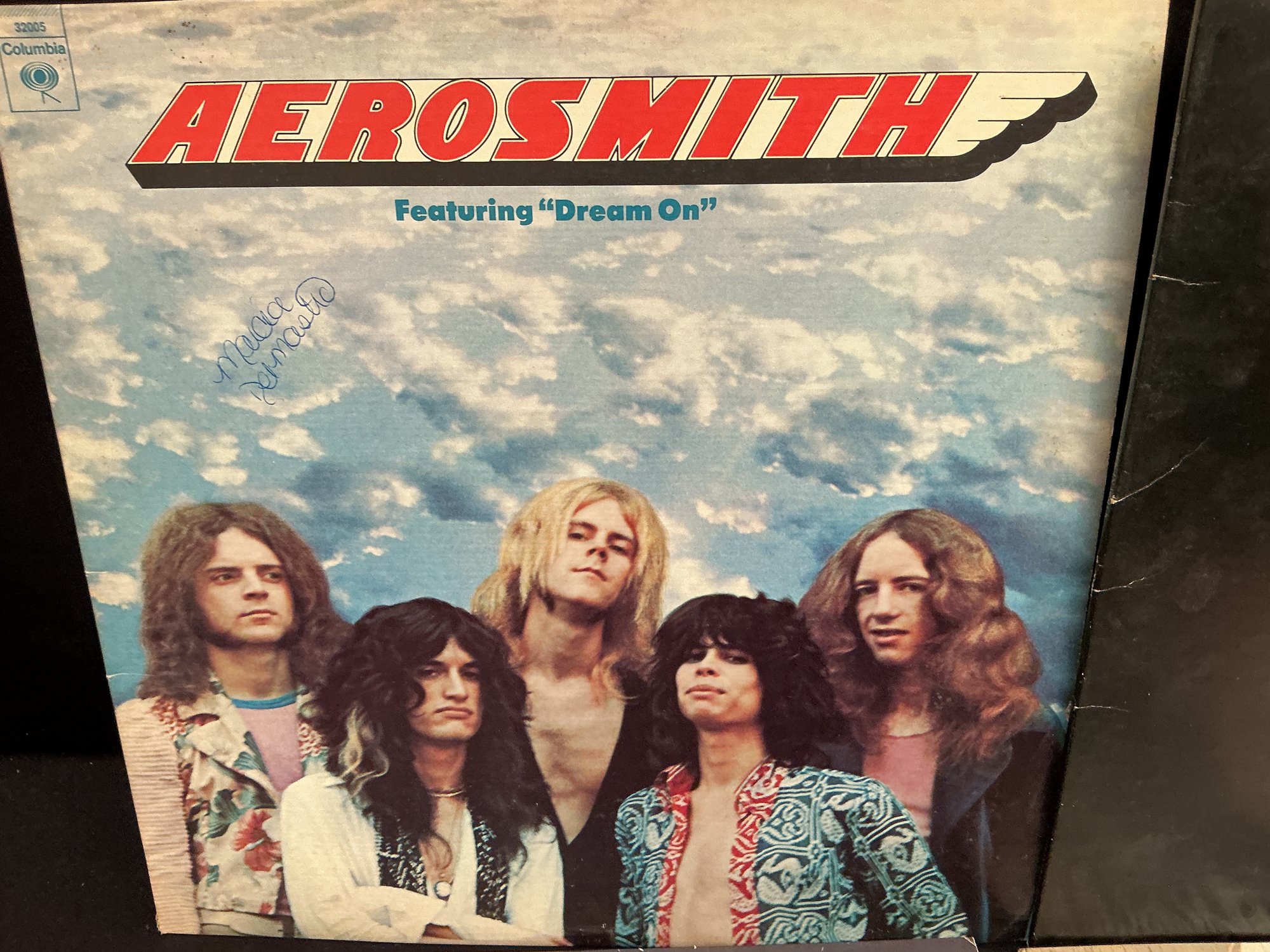
The self-titled debut album Aerosmith (1973) did not initially shock the Billboard charts. It took the re-release of the single "Dream On" in 1976—after the band had already established national fame—for the debut album to cross into multi-platinum territory. Today, Aerosmith stands at 2x Platinum (2 million units sold in the US).
Similarly, their sophomore release, Get Your Wings (1974), produced by Jack Douglas, laid the sonic blueprint for the band's swaggering, blues-based hard rock. Featuring staple tracks like "Same Old Song and Dance" and "Train Kept A-Rollin'," the album slowly built sales through constant touring, eventually reaching 3x Platinum status in the US.
The Breakthrough: Toys in the Attic (1975) and Rocks (1976)
In April 1975, Aerosmith released Toys in the Attic, the album that catapulted them to international superstardom. Powered by hit singles "Sweet Emotion" and the original release of "Walk This Way," Toys in the Attic became the band’s top-selling studio album in the United States, certified 9x Platinum by the RIAA.
| Studio Album | US RIAA Certification |
|---|---|
| Toys in the Attic (1975) | 9.0M |
| Pump (1989) | 7.0M |
| Get a Grip (1993) | 7.0M |
| Permanent Vacation (1987) | 5.0M |
| Rocks (1976) | 4.0M |
| Get Your Wings (1974) | 3.0M |
They followed this milestone with Rocks (1976), an album widely cited as a foundational influence on later hard rock and alternative bands, including Guns N' Roses, Metallica, and Nirvana. Rocks achieved instant commercial success, quickly going Platinum and eventually securing a 4x Platinum certification.
Internal Strain and Declining Sales: Draw the Line (1977) and Night in the Ruts (1979)
By the late 1970s, substance abuse and interpersonal conflicts began impacting both the creative output and commercial reach of the band:
- ** Draw the Line (1977):** While it sold well initial due to the momentum of Rocks, reaching 2x Platinum, critics noted a lack of focus, and sales stalled compared to its predecessor.
- ** Night in the Ruts (1979):** Recorded during guitarist Joe Perry’s departure from the group, this album only managed a Gold certification (500,000 units) upon release, later edging up to Platinum status years down the road.
Era 2: The Mid-80s Resurgence & The Geffen Years (1985–1993)
After a tumultuous period in the early 1980s—marked by line-up changes, moderate sales for Rock in a Hard Place (1982), and financial hardship—the original five members reunited in 1984 and signed a new recording deal with Geffen Records.
The Catalyst: "Walk This Way" with Run-DMC (1986)
Although not an official Aerosmith studio album release, the 1986 hip-hop remake of "Walk This Way" by Run-DMC featuring Steven Tyler and Joe Perry served as the catalyst for Aerosmith’s commercial rebirth. The track bridged rock and rap, dominated MTV rotation, and reintroduced Aerosmith to a younger demographic just as the CD format began driving massive music catalog sales.
The Comeback Trilogy: Permanent Vacation, Pump, and Get a Grip
Signing with A&R executive John Kalodner at Geffen Records transformed Aerosmith's recording strategy. Kalodner encouraged the band to collaborate with outside professional songwriters (such as Desmond Child, Jim Vallance, and Mark Hudson) and polish their production for radio and music television.
- ** Done with Mirrors (1985):** A raw, blues-rock reset that served as a warm-up. It was certified Gold, establishing a clean slate.
- ** Permanent Vacation (1987):** With hits like "Dude (Looks Like a Lady)," "Angel," and "Rag Doll," the album sold over 5 million copies in the US, marking one of the most successful commercial comebacks in rock history.
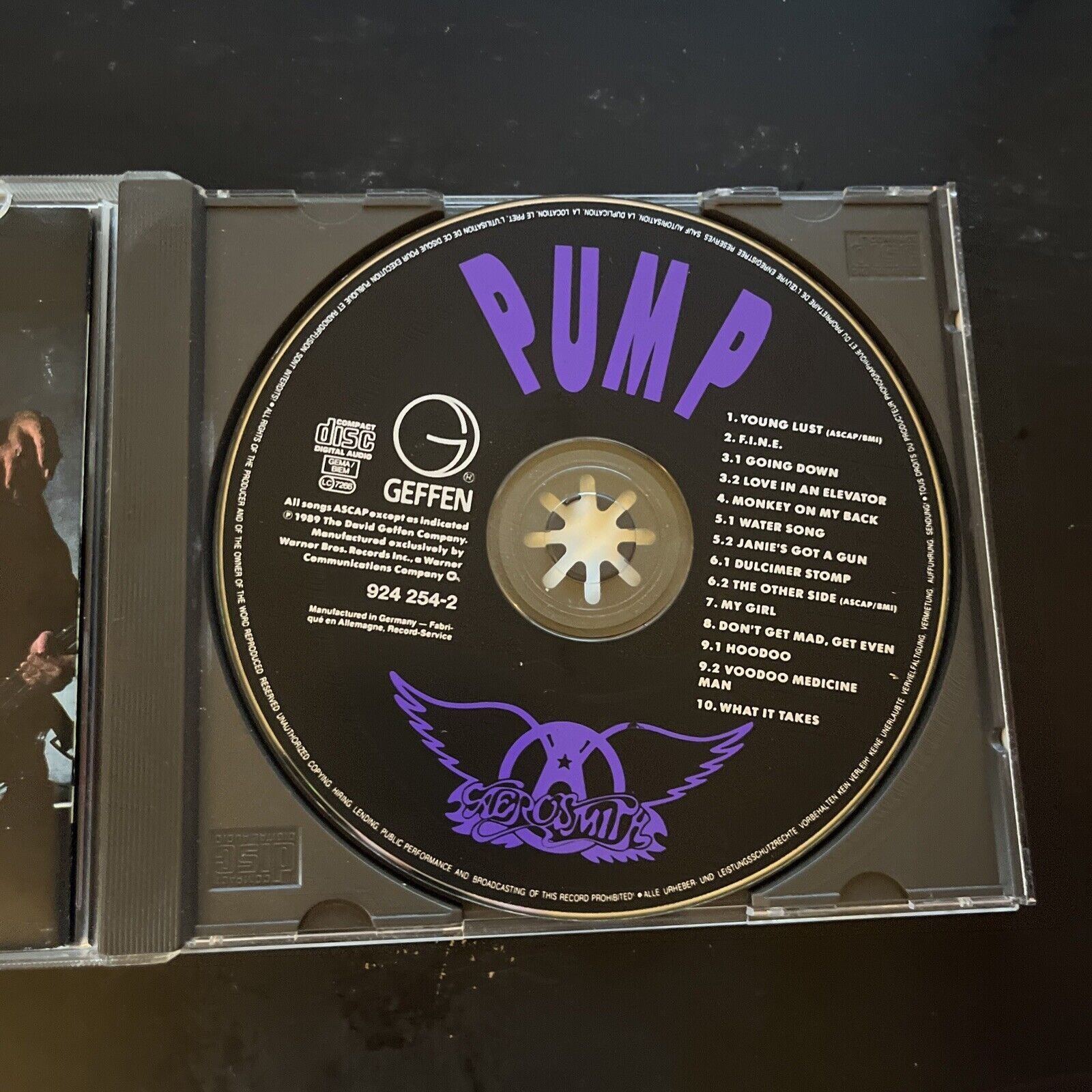
- ** Pump (1989):** Refining the pop-hard rock formula, Pump delivered smash hits like "Love in an Elevator," "Janie's Got a Gun," and "What It Takes." The album earned 7x Platinum certification in the US and sold over 12 million copies globally.
- ** Get a Grip (1993):** Aerosmith's first album to debut at #1 on the Billboard 200 chart. Driven by high-budget MTV videos featuring Alicia Silverstone ("Cryin'," "Crazy," "Amazing"), Get a Grip matched Pump with 7x Platinum US status and became their highest-selling studio album worldwide, shipping over 20 million copies globally.
Worldwide Sales Reach: 'Get a Grip' (1993)
| Region / Category | Sales Units |
|---|---|
| United States (RIAA) | 7,000,000 units |
| International Sales | 13,000,000+ units |
| Total Global Sales | 20,000,000+ units |
Era 3: Late-Career Sales & Modern Streaming Transition (1997–Present)
Returning to Columbia Records under a lucrative contract negotiated in the early 1990s, Aerosmith maintained solid commercial momentum through the end of the physical music era.
Nine Lives (1997) and Movie Soundtrack Dominance
Nine Lives (1997) debuted at #1 on the Billboard 200, achieving 2x Platinum certification. While it did not replicate the massive numbers of Get a Grip, the band achieved their biggest global hit single the following year with "I Don't Want to Miss a Thing" from the Armageddon soundtrack (1998). The single topped the Billboard Hot 100 for four weeks and propelled sales of both the soundtrack and subsequent compilation albums worldwide.
The CD Sunset: Just Push Play (2001) and Honkin' on Bobo (2004)
- ** Just Push Play (2001):** Certified Platinum in the US, aided by the single "Jaded" and a high-profile performance at the Super Bowl XXXV halftime show.
- ** Honkin' on Bobo (2004):** A cover album returning to the band's traditional blues roots, earning a Gold certification during an industry-wide decline in CD sales due to digital file-sharing.
- ** Music from Another Dimension! (2012):** Aerosmith's 15th studio album debuted in an era dominated by digital downloads and early streaming platforms, failing to achieve Gold certification—a reflective trend across most legacy rock acts in the 2010s.
Streaming Era & Legacy Catalog Performance
In the digital streaming market, Aerosmith’s revenue and listening metrics shifted heavily toward their iconic singles catalog. Songs like "Dream On," "Crazy," "Walk This Way," "Sweet Emotion," and "I Don't Want to Miss a Thing" generate hundreds of millions of streams annually on platforms like Spotify and Apple Music.
Catalog compilations continue to drive significant overall sales figures for the band. Aerosmith's Greatest Hits (originally released in 1980) has achieved 12x Platinum (Diamond) status in the US, acting as a perpetual seller across vinyl, CD, and digital formats.
Comprehensive Discography Sales & Certifications
The following table provides a verified snapshot of Aerosmith's core studio albums and major compilations, showing their US RIAA certification levels and estimated global sales totals.
| Album Title | Release Year | Primary Record Label | RIAA Certification (US) | Estimated Global Sales |
|---|---|---|---|---|
| Aerosmith | 1973 | Columbia | 2x Platinum | 4.0 Million |
| Get Your Wings | 1974 | Columbia | 3x Platinum | 4.5 Million |
| Toys in the Attic | 1975 | Columbia | 9x Platinum | 13.5 Million |
| Rocks | 1976 | Columbia | 4x Platinum | 7.0 Million |
| Draw the Line | 1977 | Columbia | 2x Platinum | 3.5 Million |
| Night in the Ruts | 1979 | Columbia | Platinum | 2.0 Million |
| Aerosmith's Greatest Hits | 1980 | Columbia | 12x Platinum (Diamond) | 17.0 Million |
| Rock in a Hard Place | 1982 | Columbia | Gold | 1.0 Million |
| Done with Mirrors | 1985 | Geffen | Gold | 1.0 Million |
| Permanent Vacation | 1987 | Geffen | 5x Platinum | 9.0 Million |
| Pump | 1989 | Geffen | 7x Platinum | 12.5 Million |
| Get a Grip | 1993 | Geffen | 7x Platinum | 20.0 Million |
| Nine Lives | 1997 | Columbia | 2x Platinum | 5.5 Million |
| Just Push Play | 2001 | Columbia | Platinum | 3.0 Million |
| Honkin' on Bobo | 2004 | Columbia | Gold | 1.2 Million |
Data compiled from RIAA database records, Billboard charts, and official label certification reports.
Key Drivers of Aerosmith’s Album Sales
Aerosmith’s historical sales trajectory was not random; it resulted from strategic shifts in production, marketing, and cross-genre collaborations.
Key Factors Behind Commercial Success
- MTV Visuals & Music Videos (1987 - 1994)
- Collaborative Songwriting (Desmond Child, Jim Vallance)
- Dual-Era Compilation Dominance ('Greatest Hits')
1. The MTV Era Visual Identity
During the late 1980s and early 1990s, Aerosmith embraced narrative-driven, high-production music videos. Directors like Marty Callner and David Fincher created iconic visuals for singles from Pump and Get a Grip. Heavy rotation on MTV drove millions of casual viewers to buy full-length cassette tapes and CDs, a key factor behind Get a Grip selling 20 million copies worldwide.
2. Outside Songwriting Collaborations
Under John Kalodner’s guidance at Geffen, Aerosmith embraced writing partnerships with pop and rock hitmakers:
- Desmond Child: Co-wrote "Angel," "Dude (Looks Like a Lady)," "Crazy," and "What It Takes."
- Jim Vallance: Co-wrote "Rag Doll" and "Other Side."
- Diane Warren: Authored the ballad "I Don't Want to Miss a Thing."
While pure rock purists occasionally criticized this shift toward commercial polish, it broadened Aerosmith's audience to include pop radio listeners, driving multi-platinum sales figures that traditional 1970s hard rock bands rarely matched in the 1990s.
3. Cross-Generational Compilation Strategy
Because Aerosmith built two distinct bodies of work—the 1970s hard rock classics and the late 80s/90s pop-rock radio hits—their compilation albums became continuous commercial engines. Aerosmith's Greatest Hits (1980) covered the classic early era, while collections like Big Ones (1994) and O, Yeah! Ultimate Aerosmith Hits (2002) captured their later successes, selling millions of copies to fans seeking comprehensive track lists across both eras.
Comparing Aerosmith to Other American Rock Giants
To put Aerosmith's sales numbers in historical context, it helps to evaluate them alongside their direct peers in the American rock landscape.
| Select American Rock Group | Total US Certified Album Units (RIAA) |
|---|---|
| Eagles | 120.0M |
| Metallica | 67.0M |
| Aerosmith | 66.5M |
| Van Halen | 56.5M |
| Journey | 48.0M |
| Guns N' Roses | 44.5M |
- Eagles (120M US Units): While the Eagles lead all American bands in total album sales (primarily driven by Their Greatest Hits 1971-1975 and Hotel California), their sound leaned heavily into country-rock and pop-rock, whereas Aerosmith operated primarily in hard rock.
- Metallica (67M US Units): Metallica closely matches Aerosmith in total US certified units, though Metallica's sales are heavily concentrated in their 1991 self-titled "Black Album" (16x Platinum) and their core 1980s metal discography.
- Van Halen (56.5M US Units): Van Halen achieved two Diamond-certified albums (Van Halen and 1984), but Aerosmith outpaces Van Halen in cumulative global sales due to their broader international success during the 1990s.
- Guns N' Roses (44.5M US Units): Guns N' Roses achieved massive sales with Appetite for Destruction (18x Platinum in the US), but Aerosmith's larger studio catalog (15 studio albums versus 6 by GN'R) yielded higher overall total career units.
Frequently Asked Questions
What is Aerosmith's single best-selling studio album?
Aerosmith's best-selling studio album in the United States is Toys in the Attic (1975), which has earned a 9x Platinum certification from the RIAA (9 million units sold). However, on a global scale, Get a Grip (1993) holds the title for their highest worldwide sales, exceeding 20 million copies internationally thanks to massive CD sales across Europe, Asia, and South America.
How many total albums has Aerosmith sold globally?
Aerosmith has sold an estimated 150+ million records worldwide. This total includes studio albums, live albums, official compilations, and physical single sales verified across global music industry trade groups (such as the RIAA in the US, BPI in the UK, and RIAJ in Japan).
Which Aerosmith album sold the most compilation copies?
Their top-selling compilation album is Aerosmith's Greatest Hits (1980). It was certified Diamond (12x Platinum) by the RIAA in the United States, signifying over 12 million copies sold domestically, and over 17 million units globally.
Why did Aerosmith's album sales increase so dramatically in the late 1980s?
Aerosmith's mid-1980s commercial revival was driven by three main factors: their high-profile cross-genre collaboration with Run-DMC on "Walk This Way" (1986), a label change to Geffen Records with A&R executive John Kalodner, and embracing outside pop-rock songwriters alongside heavy MTV music video promotion for albums like Permanent Vacation (1987) and Pump (1989).
Has streaming replaced physical album sales for Aerosmith's catalog?
Yes. Like most legacy rock bands, Aerosmith’s traditional physical album shipments slowed significantly in the streaming era. However, their digital footprint remains high, with catalog tracks like "Dream On," "Walk This Way," and "I Don't Want to Miss a Thing" generating hundreds of millions of streams annually, which the RIAA converts into digital album-equivalent units (ALEs).
Strategic Takeaway for Music Collectors and Catalog Analysts
Evaluating Aerosmith's sales performance shows that their ultimate commercial strength lay in catalog longevity rather than just initial release-week spikes. For collectors, music historians, and industry analysts assessing rock music sales, Aerosmith serves as the premier case study of how a 1970s hard rock act successfully navigated changing technologies, shifted media formats from vinyl to CD to digital, and sustained multi-platinum performance across generations.