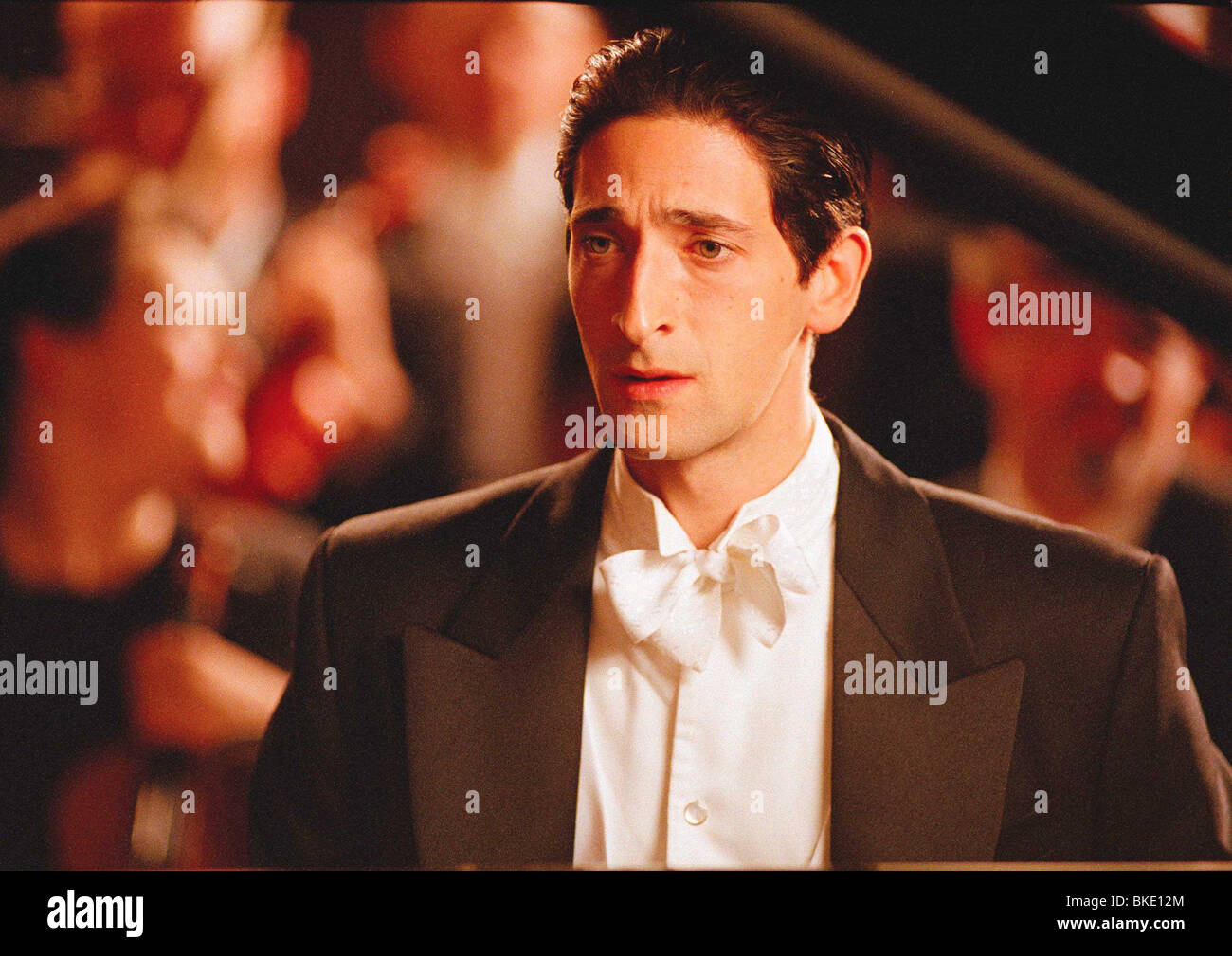
Adrien Brody’s physique for The Pianist was defined by an extreme, calorie-restricted diet where he lost nearly 31 pounds in six weeks. To portray Holocaust survivor Wladyslaw Szpilman, Brody reduced his body weight to roughly 130 pounds, pairing this physical emaciation with deep psychological isolation to achieve one of cinema's most hauntingly authentic performances.
The physical transformation of Adrien Brody for Roman Polanski’s 2002 masterpiece, The Pianist, remains one of the most significant examples of "Method" acting in cinematic history. Even as we look back from 2026, the dedication Brody displayed to inhabit the role of Wladyslaw Szpilman stands as a benchmark for actors seeking to bridge the gap between performance and reality. Brody did not merely "play" a starving man; he became one through a rigorous, dangerous, and transformative process that altered his body, his mind, and his career trajectory forever.
The Mandate for Emaciation: Why the Transformation was Necessary
To understand why Adrien Brody underwent such a drastic physical change, one must understand the historical weight of the subject matter. The Pianist is based on the autobiographical account of Wladyslaw Szpilman, a Polish-Jewish classical pianist who survived the destruction of the Warsaw Ghetto and the subsequent Holocaust.
In the film, the visual narrative is as important as the dialogue. As the years of the war progress, Szpilman transitions from a well-dressed, healthy young artist to a hollowed-out shadow of a human being, hiding in the ruins of a razed city. Polanski, himself a survivor of the Krakow Ghetto, demanded a level of realism that could not be achieved through makeup or baggy clothing. He needed the actor’s very bones to tell the story of the Holocaust.
Brody, who stands at approximately 6'1", began the project at a healthy weight of around 160 pounds. To reach the state of skeletal fragility seen in the film’s final acts, he had to drop to 130 pounds. This was not just a fitness goal; it was a biological deconstruction.
The Diet: Six Weeks of Controlled Starvation
The methodology behind Brody’s weight loss was notoriously simplistic and brutal. While modern actors in 2026 often have access to specialized nutritionists and metabolic tracking, Brody’s approach in the early 2000s was a straightforward caloric deficit designed to trigger rapid weight loss.
For six weeks, his daily intake was restricted to a specific, repetitive menu:
- Breakfast: Two boiled eggs and a cup of green tea.
- Lunch: A small portion of chicken (usually skinless and grilled).
- Dinner: A small piece of fish with steamed vegetables.
This diet was almost entirely devoid of carbohydrates and sugars. By focusing on lean protein and liquids, Brody forced his body into a state of ketosis, where it burned fat reserves for energy. However, at a weight of 130 pounds for a man of his height, the body begins to consume muscle tissue as well. This accounts for the "sunken" look of his chest and shoulders in the film, a look that captured the true horror of starvation.
The Biological Toll of Rapid Weight Loss
Losing over 30 pounds in such a short window is medically categorized as extreme weight loss. The human body is designed to protect its vital organs during periods of famine, which leads to several physiological shifts:
- Metabolic Slowdown: The thyroid gland reduces hormone production to conserve energy, leading to constant coldness and lethargy.
- Muscle Atrophy: Without sufficient caloric intake, the body breaks down its own skeletal muscle.
- Cognitive Fog: The brain, which consumes about 20% of the body's daily calories, struggles to function, leading to the "distant" or "haunted" look Brody displayed on screen.
Brody has often remarked that the hunger was not just a physical sensation but a psychological weight. It informed his movements, making them slow, deliberate, and desperate—perfectly mimicking the survival instincts of Szpilman.
Beyond the Body: The Psychological Shaping
A physique is shaped by more than just what one eats; it is shaped by how one lives. Adrien Brody understood that to look like a man who had lost everything, he had to actually lose his connections to the modern world. Physical emaciation was only the first layer of his transformation.
To prepare for the role, Brody took several radical steps:
- Asset Liquidation: He gave up his apartment in New York.
- Disconnection: He sold his car and disconnected his phone services.
- Isolation: He moved to Europe months before filming began, bringing nothing but a keyboard to practice piano and two bags of belongings.
This self-imposed exile created a sense of true loneliness. When audiences see Brody’s Szpilman staring out of a window at the burning ghetto, the sadness in his eyes is bolstered by the actor's own real-world grief and isolation. The "physique" of the character became one of total vulnerability. He wasn't just thin; he moved like a man who was afraid to take up space.
Comparison of Physical Stats: Adrien Brody's Transformation
| Metric | Pre-Production (Estimated) | Filming (Peak Emaciation) | Variance |
|---|---|---|---|
| Weight | ~160 lbs (72.5 kg) | ~130 lbs (59 kg) | -30 lbs |
| BMI | ~21.1 (Healthy) | ~17.1 (Underweight) | -4.0 |
| Dietary Focus | Balanced | High Protein / Near-Zero Carb | N/A |
| Duration | N/A | 6 Weeks | N/A |
| Physical Activity | General Fitness | Piano Practice (6+ hours/day) | N/A |
The Role of the Piano in Physical Posture
The title of the film is The Pianist, and the instrument played a crucial role in shaping Brody's physical presence. Polanski insisted that Brody actually learn to play the pieces featured in the film, specifically Chopin’s Ballade No. 1 in G Minor.
Brody practiced for up to six hours a day. This repetitive, intense focus on the piano influenced his posture. Even as his body grew weaker from the diet, his hands became more "expressive." The contrast between his frail, skeletal frame and the fluid, powerful movements of his hands at the keys created a visual metaphor for the persistence of art amidst the ruins of humanity.
The physical demand of sitting at a piano bench for hours while suffering from caloric deprivation forced Brody into a specific "hunched" silhouette. This posture—shoulders rolled forward, neck extended—is a signature visual element of the character that emphasizes the weight of the world on Szpilman’s shoulders.
The Long-Term Recovery and Lasting Effects
Physically recovering from such a transformation is not as simple as returning to a normal diet. In the years following the film's 2002 release, and even in retrospectives leading into 2026, Brody has discussed the "despair" that lingered after the cameras stopped rolling.
When an individual loses a significant amount of weight through starvation, the metabolism can remain suppressed for months or even years. Brody had to carefully reintroduce foods to avoid "refeeding syndrome," a potentially fatal condition where rapid electrolyte shifts occur when a malnourished person starts eating again.
More importantly, the psychological recovery took longer. Brody famously stated that it took him over a year to feel like himself again. The experience changed his relationship with food and material wealth, creating a permanent shift in his perspective on life and his approach to future roles. Unlike "bulking up" for a superhero role, which involves gaining strength and confidence, "leaning down" for The Pianist involved embracing weakness and trauma.
Adrien Brody vs. Other Famous Actor Transformations
Brody's transformation is often compared to Christian Bale in The Machinist (2004) or Matthew McConaughey in Dallas Buyers Club (2013). However, Brody’s work is distinct because of its historical context.
While Bale’s transformation was for a psychological thriller and McConaughey’s for a biographical drama about the AIDS crisis, Brody’s weight loss was specifically tailored to represent the collective trauma of the Holocaust. The "physique" he achieved had to be respectful of the millions who actually suffered those conditions. There was no room for "vanity" in his thinness; it had to be raw, painful, and historically accurate.
FAQ: Adrien Brody’s Transformation for The Pianist
How much weight did Adrien Brody lose for The Pianist?
Adrien Brody lost approximately 31 pounds (about 14 kilograms) for the role. He dropped from a lean 160 pounds to a skeletal 130 pounds, which is a significant reduction for someone of his 6'1" stature.
What was Adrien Brody’s diet for the movie?
His diet consisted of two boiled eggs and green tea for breakfast, a small portion of chicken for lunch, and a small piece of fish with steamed vegetables for dinner. He followed this strictly for six weeks while also practicing the piano for several hours each day.
Did Adrien Brody actually play the piano in the film?
Yes, Brody practiced the piano for at least six hours a day to ensure he could play the complex Chopin pieces seen in the film. While some of the audio in the final edit may have been supplemented by professional recordings (specifically by Janusz Olejniczak), the hand movements and the physical performance at the keys are Brody's own.
How did the weight loss affect his acting?
The weight loss provided a natural sense of lethargy and vulnerability. Brody has noted that the persistent hunger made him feel more "present" in the scenes of desperation, as he didn't have to "act" the feeling of being empty or weak—he truly was.
How old was Adrien Brody when he won the Oscar for The Pianist?
Adrien Brody was 29 years old when he won the Academy Award for Best Actor in 2003. He remains the youngest actor ever to win in that category, a testament to the profound impact of his physical and emotional dedication to the role.
Was the weight loss dangerous?
Yes. Rapid weight loss of this magnitude can lead to heart palpitations, electrolyte imbalances, and severe psychological depression. Brody underwent this transformation under a degree of supervision, but it was still an extreme strain on his physical and mental health.
Practical Lessons for Modern Performance
As we evaluate Brody’s performance in 2026, the lesson for actors and film enthusiasts is one of commitment versus safety. While Brody's transformation yielded an Oscar-winning performance, it also highlights the dangers of extreme Method acting.
For those looking to understand the "how" of Brody's physique, it was a combination of:
- Extreme Caloric Deficit: A high-protein, near-zero-carb diet to strip fat and muscle.
- Environmental Immersion: Removing all comforts to mirror the character's mental state.
- Skill Acquisition: Learning the piano to ensure the body's movements were authentic to the character's profession.
Next Action: If you are studying the art of film or Method acting, watch The Pianist specifically focusing on the middle hour. Observe how Brody’s gait, breathing, and facial structure change as his physical weight drops. This serves as a masterclass in how a physical state can drive a narrative performance without the need for excessive dialogue.