Acquia occupies a foundational yet evolving position within the digital experience landscape, serving as an enterprise-grade platform built around Drupal to help large organizations manage content, commerce, and customer data across multiple channels. Understanding its role requires examining how open-source flexibility intersects with proprietary enterprise software, cloud infrastructure, and modern content management architecture.
Enterprise organizations face increasing pressure to deliver personalized, omni-channel digital experiences while managing complex technology stacks. Acquia addresses this challenge by providing a unified digital experience platform (DXP) that bridges the gap between open-source content management and closed enterprise marketing suites. Founded in 2007 by Dries Buytaert, the co-founder and project lead of Drupal, Acquia was created to provide commercial support, security, and hosting infrastructure for organizations deploying Drupal at scale. Over the years, the platform has expanded through strategic acquisitions and product development to encompass a broader suite of tools for personalization, customer data management, campaign orchestration, and digital asset management.
Evolution of the Digital Experience Platform Market
The digital experience platform market has undergone a significant transformation over the past two decades. Traditional content management systems (CMS) were largely designed to handle desktop websites. As mobile devices, internet-connected appliances, and multi-channel marketing campaigns reshaped user expectations, the definition of a CMS expanded into the broader category of the DXP.
Organizations no longer evaluate web technologies solely on their ability to publish static pages. They require tools that integrate seamlessly with customer relationship management (CRM) systems, marketing automation platforms, enterprise resource planning (ERP) software, and data analytics pipelines. This architectural shift created a division in the marketplace between monolithic, proprietary suites and composable, modular ecosystems.
Proprietary DXP vendors offer tightly integrated suites where all modules—from analytics to email marketing—come from a single vendor. While this approach can simplify initial procurement, it often locks organizations into rigid ecosystems that make it difficult to adopt best-of-breed technologies. Conversely, open-source architectures provide immense flexibility and ownership, but managing hosting, security, and scaling in-house can strain internal IT resources. Acquia established its position in the market by offering a middle ground: the limitless customization and code ownership of open-source Drupal, paired with enterprise-grade cloud hosting, security compliance, and managed services.
Core Pillars of the Acquia Product Ecosystem
To understand Acquia's footprint in the digital experience landscape, it is necessary to examine its core product offerings. The ecosystem has evolved from a managed hosting environment for Drupal into a comprehensive suite of cloud-native applications designed to handle distinct phases of the digital customer journey.
Cloud Infrastructure and Hosting
At the foundation of Acquia's offering is its cloud infrastructure, specifically designed for Drupal workloads. Acquia Cloud provides automated deployment pipelines, staging environments, continuous integration tools, and high-availability configurations. Because Drupal applications have unique caching, database, and scaling requirements, Acquia's infrastructure is tuned to optimize performance under heavy traffic loads. This managed approach relieves internal engineering teams from infrastructure maintenance, security patching, and disaster recovery planning.
Content Management and Content Hub
Drupal remains the primary content engine within the Acquia ecosystem. Acquia enhances standard Drupal by providing pre-built distributions, security updates, and performance optimization tools. Furthermore, Acquia Content Hub acts as a syndication engine, allowing multi-brand organizations or global enterprises to create content once and distribute it across hundreds of disparate websites, mobile applications, and digital touchpoints without manual duplication.
Personalization and Decision Engines
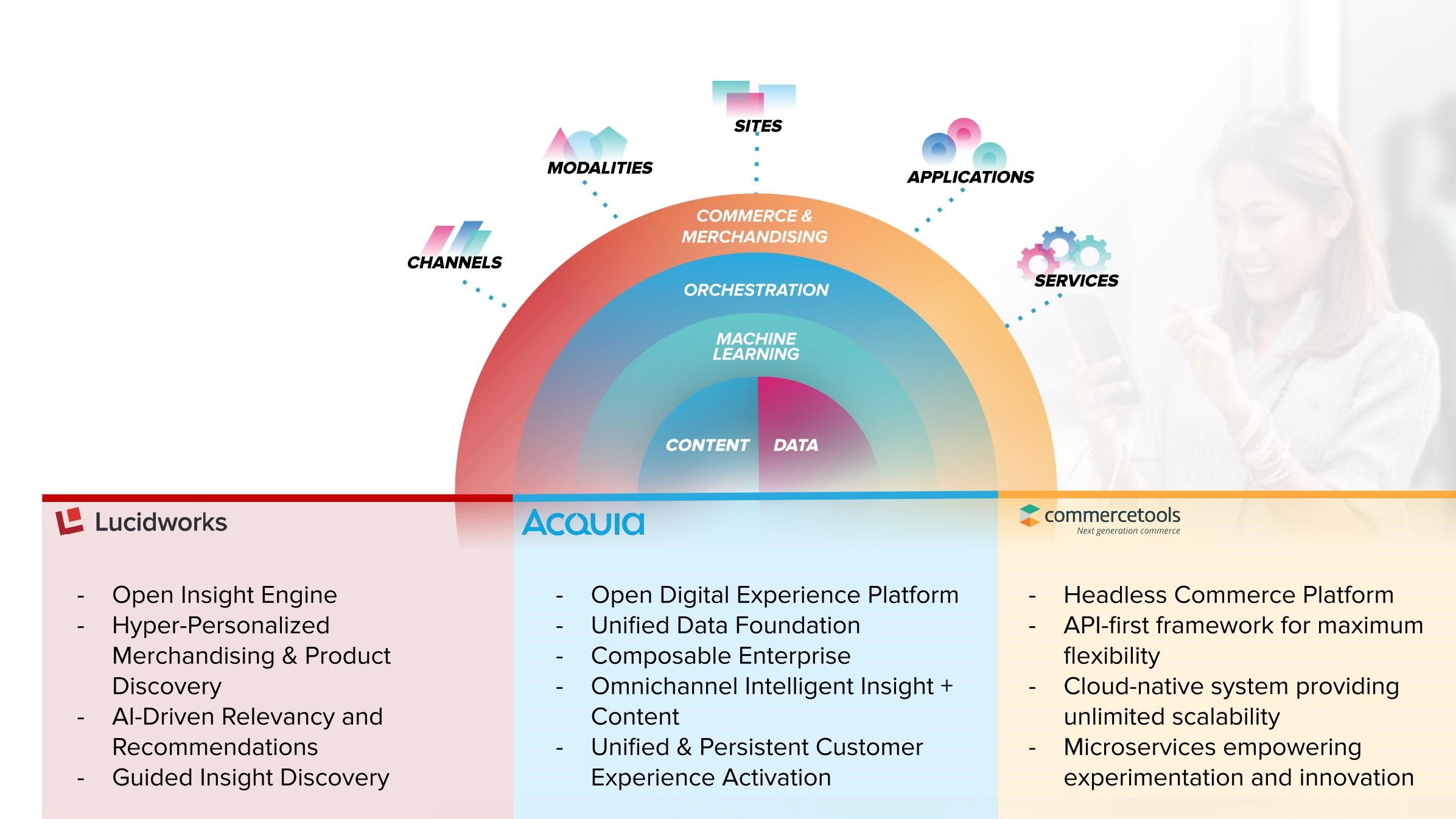
Delivering relevant content to individual users in real time requires sophisticated data processing. Acquia Customer Data Platform (CDP) and personalization tools collect behavioral data from various touchpoints, build unified customer profiles, and execute real-time decisioning. These tools allow marketers to segment audiences and serve tailored content dynamically, whether a visitor is browsing a product catalog on a desktop browser or interacting with a mobile application.
Digital Asset Management
Managing large libraries of images, videos, and marketing collateral across global teams is a common enterprise challenge. Acquia DAM (Digital Asset Management), formerly known as Widen following its acquisition, provides centralized storage, metadata tagging, permission management, and brand governance. By integrating DAM directly with the CMS, marketing teams can embed approved brand assets directly into web pages while maintaining version control.
Comparing Acquia with Alternative DXP Paradigms
Evaluating Acquia within the digital experience landscape requires comparing its architectural model against alternative approaches adopted by enterprise buyers.
| Platform Category | Representative Vendors | Core Advantages | Potential Drawbacks |
|---|---|---|---|
| Open-Source Hybrid DXP | Acquia (Drupal) | Complete code ownership, no vendor lock-in, highly extensible, strong developer community. | Requires skilled development resources; total cost of ownership depends on internal capabilities. |
| Proprietary Monolithic DXP | Adobe Experience Cloud, Sitecore | Pre-integrated suites, robust vendor support, extensive out-of-the-box enterprise features. | High licensing costs, rigid architecture, difficult to integrate custom third-party tools. |
| Headless / Composable DXP | Contentful, Strapi, Magnolia | Ultimate flexibility for multi-channel delivery, API-first architecture, decoupled frontend. | Requires building frontend applications from scratch; increased architectural complexity. |
This comparison highlights that Acquia's primary appeal lies in balancing open-source extensibility with enterprise support. Organizations that prioritize data ownership and custom application logic often lean toward Acquia, whereas organizations seeking an entirely pre-packaged marketing suite with minimal custom development may evaluate proprietary alternatives.
Headless and Decoupled Architecture in Acquia
As frontend technologies such as React, Vue.js, and Angular have matured, the demand for decoupled or headless content management has surged. In a decoupled architecture, the backend content repository is separated from the frontend presentation layer, allowing developers to deliver content via APIs to any device or digital channel.
Acquia supports both traditional monolithic Drupal implementations and decoupled architectures. Through its API-first approach, Acquia enables organizations to use Drupal as a centralized content hub while building lightning-fast progressive web applications (PWAs) or native mobile apps on the frontend. This flexibility is critical for enterprises managing complex digital ecosystems where a standard web browser is only one of many customer touchpoints.
Operational Considerations and Implementation Realities
Adopting Acquia as a primary DXP involves specific operational, financial, and technical considerations that organizations must evaluate before committing resources.
Total Cost of Ownership
While open-source software does not carry traditional software licensing fees in the way proprietary software does, an enterprise deployment on Acquia involves distinct financial commitments. Costs include subscription fees for Acquia Cloud and proprietary modules (such as personalization and DAM), implementation partner fees for system integration, ongoing maintenance, and internal talent acquisition. Organizations must weigh these expenses against the operational efficiencies gained through automated deployments, reduced security vulnerabilities, and faster time-to-market for digital campaigns.
Developer Skill Requirements and Talent
Working with an enterprise-grade Drupal platform requires specialized technical expertise. Development teams must be proficient in PHP, modern JavaScript frameworks, API integrations, and cloud deployment pipelines. Organizations transitioning from legacy systems often need to invest in training internal staff or partnering with certified digital agencies specializing in Acquia deployments to ensure system stability and performance.
Security, Governance, and Compliance
Global enterprises operate under strict regulatory frameworks regarding data privacy, accessibility, and security. Acquia provides compliance certifications relevant to industries such as finance, healthcare, and government, including SOC 2, ISO 27001, and HIPAA-readiness frameworks. Role-based access controls, automated security updates, and robust workflow governance tools help large organizations maintain brand consistency and regulatory compliance across distributed editorial teams.
Frequently Asked Questions
What is the relationship between Drupal and Acquia?
Drupal is a free, open-source content management system governed by a global community of contributors. Acquia is a commercial software company founded by Drupal's creator that provides enterprise-grade cloud hosting, security, support, and proprietary marketing applications that integrate with and enhance Drupal.
Is Acquia suitable for small businesses?
Acquia is specifically engineered for large enterprises, global brands, higher education institutions, and government agencies with complex multi-site requirements and high traffic volumes. Small businesses with straightforward website needs typically find the cost and complexity of Acquia to be higher than necessary, preferring standard shared hosting or simpler CMS platforms.
Does Acquia support headless content management?
Yes. Acquia supports both traditional coupled architectures and decoupled or headless deployments. Through built-in JSON:API and RESTful web services, organizations can use Drupal as a content repository while delivering content to mobile apps, IoT devices, and decoupled frontend frameworks.
How does Acquia handle digital asset management?
Acquia incorporates digital asset management through its DAM product suite. This allows organizations to centralize rich media files, enforce brand guidelines, manage usage rights, and distribute approved assets across global web properties and marketing campaigns directly from the content management interface.
What kind of customer support does Acquia provide?
Acquia offers tiered enterprise support models that include 24/7 technical assistance, dedicated customer success managers, advisory services, proactive performance monitoring, and security incident response teams to ensure high availability for mission-critical digital properties.
Strategic Next Actions for Enterprise Evaluators
Organizations evaluating Acquia within the digital experience landscape should begin by conducting a comprehensive audit of their current technology stack, content workflows, and multi-channel distribution requirements. Engaging with certified implementation partners early in the evaluation process helps clarify architectural fit, migration timelines, and total cost projections. Running a proof-of-concept project on Acquia Cloud can also validate how the platform integrates with existing enterprise databases, CRM tools, and authentication protocols before committing to a full-scale digital transformation initiative.