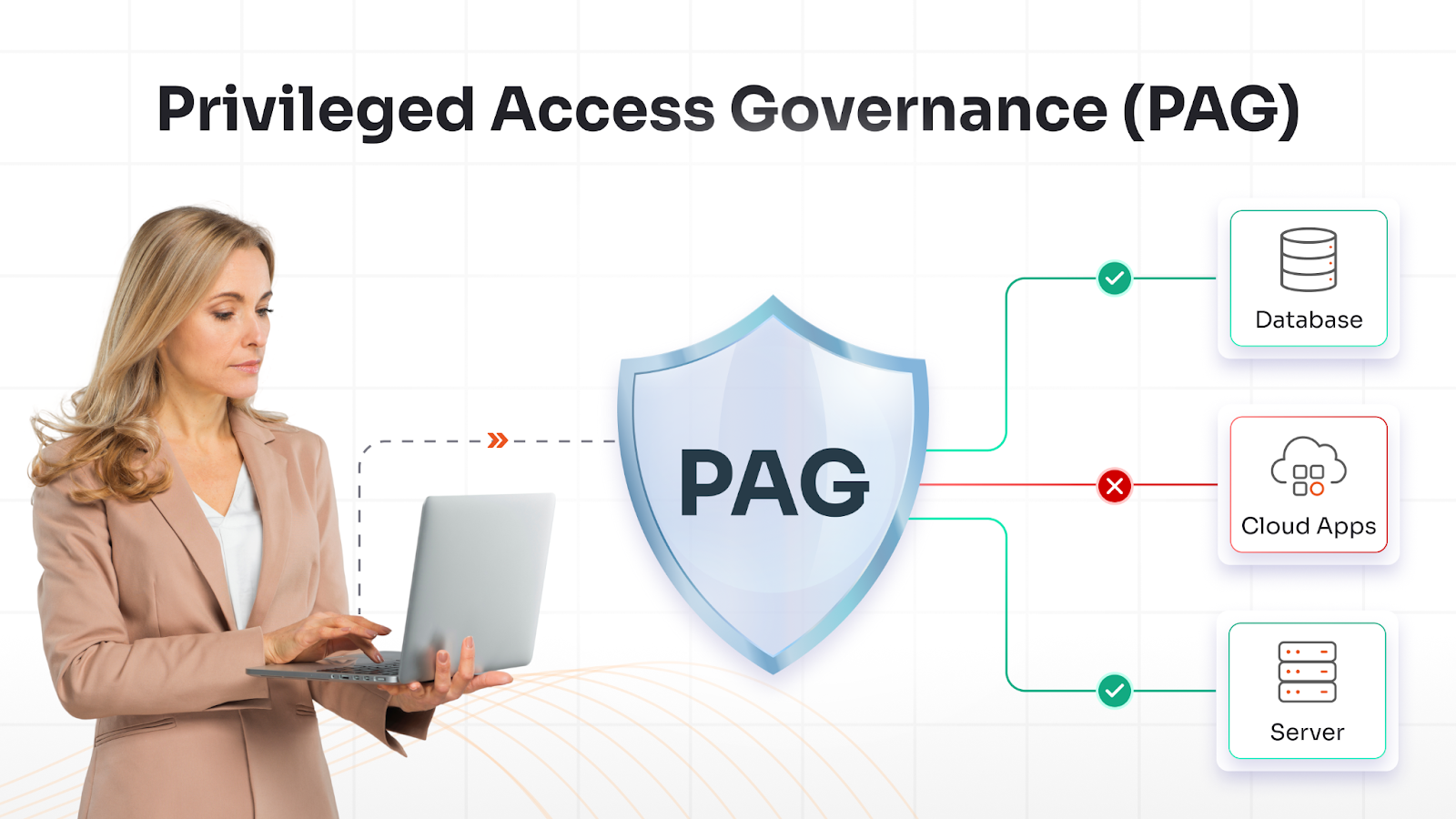
Access governance is a structured framework of policies, processes, and technologies designed to manage, monitor, and secure digital identities and their privileges across an organization’s IT ecosystem. It ensures that the right individuals have appropriate access to specific enterprise assets only for valid business purposes, thereby minimizing insider threats, maintaining regulatory compliance, and preventing unauthorized data exposure.
Modern organizations face unprecedented complexity in managing digital identities. As workforces become distributed, cloud adoption accelerates, and machine-to-machine communications multiply, traditional perimeter-based security models are no longer sufficient. Access governance addresses this challenge by providing centralized visibility and automated control over who can access what, when, and under what conditions. This comprehensive guide explores the core components of access governance, its technical architecture, implementation best practices, and how it differentiates from traditional access management.
The Evolution and Core Purpose of Access Governance
To understand why access governance is critical in contemporary enterprise security, one must examine how identity management has evolved over the past two decades. In the past, organizations relied heavily on fragmented, manual identity management systems. Local administrators created user accounts on individual servers, databases, and applications. As enterprises scaled, this decentralized approach created severe vulnerabilities: orphaned accounts left behind by departed employees, accumulated privileges that exceeded current job roles, and a complete lack of centralized auditing trails.
Access governance emerged as a distinct discipline to solve these visibility and compliance gaps. While Identity and Access Management (IAM) traditionally focused on the operational aspects of provisioning accounts and authenticating users, governance adds a layer of policy, oversight, and analytics. It answers fundamental questions that operational tools alone often miss:
- Who authorized this user to have administrative rights to the production database?
- Has this user accessed this sensitive application within the last 180 days?
- Do multiple employees hold conflicting permissions that violate internal segregation of duties (SoD) policies?
By establishing a formalized structure for answering these questions, access governance shifts security from a reactive burden to a proactive, measurable business process.
Key Components of an Access Governance Framework
An effective access governance program relies on several interconnected pillars. Each component addresses a specific vulnerability in the identity lifecycle and contributes to an organization’s overall security posture.
| Core Component | Primary Function |
|---|---|
| Identity Lifecycle Management | Onboarding, role changes, and offboarding workflows. |
| Access Certification & Recertification | Periodic manager reviews of user entitlements. |
| Role-Based Access Control (RBAC) | Grouping permissions into logical job functions. |
| Segregation of Duties (SoD) Enforcement | Preventing toxic permission combinations in one user. |
Identity Lifecycle Management
The identity lifecycle encompasses the creation, modification, and termination of digital identities. Access governance ensures that lifecycle events trigger automated access adjustments. For example, when an employee transitions from the marketing department to finance, governance workflows automatically revoke marketing application entitlements and provision access to financial systems based on their new role. When an employee departs, automated offboarding immediately revokes all credentials, mitigating the risk of lingering access.
Access Certification and Recertification
Access certification, often referred to as user access reviews (UAR), is the process where business managers and resource owners periodically review and validate whether their subordinates or external partners still require specific entitlements. These campaigns are crucial for identifying "privilege creep"—the gradual accumulation of unnecessary permissions over time. Automated governance platforms schedule these reviews, track completion rates, and revoke unapproved access automatically if reviewers fail to sign off within a specified window.
Role-Based Access Control (RBAC) and Attribute-Based Access Control (ABAC)
Managing access on an individual, user-by-user basis is impossible at scale. Access governance utilizes Role-Based Access Control to group permissions into logical roles (e.g., Accountant, Software Engineer, Customer Support Representative). Users are assigned to roles rather than individual permissions. Modern governance frameworks increasingly incorporate Attribute-Based Access Control, which evaluates dynamic attributes—such as user location, device compliance, time of day, and data classification—before granting access.
Segregation of Duties (SoD)
Segregation of duties is a fundamental internal control designed to prevent fraud and errors by ensuring no single individual holds excessive power over a critical business process. For instance, the person who creates a vendor profile in an enterprise resource planning (ERP) system should not be the same person who approves vendor disbursements. Access governance tools continuously analyze permission matrices to detect and flag SoD policy violations before or immediately after they occur.
Access Governance Versus Identity Governance and Administration (IGA)
In enterprise security discussions, the terms "access governance" and "Identity Governance and Administration" (IGA) are frequently used interchangeably, but subtle distinctions exist depending on organizational context.
- Identity Governance and Administration (IGA): IGA is a broader software category that combines governance features (such as certification and policy management) with administration capabilities (such as provisioning, password management, and directory services). IGA tools act as the operational engine that executes the policies defined by governance frameworks.
- Access Governance: Access governance focuses more heavily on the policy, compliance, risk assessment, and auditing aspects of entitlements. It can encompass cloud infrastructure entitlements management (CIEM) and Software as a Service (SaaS) security posture management (SSPM), extending beyond traditional employee identities to include machine identities, service accounts, and external contractors.
Understanding this distinction helps security leaders select the right tooling and design architectural boundaries that satisfy both compliance auditors and daily operational teams.
Regulatory Drivers and Compliance Requirements
Compliance mandates are among the primary catalysts for enterprise investments in access governance. Regulatory frameworks across industries demand rigorous control over who can view, modify, or exfiltrate sensitive data.
Sarbanes-Oxley Act (SOX)
For publicly traded companies, SOX compliance requires strict internal controls over financial reporting. Access governance provides the evidentiary trail needed to prove that only authorized personnel can access financial systems and that conflicting permissions are actively monitored and mitigated.
Health Insurance Portability and Accountability Act (HIPAA)
Healthcare organizations must protect electronic Protected Health Information (ePHI). Access governance ensures that patient data access is restricted to authorized medical and administrative staff on a strict need-to-know basis, with regular audits to verify compliance.
General Data Protection Regulation (GDPR) and California Consumer Privacy Act (CCPA)
Data privacy regulations emphasize data minimization and accountability. Access governance supports these requirements by mapping user entitlements to specific data repositories, ensuring organizations know exactly who has access to personal identifiable information (PII) and enabling rapid revocation upon data subject requests.
Implementation Methodology: A Step-by-Step Approach
Deploying an access governance program requires careful planning, cross-functional collaboration, and phased execution. Rushing an implementation often leads to operational disruption, employee frustration, and failed audits.
Phase 1: Discovery and Scope Definition
Begin by cataloging all identity repositories, authoritative sources of truth (such as Human Resources systems), and target applications (cloud, on-premises, legacy mainframe). Identify high-risk systems, such as financial databases, customer relationship management (CRM) platforms, and intellectual property repositories, which should be prioritized for initial governance rollout.
Phase 2: Defining Policies and Remediation Baselines
Establish clear ownership for every application and data store. Define initial SoD rules and baseline access policies. Conduct a preliminary baseline audit to identify existing compliance violations, orphaned accounts, and excessive privileges. Clean up these legacy issues before activating automated enforcement to avoid breaking critical business workflows.
Phase 3: Designing Role Models and Workflows
Collaborate with business unit leaders to design functional role models. Avoid creating an unmanageable explosion of hyper-specific roles; instead, focus on core job functions. Configure automated provisioning and de-provisioning workflows, ensuring that HR triggers (hiring, transferring, terminating) seamlessly update access rights without manual intervention.
Phase 4: Launching Pilot Certification Campaigns
Before rolling out access reviews enterprise-wide, conduct a pilot program with a single business unit or application. This allows IT administrators to refine review interfaces, test email notification workflows, and train managers on how to properly evaluate user entitlements without rubber-stamping unnecessary access.
Phase 5: Continuous Monitoring and Optimization
Once the core governance framework is live, transition to continuous monitoring. Regularly review audit logs, analyze policy exception requests, and update role definitions as the organization evolves through mergers, acquisitions, or restructuring.
Common Pitfalls and Troubleshooting Strategies
Organizations embarking on access governance initiatives frequently encounter organizational and technical obstacles. Recognizing these pitfalls early ensures project longevity and user adoption.
The "Rubber-Stamping" Phenomenon
When managers receive hundreds of user entitlements to review during an access certification campaign without adequate context, they often click "Approve All" simply to clear their queues.
- Solution: Implement risk-scored certifications. Highlight high-risk entitlements (such as administrative rights or access to sensitive data) while auto-approving low-risk, routine access, thereby reducing reviewer fatigue and forcing genuine scrutiny where it matters most.
Role Explosion
Attempting to create a unique role for every individual job title in a large enterprise can result in thousands of poorly managed roles, neutralizing the efficiency benefits of RBAC.
- Solution: Adopt a role-mining approach supported by analytics tools. Group users based on similarity of existing permissions rather than theoretical job descriptions, and maintain a manageable hierarchy of core roles augmented by dynamic attribute-based rules.
Resistance from Business Units
Business leaders often view access governance as bureaucratic red tape that slows down productivity and delays project delivery.
- Solution: Frame access governance around business enablement and risk reduction rather than compliance checklists. Demonstrate how automated provisioning accelerates onboarding for new hires and protects the company from damaging data breaches.
Future Trends in Access Governance
As enterprise technology architectures evolve, access governance is adapting to address new paradigms in cybersecurity.
The convergence of artificial intelligence and machine learning is transforming how access is governed. Next-generation platforms leverage behavioral analytics to detect anomalous access patterns—such as a user downloading unusual volumes of data outside normal working hours—and automatically trigger access revocations or step-up authentication challenges. Furthermore, generative AI assistants are beginning to help compliance officers draft natural-language access policies and summarize complex audit reports.
Additionally, the rise of non-human identities—including application programming interface (API) keys, service accounts, bots, and container workloads—presents a massive blind spot for traditional IAM tools. Modern access governance frameworks are expanding to discover, catalog, and lifecycle-manage machine identities with the same rigor applied to human users.
Conclusion
Access governance is an indispensable pillar of modern enterprise security and compliance. By replacing fragmented manual oversight with centralized policies, automated provisioning, regular certification campaigns, and continuous auditing, organizations can drastically reduce their attack surface while satisfying stringent regulatory mandates. Implementing a successful access governance program requires alignment between IT, security, and business units, supported by a phased methodology that prioritizes high-risk assets and mitigates user fatigue. As digital ecosystems grow increasingly complex, robust access governance ensures that organizational agility does not come at the expense of security.