To accept auto insurance in Alabama in 2026, drivers must maintain a liability policy that meets the state’s 25/50/25 minimum limits. For businesses and healthcare providers, accepting auto insurance involves verifying coverage through the Alabama Online Insurance Verification System (OIVS) and navigating the state’s strict contributory negligence laws during the claims process.
Understanding Alabama’s Mandatory Liability Insurance (MLI) Law
Alabama law strictly mandates that no person shall operate, register, or maintain registration of a motor vehicle designed to be used on public roads unless it is covered by a liability insurance policy. As of 2026, the Mandatory Liability Insurance (MLI) Act continues to be the cornerstone of road safety and financial responsibility in the state. This law is designed to ensure that if a driver causes an accident, there are funds available to compensate the victims for bodily injury and property damage.
For a driver, "accepting" auto insurance means more than just paying a premium; it involves accepting the legal responsibility to carry proof of coverage at all times. This proof can be in the form of a physical insurance card or an electronic image displayed on a mobile device. The Alabama Department of Revenue (DOR) oversees the enforcement of this act, utilizing a sophisticated electronic verification system that communicates directly with insurance carriers.
The 25/50/25 Minimum Coverage Requirements
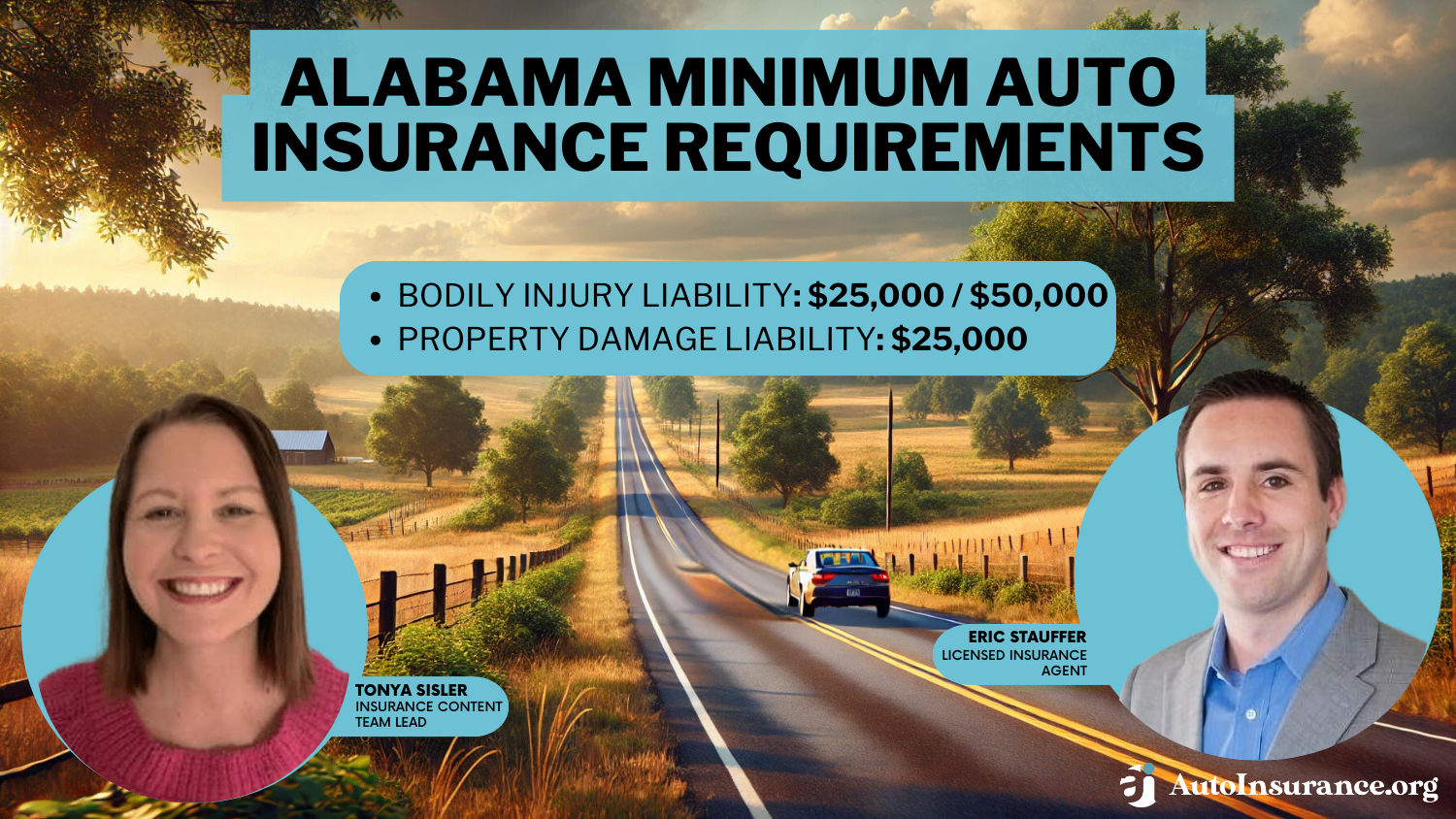
In 2026, the statutory minimums for liability insurance in Alabama remain at the "25/50/25" level. These figures represent the maximum amount the insurance company will pay out for a covered loss:
- $25,000 for bodily injury per person: This is the maximum amount the insurer will pay for the medical expenses, lost wages, or pain and suffering of a single individual injured in an accident where the policyholder is at fault.
- $50,000 for bodily injury per accident: This is the total cap for all injuries sustained by all people involved in a single accident. If four people are injured, they must split this $50,000, subject to the $25,000 per-person limit.
- $25,000 for property damage per accident: This covers damage to the other party's vehicle, buildings, fences, or other personal property.
While these are the minimums required to legally "accept" and operate a vehicle in Alabama, many financial advisors and legal experts recommend higher limits. Given the rising costs of medical care and vehicle repairs in 2026, a $25,000 limit for property damage can be quickly exhausted if a luxury vehicle or multiple cars are involved in a collision.
How Businesses and Medical Providers Accept Auto Insurance
When we discuss "accepting auto insurance" from a B2B or service provider perspective—such as a collision repair shop or a physical therapy clinic—the process becomes a matter of billing and reimbursement. In Alabama, because it is a "fault" state, the process of accepting insurance as a form of payment for services rendered to an accident victim is complex.
The Role of Third-Party Claims
If a medical provider treats a patient injured in a car accident, they are often asked to "accept" the auto insurance of the at-fault driver. However, auto insurance is not like health insurance. An auto insurer usually does not pay medical bills as they arrive. Instead, they settle the claim in a lump sum once treatment is complete.
To bridge this gap, many Alabama providers utilize a Letter of Protection (LOP). This is a legal agreement where the provider agrees to wait for payment until the personal injury case is settled, in exchange for a guarantee that the bill will be paid directly out of the settlement proceeds.
Collision Repair and Direct Repair Programs (DRPs)
For auto body shops, accepting insurance often involves joining a Direct Repair Program (DRP). In these arrangements, the shop agrees to certain labor rates and parts standards set by the insurance company in exchange for being a "preferred" provider. In 2026, while Alabama law prohibits insurers from requiring a consumer to use a specific repair shop, the "acceptance" of insurance estimates is much smoother when the shop and the insurer have a pre-existing relationship.
The Alabama Online Insurance Verification System (OIVS)
The primary tool for verifying and accepting the validity of an insurance policy in Alabama is the Online Insurance Verification System (OIVS). Developed by the Alabama Department of Revenue, this system allows law enforcement, county licensing officials, and authorized businesses to verify insurance status in real-time.
How OIVS Functions in 2026
When a driver registers a vehicle or is stopped by law enforcement, the OIVS sends an inquiry to the insurance company listed in the state’s database. The insurer must respond within seconds, confirming whether a policy is active.
For businesses that need to verify insurance—such as car rental agencies or dealerships—accessing OIVS data ensures that they are not "accepting" an expired or fraudulent policy. This system has significantly reduced the number of uninsured motorists on Alabama roads by catching lapsed policies immediately rather than waiting for an accident to occur.
Verification Challenges
There are instances where a policy may be active but "unverifiable" through OIVS. This often happens with:
- New Policies: It can take several days for a new policy to propagate through the insurer’s reporting system to the state.
- Commercial/Fleet Policies: These are sometimes held in different databases that do not sync perfectly with the personal lines OIVS.
- Binder Agreements: Temporary insurance binders issued by agents may not show up in the automated system until the formal policy is generated.
In these cases, "accepting" the insurance requires manual verification by calling the agent or carrier directly.
Contributory Negligence: A Hurdle for Claims Acceptance
One of the most critical aspects of "accepting" auto insurance in Alabama is understanding the state's Pure Contributory Negligence rule. Alabama is one of the few remaining jurisdictions in the United States that follows this strict doctrine.
Under contributory negligence, if a driver is found to be even 1% at fault for an accident, they are legally barred from recovering any damages from the other driver's insurance company. This has a massive impact on how insurance companies "accept" liability.
Impact on Providers and Drivers
If a repair shop or medical clinic is waiting for payment from a third-party insurer, they must be aware that the insurer may deny the claim entirely if there is any evidence that their own client (the victim) contributed to the accident. This makes "accepting" auto insurance as a primary payment source risky for providers in Alabama compared to "no-fault" states like Florida or Georgia.
| Feature | Alabama Requirement / Status (2026) |
|---|---|
| Minimum Bodily Injury | $25,000 per person / $50,000 per accident |
| Minimum Property Damage | $25,000 |
| Verification Method | Alabama OIVS (Real-time electronic) |
| Legal Doctrine | Pure Contributory Negligence (0% fault required to collect) |
| Uninsured Motorist (UM) | Optional, but must be rejected in writing |
| Proof of Insurance | Hard copy or electronic (smartphone) accepted |
Legal Consequences of Failing to Maintain Insurance
Failure to maintain and "accept" the legal requirement for insurance results in significant penalties in Alabama. The state uses the OIVS to send out "Insurance Profile" questionnaires when a lapse is detected. If a driver cannot prove they had insurance during the period in question, their registration is suspended.
Reinstatement Fees and Procedures
In 2026, the costs for failing to comply with MLI laws are as follows:
- First Violation: A $200 reinstatement fee and a requirement to provide proof of current insurance for a 12-month period.
- Second and Subsequent Violations: A $400 reinstatement fee and a mandatory 4-month registration suspension. Drivers must also provide proof of insurance to get their plates back.
Furthermore, driving a vehicle with a suspended registration due to insurance cancellation is a separate misdemeanor offense that can lead to vehicle impoundment and additional court fines.
Types of Insurance Beyond the Minimums
While the state only requires liability, most Alabama drivers "accept" additional coverages to protect their own assets. In 2026, the landscape of vehicle values and repair costs makes these optional coverages almost essential.
Comprehensive and Collision
If a vehicle is financed or leased in Alabama, the lienholder will require the driver to carry Collision (damage from hitting an object) and Comprehensive (theft, fire, vandalism, or animal strikes). Unlike liability, which pays others, these coverages pay for the driver's own vehicle repairs.
Uninsured/Underinsured Motorist (UM/UIM)
Given that a segment of the population still operates without insurance despite the OIVS, Uninsured Motorist coverage is vital. In Alabama, insurers are required to offer this coverage, and if a driver chooses not to "accept" it, they must sign a formal rejection form. UM coverage steps into the shoes of the at-fault driver's insurance if they are uninsured or if their limits are too low to cover the damages.
Professional Advice and Jurisdictional Limits
It is important to note that insurance laws and the interpretation of "contributory negligence" are subject to legislative changes and judicial rulings. While this guide reflects the standards in Alabama for 2026, drivers and business owners should consult with a licensed Alabama insurance agent or a qualified attorney regarding specific policy language or legal disputes. This information is for educational purposes and does not constitute legal or financial advice.
Frequently Asked Questions
What happens if my insurance is active but the OIVS says it isn't?
If the Online Insurance Verification System returns a "unconfirmed" status, you should not panic. You can provide a manual "Evidence of Insurance" to the Department of Revenue or the Licensing Official. This typically includes a current insurance card, a premium receipt, or a copy of the policy’s declarations page. Your agent can also provide a "Letter of Experience" or a certificate of insurance to resolve the discrepancy.
Can I accept an out-of-state insurance policy for a car registered in Alabama?
No. To register a vehicle in Alabama, the insurance policy must be issued by a company licensed to do business in the State of Alabama. While national carriers like State Farm or Geico work in most states, the specific policy must be written on an Alabama-approved form and reported to the Alabama OIVS.
Does Alabama require "No-Fault" insurance?
No. Alabama is a "Tort" state, specifically following the contributory negligence rule. There is no requirement for Personal Injury Protection (PIP) or "No-Fault" coverage. Drivers are responsible for the damages they cause, and victims must prove the other driver was 100% at fault to collect from the other driver's insurance.
Is electronic proof of insurance always accepted by Alabama police?
Yes, under Alabama law, officers are required to accept an electronic image of an insurance card displayed on a mobile device (such as a smartphone or tablet). However, it is always recommended to keep a paper copy in the glovebox in case your phone battery dies or you are in an area with no cellular service to pull up an app.
How do I "accept" insurance for a utility trailer in Alabama?
In Alabama, liability coverage for a non-motorized utility trailer is typically "accepted" and extended from the towing vehicle’s auto insurance policy. You do not usually need a separate liability policy for the trailer itself, though you may want comprehensive/collision coverage for the trailer's value.
Next Steps for Alabama Drivers and Businesses
To ensure you are fully compliant with Alabama's insurance landscape in 2026, follow these steps:
- Verify your Limits: Check your declarations page to ensure you have at least 25/50/25 coverage.
- Confirm OIVS Reporting: Ask your agent if your policy is being correctly reported to the Alabama Department of Revenue to avoid "Insurance Profile" inquiries.
- Evaluate UM Coverage: Review whether you have Uninsured Motorist coverage. In a contributory negligence state, this is often the only way to ensure your medical bills are paid if the other driver is uninsured or if fault is disputed.
- Keep Records: Whether you are a business "accepting" insurance from a client or a driver showing proof to an officer, maintain both digital and physical records of all policy documents.