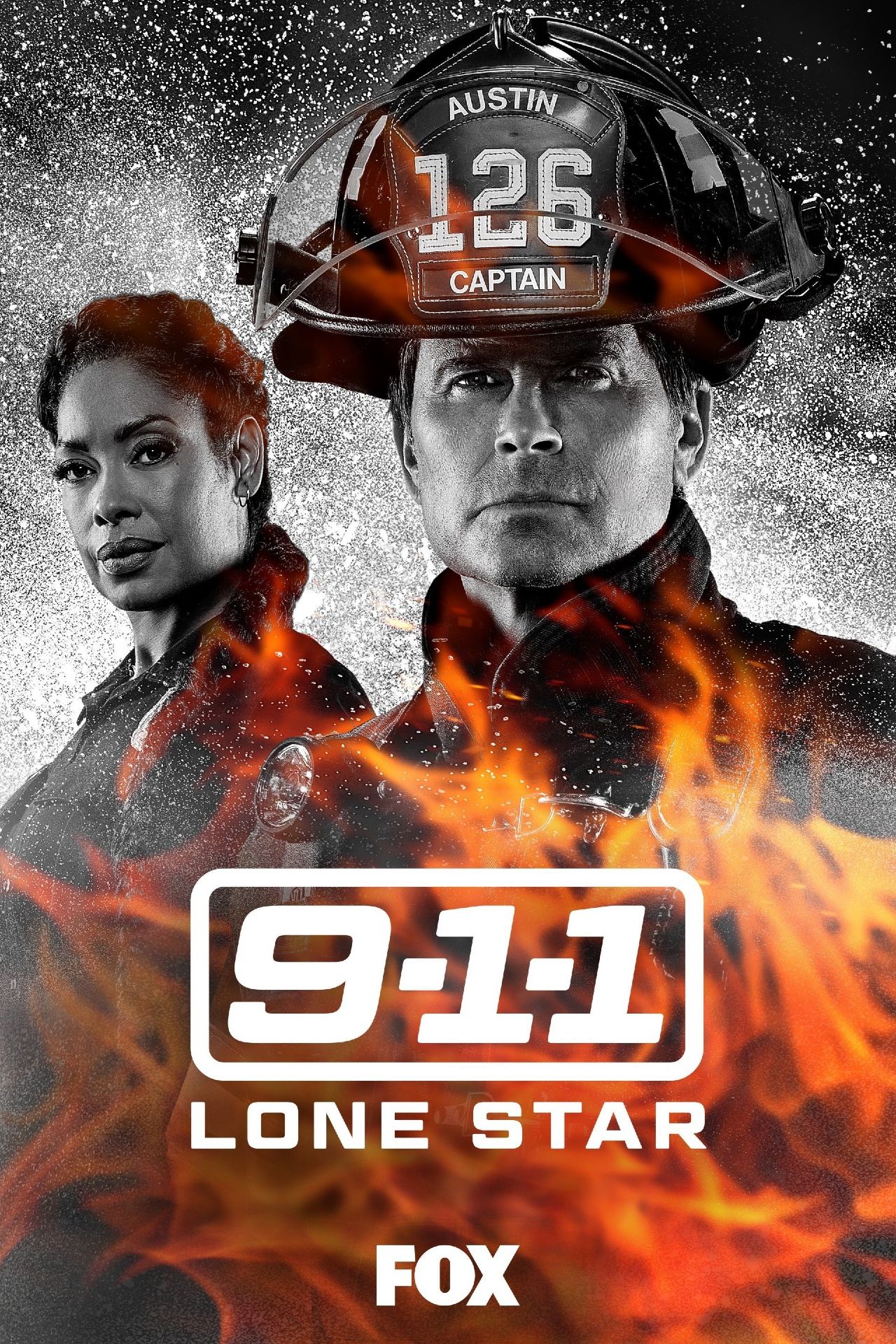
9-1-1: Lone Star is an American procedural drama that concluded its five-season run on FOX in early 2025. Centered on Captain Owen Strand and the diverse crew of Austin’s Station 126, the series is a spin-off of the original 9-1-1, blending high-octane emergency response with deep character-driven narratives focused on inclusivity and resilience.
Overview of the 9-1-1: Lone Star Universe
Created by Ryan Murphy, Brad Falchuk, and Tim Minear, 9-1-1: Lone Star premiered in January 2020 as a high-profile expansion of the 9-1-1 franchise. While the flagship series is rooted in the fast-paced, urban sprawl of Los Angeles, Lone Star transplanted the formula to Austin, Texas. This shift in locale allowed the creators to explore different cultural dynamics, environmental hazards, and a distinct "Texas-sized" brand of emergencies, ranging from massive solar flares and ice storms to rattlesnake infestations and wildfire outbreaks.
The show's premise begins with Owen Strand (played by Rob Lowe), a New York City fire captain and the lone survivor of his Manhattan firehouse on September 11, 2001. After a tragedy wipes out a firehouse in Austin, Strand is recruited to rebuild the station from the ground up. His mission is not just to staff a firehouse, but to curate a team that reflects modern diversity, incorporating individuals with unique backgrounds, faiths, and identities. This foundational element distinguished the series from traditional procedurals, making it a landmark for representation in prime-time television.
The Evolution and Conclusion of the Series
As of 2026, the series is viewed as a complete body of work consisting of 72 episodes across five seasons. The path to the series finale was marked by significant industry shifts, including the 2023 Hollywood strikes and changing broadcast dynamics.
The Impact of Season 5
The fifth and final season, which premiered in September 2024 and concluded in early 2025, served as a definitive closing chapter for the 126. Unlike previous seasons that often ended on cliffhangers, the 12-episode final season focused on legacy and transition. Key storylines included Owen Strand confronting his past and his health, the evolution of the "Tarlos" relationship (TK Strand and Carlos Reyes), and the professional growth of the younger firefighters.
The final season faced several production hurdles, most notably the departure of Sierra McClain, who portrayed the central character Grace Ryder. Her absence was a significant plot point that the writers had to navigate, focusing more heavily on her husband Judd Ryder (Jim Parrack) and his transition into a new phase of his career. Despite these challenges, the series maintained its signature blend of "emergency of the week" spectacles and the "found family" emotional core that fans had come to expect.
Why the Series Ended
The conclusion of 9-1-1: Lone Star was largely a result of economic factors in the streaming era. While the original 9-1-1 moved from FOX to ABC (Disney) for its seventh season, Lone Star remained on FOX. This created a complex licensing situation where the production costs—largely driven by a high-profile cast and expensive special effects—became difficult for the FOX network to sustain without full ownership of the show. Consequently, the decision was made to bring the series to a creative close after five successful years rather than risk a cancellation without a proper ending.
Core Characters and Cast Dynamics
The success of 9-1-1: Lone Star rested heavily on its ensemble cast. Each character was designed to represent a specific facet of the American experience, often subverting stereotypes associated with first responders.
Captain Owen Strand (Rob Lowe)
Owen Strand is the sophisticated, skincare-obsessed leader who balances his vanity with extreme bravery. His character arc is defined by his struggle with lung cancer (linked to his time at Ground Zero) and his complicated relationship with his son, TK. Throughout the series, Strand evolves from a man trying to outrun his trauma to a leader who fully embraces his role as a father figure to his entire station.
T.K. Strand and Carlos Reyes ("Tarlos")
The relationship between Owen’s son, TK (Ronen Rubinstein), and Austin police officer Carlos Reyes (Rafael L. Silva) became the emotional heartbeat of the series. Often referred to by fans as "Tarlos," their journey from a casual encounter to a married couple dealt with themes of addiction, career-ending injuries, and familial acceptance. Their wedding at the end of Season 4 remains one of the series' most-watched milestones.
Captain Tommy Vega (Gina Torres)
Joining the cast in Season 2, Gina Torres’ Tommy Vega brought a new level of gravitas to the show. As a paramedic captain returning to the workforce after a hiatus, Tommy’s storyline explored grief following the sudden death of her husband, the challenges of being a single mother, and the pressure of leading a high-stakes medical team.
The Supporting Heroes of the 126
- Judd and Grace Ryder: Representing the traditional Texas roots of the show, their relationship provided a grounded, spiritual counterpoint to the more chaotic lives of their colleagues.
- Paul Strickland (Brian Michael Smith): A trailblazing character, Paul was one of the first Black transgender men portrayed as a series regular in a procedural drama. His storylines focused on his expert observational skills and his navigate of health issues like Brugada syndrome.
- Marjan Marwani (Natacha Karam): A devout Muslim and "adrenaline junkie," Marjan’s character challenged hijabi stereotypes, showcasing a woman who was both a social media influencer and a fearless firefighter.
- Mateo Chavez (Julian Works): Serving as the "probie" for much of the series, Mateo’s journey through dyslexia and his dedication to the 126 provided a relatable underdog narrative.
Technical Specifications and Production Detail
The production of 9-1-1: Lone Star was noted for its high-budget set pieces. Despite being set in Austin, much of the primary filming took place in Los Angeles, with second-unit photography capturing the iconic landmarks of the Texas capital. This required extensive use of CGI and set design to maintain geographical authenticity.
| Feature | Details |
|---|---|
| Network | FOX (2020–2025) |
| Total Seasons | 5 |
| Total Episodes | 72 |
| Production Companies | Reznick Publications, 20th Television, Ryan Murphy Television |
| Key Creators | Ryan Murphy, Brad Falchuk, Tim Minear |
| Main Location | Austin, Texas (Setting); Los Angeles, CA (Filming) |
| Spin-off Status | Spin-off of 9-1-1 |
| Primary Streaming Home | Hulu / Disney+ |
Streaming Availability and Re-watch Value in 2026
In the current media landscape of 2026, 9-1-1: Lone Star remains a high-value asset for streaming platforms. For viewers looking to access the series in its entirety, the primary destination continues to be Hulu and Disney+ (depending on the region and bundle configuration).
The series is particularly well-suited for "binge-watching" because of its mix of episodic emergencies and long-form character arcs. New viewers often find the "Multi-Part Openers" (such as the Season 2 lava flow or the Season 3 ice storm) to be the best entry points, as these episodes demonstrate the show's ability to execute cinema-quality disaster sequences on a television budget.
For collectors and enthusiasts, the series has also seen limited physical media releases, though the primary mode of consumption remains digital. The syndication of the show on cable networks like USA Network and ION Television has also ensured that the series remains in the public consciousness long after its final original broadcast.
The Legacy of the 126
The legacy of 9-1-1: Lone Star is defined by its commitment to "radical inclusivity." By placing a diverse group of heroes in the heart of a traditionally conservative state, the show sparked conversations about identity, service, and what it means to be a "real" Texan.
The series also proved that the 9-1-1 franchise had legs beyond its original setting. It paved the way for discussions about further spin-offs in different cities, though as of 2026, the focus remains on the longevity of the original Los Angeles-based series. The 126 firehouse stands as a symbol of the "found family" trope, where individuals from disparate walks of life are bound together by the shared trauma and triumph of the first responder life.
Frequently Asked Questions
Why did Sierra McClain leave 9-1-1: Lone Star before the final season?
Sierra McClain, who played the beloved 9-1-1 dispatcher Grace Ryder, departed the series following a contract dispute prior to the filming of Season 5. Because her character was the moral compass of the show and half of a popular couple, the writers chose to address her absence by having her character pursue mission work, which allowed the show to focus on Judd Ryder’s solo journey and the impact of her absence on the 126 family.
Is 9-1-1: Lone Star connected to the original 9-1-1 series?
Yes, the shows exist in the same universe. There have been several crossover events, most notably in Season 2, when characters from the Los Angeles 118 (Buck, Hen, and Eddie) traveled to Texas to help fight a massive wildfire. These crossovers established a shared continuity, though the shows eventually aired on different networks (ABC for 9-1-1 and FOX for Lone Star).
What happened to the 126 in the series finale?
The series finale focused on the themes of closure and new beginnings. While the firehouse remained operational, the finale provided glimpses into the future of each character, ensuring that the bonds formed at the 126 would endure even as their careers evolved. Owen Strand made peace with his legacy, and the younger generation of firefighters stepped into leadership roles.
Will there be a 9-1-1: Lone Star movie or revival?
As of 2026, there are no official plans for a feature film or a revival. However, showrunner Tim Minear has expressed openness to revisiting the characters in future crossover events on the original 9-1-1 or potential new spin-offs. The "Tarlos" characters remain particularly popular, leading to ongoing speculation about a potential limited series or guest appearances.
Where can I watch 9-1-1: Lone Star without a cable subscription?
The most reliable way to watch the series is through a subscription to Hulu or the Disney+ bundle. These platforms host all five seasons and 72 episodes. Additionally, episodes can be purchased individually or by the season on digital retailers like Amazon Prime Video and Apple TV.
Practical Recommendation for Viewers
If you are new to the series or planning a re-watch in 2026, it is highly recommended to watch the show in chronological order rather than skipping to the emergencies. While the rescues provide the spectacle, the emotional weight of the series comes from the character growth—specifically the evolution of Owen and TK’s relationship and the integration of the diverse team members into a cohesive unit. For those short on time, the "Event Openers" of each season (the Solar Flare in Season 1, the Lava in Season 2, and the Ice Storm in Season 3) offer the best examples of the series' technical ambition.