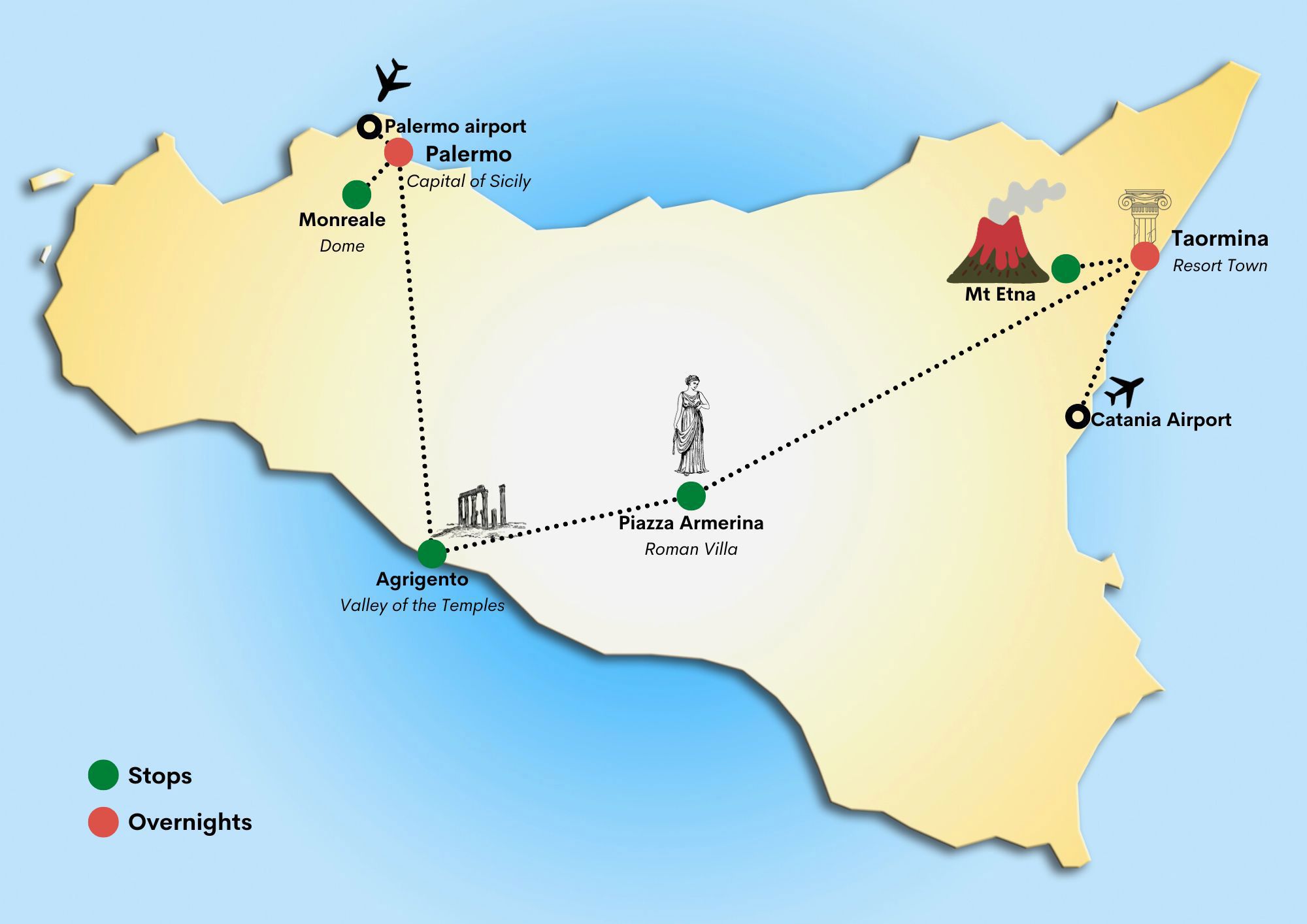
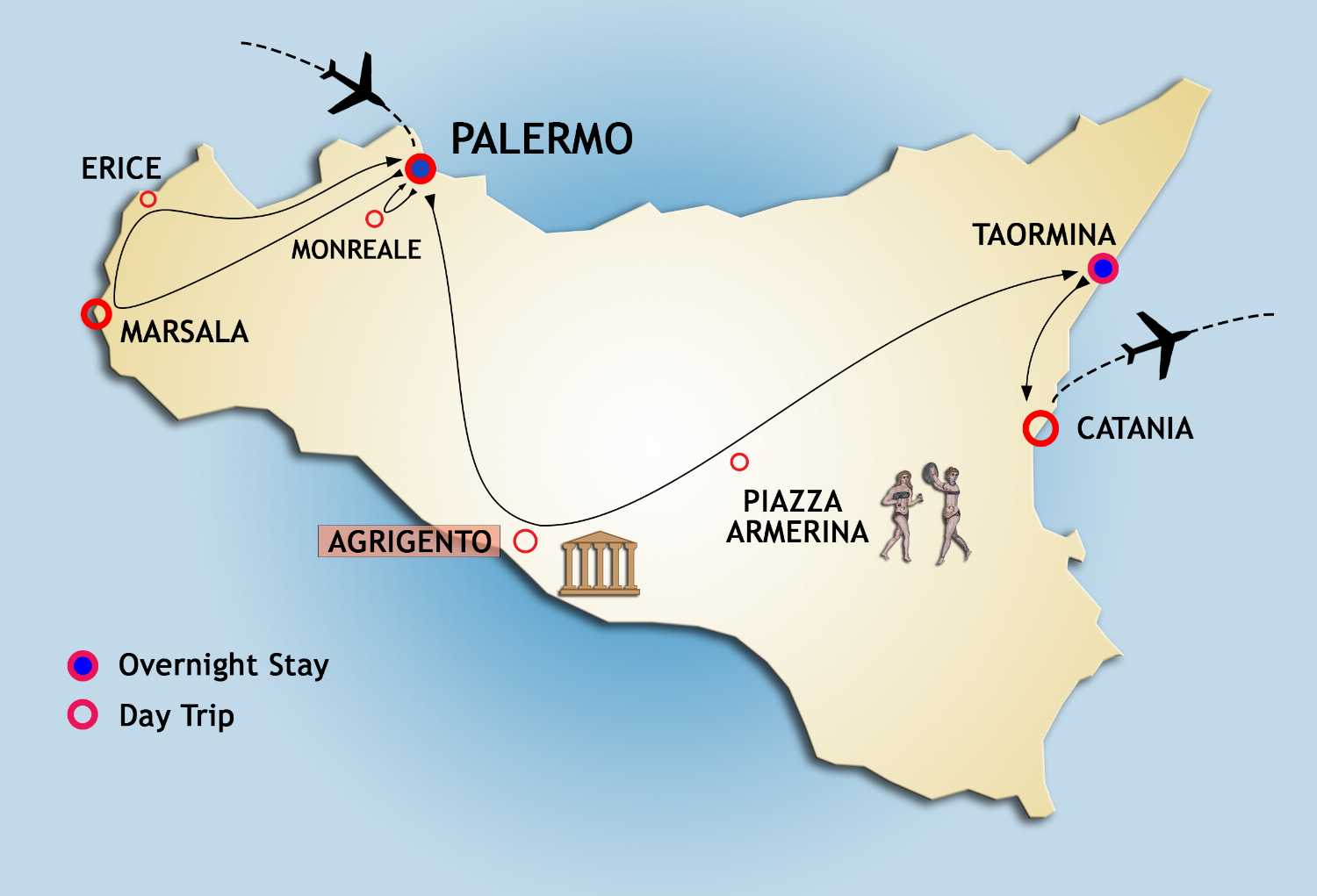
A successful 6-day trip to Sicily requires focusing on one specific region, such as the East Coast, to avoid excessive travel time. This itinerary centers on Catania, Taormina, Mount Etna, and the Val di Noto, offering a concentrated experience of ancient Greek ruins, Baroque architecture, and active volcanic landscapes within a manageable driving radius.
Sicily is the largest island in the Mediterranean, and its triangular shape (the Trinacria) encompasses nearly 10,000 square miles of diverse terrain. For travelers with only six days in 2026, the primary challenge is resisting the urge to see everything. Attempting to drive from the western capital of Palermo to the eastern shores of Syracuse in a single week often results in more time spent on the Autostrada than in the piazzas. By focusing on the eastern side of the island, you minimize transit and maximize cultural immersion.
Logistics and Transport Requirements for 2026
To execute a 6-day itinerary effectively, your choice of transport is the most critical decision. While Sicily’s rail network connects major hubs like Messina, Catania, and Syracuse, it remains secondary to the flexibility provided by a car.
Car Rentals and Driving Nuances
In 2026, car rental prices at Catania–Fontanarossa Airport (CTA) typically range from €45 to €85 per day for a mid-sized automatic vehicle, depending on the season. It is highly recommended to opt for a compact car; Sicilian streets, particularly in the historic centers of Ragusa and Taormina, are notoriously narrow.
When driving, you must be aware of the Zona a Traffico Limitato (ZTL). These are restricted traffic zones found in almost every Sicilian city center. Entering a ZTL without authorization (usually reserved for residents or hotel guests with registered plates) results in automated fines that are mailed to rental agencies. Always verify with your accommodation if they provide ZTL clearance.
Choosing Your Base
For this itinerary, you have two logical options:
- The Single Base Approach: Stay in or near Syracuse (Ortigia). This allows you to avoid packing and unpacking, as most East Coast highlights are within a 90-minute drive.
- The Split Base Approach: Three nights in Taormina or Catania and two nights in Syracuse/Noto. This reduces daily driving time and allows for different evening atmospheres.
Day 1: Taormina and the Ionian Coastline
Upon arrival at Catania Airport, collect your vehicle and head north toward Taormina. Perched on a cliff overlooking the Ionian Sea, Taormina has been a premier destination since the days of the Grand Tour.
The Teatro Antico di Taormina
Your first stop should be the Teatro Antico, a remarkably preserved Greek theater later renovated by the Romans. The technical brilliance of its placement allows the audience to see the stage with Mount Etna framing the background. In 2026, entry fees are approximately €12-€15. It is advisable to visit in the late afternoon to capture the "golden hour" light on the brickwork.
Corso Umberto and Isola Bella
The main pedestrian artery, Corso Umberto, is lined with medieval gates and high-end boutiques. While tourist-centric, it provides essential access to the Piazza IX Aprile, a "balcony" over the sea. For those seeking the water, a cable car connects the town center to Mazzarò. From there, a short walk leads to Isola Bella, a small island and nature reserve connected to the mainland by a thin strip of pebbles.
Day 2: The Majesty of Mount Etna and Regional Vineyards
Mount Etna is Europe’s highest and most active volcano. In 2026, it remains a focal point for both geological study and adventure tourism.
Summit Access and Silvestri Craters
There are two main access points: Etna Nord (Piano Provenzana) and Etna Sud (Rifugio Sapienza). For most first-time visitors, Rifugio Sapienza is the preferred choice. From here, you can walk around the dormant Silvestri Craters for free, which provide a stark, lunar landscape.
For a higher ascent, the Funivia dell'Etna (cable car) takes you to 2,500 meters. From the cable car terminus, 4x4 buses can transport you further to the authorized crater zones (typically around 2,900 meters). Safety Note: Due to Etna's constant activity, access to the upper craters is strictly regulated by the INGV (National Institute of Geophysics and Volcanology). Always check the daily volcanic bulletin before planning a hike to the summit.
The Etna DOC Wine Region
The volcanic soil produces some of Italy's most unique wines, specifically those utilizing the Nerello Mascalese and Carricante grapes. On your descent from the volcano, visit a winery in the communes of Castiglione di Sicilia or Randazzo. These vineyards utilize ancient "palmento" structures, though modern 2026 production uses state-of-the-art temperature-controlled stainless steel and French oak.
Day 3: Syracuse and the Island of Ortigia
Driving south from the Etna region, you will reach Syracuse (Siracusa). Once the largest city in the ancient Greek world, it rivaled Athens in power and prestige.
Neapolis Archaeological Park
Located on the mainland, this park contains the Teatro Greco, one of the largest Greek theaters ever built, and the Latomia del Paradiso, a deep limestone quarry. Within the quarry lies the Ear of Dionysius, a cavern with extraordinary acoustic properties. Legend states that the tyrant Dionysius used the cave to overhear the whispers of his prisoners.
The Charm of Ortigia
The heart of Syracuse is the island of Ortigia, connected by the Ponte Umbertino. Ortigia is a labyrinth of narrow alleys and white limestone buildings. Key sites include:
- The Duomo di Siracusa: A masterpiece of architectural layering, where a 7th-century cathedral was built directly into the structure of a 5th-century BC Temple of Athena. The Doric columns are still visible both inside and out.
- Fonte Aretusa: A freshwater spring where papyrus grows naturally, linked to the myth of the nymph Arethusa.
- The Jewish Baths (Miqwa’ot): Located beneath a hotel in the Giudecca district, these are among the oldest ritual baths in Europe, dating back to the Byzantine era.
Day 4: The Val di Noto and Sicilian Baroque
In 1693, a massive earthquake devastated southeastern Sicily. The subsequent reconstruction resulted in a unique architectural movement known as the Sicilian Baroque, characterized by theatrical facades, belfries, and grotesque masks (mascaroni) on balcony corbels.
Noto: The Stone Garden
Noto is the pinnacle of this style. The Corso Vittorio Emanuele is flanked by palaces and churches built from a local honey-colored limestone that glows orange at sunset. The Cattedrale di San Nicolò, which underwent a massive structural restoration in the early 21st century, is the centerpiece.
Ragusa Ibla
Further inland lies Ragusa, divided into two parts: Ragusa Superiore (the modern upper town) and Ragusa Ibla (the historic lower town). The view of Ibla from the Santa Maria delle Scale church is one of the most iconic images of Sicily. Spend your afternoon wandering the Giardino Ibleo and visiting the Duomo di San Giorgio. The engineering required to build these massive structures on steep, seismic ridges is a testament to 18th-century Sicilian resilience.
Day 5: The Mosaics of Piazza Armerina
While slightly further inland, the Villa Romana del Casale in Piazza Armerina is an essential stop for any history enthusiast. This UNESCO World Heritage site contains the most extensive and complex collection of Roman mosaics in the world.
Technical Detail: The Mosaics
Dating to the 4th century AD, the mosaics cover approximately 3,500 square meters. The most famous room is the "Chamber of the Ten Maidens" (often called the Bikini Girls), depicting women participating in athletic competitions such as weightlifting and discus throwing.
The "Great Hunt" mosaic, stretching 60 meters, depicts the capture of exotic animals in Africa for transport to Rome. In 2026, the site features advanced climate control and elevated walkways to preserve the tesserae from humidity and foot traffic. It is a roughly 1 hour 45-minute drive from Syracuse, making it a feasible day trip if you start early.
Day 6: Catania’s Vibrant Markets and Departure
On your final day, return to Catania to experience the grit and grandeur of Sicily’s second-largest city. Catania is a city built from "black gold"—the basaltic lava rock from Etna.
La Pescheria (The Fish Market)
Located just behind the Piazza del Duomo, this market is a sensory overload. Fishmongers shout their prices over stalls of swordfish, sea urchins, and red prawns. It offers a raw look at Sicilian daily life that hasn't changed in centuries.
Catania Cathedral and the Elephant Fountain
The Cattedrale di Sant'Agata houses the relics of the city’s patron saint and the tomb of the composer Vincenzo Bellini. In the center of the piazza stands the Fontana dell'Elefante, an ancient basalt elephant (u Liotru) that serves as the city's symbol.
Before heading to the airport, visit the Monastero dei Benedettini, one of the largest Benedictine monasteries in Europe. Its late-Baroque architecture and integration with a Roman theater make it a fascinating study in urban layers.
Comparative Overview: Planning Your Route
The following table compares the East Coast focus with the potential West Coast alternative for a 6-day duration.
| Feature | East Coast (Catania/Syracuse) | West Coast (Palermo/Trapani) |
|---|---|---|
| Primary Theme | Greek History & Volcanology | Arab-Norman History & Beaches |
| Top Landmark | Mount Etna | Monreale Cathedral |
| Driving Intensity | Moderate (well-connected Autostrada) | High (longer distances between sites) |
| Best For | First-time visitors, hikers, wine lovers | Foodies, history buffs, beach seekers |
| Main Airport | Catania (CTA) | Palermo (PMO) |
| Baroque Focus | High (Val di Noto) | Low (primarily Palermo/Marsala) |
Practical Planning: Budget, Dining, and Timing
Estimated Costs for 2026
For a mid-range traveler in 2026, expect the following daily expenditures:
- Accommodation: €120–€200 for a boutique hotel or high-end Agriturismo.
- Dining: €50–€80 per person (includes a sit-down dinner with wine).
- Activities: €20–€40 for museum and site entries.
- Transport: €60 (car rental, fuel, and parking).
Sicilian Culinary Staples
In the east, the cuisine is heavily influenced by the proximity to the sea and the fertile volcanic soil. Do not miss:
- Pasta alla Norma: A Catanese specialty featuring fried eggplant, tomato sauce, and salted ricotta.
- Granita and Brioche: The standard Sicilian breakfast, particularly the almond or pistachio flavors in Noto.
- Arancini: Note that in the east (Catania), they are usually conical and called arancini, whereas in the west (Palermo), they are round and called arancine.
Frequently Asked Questions
Is 6 days enough to see all of Sicily?
No. Sicily is roughly the size of Belgium or the state of Maryland. Attempting to see the whole island in 6 days would result in approximately 12–15 hours of driving, leaving little time for sightseeing. Focusing on either the East or West coast is the most efficient way to travel.
Do I need to book tickets in advance for 2026?
Yes, especially for major sites. The Villa Romana del Casale and the Neapolis Archaeological Park often have long queues. For Mount Etna cable cars and specific high-end wineries, booking at least 48 hours in advance is recommended. Many state-run museums in Sicily moved to a mandatory online booking system for weekend visits during the 2024-2025 period, a trend that continues in 2026.
What is the best month to visit Sicily?
May, June, September, and October are the ideal months. July and August in 2026 are expected to be extremely hot, with temperatures often exceeding 40°C (104°F) due to the Scirocco winds from Africa. Many sites offer limited shade, making midday sightseeing difficult in high summer.
Is it safe to drive in Sicily?
Driving in Sicily is safe but requires assertiveness. Local drivers often treat lane markings as suggestions. The most significant risks are narrow roads in historic centers and ZTL zones. Ensure your insurance policy includes "collision damage waiver" (CDW) with a low or zero excess, as minor scrapes are common in tight parking areas.
Can I do this itinerary using only public transport?
It is possible but difficult. While trains connect Catania, Taormina, and Syracuse, reaching the Val di Noto towns (Ragusa/Modica) or Piazza Armerina via public transport is time-consuming and involves infrequent bus schedules. A car is strongly recommended to maximize your 6-day window.
Final Recommendations for Your Trip
To make the most of your 6 days in Sicily, prioritize the quality of your experiences over the quantity of locations visited. Start your days early to beat the heat and the tour bus crowds, particularly at Mount Etna and the Valley of the Temples (if you choose to extend your drive). Always carry a small amount of cash for parking meters and rural cafes, as digital payment adoption, while improved in 2026, can still be inconsistent in smaller villages. Finally, embrace the "slow" pace of the island—Sicily is best enjoyed when you leave room for an unplanned espresso in a quiet piazza.