A $50,000 age-rated term life insurance policy is a life insurance contract where the death benefit is fixed at $50,000, but the premium costs increase periodically based on the insured person's attained age. Unlike level-premium term insurance, these policies start with very low initial costs but become significantly more expensive as the policyholder grows older.
In 2026, the life insurance landscape has shifted toward more personalized, data-driven underwriting, yet the fundamental structure of the age-rated term policy remains a niche but vital tool for specific financial needs. Often referred to as "attained age" or "yearly renewable term" (YRT) policies, these products are designed for individuals who need immediate, low-cost coverage and understand that the long-term cost trajectory will climb. Understanding the nuances of these policies—from how "rating" affects your premium to the specific utility of a $50,000 face value—is essential for making an informed financial decision.
Defining the "Age-Rated" Mechanism
In the insurance industry, the term "age-rated" usually refers to one of two distinct concepts: the pricing structure (attained age) or a health-related "table rating" that adjusts the price based on medical risk. In the context of a $50,000 term policy, it most commonly refers to the attained age pricing model.
Attained Age vs. Issue Age Pricing
Most consumers are familiar with "level term" insurance, where you pay the same $20 or $30 every month for 20 years. That is "issue age" pricing, where the risk is averaged over the life of the term. An age-rated policy works differently. The premium you pay today is based strictly on the statistical risk of someone of your current age passing away within the next 12 months.
Because the statistical probability of death increases every year, the premium must also increase. In 2026, many carriers utilize "age bands," where the price remains stable for five years (e.g., ages 40–44) and then jumps significantly when you enter the next band (ages 45–49). This structure allows young families or career-starters to secure a $50,000 death benefit for a nominal sum, often less than the cost of a monthly streaming subscription, during the early years of the policy.
The Role of Substandard Ratings
Alternatively, if a policy is "rated" due to health conditions (such as diabetes or high blood pressure), the term "age-rated" might imply that the insurance company is treating you as if you are older than your chronological age. For instance, a 45-year-old with significant health risks might be "rated" as a 55-year-old for premium calculation purposes. When seeking a $50,000 policy, understanding whether your quote is "age-rated" due to the product structure or your personal health history is the first step in cost verification.
Why Choose a $50,000 Face Value?
A $50,000 death benefit occupies a specific segment of the market. It is generally too small to replace decades of income for a young family, but it is substantially larger than the average "final expense" or "burial" policy, which typically caps at $25,000.
Final Expenses and Debt Liquidation
In 2026, the average cost of a funeral, memorial service, and associated legal fees can easily reach $15,000 to $20,000. A $50,000 policy provides enough cushion to cover these costs while leaving a meaningful sum for survivors to settle outstanding credit card debts, medical bills, or short-term personal loans. According to the National Association of Insurance Commissioners (NAIC), many consumers choose these "mini-term" policies to bridge specific gaps without committing to the higher premiums of a $250,000 or $500,000 policy.
Supplementing Employer-Provided Coverage
Many employees receive a basic life insurance benefit through their employer, often equal to one year's salary. However, these policies are usually not portable; if you leave the job, you lose the coverage. A private $50,000 age-rated term policy acts as a "safety floor." Because it is age-rated, the entry price is low, making it an affordable way to ensure that at least some coverage remains in place regardless of your employment status.
How Premiums Scale Over Time
The most critical aspect of an age-rated policy is the "escalation schedule." Unlike a mortgage, which stays the same, or a level-term policy, which is predictable, an age-rated policy requires a long-term budget perspective.
The Trajectory of Cost
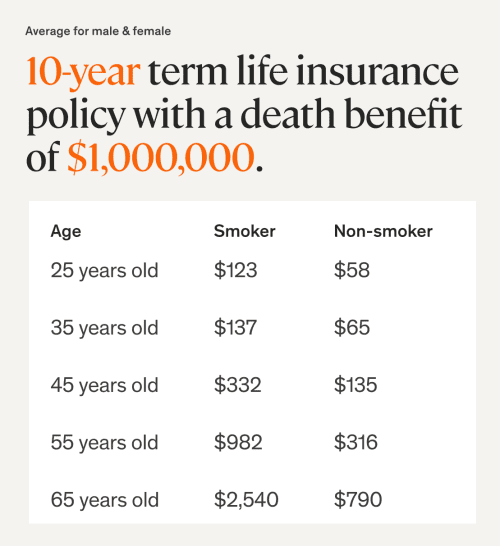
In your 20s and 30s, the cost of $50,000 in coverage is negligible because the statistical risk of death is very low. However, once a policyholder reaches their 50s and 60s, the "cost of insurance" (COI) curve steepens sharply. By age 70, the annual premium for an age-rated term policy can sometimes exceed 10% of the face value, at which point the policy often becomes financially unsustainable for the average retiree.
2026 Pricing Trends
As of 2026, insurance carriers have integrated more sophisticated "predictive analytics" into their pricing. This means that while age is the primary factor, the jumps in premium between age bands may be more nuanced than in previous decades. Some modern age-rated products now offer "capped" increases, where the premium cannot rise more than a certain percentage per year, providing a layer of protection against extreme price hikes in later years.
| Age Bracket | Estimated Monthly Premium (Standard Risk) | Primary Use Case |
|---|---|---|
| 25–30 | $7.00 – $10.00 | Student loan protection / Early career gap |
| 40–45 | $15.00 – $22.00 | Supplementing work benefits / Minor debts |
| 55–60 | $45.00 – $65.00 | Final expense preparation / Mortgage bridge |
| 65–70 | $110.00 – $180.00 | Transitioning to permanent or final expense |
Note: These figures are estimates for 2026 and vary based on gender, tobacco use, and specific carrier algorithms.
Underwriting and Eligibility in 2026
The process of applying for a $50,000 age-rated term policy has been revolutionized by "accelerated underwriting." In the past, even a small policy required a paramedical exam (blood draw, urine sample, and physical). Today, for a $50,000 limit, most carriers utilize data from the MIB (formerly Medical Information Bureau) and prescription drug databases to issue a decision within minutes.
The "Fluidless" Experience
Most applicants in 2026 can expect a "fluidless" experience. If you are relatively healthy and within the age range of 18 to 60, the insurance company's AI-driven systems will scan your medical history and motor vehicle records to approve the policy. This makes $50,000 policies particularly attractive for those who need coverage immediately, such as when securing a small business loan or fulfilling a divorce decree requirement.
Guaranteed Issue vs. Simplified Issue
It is important to distinguish between "age-rated term" and "guaranteed issue" policies. A $50,000 age-rated term policy usually still requires you to answer basic health questions (Simplified Issue). If you have a terminal illness or severe chronic condition, you may not qualify for a standard age-rated term policy and might instead be directed toward a "Guaranteed Issue" whole life policy, which has much lower limits (usually capping at $25,000) and significantly higher costs per thousand dollars of coverage.
Advantages and Disadvantages
The Pros
- Low Initial Cost: No other insurance product provides $50,000 of coverage for a lower starting price. It is the most "capital-efficient" way to get insured today.
- Flexibility: These policies are often renewable annually. If your financial situation changes—perhaps you pay off a debt or save enough to self-insure—you can cancel the policy without having "overpaid" for future coverage as you would in a level-term plan.
- Ease of Access: Due to the lower face value, the "threshold of suspicion" for insurance companies is lower, often leading to faster approvals.
The Cons
- Unpredictable Long-Term Costs: If you keep the policy for 30 years, you will likely end up paying significantly more in total premiums than if you had purchased a 30-year level-term policy at the start.
- No Cash Value: Like all term insurance, there is no savings component. If you outlive the term or the policy becomes too expensive to maintain, you walk away with nothing.
- The "Cliff" Effect: Many policyholders forget about the age-band increases. A sudden jump in premiums in one's 60s can lead to a "lapse" in coverage just when the risk of death is highest.
Comparing Age-Rated Term to Alternatives
When considering a $50,000 policy, you must weigh it against the two most common alternatives: Level Term and Final Expense Whole Life.
Age-Rated Term vs. Level Term
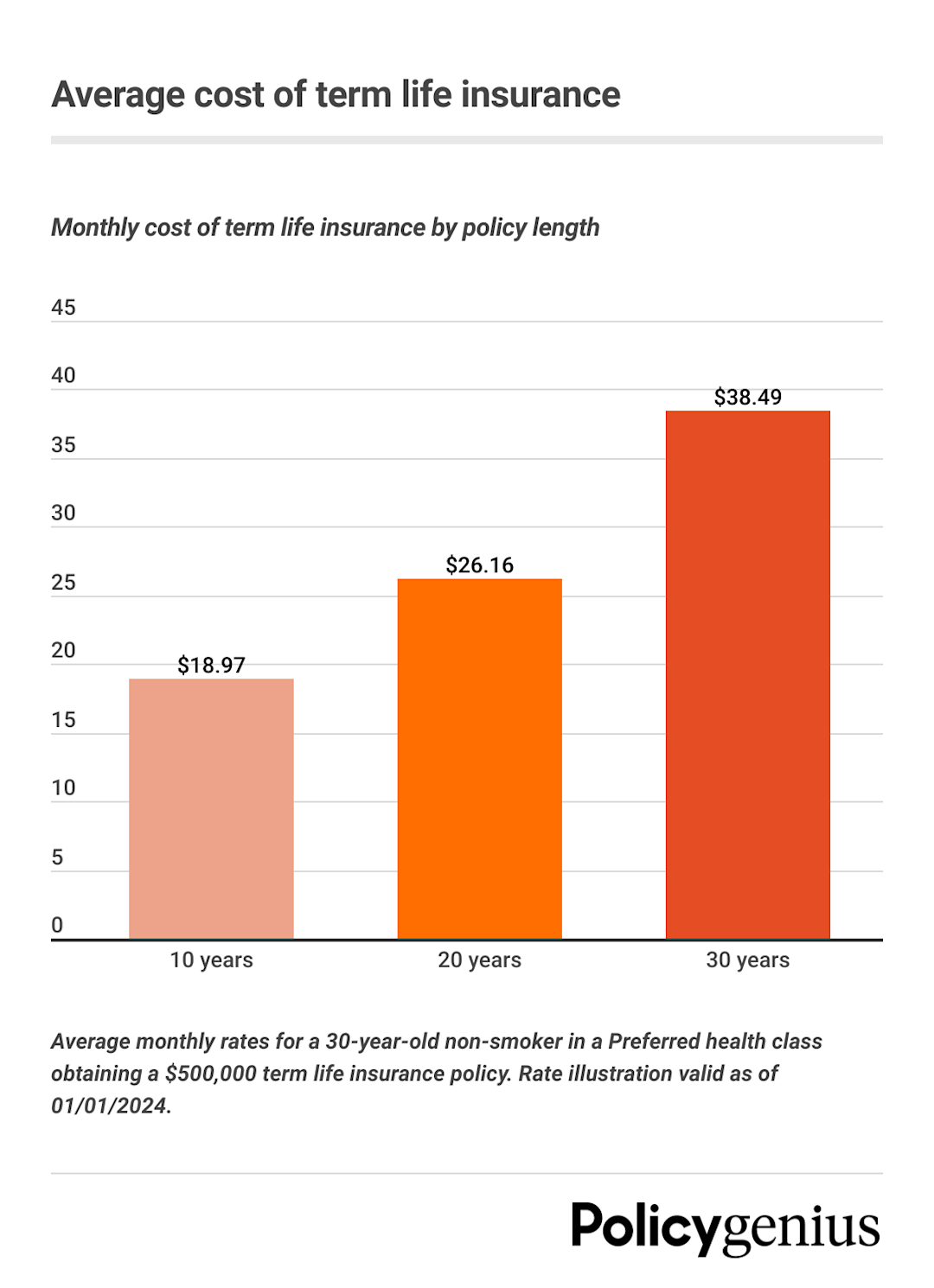
A Level Term policy locks in your price for a set period (10, 20, or 30 years). If you are 30 years old and plan to keep the coverage until age 50, a 20-year Level Term policy is almost always the better financial choice. However, if you only need the coverage for 3–5 years while paying down a specific debt, the age-rated policy's lower initial premium wins.
Age-Rated Term vs. Final Expense Whole Life
Final Expense policies are permanent and build cash value, but they are expensive. A 50-year-old might pay $100 a month for a $25,000 Final Expense policy. In contrast, that same 50-year-old might only pay $30 a month for a $50,000 age-rated term policy. The trade-off is that the term policy will eventually expire or become unaffordable, while the Final Expense policy is guaranteed for life.
Common Mistakes to Avoid
- Ignoring the Renewal Notice: Age-rated policies often renew automatically. If you don't monitor the price increases, you might find a larger-than-expected deduction from your bank account when you hit a new age bracket.
- Using it for Permanent Needs: Do not use an age-rated term policy for an obligation that will never go away, such as a legacy for children or funeral costs if you have no other assets. The rising cost will eventually price you out of the market.
- Overlooking Conversion Riders: Some $50,000 term policies include a "conversion rider" that allows you to switch to a permanent policy without a medical exam. In 2026, this is a valuable feature, as it protects your "insurability" even if your health declines later.
Strategic Final Recommendation
A $50,000 age-rated term life insurance policy is an excellent "tactical" financial tool but a poor "strategic" long-term solution. It is best used for:
- Gap Coverage: Protecting a 5-year personal loan or a short-term business obligation.
- Budget Constraints: Providing maximum protection for a young family with extremely tight cash flow who plan to upgrade to a level-term policy once their income increases.
- Supplementary Protection: Adding a small layer of private insurance on top of a "work-life" policy.
If you are seeking coverage that will last until your passing, regardless of when that occurs, you should look toward a permanent product or a long-duration level-term policy. However, if you need immediate, $50,000 of "just in case" protection for the lowest possible cost today, the age-rated term policy remains a competitive option in the 2026 market.
Frequently Asked Questions
1. Does a $50,000 age-rated policy require a medical exam in 2026? In most cases, no. Due to the relatively low face value and advancements in digital underwriting, most healthy applicants under age 60 can qualify through a "Simplified Issue" process that uses database checks rather than physical exams.
2. Can I decrease the death benefit later to lower the cost? While some carriers allow you to "step down" your coverage (e.g., from $50,000 to $25,000) to keep premiums affordable as you age, many $50,000 policies are already at the carrier's minimum limit for term products. You should check the "minimum face amount" requirements of your specific policy.
3. What happens if I miss a premium payment? Most policies have a 31-day grace period. Because age-rated policies do not have cash value, there is no "automatic premium loan" feature to cover a missed payment. If you don't pay within the grace period, the policy will lapse, and you will have to re-apply, potentially at a higher rate.
4. Is the $50,000 payout taxable to my beneficiaries? Under current tax laws in 2026 (Internal Revenue Code Section 101(a)), life insurance death benefits are generally received income-tax-free by the beneficiaries. However, if the payout is part of a very large estate, it may be subject to estate taxes, though a $50,000 policy alone rarely triggers these thresholds.
5. Why is my "age-rated" premium higher than a "level" quote I got elsewhere? If your age-rated premium is high from the start, you likely received a "substandard rating" due to health or lifestyle risks. In this case, "age-rated" refers to your health status rather than the product type. Always ask for your specific "rating class" (e.g., Standard, Preferred, or Table B).
6. Can I cancel the policy at any time? Yes. Term life insurance policies are "unilateral contracts," meaning you can cancel at any time simply by stopping payment or notifying the carrier. There are no "surrender charges" for a $50,000 term policy because there is no cash value to surrender.