For the vast majority of General Motors 5.3L LS-based engines, the standard oil capacity is 6.0 US quarts (5.7 liters) when replacing the oil filter. This capacity applies to nearly all Vortec 5300 variants found in Chevrolet and GMC trucks and SUVs produced between 1999 and 2014, as well as modern iterations.
The "5.3 LS" is one of the most prolific V8 engines ever produced. Technically part of the GM Generation III and Generation IV small-block family, these engines—officially branded as the Vortec 5300—are legendary for their durability and "LS-swap" versatility. Whether you are performing a routine oil change on a 2026-maintained daily driver or finishing a custom engine swap, understanding the nuances of oil capacity, viscosity, and filtration is critical for the longevity of this platform.
Understanding the 5.3L LS Engine Families
To accurately determine the oil requirements for a 5.3L engine, it is helpful to identify which specific version you own. While the 6-quart rule is dominant, variations in oil pan design and vehicle application can occasionally alter the requirements.
Generation III (1999–2007)
The Gen III 5.3L engines (often referred to by RPO codes like LM7, L59, LM4, and L33) were the workhorses of the GMT800 platform (Silverado, Sierra, Tahoe, Suburban). These engines almost universally utilized a deep-sump oil pan designed for trucks, which established the 6-quart standard. These engines are known for their iron blocks (LM7/L59) or aluminum blocks (LM4/L33) and represent the foundation of the LS enthusiast community.
Generation IV (2005–2014)
The Gen IV versions (such as the LY5, LMG, LC9, LH6, and LH8) introduced more advanced technologies like Active Fuel Management (AFM) and Variable Valve Timing (VVT). Despite these internal changes, the oil capacity remained largely consistent at 6 quarts for truck and SUV applications. However, certain specialized applications, such as the LH8 found in the mid-size Chevrolet Colorado and GMC Canyon, featured a different oil pan to clear the steering rack, which can sometimes lead to slight variations in "fill-to-line" levels on the dipstick.
Generation V (2014–Present)
While technically "EcoTec3" engines rather than "LS," the 5.3L L83 and L84 engines are the direct successors. These engines moved to a higher oil capacity—often 8.0 to 8.5 quarts—due to the requirements of direct injection and more complex variable displacement systems. If your vehicle is 2014 or newer, you are likely dealing with a Gen V engine rather than a traditional LS.
Why 6 Quarts is the Standard
The 5.3L LS oil pan was engineered to provide a significant buffer for high-mileage operation and heavy-duty towing. A larger oil volume helps with thermal management; more oil takes longer to heat up and provides a larger surface area for heat dissipation. In a truck environment, where the engine might be under high load for extended periods, having 6 quarts ensures that the oil pump pickup is never "starved" of oil, even when the vehicle is on an incline or during hard braking.
Furthermore, the 6-quart capacity allows for a longer oil life monitor (OLM) interval. By 2026, many of these engines are reaching high mileage counts, and maintaining that full 6-quart volume is essential for suspending combustion byproducts and preventing the sludge buildup that can plague neglected engines.
5.3 LS Oil Capacity and Specification Table
| Engine Generation | RPO Codes (Examples) | Typical Oil Capacity (With Filter) | Recommended Viscosity |
|---|---|---|---|
| Gen III (Truck/SUV) | LM7, L59, LM4, L33 | 6.0 Quarts (5.7L) | 5W-30 |
| Gen IV (Truck/SUV) | LY5, LMG, LC9, LH6 | 6.0 Quarts (5.7L) | 5W-30 (Dexos 1) |
| Gen IV (Mid-size Truck) | LH8, LH9 | 5.5 - 6.0 Quarts | 5W-30 |
| LS Swap (Holley 302-1) | Custom Swap | 5.5 - 6.0 Quarts | 5W-30 / 10W-30 |
| LS Swap (F-Body Pan) | Performance Swap | 5.5 Quarts (5.2L) | 5W-30 |
Oil Viscosity and Selection for 2026
The factory-recommended oil for the 5.3L LS has historically been 5W-30. In 2026, the standard for this viscosity has evolved. For older Gen III engines, a high-quality synthetic blend or full synthetic is sufficient. However, for Gen IV engines equipped with Active Fuel Management (AFM), using a Dexos 1 Gen 3 certified full synthetic oil is highly recommended.
Why Synthetic Matters
The 5.3L LS uses a gerotor-style oil pump and has relatively tight tolerances in the lifter buckets and cam bearings. Synthetic oil provides better flow at cold startups and higher resistance to thermal breakdown at high temperatures. Given that many 5.3 LS engines are now used for heavy towing or high-performance builds, the extra protection of a synthetic 5W-30 is a cost-effective insurance policy.
High-Mileage Considerations
If your 5.3L has surpassed 150,000 miles, you may consider a "High Mileage" specific oil. These formulations contain seal swell agents that can help reduce minor leaks from the rear main seal or oil pan gasket—two common "weep" points on the LS platform. Additionally, they often have slightly higher levels of anti-wear additives like Zinc (ZDDP) to protect aging valvetrain components.
The Role of the Oil Filter
When discussing capacity, the oil filter accounts for roughly 0.5 quarts of the total volume. There were two primary filter thread patterns used throughout the 5.3L LS production run:
- Early (1999–2006): These typically used the ACDelco PF46 (or the longer PF61). The thread size is 13/16-16.
- Late (2007–2014): GM switched to a metric thread (M22x1.5). These use the ACDelco PF48 or the high-efficiency PF64 / UPF48R.
Caution: Never attempt to force a filter on if the threads do not engage smoothly. Because the physical size of the PF46 and PF48 is similar, it is a common mistake to buy the wrong one. Always verify your vehicle’s year or the specific oil pan's thread requirement if you have performed a swap.
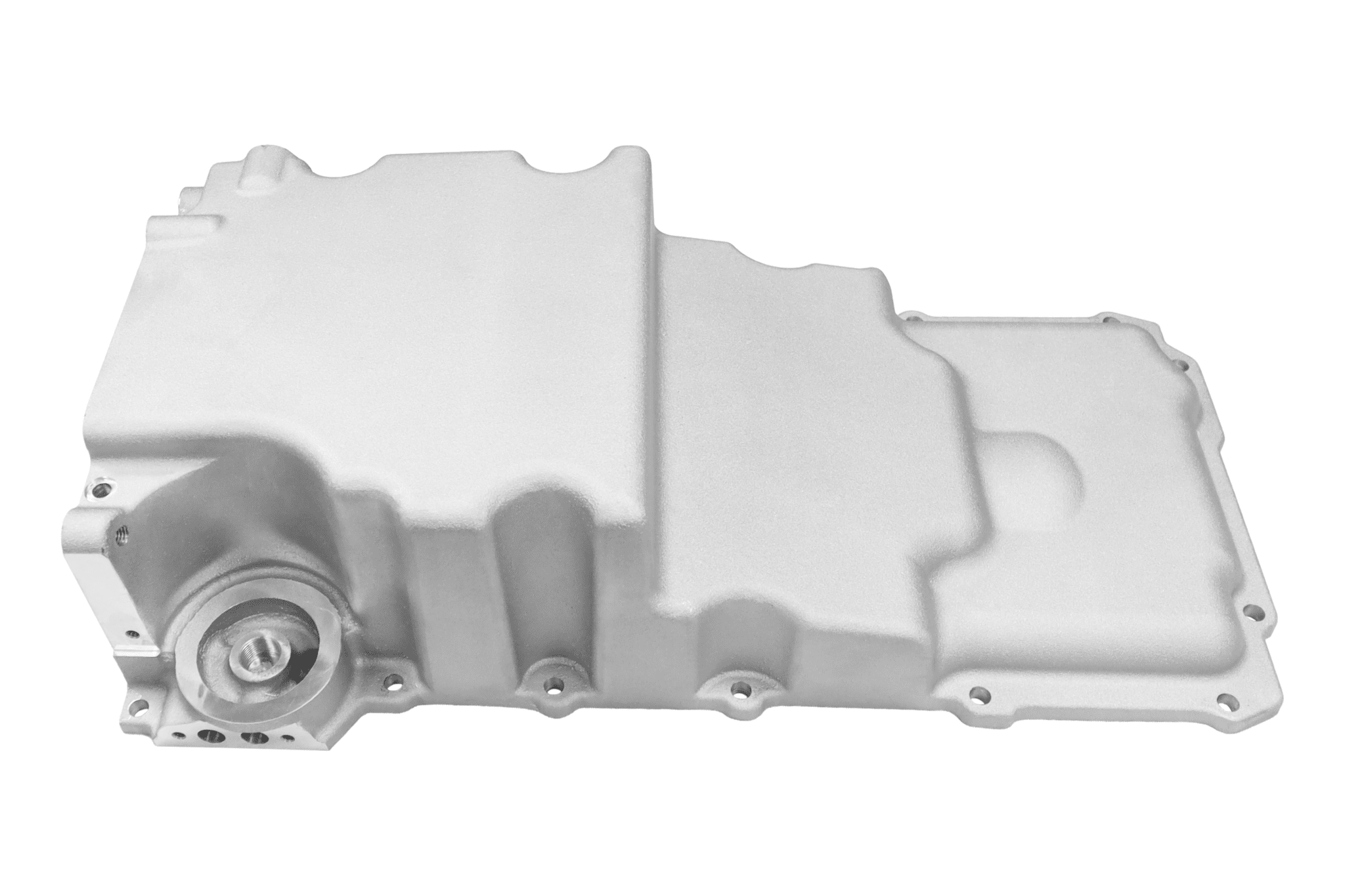
Oil Capacity in LS Swaps
If you are using a 5.3L engine in a "swap" project (putting the engine into a car like a Mazda Miata, Nissan 240SX, or an older C10 truck), your oil capacity may change based on the aftermarket oil pan you choose.
- Holley 302-2 / 302-3: These popular swap pans usually hold between 5.7 and 6.0 quarts. They are designed to provide better ground clearance while maintaining the factory oil volume.
- F-Body (Camaro/Firebird) Pan: Often used for low-profile swaps, these pans typically hold 5.5 quarts with the filter.
- Front-Sump GTO Pan: These also hold approximately 5.5 to 6.0 quarts but are rarely used in 5.3L truck engine swaps due to crossmember interference.
When using an aftermarket pan, always use the dipstick calibrated for that specific pan to verify the level. Do not rely solely on the factory 5.3L truck dipstick, as it may provide an inaccurate reading in a non-original pan.
Step-by-Step Oil Change Procedure for the 5.3 LS
Performing an oil change on a 5.3L LS is a straightforward task, often considered one of the best "entry-level" DIY projects for truck owners.
1. Preparation and Safety
Ensure the vehicle is on a level surface. Engage the parking brake. If you need to jack up the vehicle, use jack stands. The 5.3L truck engine sits high enough that many owners can perform the change without lifting the vehicle.
2. Drain the Old Oil
Locate the oil drain plug on the side of the oil pan (usually a 13mm or 15mm bolt). Place a drain pan capable of holding at least 7 quarts underneath. Remove the plug and let the oil drain until it is a slow drip. Inspect the drain plug gasket; if it is crushed or torn, replace it to prevent leaks.
3. Replace the Oil Filter
The oil filter is located near the drain plug. Use a filter wrench to loosen it. Be prepared for a small amount of oil to spill from the filter as it is removed. Before installing the new filter, "pre-fill" it with a small amount of fresh oil and smear a thin layer of oil on the rubber gasket. This ensures a good seal and faster oil pressure on startup. Hand-tighten the filter—do not use a wrench to tighten it, as this can damage the gasket.
4. Refill with Fresh Oil
Reinstall the drain plug and tighten it to approximately 18 lb-ft. Open the hood and remove the oil fill cap. Pour in 5.5 quarts of 5W-30 oil.
5. Check and Level
Start the engine and let it run for 30 seconds to circulate the oil through the new filter. Shut the engine off and wait 2 to 3 minutes for the oil to drain back into the pan. Pull the dipstick, wipe it clean, reinsert it, and check the level. Add the remaining 0.5 quarts (or as much as needed) to bring the level to the "Full" mark.
Troubleshooting Common 5.3 LS Oiling Issues
While the LS platform is robust, there are a few common issues related to oil that owners should monitor, especially as we head into 2026 with many of these engines reaching high service ages.
Active Fuel Management (AFM) Consumption
Gen IV 5.3L engines (2007–2013) are known for oil consumption issues related to the AFM system. The system can cause oil to be drawn past the piston rings in cylinders that are deactivated. Owners of these engines should check their oil levels every 1,000 miles. If you find the level dropping significantly between changes, it may be a sign of AFM-related ring fouling.
The "O-Ring" Issue
A common cause of low oil pressure in the 5.3L LS is a hardening or tearing of the oil pump pickup tube O-ring. If your oil pressure gauge flickers or drops at idle, but the oil level is full, this $5 rubber ring is often the culprit. Replacing it requires dropping the oil pan, but it is a critical fix to prevent engine failure.
Oil Pressure Sensor Failure
If your gauge reads "0" or stays pegged at the maximum, the oil pressure sensor (located behind the intake manifold) has likely failed. This is a very common failure on the 5.3L platform. While the sensor failure doesn't affect actual oil flow, it prevents you from monitoring the engine's health.
Frequently Asked Questions
Can I use 10W-30 instead of 5W-30 in a 5.3 LS?
Yes, especially in warmer climates or high-mileage engines. 10W-30 provides slightly more viscosity at startup, which can help quiet "lifter tick" in older engines. However, in cold climates, 5W-30 is preferred for better flow during sub-zero starts. By 2026, most modern synthetic 5W-30 oils offer a wide enough temperature range that 10W-30 is rarely strictly necessary.
How often should I change the oil in my 5.3 LS?
If using full synthetic oil, an interval of 5,000 to 7,500 miles is generally recommended. While the GM Oil Life Monitor may suggest longer intervals (up to 10,000 miles), many mechanics suggest shorter intervals for the 5.3L to prevent carbon buildup in the AFM lifters, which are sensitive to dirty oil.
What happens if I overfill the oil?
Overfilling a 5.3L LS (e.g., putting in 7 or 8 quarts) can cause the crankshaft to "whip" the oil, creating foam. This aerated oil does not lubricate as effectively and can lead to a drop in oil pressure or increased wear. If you accidentally overfill by more than half a quart, it is best to drain the excess.
Is there a difference between the iron block and aluminum block oil capacity?
No. The oil capacity is determined by the oil pan and the vehicle application, not the material of the engine block. An iron-block LM7 and an aluminum-block L33 will both take 6 quarts of oil if they use the standard truck oil pan.
Does the 4WD version have a different capacity than the 2WD?
Generally, no. GM designed the LS truck pans to be compatible with both 2WD and 4WD subframes. Both versions typically utilize the same 6-quart capacity.
Expert Recommendation
For optimal performance in 2026, we recommend using a high-quality full synthetic 5W-30 oil and a high-efficiency synthetic media filter (such as the ACDelco Gold or Wix XP series). If your vehicle is equipped with Active Fuel Management, staying diligent with 5,000-mile oil changes is the single best way to prevent the dreaded "AFM lifter failure." Always verify your dipstick reading after a change, as slight variations in pan level can occur depending on the specific vehicle rake and filter size used.