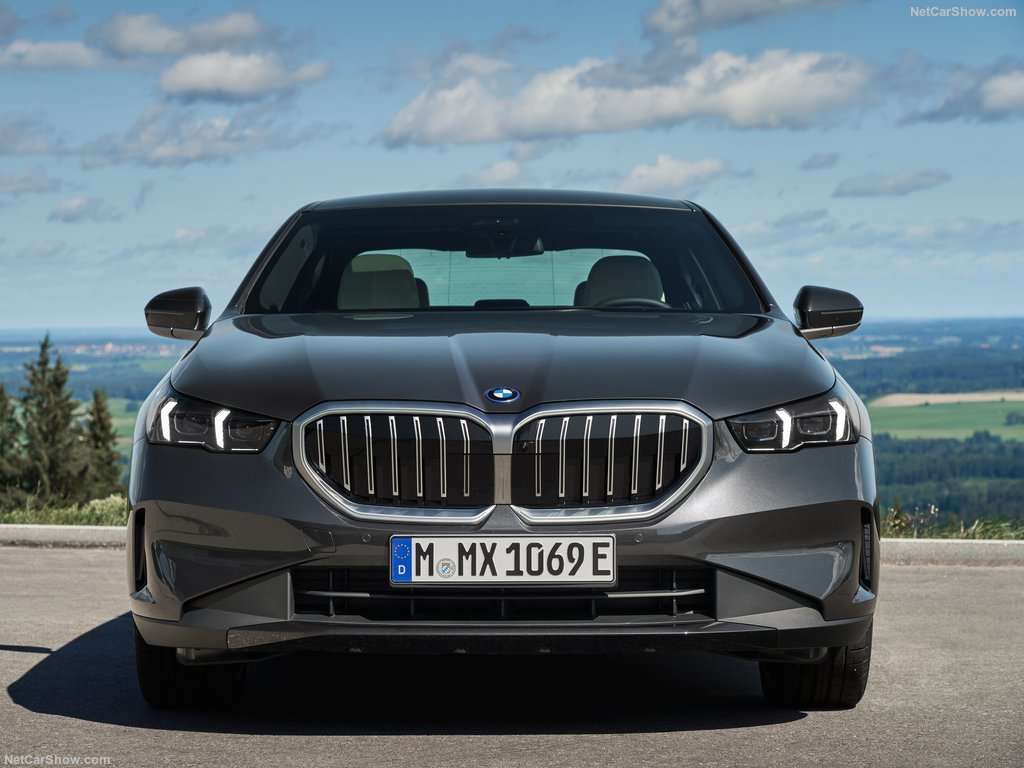
The 2023 BMW 530e xDrive is a plug-in hybrid executive sedan that combines a 2.0-liter turbocharged engine with an electric motor to produce a total of 288 horsepower. Featuring an all-electric range of approximately 19 miles and the security of all-wheel drive, it serves as a sophisticated bridge between traditional internal combustion and full electrification. As a final iteration of the G30 generation, it offers a refined balance of physical controls and digital integration that remains highly sought after in the 2026 pre-owned market.
The Legacy of the G30 Generation in 2026
By 2026, the automotive landscape has shifted significantly toward full electrification, yet the 2023 BMW 530e xDrive remains a relevant and practical choice for many drivers. This model year represented the "Last of the Greats" for the G30 chassis—a generation lauded for its build quality, ergonomic interior, and the inclusion of the iDrive 7 system. Unlike subsequent models that transitioned to purely screen-based interfaces, the 2023 530e retains physical buttons for climate control and the programmable "shortcut" keys that BMW enthusiasts have favored for decades.
The G30 5 Series was designed with a focus on business-class comfort and understated athleticism. In the 530e xDrive, this DNA is augmented by a high-voltage lithium-ion battery. While the industry has moved toward larger batteries and longer ranges, the 2023 530e was engineered for the "average" daily commute. Data from the U.S. Department of Transportation consistently shows that most daily driving falls within the range this vehicle can cover on electricity alone, provided the owner has access to Level 2 charging.
Powertrain Architecture and XtraBoost Technology
The heart of the 2023 BMW 530e xDrive is a modular powertrain consisting of the B48 2.0-liter TwinPower Turbo inline-4 engine and an integrated electric motor. The gasoline engine independently generates 181 horsepower and 258 lb-ft of torque. However, the electric motor, nestled within the 8-speed Steptronic transmission, adds another 107 horsepower.
One of the most notable technical features of this model is the XtraBoost function. When the vehicle is in Sport mode, a vigorous application of the accelerator triggers an additional 40 horsepower for up to 10 seconds. This brings the total system output to 288 horsepower and 310 lb-ft of torque. This implementation ensures that the 530e xDrive feels nearly as quick as its six-cylinder siblings in short bursts, achieving a 0-60 mph sprint in roughly 5.7 seconds.
The xDrive system is an intelligent all-wheel-drive mechanism that works in tandem with the hybrid controller. Unlike some competitors that use an "e-AWD" setup (where the rear wheels are powered only by an electric motor), the BMW 530e xDrive uses a mechanical driveshaft to the rear. This means the full power of both the engine and the motor can be distributed to all four wheels as needed, providing superior traction in snow or during aggressive cornering.
Battery Capacity, Charging, and Efficiency
In 2026, prospective buyers of a 2023 530e xDrive must consider the battery's health and its operational limitations. The vehicle is equipped with a 12.0 kWh lithium-ion battery pack, with roughly 9.1 kWh of that being usable energy.
Range and Fuel Economy
The EPA rated the 2023 530e xDrive at approximately 62 MPGe when running in hybrid mode with a full charge. Once the battery is depleted, the car operates as a traditional hybrid, returning an estimated 22-24 combined MPG. It is important to note that the PHEV version has a smaller fuel tank (12.1 gallons) compared to the standard 530i (18 gallons) to accommodate the battery pack. This results in a shorter total cruising range on long highway trips, a factor that drivers should weigh against their specific travel patterns.
Charging Infrastructure Requirements
The 2023 530e xDrive does not support DC Fast Charging, which is typical for plug-in hybrids of this era. Instead, it relies on:
- Level 1 (120V): Using a standard household outlet, a full charge can take between 8 to 10 hours.
- Level 2 (240V): Using a dedicated home wallbox or public charging station, the 3.7 kW onboard charger can replenish the battery in approximately 3 to 3.5 hours.
For owners in 2026, verifying the state of health (SOH) of the battery is critical. While BMW provided an 8-year/80,000-mile warranty on high-voltage components in the U.S. (with some states like California offering longer coverage), the 2023 models are now approaching the mid-point of that protection.
Interior Craftsmanship and Digital Interface
The interior of the 2023 5 Series is often cited as the benchmark for executive sedan ergonomics. The 530e xDrive specifically features the BMW Live Cockpit Professional, which includes two 12.3-inch displays: one for the digital instrument cluster and one for the central iDrive infotainment system.
iDrive 7 vs. Later Generations
While 2026 models feature the curved "iDrive 9" displays, many users find the 2023's iDrive 7 more intuitive. It allows for three distinct modes of interaction: the physical iDrive rotary controller, touch inputs, and voice commands. This redundancy is a safety feature, allowing the driver to navigate menus without taking their eyes off the road.
Seating and Materials
Standard equipment often included Sensatec (synthetic leather) upholstery, though many 530e models on the pre-owned market will feature genuine Dakota or Nappa leather. The Multi-contour seats, an optional upgrade, remain some of the most comfortable in the industry, offering adjustable side bolsters, lumbar support, and thigh extensions.
Trunk Space Considerations
One significant trade-off of the PHEV architecture in the 2023 model is the reduction in cargo volume. The floor of the trunk is raised to house the battery and fuel tank components.
- Standard 530i: ~14.0 cubic feet
- 530e xDrive: ~10.0 cubic feet
This reduction makes the 530e less ideal for families requiring large amounts of luggage space for road trips, though the rear seats still fold in a 40/20/40 configuration to allow for longer items.
Technical Specifications Comparison
The following table compares the 2023 BMW 530e xDrive against its internal combustion counterpart (530i xDrive) and the more powerful inline-6 hybrid (545e, where available in international markets) to provide context on its positioning.
| Feature | 2023 530e xDrive | 2023 530i xDrive | 2023 540i xDrive |
|---|---|---|---|
| Engine Type | 2.0L I4 + Electric Motor | 2.0L I4 Turbo | 3.0L I6 Turbo |
| Total Horsepower | 288 hp | 248 hp | 335 hp |
| 0-60 MPH (sec) | 5.7 Seconds | 5.8 Seconds | 4.6 Seconds |
| Fuel Tank Capacity | 12.1 Gallons | 18.0 Gallons | 18.0 Gallons |
| Trunk Capacity | 10.0 cu. ft. | 14.0 cu. ft. | 14.0 cu. ft. |
| EPA Combined MPG | 62 MPGe / 23 MPG | 26 MPG | 25 MPG |
| Curb Weight | 4,321 lbs | 3,765 lbs | 4,054 lbs |
Ownership in 2026: Maintenance and Reliability
As the 2023 530e xDrive moves further into its lifecycle, maintenance becomes a more prominent concern for owners. Because this is a complex vehicle with two propulsion systems, there are more potential points of failure than in a standard 530i, but there are also unique advantages.
Brake Longevity
One benefit of the hybrid system is regenerative braking. When you lift off the accelerator or lightly press the brake pedal, the electric motor acts as a generator, slowing the vehicle down while recharging the battery. This reduces the wear and tear on the physical brake pads and rotors. It is not uncommon for a 530e to reach 70,000 or 80,000 miles on its original brake pads, depending on driving style.
Common Maintenance Items
Owners should adhere to the following schedule for a 2023 model in 2026:
- Oil Changes: Even if you drive primarily on electric power, the gasoline engine requires annual oil changes to prevent moisture buildup and oil degradation.
- Cooling Systems: The 530e has complex cooling circuits for the battery, the electric motor, and the internal combustion engine. Regular inspections of the coolant levels and hoses are vital.
- 12V Battery: In addition to the high-voltage battery, the car has a standard 12V battery to run electronics. These typically last 4–5 years and may be nearing the end of their life in 2026.
- Tires: Due to the increased weight of the battery (the 530e is about 500 lbs heavier than a 530i), tires may wear out faster, especially if they are the original Run-Flat tires.
For verification of safety and recall status, owners should consult the NHTSA official database using their specific Vehicle Identification Number (VIN).
Driving Dynamics: Is it Still a "Drivers' Car"?
Despite the added weight of the battery, the 2023 530e xDrive retains the poised handling characteristics for which BMW is known. The battery is positioned over the rear axle, which actually helps move the center of gravity lower and improves the front-to-rear weight distribution.
In "Max eDrive" mode, the car can reach speeds of up to 87 mph using only electricity, providing a silent, serene driving experience perfect for city centers. In "Auto eDrive," the computer decides the most efficient mix of power. The transition between gas and electric is nearly seamless, though a slight vibration can be felt when the four-cylinder engine fires up under heavy load.
For those seeking more engagement, the M Sport Package was a popular option on the 2023 models. It includes an M leather steering wheel, aerodynamic body styling, and often 19-inch wheels. However, it is important to note that the 530e does not usually include the lowered M Sport suspension found on gas-only models, as the car's weight requires specific dampening to maintain ride quality.
Frequently Asked Questions
How long does the battery last in a 2023 BMW 530e xDrive?
The high-voltage battery is designed to last the lifetime of the vehicle, typically 10 to 15 years, before significant degradation occurs. By 2026, a well-maintained 2023 model should still retain over 90% of its original capacity. Environmental factors, such as extreme heat, play a larger role in degradation than total mileage.
Can I drive the 530e xDrive if I never plug it in?
Yes, the vehicle will function as a standard hybrid if not plugged in. It will use regenerative braking to keep a small buffer of charge in the battery to assist the engine. However, you will not realize the fuel savings or the 62 MPGe efficiency without regular charging. Furthermore, the car is significantly heavier than the 530i, so fuel economy may be lower than the non-hybrid version if the battery is always depleted.
Does the 2023 530e xDrive have a spare tire?
Generally, no. Like most modern BMWs, the 2023 530e xDrive comes equipped with Run-Flat tires. Because the battery occupies the space where a spare tire would normally sit, there is no room for a temporary spare. Some owners choose to carry a mobility kit (sealant and a compressor) as a backup.
Is the 2023 530e xDrive eligible for federal tax credits in 2026?
Federal tax credits for new vehicles (under the Inflation Reduction Act) typically do not apply to used cars unless they meet specific "Used Clean Vehicle" credit criteria. In 2026, a 2023 530e might qualify for a credit of up to $4,000 if purchased from a dealer for less than $25,000 and if the buyer meets specific income requirements. Buyers should check the IRS official guidelines for the most current eligibility rules.
How does the 530e perform in the snow?
The xDrive system is highly effective in winter conditions. Because the electric motor provides instant torque, the traction control system can manage wheel slip very precisely. When paired with dedicated winter tires, the 530e xDrive is one of the most capable luxury sedans for cold-weather climates.
Recommendation for Prospective Buyers
In 2026, the 2023 BMW 530e xDrive represents an excellent value proposition for a specific type of driver. If your daily round-trip commute is under 20 miles and you have the ability to charge at home or work, you can effectively operate this car as an EV for the majority of the year.
However, if you frequently take long road trips or require a large trunk for golf clubs or strollers, the 540i xDrive or the X5 xDrive45e (which has a much larger battery and more cargo space) may be better alternatives. Before purchasing, ensure the vehicle has a complete service history and, if possible, obtain a "Battery State of Health" report from an authorized BMW service center.