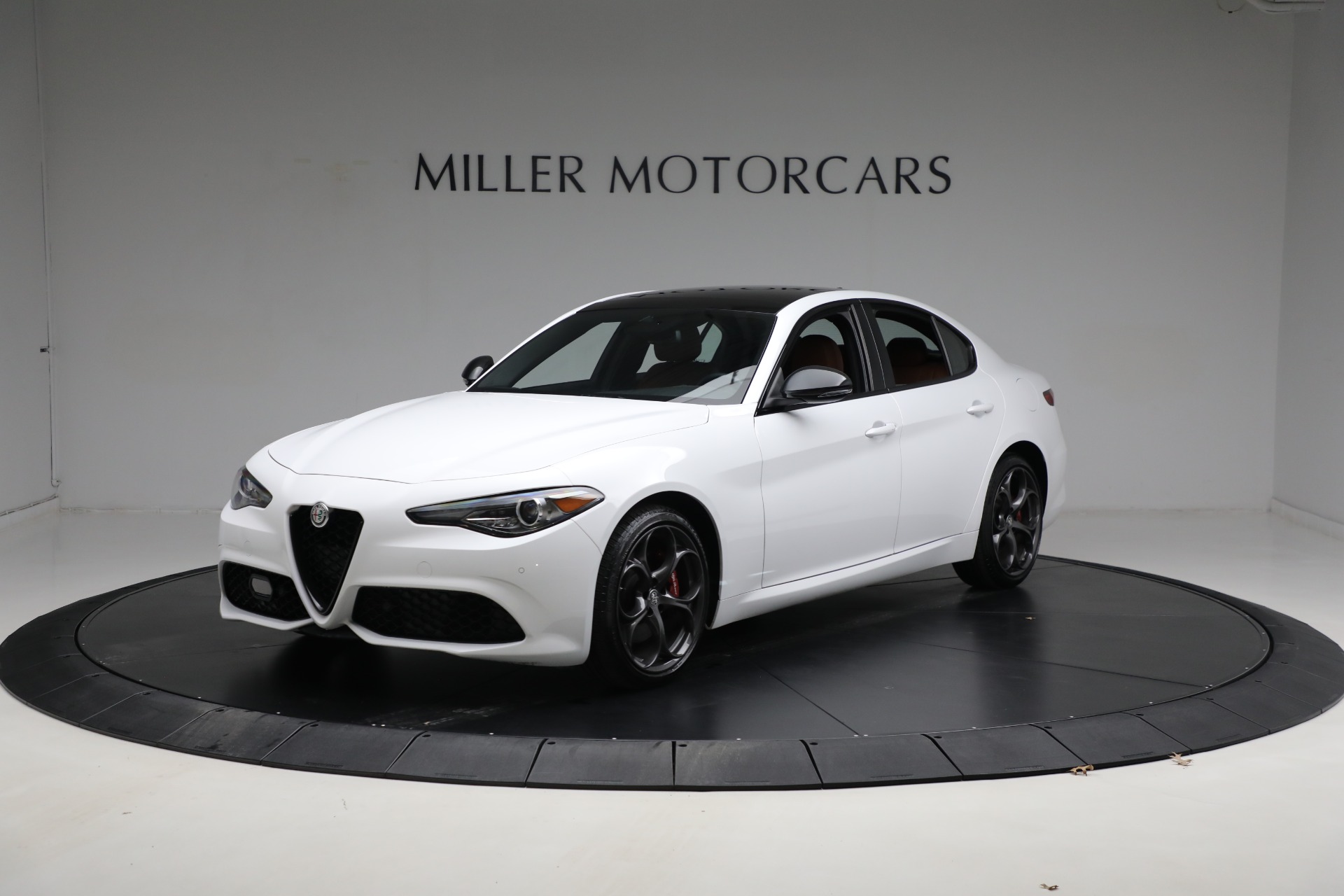
The 2020 Alfa Romeo Giulia Ti balances Italian driving dynamics, striking design, and everyday usability, featuring a standard 2.0-liter turbocharged inline-four engine producing 280 horsepower, an 8-speed automatic transmission, and available rear-wheel drive or Q4 all-wheel drive.
Selecting a pre-owned luxury sport sedan requires an understanding of what makes a particular model year stand out. Positioned between the base Giulia and the high-performance Quadrifoglio, the Turismo Internazionale (Ti) trim represents the sweet spot for daily driving. It bridges the gap between raw track capabilities and comfortable commuting, offering enhanced interior appointments, advanced driver-assistance systems, and an array of customization packages that elevate its appeal in a crowded segment dominated by German rivals.
Identity, Scope, and Model Year Context
The Alfa Romeo Giulia arrived in North America for the 2017 model year, instantly shaking up the compact executive sedan market with its rear-wheel-drive platform, lightweight carbon fiber driveshaft, and razor-sharp steering. By 2020, Alfa Romeo introduced a comprehensive mid-cycle refresh aimed squarely at addressing early criticisms regarding interior material quality, technology interfaces, and driver-assistance features.
The 2020 model year sits as a pivotal turning point for the Giulia lineup. It retains the sensational chassis tuning and mechanical architecture that earned the car universal praise from automotive journalists, while introducing a heavily revised cabin. For buyers evaluating the pre-owned market, the 2020 model year represents the entry point for updated touchscreens, redesigned center consoles, and substantially improved build quality.
Understanding the specific nuances of the Ti (Turismo Internazionale) trim requires looking at how it differs from the base model and the performance-oriented Ti Sport and Ti Lusso variants. While all Ti models share the same powertrain, their distinct cosmetic packages and interior appointments cater to buyers with differing priorities, ranging from aggressive track-inspired aesthetics to understated luxury.
Powertrain, Performance, and Mechanical Specifications
At the mechanical heart of every 2020 Alfa Romeo Giulia Ti lies an all-aluminum, 2.0-liter turbocharged inline-four engine. This powerplant generates 280 horsepower at 5,200 rpm and 306 lb-ft of torque starting at a low 2,000 rpm. Power is routed to the wheels via a ZF 8-speed automatic transmission, widely regarded as one of the best torque-converter automatics on the market due to its rapid, seamless shifts and intelligent gear logic.
Rear-Wheel Drive vs. Q4 All-Wheel Drive
Buyers shopping for a Giulia Ti will encounter two drivetrain configurations:
- Rear-Wheel Drive (RWD): Purists frequently gravitate toward the RWD configuration for its balanced weight distribution, lighter overall curb weight, and uncorrupted steering feel. It delivers classic sports sedan handling dynamics with a playful rear end when pushed.
- Q4 All-Wheel Drive (AWD): The Q4 system is a rear-biased setup that operates primarily in rear-wheel drive under normal driving conditions to preserve handling purity. When slip is detected, it can instantly transfer up to 60 percent of torque to the front wheels. This configuration appeals heavily to drivers living in regions prone to heavy winter weather or slick road surfaces.
Performance Metrics
Performance figures for the 2020 Giulia Ti remain impressive for a luxury compact sedan. The sprint from 0 to 60 mph takes approximately 5.1 seconds for the RWD model, with the Q4 variant matching or slightly improving upon that time off the line due to enhanced traction. Top speed is electronically limited to 149 mph.
The steering ratio is exceptionally quick—11.8:1—giving the car an almost exotic car-like turn-in response. However, this requires a brief period of acclimatization for drivers accustomed to more subdued, insulated steering systems found in competitors like the BMW 3 Series or Audi A4.
Interior Redesign, Technology, and Cabin Quality
Critics of the 2017–2019 Giulia models frequently pointed to the dated infotainment system, subpar rotary controller feel, and occasional plastics in lower cabin areas. For 2020, Alfa Romeo overhauled the interior architecture to address these exact pain points.
| Interior Feature (Pre-2020) | 2020 Alfa Romeo Giulia Ti Upgrade |
|---|---|
| 6.5-inch embedded display | 8.8-inch touchscreen with customizable widgets |
| Plastic rotary controller | Rotary controller with aluminum trim & tactile feel |
| Traditional plastic center console | Redesigned center console with wireless charging |
| Standard leather steering wheel | Upgraded steering wheel materials and switchgear |
| Basic instrument cluster layout | Revised 7-inch TFT driver information display |
Infotainment and Connectivity
The centerpiece of the updated cabin is a new 8.8-inch touchscreen display. Unlike its predecessor, this screen supports touch inputs alongside the traditional center-console rotary dial. The software interface features a drag-and-drop widget layout reminiscent of modern smartphones, allowing drivers to customize their home screens with navigation, audio, and vehicle status panels. Apple CarPlay and Android Auto come standard, significantly improving daily usability.
Materials and Ergonomics
The Giulia Ti elevates cabin ambiance through genuine aluminum, wood, and carbon fiber trim options paired with standard leather upholstery. The front seats offer extensive power adjustments and lateral support, striking a fine balance between long-distance touring comfort and lateral holding during spirited cornering. Rear seat legroom, however, remains tight compared to class leaders like the Mercedes-Benz C-Class, reflecting the car’s compact, driver-focused packaging priorities.
Trim Variations: Ti, Ti Sport, and Ti Lusso
The Ti designation serves as an umbrella for three distinct flavors, allowing buyers to tailor the vehicle’s aesthetic and tactile personality to their specific tastes.
1. Giulia Ti (Standard)
The baseline Ti model includes standard leather seating, heated front seats, a heated steering wheel, a dual-pane sunroof, front and rear parking sensors, and 18-inch alloy wheels. It serves as an exceptionally well-equipped luxury cruiser right out of the box.
2. Giulia Ti Sport
For drivers seeking a more aggressive visual presence, the Ti Sport package transforms the exterior and interior. It adds:
- 19-inch dark 5-hole or turbine alloy wheels with performance all-season or summer tires.
- Sport front and rear fascias.
- Gloss-black window surrounds and aluminum exterior accents.
- Bolstered sport seats with manual thigh extenders.
- A sport steering wheel paired with massive, column-mounted aluminum paddle shifters that remain fixed while the wheel turns.
- Aluminum pedal covers and footrests.
3. Giulia Ti Lusso
Conversely, the Ti Lusso focuses entirely on refined elegance. It introduces Pieno Fiore Italian leather upholstery with distinctive contrasting stitching, luxury leather-wrapped dash and door panels, authentic real wood interior accents (such as dark oak or walnut), and unique 18- or 19-inch wheel designs.
Safety, Driver Assistance, and Reliability
Safety and reliability are critical considerations when evaluating a European luxury sport sedan. The 2020 model year benefited from upgraded Advanced Driver Assistance Systems (ADAS) packages that brought the Giulia up to par with contemporary industry standards.
Safety Features
Standard safety equipment includes forward collision warning, automatic emergency braking, lane departure warning, and rear cross-path detection. Higher-tier optional packages (such as the Active Assist Plus Package) introduce Highway Assist, Traffic Jam Assist, Lane Keep Assist, active blind-spot monitoring, driver attention alert, and traffic sign recognition. These systems utilize a combination of radar and camera sensors to reduce driver fatigue on long highway journeys.
Reliability and Maintenance Realities
While early production models of the Giulia (2017–2018) suffered from occasional electrical gremlins and software bugs, the 2020 model year represents a mature phase of this generation. Many of the initial software glitches were resolved via factory updates and revised wiring harnesses.
Prospective owners must note that luxury European vehicles demand meticulous adherence to factory-recommended maintenance schedules. Oil changes, spark plug replacements, and brake service must be performed using OEM or high-grade equivalent fluids and parts. Neglecting routine maintenance can lead to premature component wear, particularly within the sophisticated multi-link suspension and complex electrical architecture.
Driving Dynamics and Real-World Impressions
Out on the open road, the 2020 Alfa Romeo Giulia Ti truly separates itself from competitors like the BMW 330i, Audi A4 45 TFSI, and Mercedes-Benz C300. While German competitors often prioritize vault-like isolation and digital detachment, the Giulia leans into an engaging, analog driving experience.
The chassis feels remarkably rigid, allowing the suspension to absorb harsh road impacts while maintaining flat cornering attitudes. Body roll is kept minimal, and the car transitions from left to right-hand corners with eagerness. The brakes utilize an integrated braking system (IBS) that combines stability control and traditional braking into a single electronic unit. While initial pedal feel can feel grabby to uninitiated drivers due to its brake-by-wire nature, it offers exceptional stopping power and consistent pedal modulation once mastered.
Fuel economy for the RWD model sits at an EPA-estimated 24 mpg city and 33 mpg highway, while the Q4 AWD variant returns approximately 23 mpg city and 31 mpg highway. These figures place the Giulia squarely in line with its turbocharged four-cylinder rivals.
Common Questions About the 2020 Alfa Romeo Giulia Ti
Is the 2020 Alfa Romeo Giulia Ti reliable compared to German rivals?
The 2020 model year is significantly more reliable than the initial 2017 launch vehicles due to mid-cycle electrical updates and software refinements. While it requires strict adherence to maintenance intervals, major mechanical failures are rare. It matches or exceeds the reliability of comparable BMW and Mercedes-Benz models from the same era, provided it has a documented service history.
What is the difference between the Giulia Ti and the Giulia Ti Sport?
Mechanically, the standard Ti and Ti Sport are identical, utilizing the same 280-hp 2.0-liter turbo engine and 8-speed transmission. The differences lie in aesthetics and ergonomics. The Ti Sport adds aggressive exterior fascias, larger 19-inch wheels, stiffer sport seats with manual thigh extensions, aluminum paddle shifters, and sportier interior trim pieces.
Does the 2020 Giulia Ti support Apple CarPlay and Android Auto?
Yes. The 2020 model year introduced a heavily revised 8.8-inch touchscreen infotainment system that includes standard Apple CarPlay and Android Auto integration, addressing a major complaint leveled against 2017–2019 models.
Can the Giulia Ti handle snowy winter conditions?
Models equipped with the Q4 all-wheel-drive system handle snow and ice exceptionally well. The system operates primarily in rear-wheel drive for optimal driving dynamics, but instantly routes torque forward when wheel slip is detected. Pairing the Q4 system with a dedicated set of winter tires turns the Giulia into a confident all-weather commuter.
How expensive is it to maintain a used 2020 Giulia Ti?
Maintenance costs align with European luxury standards. Routine services—such as synthetic oil changes, filter replacements, and brake services—cost more than economy vehicles. To minimize unexpected repair bills, buyers should prioritize Certified Pre-Owned (CPO) vehicles or inspect service records to verify that previous owners kept up with factory guidelines.
Final Recommendations for Prospective Buyers
The 2020 Alfa Romeo Giulia Ti remains a compelling choice for drivers who value driving dynamics, distinctive Italian styling, and exclusivity over mainstream conformity. By addressing the interior technology and build quality shortcomings of earlier model years, the 2020 update turned the Giulia into a well-rounded daily driver.
When shopping for a pre-owned model, buyers should prioritize vehicles with documented maintenance histories, preferably originating from southern or temperate climates if rust or road salt exposure is a concern. For driving enthusiasts, the Ti Sport package with rear-wheel drive offers the purest expression of Alfa Romeo's engineering ethos. For year-round practicality in northern climates, the Q4 AWD system provides peace of mind without sacrificing the car's inherent agility. Always obtain a comprehensive pre-purchase inspection (PPI) from a technician familiar with Italian performance vehicles before finalizing any transaction.