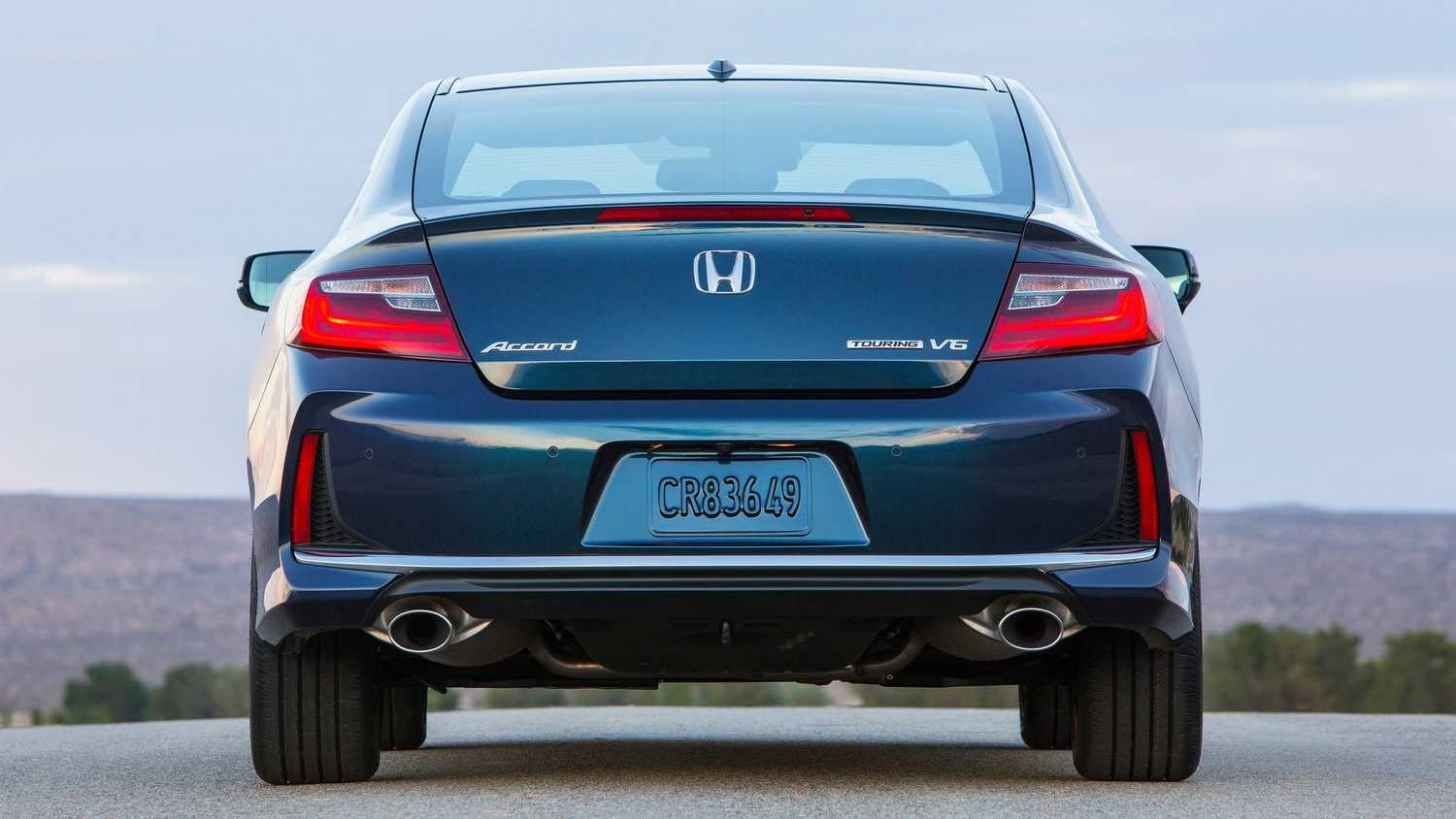
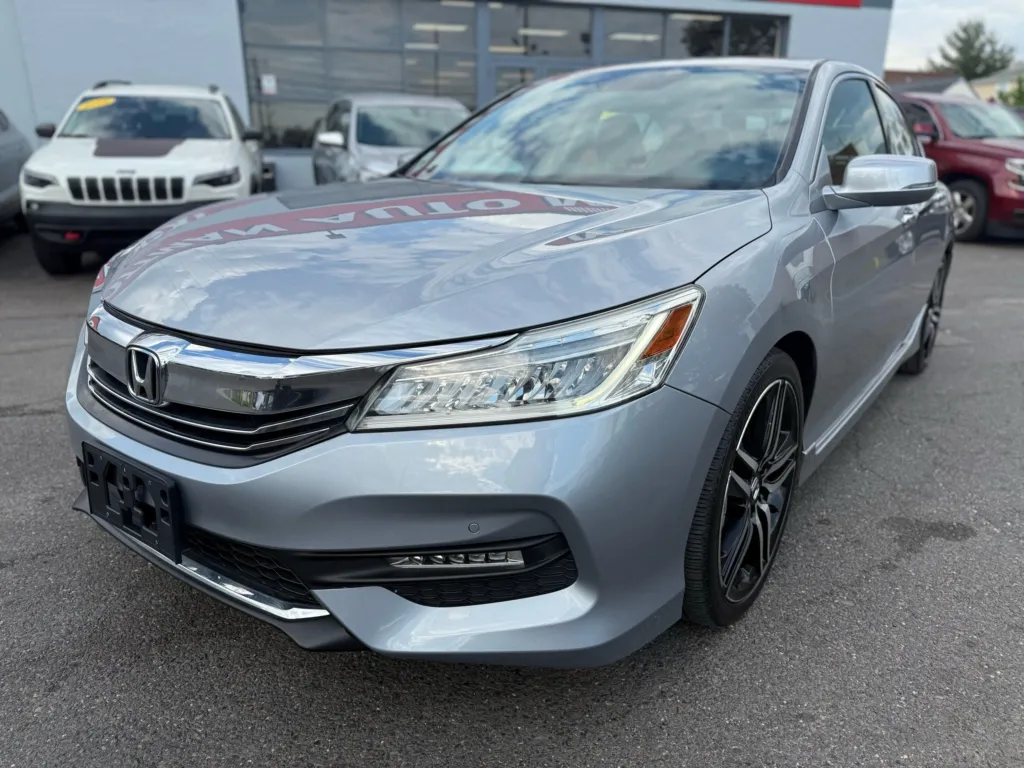
The gasoline-powered 2017 Honda Accord Touring produces 278 horsepower at 6,200 RPM and 252 lb-ft of torque at 4,900 RPM from its naturally aspirated 3.5-liter i-VTEC V6 engine. Alternatively, the 2017 Honda Accord Hybrid Touring trim delivers a combined system total of 212 horsepower via a 2.0-liter four-cylinder engine paired with dual electric motors.
Core Engine Specifications of the 2017 Honda Accord Touring
The 2017 model year marked the final chapter for the ninth generation of the Honda Accord (spanning 2013 to 2017). As the top-of-the-line trim, the Touring badge represented the apex of Honda's midsize sedan engineering before the industry shifted en masse toward turbocharging and downsizing. Buyers choosing the Touring trim had two distinct powertrain choices: a conventional gasoline V6 engine or a two-motor hybrid system.
2017 Honda Accord Touring Powertrain Options:
- Gasoline Trim:
- 3.5L i-VTEC V6 Engine
- 278 HP @ 6,200 RPM
- 252 lb-ft Torque @ 4,900 RPM
- 6-Speed Automatic Transmission
- Hybrid Trim:
- 2.0L 4-Cyl + Dual Motors
- 212 HP Combined
- 232 lb-ft Motor Torque
- Electronic CVT (e-CVT)
The 3.5L i-VTEC V6 (Gasoline Touring Sedan and Coupe)
Under the hood of the traditional gasoline 2017 Honda Accord Touring sits the 3.5-liter J35Y2 V6. This naturally aspirated, single-overhead-camshaft (SOHC) 24-valve engine utilizes Honda’s signature i-VTEC (Intelligent Variable Valve Timing and Lift Electronic Control) system combined with Variable Cylinder Management (VCM).
- Engine Displacement: 3,471 cc (3.5 Liters)
- Peak Horsepower: 278 hp @ 6,200 RPM
- Peak Torque: 252 lb-ft @ 4,900 RPM
- Compression Ratio: 10.5:1
- Valvetrain: SOHC, 4 valves per cylinder with i-VTEC
- Fuel Delivery: Multi-point fuel injection
- Transmission: 6-speed automatic transmission with Sport Mode (Paddle shifters standard on Coupe models and specific trims)
The V6 engine delivers smooth, linear power across the rev band. Unlike turbocharged engines that rely on exhaust gas pressure to spool up boost, the naturally aspirated J35 engine provides immediate throttle response off the line. Additionally, the integrated Variable Cylinder Management (VCM) system allows the engine to deactivate three of its six cylinders during highway cruising, lowering fuel consumption without sacrificing high-end output when passing power is required.
The Two-Motor Hybrid System (Accord Hybrid Touring)
For drivers seeking maximum fuel economy alongside responsive low-end torque, Honda offered the 2017 Accord Hybrid Touring. Rather than a mechanical transmission, this system uses an innovative two-motor hybrid arrangement that acts as an electronic continuously variable transmission (e-CVT).
- Gasoline Engine: 2.0-liter DOHC 16-valve Atkinson-cycle 4-cylinder (LFA1)
- Gasoline Engine Output: 143 hp @ 6,200 RPM / 129 lb-ft torque @ 4,000 RPM
- Electric Propulsion Motor: 181 hp / 232 lb-ft torque
- Total System Output: 212 net horsepower
- Battery Pack: 1.3 kWh Lithium-ion battery pack
The hybrid setup operates seamlessly across three driving modes: EV Drive (100% electric operation at low speeds), Hybrid Drive (the gas engine powers a generator motor, which supplies electricity to the drive motor), and Engine Drive (a direct-lockup clutch connects the engine directly to the front wheels during highway cruising).
Detailed Powertrain Specifications & Comparison
To understand how the 2017 Honda Accord Touring compares across its available powertrains and against the base four-cylinder models from the same year, review the performance metrics below.
| Trim / Powertrain | Engine Type | Peak Horsepower | Peak Torque | Transmission | 0–60 MPH Time (Approx.) | Fuel Economy (EPA Est. City/Hwy/Comb) |
|---|---|---|---|---|---|---|
| 2017 Accord Touring (3.5L V6) | 3.5L Naturally Aspirated V6 | 278 hp @ 6,200 RPM | 252 lb-ft @ 4,900 RPM | 6-Speed Automatic | 5.6–5.8 seconds | 21 / 33 / 25 MPG |
| 2017 Accord Hybrid Touring | 2.0L I4 + Dual Electric Motors | 212 hp (Combined System) | 232 lb-ft (Electric Motor) | e-CVT (Multi-Mode) | 6.9–7.2 seconds | 49 / 47 / 48 MPG |
| 2017 Accord EX-L / LX (2.4L Base) | 2.4L Naturally Aspirated I4 | 185 hp @ 6,400 RPM | 181 lb-ft @ 3,900 RPM | 6-Speed Manual / CVT | 7.5–7.8 seconds | 27 / 36 / 30 MPG (CVT) |
| 2017 Accord Sport (2.4L Upgraded) | 2.4L Naturally Aspirated I4 | 189 hp @ 6,400 RPM | 182 lb-ft @ 3,900 RPM | 6-Speed Manual / CVT | 7.4–7.6 seconds | 26 / 34 / 29 MPG (CVT) |
Real-World Performance, Acceleration, and Fuel Economy
In independent testing conducted by automotive reviewers during the 2017 model year, the 2017 Accord V6 Touring Sedan demonstrated impressive acceleration figures for a front-wheel-drive midsize family car.
- 0 to 60 MPH: Approximately 5.6 to 5.8 seconds
- Quarter-Mile Time: 14.2 to 14.4 seconds @ 101 MPH
- Top Speed: Electronically limited to 125 MPH
The front-wheel-drive platform manages 278 horsepower through Honda's tuned MacPherson strut front suspension and multi-link rear suspension. The Touring trim came equipped with exclusive mechanical upgrades over lower trims, including Amplitude Reactive Dampers and 19-inch alloy wheels fitted with 235/40 R19 all-season tires, helping to minimize body roll and stabilize the vehicle during heavy acceleration.
While the 2017 Accord Hybrid Touring cannot match the 0–60 acceleration of the V6 (recording a 0–60 time near 7 seconds), its electric motor provides instantaneous 232 lb-ft off-the-line torque. This makes low-speed city maneuvers and stop-and-go driving feel eager and responsive, while achieving an EPA-estimated 48 MPG combined.
A Complete Timeline of Honda Accord Power (1st Generation to Present)
The 2017 Honda Accord Touring represents a specific high-water mark in the engine history of Honda's midsize lineup. To appreciate its 278-horsepower V6 engine, it helps to examine how the Accord evolved from a modest, fuel-efficient hatchback in the mid-1970s to a potent midsize performance sedan.
HORSEPOWER TIMELINE:
- 1976 (Gen 1): 68 HP (1.6L I4)
- 1982 (Gen 2): 86 HP (1.8L I4)
- 1986 (Gen 3): 110 HP (2.0L Fuel-Injected I4)
- 1990 (Gen 4): 130 HP (2.2L I4)
- 1995 (Gen 5): 170 HP (First V6 Introduced: 2.7L)
- 1998 (Gen 6): 200 HP (3.0L V6)
- 2003 (Gen 7): 240 HP (3.0L V6 i-VTEC)
- 2008 (Gen 8): 271 HP (3.5L V6)
- 2013 (Gen 9): 278 HP (3.5L V6 - Peak Accord Horsepower)
- 2018 (Gen 10): 252 HP (2.0L Turbo I4 - Retires V6)
- 2023+ (Gen 11): 204 HP (2.0L Hybrid System)
The Early Years (1976–1994): From 68 HP to 140 HP
- 1st Generation (1976–1981): Introduced during the oil crises of the 1970s, the original Accord featured a 1.6-liter CVCC 4-cylinder engine making just 68 horsepower. Power grew slightly to 72 hp with an expanded 1.8-liter engine later in the cycle.
- 2nd Generation (1982–1985): Engine output rose to 86 horsepower from an updated 1.8-liter engine. Fuel injection made its Accord debut in 1985 on the SE-i trim, generating 101 hp.
- 3rd Generation (1986–1989): Honda introduced a 2.0-liter engine architecture with dual overhead cams (DOHC) on select models, pushing power output to 110–120 horsepower.
- 4th Generation (1990–1993): The Accord grew into a dedicated midsize vehicle. All models utilized a 2.2-liter 4-cylinder engine making between 125 hp and 140 hp (in the EX trim).
The V6 Era Begins (1995–2012): Crossing the 200 HP Threshold
- 5th Generation (1994–1997): In 1995, Honda responded to American demand for six-cylinder midsize cars by introducing the first-ever Accord V6—a 2.7-liter single-overhead-cam engine (C27A4) delivering 170 horsepower and 165 lb-ft of torque.
- 6th Generation (1998–2002): A brand-new 3.0-liter V6 engine (J30A1) officially pushed output past two hundred, generating 200 horsepower and 195 lb-ft of torque.
- 7th Generation (2003–2007): Equipped with an upgraded 3.0-liter J30A4/J30A5 V6 featuring VTEC, output jumped to 240 horsepower (later revised to 244 hp under updated SAE testing standards). In 2005, Honda launched the Accord Hybrid V6, which combined the 3.0L engine with an electric motor for 255 net horsepower.
- 8th Generation (2008–2012): The displacement expanded to 3.5 liters (J35Z series). Non-coupe V6 models pushed output to 268–271 horsepower, while incorporating Variable Cylinder Management (VCM) for the first time on non-hybrid models.
Peak V6 & The 9th Generation (2013–2017): The 278 HP Apex
The 9th generation Accord represents the numerical peak of factory-rated horsepower for the model line. Refining the 3.5-liter engine with optimized intake manifold design, reduced internal friction, and variable valve management allowed Honda to achieve 278 horsepower.
Because this power was delivered without turbocharging, the 2017 Accord Touring gained a reputation among mechanics and automotive enthusiasts for its smooth power band, linear throttle modulation, and mechanical simplicity compared to high-stress, small-displacement turbocharged engines.
The Turbocharged & Electrified Transition (2018–Present)
- 10th Generation (2018–2022): Honda officially discontinued the V6 engine for the 2018 model year. The top-tier powertrain became a 2.0-liter turbocharged inline-4 (K20C1 derivative) shared with the Civic Type R. While peak horsepower dropped from 278 hp to 252 hp, torque increased significantly to 273 lb-ft available from just 1,500 RPM.
- 11th Generation (2023–Present): For the eleventh generation, Honda restructured the lineup to prioritize electrification. The performance-focused 2.0-liter turbo engine was phased out. The most powerful Accord variant today is the two-motor hybrid powertrain, generating 204 net system horsepower and 247 lb-ft of torque.
Why the 2017 Accord Touring V6 Remains a Cult Favorite
In the secondary car market, the 2017 Honda Accord Touring V6 maintains elevated resale values and a strong collector following. Several key factors contribute to this enduring interest:
- The Final Honda V6 Sedan: The 2017 model year was the final opportunity for car buyers to own a midsize Honda sedan with a naturally aspirated six-cylinder engine.
- Exclusivity of the Touring Trim: The 2017 Touring trim combined performance with high-end luxury features rare for its price class at the time, including LED headlights with auto-high beams, heated front and rear seats, rain-sensing windshield wipers, parking sensors, and adaptive cruise control via the Honda Sensing suite.
- Refined Transmission Pairing: Unlike many modern midsize sedans fitted strictly with Continuously Variable Transmissions (CVTs), the 2017 V6 Accord utilizes a traditional 6-speed planetary automatic transmission, offering distinct gear shifts and durable torque handling.
- Tuning and Aftermarket Potential: The J35Y2 engine shares structural heritage with Honda's performance family. Simple modifications such as intake/exhaust upgrades, VCM disable devices, and ECU reflashes allow drivers to extract additional throttle response and engine performance.
Buyer Considerations, Reliability, and Maintenance Notes
If you are considering purchasing, maintaining, or evaluating a 2017 Honda Accord Touring, pay careful attention to several specific technical and maintenance guidelines:
Timing Belt vs. Timing Chain
Unlike the 2.4-liter 4-cylinder engine (which uses a maintenance-free timing chain), the 3.5-liter V6 engine uses a rubber timing belt.
- Replacement Interval: Honda recommends replacing the timing belt, hydraulic tensioner, water pump, and serpentine belt every 7 years or 105,000 miles (whichever comes first).
- Interference Design: The J35Y2 is an interference engine. If the timing belt snaps, the valves will collide with the pistons, causing internal engine destruction. Verifying timing belt replacement history is crucial when buying a used 2017 V6 Touring.
Variable Cylinder Management (VCM)
The VCM system shuts off the rear cylinder bank during low-load conditions to conserve fuel. While effective for fuel economy, extended cylinder deactivation can occasionally lead to uneven spark plug wear or minor engine vibration over time. Many owners choose to install aftermarket VCM muzzler devices that keep all six cylinders engaged continuously, ensuring smooth engine operation at the trade-off of roughly 1–2 MPG in highway fuel economy.
Transmission Service
The 6-speed automatic transmission requires regular fluid refreshes. Honda recommends replacing the transmission fluid (using genuine Honda ATF DW-1) every 30,000 to 45,000 miles. Neglecting transmission fluid changes can lead to harsh shifting between 2nd and 3rd gears under heavy acceleration.
Frequently Asked Questions
Does the 2017 Honda Accord Touring come in a manual transmission?
The 2017 Honda Accord Touring Sedan was sold exclusively with a 6-speed automatic transmission (or an e-CVT on the Hybrid Touring). However, Honda did offer a 6-speed manual transmission on the 2017 Accord EX-L V6 Coupe. The Touring trim Coupe was limited to the 6-speed automatic.
What is the difference in horsepower between the 2017 Accord Touring V6 and the 2017 Accord Sport?
The 2017 Accord Touring V6 produces 278 horsepower, whereas the 2017 Accord Sport produces 189 horsepower from its 2.4-liter 4-cylinder engine. This represents an 89-horsepower advantage for the V6 Touring model.
Is the 2017 Honda Accord V6 faster than the 2018 Turbocharged 2.0T Accord?
In terms of peak horsepower, the 2017 V6 wins (278 hp vs. 252 hp). However, in real-world 0–60 MPH testing, the 2018 2.0T model is slightly faster (around 5.4–5.5 seconds) due to its higher torque rating (273 lb-ft) and its 10-speed automatic transmission, which keeps the turbo engine operating within its optimal powerband.
What fuel octane rating is required for the 2017 Honda Accord Touring V6?
Honda recommends regular unleaded fuel (87 octane) for the 2017 Accord Touring V6. While using premium 91 or 93 octane fuel will not harm the engine and may yield minor timing benefits in extreme heat, it is not required to reach the advertised 278 horsepower output.
How can I tell if a 2017 Accord is a genuine V6 Touring trim?
Externally, the 2017 Accord Touring features full LED headlights (with distinct dual-lamp jewel eyes), body-colored parking sensors integrated into the front and rear bumpers, chrome door handles, a rear decklid spoiler, Touring badging on the trunk lid, and 19-inch alloy wheels with dual-tone black and machined finishing.
Practical Recommendation for Buyers and Owners
When shopping for or maintaining a 2017 Honda Accord Touring, prioritize vehicles with full service documentation confirming timely timing belt and fluid changes. If you prioritize raw, linear naturally aspirated engine output, the 278-hp 3.5L V6 Gasoline Touring remains one of the best choices in Honda's historical lineup. Conversely, if high fuel efficiency for daily commutes takes priority over quick acceleration, search for the 212-hp Hybrid Touring variant, which delivers modern fuel efficiency without sacrificing top-tier interior luxury.