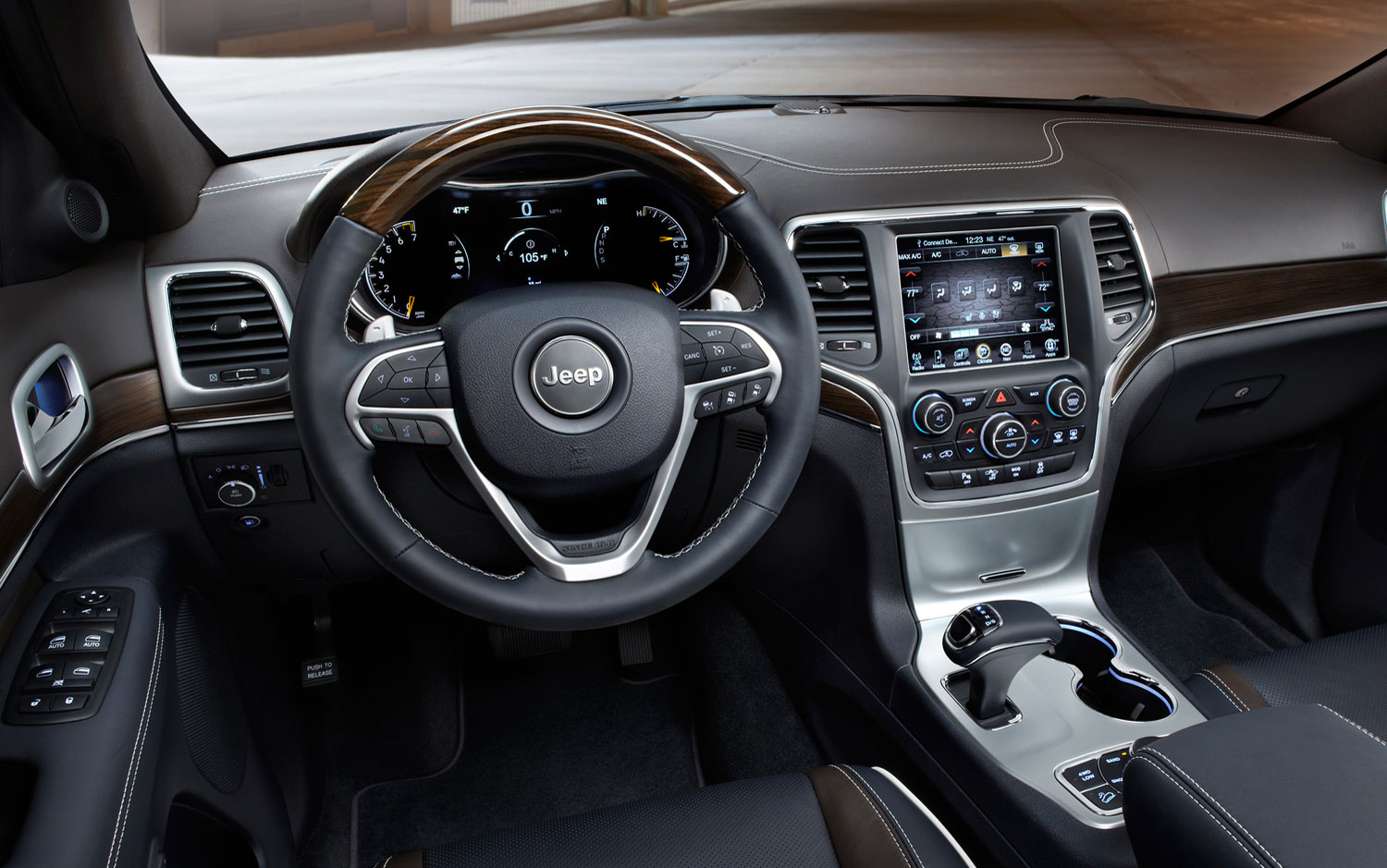
The 2014 Jeep Grand Cherokee Laredo produces 290 horsepower when equipped with its standard 3.6-liter Pentastar V6 engine. This output is delivered at 6,400 RPM, paired with 260 lb-ft of torque at 4,800 RPM. When drivers opt for the rare 3.0-liter EcoDiesel V6 engine, the horsepower rating shifts to 240 horsepower, accompanied by a significantly higher torque output of 420 lb-ft at 2,000 RPM.
Understanding the powertrain metrics of the 2014 Jeep Grand Cherokee Laredo requires a look at how Chrysler engineered its fourth-generation midsize SUV. The 2014 model year marked a significant milestone for this generation, introducing an updated interior, refreshed exterior styling, and—most importantly for performance enthusiasts—an advanced 8-speed automatic transmission. This mechanical shift replaced the older 5-speed unit, fundamentally changing how the Laredo’s engine output reaches the pavement. Whether evaluating the vehicle for daily commuting, towing a small trailer, or handling adverse weather conditions, examining its horsepower ratings, torque curves, and transmission pairing provides a clear picture of what this sport utility vehicle can achieve.
Overview of the 2014 Jeep Grand Cherokee Laredo Powertrain Lineup
The Laredo serves as the entry-level trim for the Jeep Grand Cherokee lineup, yet it shares its core engine options with higher-tier trims like the Limited, Overland, and Summit. For the 2014 model year, Jeep engineered the vehicle to balance everyday drivability, fuel economy, and utility. Buyers shopping for a used Laredo or maintaining an existing one will typically encounter one of two primary engine configurations under the hood: the ubiquitous gasoline-powered Pentastar V6 or the optional EcoDiesel V6.
Examining these powertrains involves looking beyond raw horsepower numbers. Horsepower measures how quickly work can be done, dictating top-end acceleration and highway passing power. Torque, on the other hand, represents rotational force, which dictates initial launch capability and pulling power. The Laredo trim was offered in both rear-wheel drive (2WD) and four-wheel drive (4WD) configurations, with systems like Quadra-Trac I available to distribute power efficiently. Regardless of the drivetrain layout chosen by the original buyer, the fundamental engine output figures remained tied directly to the chosen powerplant.
The Standard Powerplant: 3.6-Liter Pentastar V6 Horsepower Specifications
The vast majority of 2014 Jeep Grand Cherokee Laredo models leave the factory equipped with the 3.6-liter Pentastar 24-valve V6 engine. This aluminum-block, aluminum-head powerplant has served as a workhorse across various Chrysler, Dodge, Jeep, and RAM vehicles due to its reliability and smooth power delivery.
- Displacement: 3.6 liters (220 cubic inches)
- Horsepower: 290 hp at 6,400 RPM
- Torque: 260 lb-ft at 4,800 RPM
- Compression Ratio: 10.2:1
- Valvetrain: Dual Overhead Cam (DOHC) with variable valve timing (VVT)
This engine generates its peak 290 horsepower near the upper end of its tachometer, requiring the driver to press firmly on the accelerator to extract maximum output during aggressive highway merging. However, the integration of variable valve timing ensures a broad torque curve, meaning a substantial portion of the 260 lb-ft of torque is available at lower RPMs. This low-end responsiveness helps the relatively heavy Laredo feel nimble from a dead stop despite weighing over 4,500 pounds in its base configurations.
The Alternative Choice: 3.0-Liter EcoDiesel V6 Horsepower and Torque
While less common on the base Laredo trim, the 3.0-liter EcoDiesel V6—sourced from VM Motori—was offered as an option for buyers seeking maximum fuel efficiency and low-end towing capability.
- Displacement: 3.0 liters (182 cubic inches)
- Horsepower: 240 hp at 3,600 RPM
- Torque: 420 lb-ft at 2,000 RPM
- Fuel Type: Diesel
Although the EcoDiesel produces 50 fewer horsepower than the gasoline Pentastar V6, its torque figure is nearly double. Achieving its peak torque at just 2,000 RPM means the diesel variant requires very little engine revving to move the vehicle forward. For drivers who frequently tow utility trailers, boats, or campers, this characteristic makes the EcoDiesel feel significantly more powerful under load than the peak horsepower numbers suggest.
The Crucial Link: The ZF 8-Speed Automatic Transmission
Raw horsepower and torque figures only tell part of the story. How that power reaches the wheels depends entirely on the transmission. For the 2014 model year, Jeep replaced the outgoing 5-speed automatic transmission with the ZF 8-speed automatic transmission (designated as the 8HP70).
This transmission pairing transformed the performance of the 3.6-liter Pentastar engine. With closer gear ratios, the 8-speed keeps the engine operating within its optimal power band more frequently. When accelerating hard, the transmission shifts rapidly and smoothly, minimizing drops in power between gears. Furthermore, the inclusion of multiple overdrive ratios allows the engine to cruise at low RPMs on the highway, reducing fuel consumption while keeping the vehicle ready to downshift instantly when the driver demands more power.
| Engine Option | Horsepower | Torque | Transmission | Primary Benefit |
|---|---|---|---|---|
| 3.6L Pentastar V6 | 290 hp @ 6,400 RPM | 260 lb-ft @ 4,800 RPM | 8-Speed Automatic | Smooth acceleration, balanced daily drivability |
| 3.0L EcoDiesel V6 | 240 hp @ 3,600 RPM | 420 lb-ft @ 2,000 RPM | 8-Speed Automatic | Exceptional low-end torque, high fuel economy |
Real-World Performance Impact of Laredo Horsepower
Having 290 horsepower in a midsize SUV translates to predictable, adequate performance for everyday driving tasks. When executing highway passing maneuvers, the 3.6-liter engine delivers sufficient acceleration once the transmission drops down a few gears and the tachometer climbs toward that 6,400 RPM peak.
However, prospective buyers and current owners should account for the vehicle's curb weight. The 2014 Jeep Grand Cherokee Laredo is a substantial machine, weighing roughly 4,677 pounds in rear-wheel-drive form and over 4,800 pounds when equipped with four-wheel drive. Consequently, while 290 horsepower is more than enough for city traffic and highway cruising, the vehicle does not possess sports-car acceleration. It provides a composed, stable ride quality, prioritizing comfort and utility over raw speed.
When properly equipped with the Trailer Tow Group IV package, a 2014 Grand Cherokee Laredo with the 3.6-liter V6 engine can tow up to 6,200 pounds. The EcoDiesel variant increases this towing capacity to 7,400 pounds. While horsepower dictates how fast the vehicle can maintain speed up an incline while towing, the structural chassis rigidity, cooling systems, and suspension tuning of the Laredo determine its safe operational limits.
Fuel Economy and Horsepower Efficiency
Engine output directly influences fuel consumption. The 2014 Jeep Grand Cherokee Laredo with the 3.6-liter V6 and rear-wheel drive achieves EPA fuel economy ratings of approximately 17 miles per gallon (mpg) in the city and 24 mpg on the highway. Choosing the four-wheel-drive variant adjusts these figures slightly to around 17 mpg city and 24 mpg highway, as the modern 8-speed transmission mitigates much of the traditional penalty associated with driving all four wheels.
The EcoDiesel variant alters the efficiency equation dramatically. Rear-wheel-drive EcoDiesel models achieve upwards of 22 mpg city and 30 mpg highway, making it a popular choice for long-distance commuters who still require the capability and ground clearance of a utility vehicle. Balancing these fuel economy figures against the cost of diesel fuel versus regular unleaded gasoline is a key consideration for anyone examining these older powertrains.
Frequently Asked Questions
Can the 2014 Jeep Grand Cherokee Laredo horsepower be increased with aftermarket parts?
Yes, minor horsepower gains can be achieved through aftermarket modifications such as cold-air intakes, performance exhaust systems, and custom engine tuning. However, these modifications typically yield modest improvements—often just 5 to 15 horsepower—and may affect factory emissions compliance or fuel economy. For most drivers, the stock 290 horsepower is optimized for reliability and longevity.
Is the 2014 Jeep Grand Cherokee Laredo powerful enough for towing?
The 3.6-liter V6 engine provides a maximum towing capacity of up to 6,200 pounds when properly equipped. This is more than sufficient for pulling small utility trailers, pop-up campers, or recreational boats. Drivers planning to tow heavy travel trailers or equipment frequently should ensure the vehicle has an auxiliary transmission cooler and proper hitch equipment installed.
Did Jeep offer a V8 engine in the 2014 Grand Cherokee Laredo?
For the 2014 model year, Jeep restricted the 5.7-liter HEMI V8 engine (which produces 360 horsepower) to the higher trim levels such as the Limited, Overland, and Summit. The Laredo trim was strictly limited to the 3.6-liter Pentastar V6 and the optional 3.0-liter EcoDiesel V6. Buyers specifically wanting a V8 engine must look at models above the Laredo trim.
How does the 8-speed transmission affect the Laredo's horsepower delivery?
The ZF 8-speed automatic transmission maximizes the usable power of the 290-horsepower V6 engine by keeping the engine operating in its ideal power band across a wider range of vehicle speeds. It offers quicker acceleration from a standstill and smoother highway passing compared to older 5-speed or 4-speed automatic transmissions found in previous generations.
What is the difference between Laredo and higher trims regarding engine performance?
The mechanical horsepower output of the 3.6-liter Pentastar V6 remains identical across all trims, whether in a base Laredo or a top-tier Summit. Higher trims differ in available engine choices (such as the 5.7L HEMI V8 or the 6.4L SRT V8), interior features, and advanced four-wheel-drive systems, but a V6 Laredo has the exact same baseline engine performance as a V6 Overland.
Conclusion and Recommendations
The 2014 Jeep Grand Cherokee Laredo strikes a practical balance of power, capability, and efficiency through its standard 290-horsepower 3.6-liter Pentastar V6 engine. Paired with the responsive ZF 8-speed automatic transmission, this powertrain delivers smooth daily driving dynamics and respectable towing capabilities for an entry-level midsize SUV. When evaluating or maintaining this vehicle, understanding that its horsepower output is designed for utility and comfort rather than high-performance driving helps set realistic expectations. For prospective buyers or current owners, ensuring routine maintenance—such as timely spark plug changes, oil services, and transmission fluid inspections—will keep this proven powertrain operating at its peak specified efficiency for years to come.