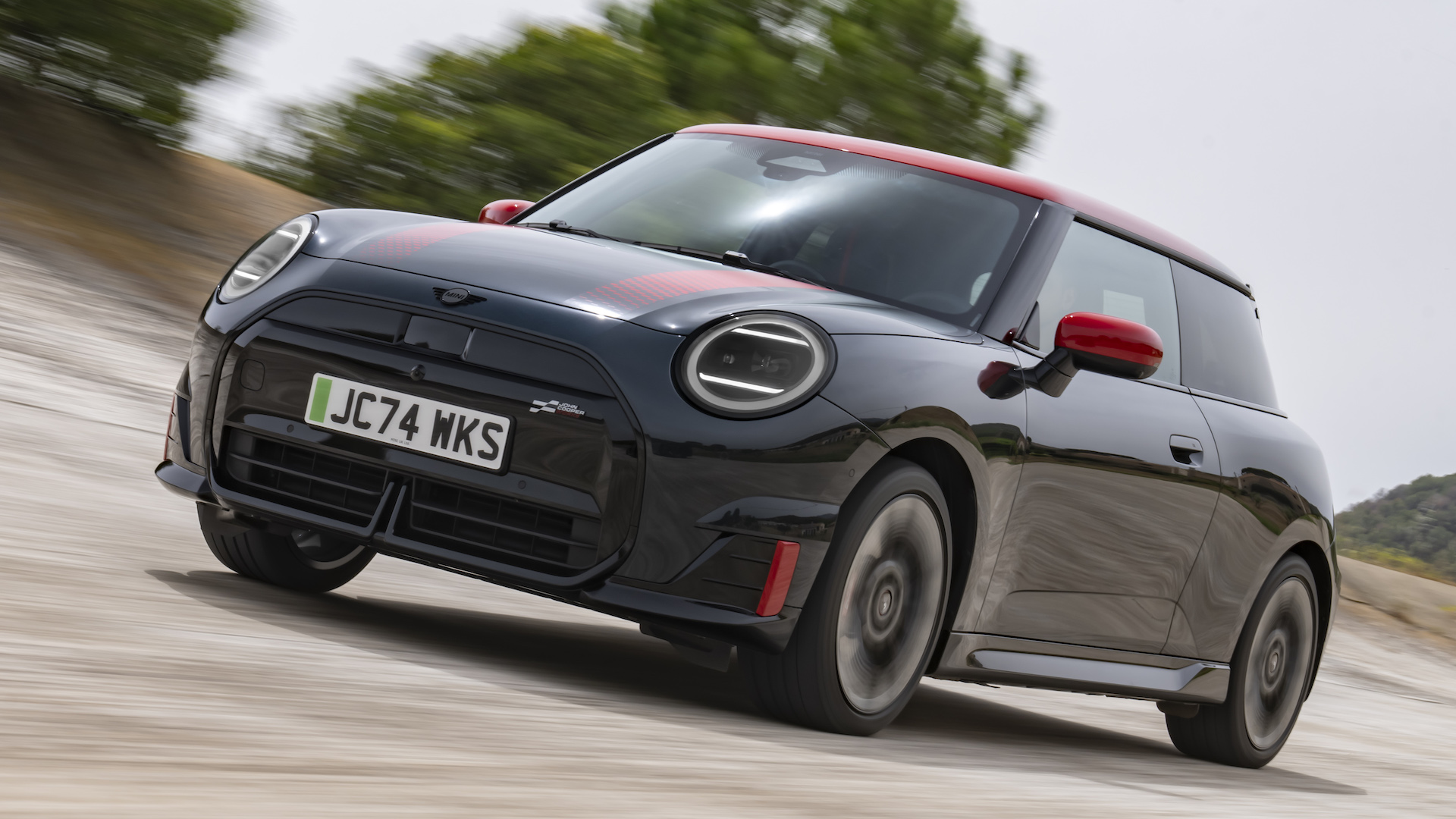
The 2013 MINI Cooper John Cooper Works (JCW) represents the pinnacle of the R56 generation, blending a potent 1.6-liter turbocharged N18 engine with an incredibly agile, lightweight chassis. As a sought-after modern classic in 2026, it offers a raw, analog driving experience that remains a benchmark for enthusiasts who prioritize engagement and "go-kart" handling over modern digital isolation.
The Heritage of the 2013 John Cooper Works Edition
The John Cooper Works name is synonymous with the racing pedigree established by John Cooper, the man responsible for turning the original economy-focused Mini into a Monte Carlo Rally-winning giant killer. By 2013, the JCW sub-brand had evolved from an aftermarket tuning kit into a fully integrated factory performance model.
The 2013 model year is particularly significant because it was the final full production year for the second-generation (R56) Hardtop. This version benefited from all the incremental improvements made since the generation's debut in 2007. For many purists, the 2013 JCW is the "Goldilocks" of the modern MINI era: it is more reliable than the earlier R56 models but more compact and visceral than the larger F56 generation that followed in 2014.
In the 2026 secondary market, these vehicles are categorized as "driver’s cars." They lack the complex screens and autonomous aids of contemporary 2020s vehicles, focusing instead on the mechanical connection between the driver, the steering rack, and the asphalt.
Engineering the Thrill: Powertrain and Mechanical Specifications
At the heart of the 2013 MINI Cooper JCW is a 1.6-liter four-cylinder engine equipped with a twin-scroll turbocharger and direct injection. While the standard Cooper S of the era was no slouch, the JCW variant received significant internal upgrades to handle increased boost and provide higher output.
The N18 Engine Advantage
The 2013 JCW features the N18 engine, which replaced the more troublesome N14. The N18 introduced BMW’s Valvetronic variable valve lift technology and improved cooling and oiling systems. These changes were not just for performance; they addressed several reliability concerns, such as the infamous "death rattle" caused by failing timing chain tensioners in earlier models.
The JCW-specific engine includes reinforced pistons, a higher-flow exhaust system, and a remapped Electronic Control Unit (ECU). This configuration allows the 2013 JCW to produce 208 horsepower and 192 lb-ft of torque. Under heavy acceleration, an "overboost" function temporarily increases torque to 207 lb-ft, providing a noticeable surge for overtaking.
Transmission and Gearing
Drivers could choose between a six-speed manual transmission or a six-speed Steptronic automatic. In 2026, the manual transmission remains the highly preferred option for enthusiasts, featuring short throws and a mechanical feel that complements the car's aggressive nature. The automatic transmission, while competent for its time, does not offer the same level of engagement or the lightning-fast shifts found in the dual-clutch systems of later competitors.
Performance Metrics and Dynamic Handling
The 2013 MINI Cooper JCW was designed with a specific philosophy: power is useless without control. This is reflected in the car's performance figures and its sophisticated suspension tuning.
Acceleration and Speed
The JCW Hardtop can sprint from 0 to 60 mph in approximately 5.9 seconds. While this might seem modest compared to the electric performance cars of 2026, the sensation of speed is amplified by the MINI’s low seating position and stiff suspension. Its top speed is electronically limited to 150 mph, though the car is most at home on winding B-roads rather than straight-line highways.
The "Go-Kart" Chassis
The suspension of the 2013 JCW is noticeably firmer than the standard Cooper S. It utilizes MacPherson struts in the front and a sophisticated multi-link setup in the rear, which is a rarity for cars in the subcompact class. To mitigate the inherent front-wheel-drive tendency to understeer, MINI equipped the JCW with Electronic Differential Lock Control (EDLC).
EDLC works in tandem with the Dynamic Stability Control (DSC). When the system detects the inside wheel spinning during hard cornering, it applies braking force to that wheel, effectively transferring torque to the outside wheel with more grip. This allows the driver to power out of corners with surprising precision and minimal wheel spin.
| Feature | Specification | Impact on Performance |
|---|---|---|
| Engine Type | 1.6L Twin-Scroll Turbocharged I4 (N18) | High power-to-weight ratio; rapid throttle response. |
| Horsepower | 208 hp @ 6,000 RPM | Exceptional top-end pull for a subcompact. |
| Torque | 192 lb-ft (207 lb-ft with Overboost) | Strong mid-range acceleration for overtaking. |
| Braking System | Brembo 4-Piston Fixed Calipers (Front) | Consistent stopping power; resists brake fade. |
| Weight | ~2,600 lbs | High agility and low inertia in corners. |
| Differential | Electronic Differential Lock Control (EDLC) | Improved traction and reduced understeer. |
Compact Design: Aggressive Aesthetics and Interior Ergonomics
The design of the 2013 JCW is a masterclass in functional aggression. It retains the iconic silhouette of the MINI but adds several aerodynamic and stylistic flourishes that signal its performance intent.
Exterior Styling
The JCW comes standard with an aerodynamic body kit, which includes a deeper front apron for better cooling, sculpted side skirts, and a rear diffuser. The 17-inch "Cross Spoke Challenge" light-alloy wheels are a signature JCW element, designed to clear the larger Brembo brake calipers while reducing unsprung weight.
The dual central exhaust tips, finished in chrome, are not merely cosmetic. They are part of a high-flow exhaust system that produces a distinctive "pop and crackle" on overrun, a feature that has become a hallmark of the JCW experience.
Interior Focus
Inside, the 2013 JCW prioritizes the connection between the car and the driver. The most prominent feature is the massive central speedometer, a nod to the original 1959 Mini. However, in the JCW, this is often supplemented by a digital tachometer mounted directly on the steering column for easier viewing during spirited driving.
JCW-specific interior touches include:
- Chili Red Stitching: Found on the gear lever gaiter, steering wheel, and floor mats.
- Piano Black Trim: Provides a sleek, modern finish to the dashboard and doors.
- Sport Seats: Heavily bolstered to keep the driver and passenger in place during high-G cornering. In 2026, many owners have opted for the optional Recaro seats, which offer even more support but are increasingly rare.
Ownership in 2026: Maintenance, Reliability, and Market Value
Owning a 2013 MINI Cooper JCW in 2026 requires a proactive approach to maintenance. While the N18 engine is significantly more robust than its predecessor, it is now a 13-year-old high-performance machine that demands attention.
Common Maintenance Concerns
- Oil Consumption: Like many direct-injected turbocharged engines, the N18 can consume oil between changes. Owners should check oil levels every 500 to 1,000 miles.
- Carbon Buildup: Direct injection means fuel does not wash over the intake valves. Over time, carbon can build up, leading to a loss of power. Walnut blasting the intake valves every 50,000 miles is a standard recommendation.
- Cooling System: The plastic thermostat housing is a known failure point. In 2026, most well-maintained JCWs will have already had this replaced, possibly with an aftermarket aluminum version.
- High-Pressure Fuel Pump (HPFP): While improved in the 2013 model, the HPFP can still fail, leading to long crank times or limp-mode activation.
The 2026 Market Context
The 2013 JCW has reached a point of price stabilization. Depreciating has largely stopped for well-documented, low-mileage examples. In 2026, buyers can expect to pay a premium for cars with the manual transmission and the "JCW Championship Edition" or "GP" packages (though the GP2 is a distinct limited-run model). The car’s compact dimensions make it an excellent "weekend car" for urban dwellers who want performance without the footprint of a modern sports sedan.
Comparing the 2013 JCW to Contemporary Rivals
To understand the 2013 JCW’s value proposition, it is helpful to compare it to its peers from the same era, such as the Volkswagen GTI (Mk6) and the Ford Fiesta ST.
- Vs. Volkswagen GTI (Mk6): The GTI is a more refined "grown-up" car. It offers a better ride and a higher-quality interior. However, it lacks the raw, twitchy agility of the MINI. The JCW feels faster and more immediate, whereas the GTI is the better daily driver for long commutes.
- Vs. Ford Fiesta ST: Launched around the same time, the Fiesta ST is often cited as the MINI’s closest rival in terms of driving fun. The Fiesta has a more playful rear end, but the 2013 JCW offers a higher level of interior customization and a "premium" feel that the Ford lacks.
The 2013 JCW sits in a unique niche: it is more prestigious than the Ford but more visceral than the Volkswagen.
Frequently Asked Questions
Is the 2013 MINI Cooper JCW a reliable daily driver in 2026?
Yes, provided it has a documented service history. The 2013 model year uses the N18 engine, which is much more reliable than the 2007–2010 versions. However, being a high-performance European car, it requires more expensive parts and specialized labor compared to a standard economy car.
What is the difference between a Cooper S and a JCW from 2013?
The JCW features a more powerful engine with reinforced internal components, a larger turbocharger, a high-flow exhaust, and upgraded Brembo brakes. It also comes with the JCW aerodynamic body kit and firmer suspension tuning as standard, which were options or unavailable on the Cooper S.
Does the 2013 JCW require premium fuel?
Absolutely. To prevent engine knocking and to maintain the performance levels of the turbocharged N18 engine, 91 or 93 octane fuel is required. Using lower octane fuel can lead to reduced power and potential long-term engine damage.
How can I tell if a 2013 JCW is a "factory" model or a dealer-installed kit?
In 2013, most JCWs were factory-built. A factory JCW will have a specific VIN prefix (usually starting with WMV), larger Brembo brakes (noted by their red color), and "John Cooper Works" branding on the door sills and engine valve cover. Dealer kits were more common on the earlier R53 and early R56 generations.
Is the 2013 MINI JCW fuel-efficient?
Given its performance, it is surprisingly efficient. On the highway, it can achieve up to 30–32 MPG. However, spirited driving will significantly lower this figure, and the car's small fuel tank means frequent stops on long road trips.
Practical Recommendation for Potential Buyers
If you are considering a 2013 MINI Cooper JCW in 2026, the primary factor in your decision should be the service history. Look for examples where the oil was changed every 5,000 miles rather than the 10,000–15,000 mile intervals originally suggested by the manufacturer.
The 2013 JCW is best suited for the enthusiast who values mechanical feedback. If you find a manual-transmission Hardtop with under 80,000 miles and a clean cooling system, you have found one of the best "pure" driving machines of the early 21st century. It is a car that demands your full attention, rewarding every well-timed shift and precisely clipped apex with a level of joy that modern, computerized vehicles often fail to provide.