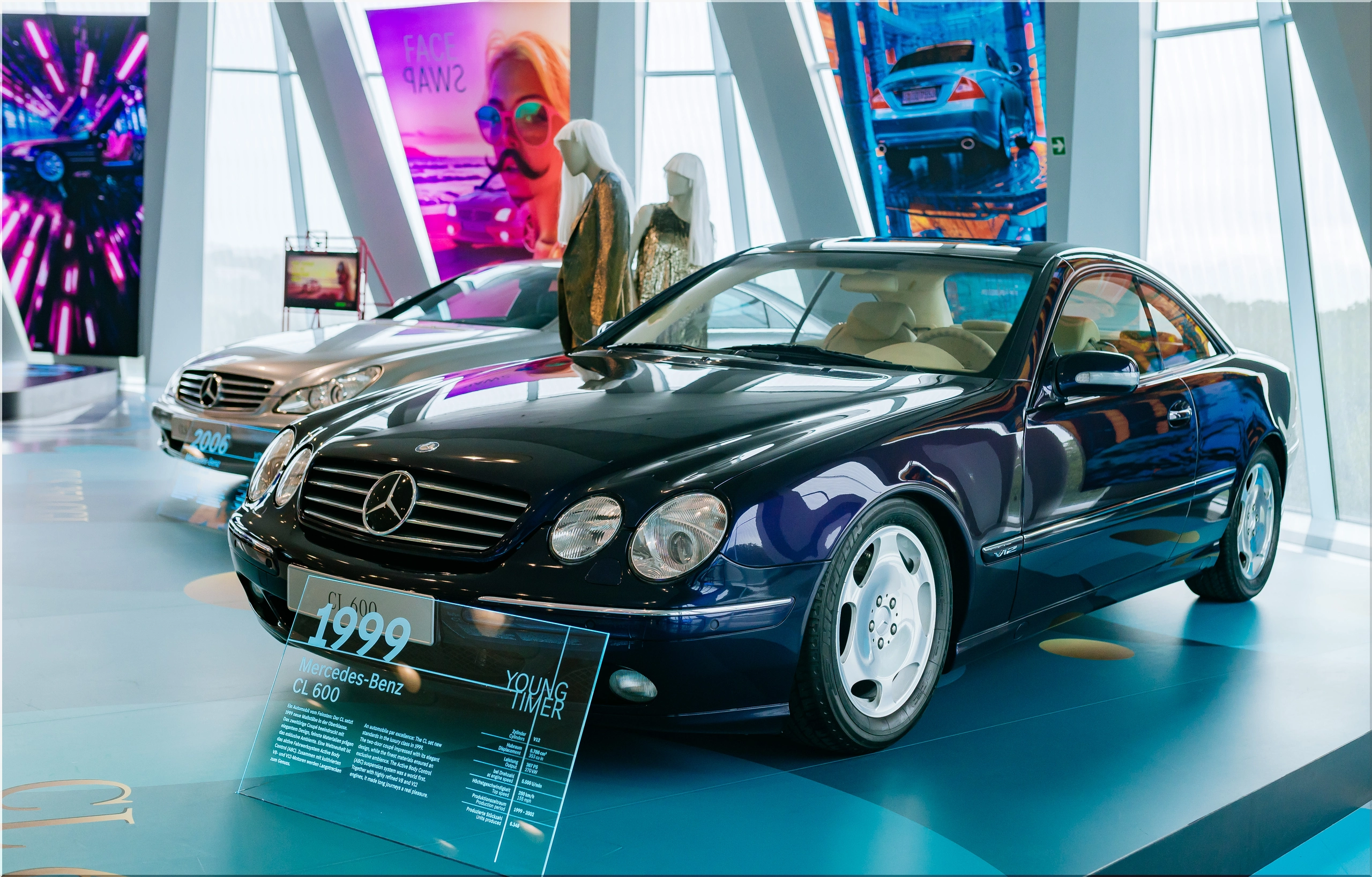
The 2004 Mercedes-Benz CL 600 was a flagship luxury grand tourer powered by a twin-turbocharged 5.5-liter V12 engine producing 493 horsepower and 590 lb-ft of torque, carrying an original MSRP of approximately $129,920 and achieving 0-60 mph in roughly 4.4 to 4.5 seconds.
Introduction and Identity of the 2004 Mercedes-Benz CL 600
The 2004 Mercedes-Benz CL 600 (W215 chassis) represents an intriguing era of engineering ambition, where no-expense-spared development met the dawn of high-output forced induction. As a pillar of Mercedes-Benz’s luxury coupe lineup in the mid-2000s, this pillarless hardtop coupe combined effortless high-speed autobahn cruising with supercar-shaming torque delivery. At its core sat the M275 engine, an aluminum 5.5-liter bi-turbo V12 that established a new benchmark for velvet-smooth power delivery.
Understanding this vehicle requires looking beyond its initial showroom prestige. Over two decades after its production, the CL 600 occupies a unique space in automotive history. It bridges the gap between analog mechanical prestige and complex digital-era electronic integration. This guide analyzes the original power output metrics, historical pricing, chronological performance metrics, and the mechanical evolution that defines the 2004 CL 600 ownership experience.
Engineering the M275 V12 Powerplant
To comprehend the performance profile of the 2004 CL 600, one must examine the engine bay. The M275 engine replaced the naturally aspirated M137 V12 used in the late 1990s and early 2000s. By incorporating two water-cooled turbochargers and air-to-water intercoolers, Mercedes-Benz engineers unlocked massive power gains without sacrificing the signature quietness and lack of vibration inherent to a twelve-cylinder configuration.
The engine management system utilizes twin independent ignition coils per cylinder—totaling 24 spark plugs—managed by a sophisticated ion-sensing knock-control system. This ensures optimal combustion across varied fuel qualities and atmospheric conditions.
- Displacement: 5,513 cc (5.5 liters)
- Induction: Twin Garrett turbochargers operating at a maximum boost of approximately 1.0 bar (14.5 psi)
- Valvetrain: SOHC, 3 valves per cylinder (two intake, one exhaust)
- Horsepower: 493 hp (500 PS) at 5,000 rpm
- Torque: 590 lb-ft (800 Nm) available in a flat plateau from 1,800 to 3,500 rpm
This massive torque curve arrived almost instantaneously, transforming the heavy luxury cruiser into an effortless acceleration machine. Power was routed to the rear wheels via a 5-speed automatic transmission (5G-Tronic / WA580), which was specially reinforced to handle the immense twisting force without slipping.
Historical Pricing and Market Depreciation Timeline
When new, the 2004 Mercedes-Benz CL 600 was priced for the ultra-wealthy, serving as a status symbol for executives, celebrities, and automotive enthusiasts who demanded uncompromising luxury paired with elite performance. However, due to high maintenance costs and rapid technological advancements in automotive electronics, the model experienced a steep depreciation curve typical of high-end German flagship vehicles.
| Ownership Era / Phase | Average Market Value (USD) | Market Dynamics and Condition Factor |
|---|---|---|
| 2004 (New MSRP) | $129,920 - $135,000+ | Brand-new baseline price before custom designo options and dealer packages. |
| 2008 (4-Year Used) | $55,000 - $68,000 | Rapid initial depreciation as factory warranties expired and complexity concerns grew. |
| 2014 (10-Year Used) | $15,000 - $25,000 | Reached rock-bottom retail pricing; maintenance liabilities often outweighed book value. |
| 2026 (Collector / Enthusiast) | $18,000 - $35,000 | Stabilization for well-maintained, low-mileage, or documented collector examples. |
Factory options could push the out-the-door price well past $140,000 in 2004. Upgrades included exclusive Designo interior leather and wood packages, distronic adaptive cruise control, and keyless go. On the secondary market, vehicles that suffered from deferred maintenance plummeted in value, while enthusiast-owned cars with comprehensive service records found a stable floor among collectors who appreciated the V12 bi-turbo engineering feat.
Performance Metrics and Acceleration Timeline
The performance of the 2004 CL 600 was defined less by peak horsepower numbers and more by its ruthless in-gear acceleration. Thanks to the 590 lb-ft of torque channeled through wide rear tires, the car could surge past legal highway speeds with minimal mechanical drama or engine strain.
Independent automotive testing conducted by major publications upon the vehicle's release highlighted its capabilities:
- 0–60 mph (0–96 km/h): 4.4 to 4.5 seconds
- 0–100 mph (0–160 km/h): 10.4 seconds
- Quarter-Mile (1/4 mi): 12.8 seconds at approximately 111 mph (179 km/h)
- Top Speed: Electronically limited to 155 mph (250 km/h); can exceed 185 mph with the electronic limiter removed.
- Braking (70–0 mph): Approximately 162 feet, aided by massive ventilated disc brakes and Mercedes' sensitive hydraulic braking architecture.
Handling performance was heavily managed by Active Body Control (ABC), a fully active hydraulic suspension system. ABC utilized a network of sensors and hydraulic servos to counteract body roll in cornering, dive under braking, and squat during acceleration. While it delivered a flat, composed ride over undulating surfaces, the system added considerable weight (curb weight resting around 4,387 lbs / 1,990 kg) and introduced long-term maintenance considerations regarding hydraulic lines, valve blocks, and tandem pumps.
Chronological Evolution of the W215 CL-Class Platform
To properly contextualize the 2004 CL 600, it helps to examine where it sat within the lifecycle of the W215 generation, which ran from model years 2000 through 2006.
[1999-2002: W215 Phase 1] ---> [2003-2004: The V12 Bi-Turbo Shift] ---> [2005-2006: Facelift & Final Run]
Phase 1 (2000–2002)
The W215 platform debuted with the naturally aspirated CL 500 (V8) and the CL 600. The early CL 600 featured a 5.8-liter naturally aspirated V12 producing 362 horsepower. While smooth, it struggled to justify its massive price premium over the lighter and nearly as fast V8 models.
The Turning Point (2003–2004)
Mercedes-Benz executed a major mid-cycle refresh for the 2003 model year, which carried into 2004 with minor refinements. The biggest change was the retirement of the naturally aspirated V12 in favor of the M275 bi-turbo engine. Exterior styling was updated with clearer projector headlamps, revised tail light lenses, and front bumper refreshes. Inside, fiber-optic MOST networks replaced the older D2B audio systems, improving infotainment integration.
Final Years (2005–2006)
The final two years of production saw minor cosmetic adjustments and software revisions to the transmission and ABC suspension systems. Production of the W215 ended in late 2006, making way for the heavier, more angular W216 generation starting in 2007.
Common Mechanical Considerations and Operational Realities
Owning a high-performance V12 grand tourer from the mid-2000s requires a clear-eyed assessment of operating costs. While the M275 engine block and internal rotating assembly are robust and capable of high mileage, the peripheral components demand strict adherence to maintenance schedules.
- Active Body Control (ABC) Maintenance: The hydraulic fluid and filter require changing every 30,000 to 40,000 miles. Aging high-pressure rubber hoses can develop leaks, and failure of the tandem power steering/ABC pump will result in a loss of ride-height control and heavy steering effort.
- Ignition Coil Packs and Voltage Converters: The dual-coil system relies on a specialized electronic voltage transformer. When coil packs fail—often due to heat soak inside the V12 valley—it triggers cylinder misfires, placing the car into a protective limp mode. Replacing both bank coil packs is a significant financial undertaking.
- Cooling System Complexity: With two turbochargers and a dedicated intercooler circuit, the engine bay operates at extremely high thermal thresholds. Intercooler pump failures lead to intake air temperature spikes, prompting the computer to pull timing and reduce power output.
- Transmission Mounts and Flex Discs: The massive torque output places high mechanical stress on drivetrain mounts and rubber giubos (flex discs). Regular inspection and timely replacement prevent vibration and driveline slop.
Frequently Asked Questions
How fast is a stock 2004 Mercedes CL 600 from 0 to 60 mph?
A stock 2004 Mercedes-Benz CL 600 accelerates from 0 to 60 mph in approximately 4.4 to 4.5 seconds. Despite weighing over 4,300 pounds, its twin-turbo V12 engine generates 590 lb-ft of torque at just 1,800 rpm, providing immediate thrust off the line.
What was the original MSRP of the 2004 CL 600?
The base manufacturer's suggested retail price (MSRP) for the 2004 Mercedes-Benz CL 600 started at approximately $129,920. With optional features like exclusive Designo interior trim, upgraded wheels, and advanced driver assistance packages, total retail prices regularly exceeded $140,000.
Is the M275 V12 engine reliable over high mileage?
The mechanical core of the M275 engine—including the block, pistons, and crankshaft—is exceptionally durable. However, reliability concerns center on peripheral electronics, specifically the ignition coil packs, voltage transformers, cooling system components, and turbocharger wastegate actuators. Proper preventive maintenance is essential.
How does Active Body Control (ABC) affect performance?
Active Body Control is a hydraulic suspension system that actively eliminates body roll during hard cornering and minimizes squat and dive during acceleration and braking. It delivers exceptional high-speed stability and flat cornering dynamics, though it requires meticulous hydraulic fluid servicing to prevent expensive component failures.
Can the top speed limiter on the 2004 CL 600 be removed?
Yes. From the factory, the vehicle is electronically restricted to a top speed of 155 mph (250 km/h) for safety and regulatory reasons. With the electronic governor removed via ECU tuning, aerodynamic testing suggests the car is capable of exceeding 185 mph given suitable tires and road conditions.
Conclusion and Final Recommendations
The 2004 Mercedes-Benz CL 600 remains an engineering masterpiece of the early 2000s, delivering effortless power, silent high-speed cruising, and classic pillarless styling. For prospective buyers or automotive historians, evaluating this vehicle requires balancing its extraordinary performance metrics and historical prestige against the reality of complex V12 maintenance. Prioritize examples with comprehensive, documented service histories, verify the health of the ABC suspension and ignition coil packs, and enjoy one of the most tractable grand touring engines ever built.