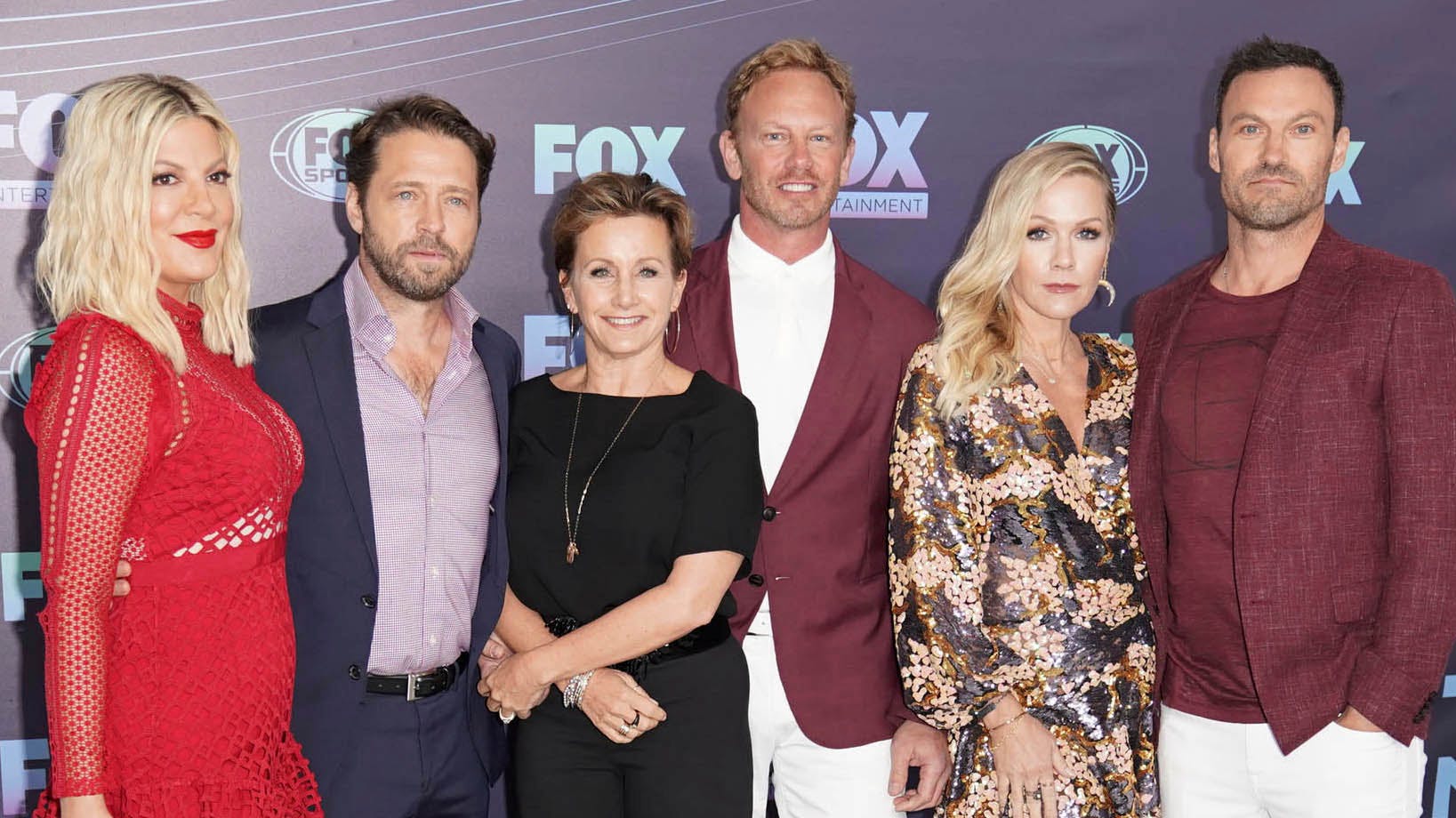
Brandon Walsh, the moral compass of West Beverly Hills High and the iconic protagonist of the long-running television drama Beverly Hills, 90210, navigated a complex web of romantic entanglements throughout his tenure on the show. Portrayed by Jason Priestley, Brandon often served as the reliable, albeit sometimes impulsive, heart of the group, and his relationships were central to the series' narrative progression from 1990 through 1998.
From high school sweethearts to professional colleagues and ill-fated engagements, Brandon Walsh’s love life was defined by a series of choices that often highlighted his struggle between personal desire and his own set of rigid, sometimes self-defeating principles. Examining his romantic history provides a unique lens through which to view the evolution of the series and the maturation of his character as he transitioned from a wide-eyed transplant from Minnesota into a young professional in Los Angeles.
1. The Archetype of the "Good Guy" Relationship
Brandon Walsh was frequently established as the "good guy" of Beverly Hills, 90210. Unlike his best friend Dylan McKay, who carried the brooding "bad boy" persona, Brandon’s relationships were typically framed by sincerity, honesty, and a constant, often exhausting, quest for the moral high ground. This often led him into relationships where he acted as a protector or a mentor, dynamics that frequently became unsustainable as the characters grew older and their individual ambitions diverged. His romantic choices reflected his transition from the innocence of the Peach Pit era to the more cynical realities of college life and early journalism.
2. Andrea Zuckerman: The "What If" Dynamic
Perhaps the most foundational relationship in Brandon’s life was his connection to Andrea Zuckerman. While their dynamic was primarily one of deep, platonic friendship for much of the series, the tension between them provided a constant undercurrent. Brandon represented the normalcy that Andrea craved, while Andrea challenged Brandon’s intellect and integrity.
Although they never became a long-term romantic couple—partly because of the physical distance and their differing life paths—their bond defined Brandon’s standard for what a partner should be. He valued intellectual parity, a trait he found in Andrea more consistently than in any other woman he dated.
3. The Emily Valentine Conflict
The storyline involving Emily Valentine remains one of the most memorable arcs in the series. Emily, played by Christine Elise, represented an entry point into the counterculture and the darker, less supervised side of Los Angeles life. For Brandon, who was deeply tied to his family’s approval and his own reputation as an upstanding student, Emily was a catalyst for rebellion.
Their relationship highlighted Brandon’s internal struggle with conformity. When Emily drugged his drink, the violation of trust became a definitive moment for Brandon. It taught him that his "hero complex"—the desire to save or fix others—had its limits. This relationship serves as a primary example of Brandon’s vulnerability to people who lived outside the structured norms he built for himself.
4. Kelly Taylor and the Complex Triangle
Brandon’s on-again, off-again romance with Kelly Taylor was the central romantic engine of the mid-to-late series. This relationship was fraught with external pressure, specifically the involvement of Dylan McKay. The love triangle between Brandon, Kelly, and Dylan became a cornerstone of the show’s legacy.
For Brandon, Kelly represented the pinnacle of his social standing and personal goals. However, the recurring theme was that Brandon and Kelly struggled to reconcile their individual identities with the expectations placed upon them by their peer group. Their relationship showcased the emotional toll of dating within a tight-knit circle where every breakup or reconciliation was public knowledge.
5. Lucinda Nicholson: The Academic Entanglement
During his college years at California University, Brandon’s affair with Professor Lucinda Nicholson marked a significant shift in his romantic narrative. This was a foray into power dynamics and professional boundaries. Lucinda was older, sophisticated, and morally flexible, contrasting sharply with the women Brandon had dated in high school.
This relationship underscored Brandon’s desire to be seen as an adult and an intellectual. However, it also exposed his naivety. He struggled to navigate the complex social and professional consequences of the affair, demonstrating that while he had matured, he was still prone to making impulsive decisions when his ego was engaged.
6. Susan Keats and the Journalism Parallel
Brandon’s relationship with Susan Keats, a fellow journalist at the California University Blaze, was one of his most compatible pairings on paper. Both were driven, ambitious, and passionate about the truth. Unlike many of his other relationships, this one felt grounded in shared professional goals.
However, their downfall was their similarity. Both were headstrong and unwilling to compromise on their career paths. The breakup was a realistic portrayal of two ambitious young people realizing that their professional trajectories were moving in different directions, a departure from the more dramatic or scandalous endings of his other romances.
7. Tracy Gaylean and the Attempt at Stability
Tracy Gaylean served as the bridge between Brandon’s more tumultuous romantic eras. She was perceived as the "stable" choice—someone who fit into the life Brandon was trying to build for himself. Yet, the persistent shadow of his past feelings for Kelly Taylor made it impossible for the relationship to survive.
This relationship is a study in the futility of "settling." Brandon often felt that he should be happy with someone as compatible and kind as Tracy, but he could not force the emotional depth that he had developed elsewhere. It served as a reminder that compatibility is not solely about shared interests, but about emotional presence.
8. The Engagement That Wasn't: Brandon and Kelly
The aborted wedding between Brandon and Kelly in the later seasons serves as the climax of his romantic history. After years of "will they or won't they," the decision to call off the wedding was a defining moment of character growth. It signaled the end of the idealized version of their relationship.
By 2026, looking back at this narrative beat, it remains one of the most analyzed points in the show’s history. It represented the realization that love, no matter how long-standing, is not enough to overcome fundamental differences in life vision. It was a mature, if painful, acknowledgment that their lives were fundamentally meant to diverge.
9. The Role of the Peach Pit in Romantic Framing
Throughout these relationships, the Peach Pit served as both the setting and a symbolic gatekeeper for Brandon’s romantic life. It was a neutral ground where he interacted with girlfriends across different phases of his life. The setting provided a stark contrast between his working-class-adjacent reality and the affluent backgrounds of women like Kelly Taylor or the experimental nature of women like Emily Valentine.
The Peach Pit was a constant, and the way his partners interacted with this space often signaled whether or not they would be a long-term fixture in his life. Those who could not reconcile the simplicity of the environment with the complexity of their lives rarely lasted long.
10. Key Romantic Milestones and Characteristics
To synthesize Brandon’s romantic journey, one must look at how his partners shifted from emotional anchors to professional challenges.
| Partner | Relationship Dynamic | Primary Conflict |
|---|---|---|
| Emily Valentine | Rebellious/Experimental | Trust and boundaries |
| Kelly Taylor | The "Epic" Romance | External pressure and timing |
| Lucinda Nicholson | Intellectual/Professional | Power dynamics and ego |
| Susan Keats | Peer/Professional | Career-driven competition |
| Tracy Gaylean | Stable/Compromise | Lack of emotional depth |
This table illustrates that Brandon's romantic evolution was effectively a search for a balance between his core moral values and the evolving pressures of adult life in Los Angeles.
Frequently Asked Questions
Did Brandon Walsh ever get married in the series? No, Brandon Walsh did not get married in the original run of Beverly Hills, 90210. While he came close to marrying Kelly Taylor, the couple mutually decided to call off their wedding, marking a pivotal moment in both characters' trajectories.
Why was the relationship between Brandon and Dylan McKay's love interests so complicated? The complexity stemmed from the deep, lifelong friendship between Brandon and Dylan. Their overlapping romantic interests acted as a constant stress test for their friendship, forcing both characters to choose between personal romantic fulfillment and loyalty to one another.
Was Brandon’s relationship with Lucinda Nicholson a turning point? Yes, it marked his transition into adult romantic complications. It highlighted his struggle with authority and the consequences of mixing personal desires with professional environments, effectively closing the door on his "high school boy" persona.
What was the most significant factor in Brandon’s breakups? In most cases, the primary factor was the misalignment of personal growth and professional ambition. As Brandon moved from a student to an aspiring journalist, his needs evolved in ways that his previous partners—or he himself—could not always accommodate.
Is there a consensus on who was Brandon’s "best" match? Audience and critic consensus varies. Some point to Susan Keats for her intellectual parity, while others maintain that the intense, albeit volatile, history with Kelly Taylor was the only one that truly challenged Brandon to become the person he was meant to be.
Final Recommendation for Enthusiasts
If you are re-examining the series in 2026, it is highly recommended to view Brandon’s relationships not as isolated romantic arcs, but as mirrors of his professional and personal development. Pay close attention to the dialogue between Brandon and his partners during the college years; it is here that the writing moves away from standard teen drama tropes and begins to explore the genuine difficulties of young adult intimacy. Brandon’s history is a map of a character trying to define himself outside of his family and his friend group, and every relationship provides a specific piece of that puzzle.