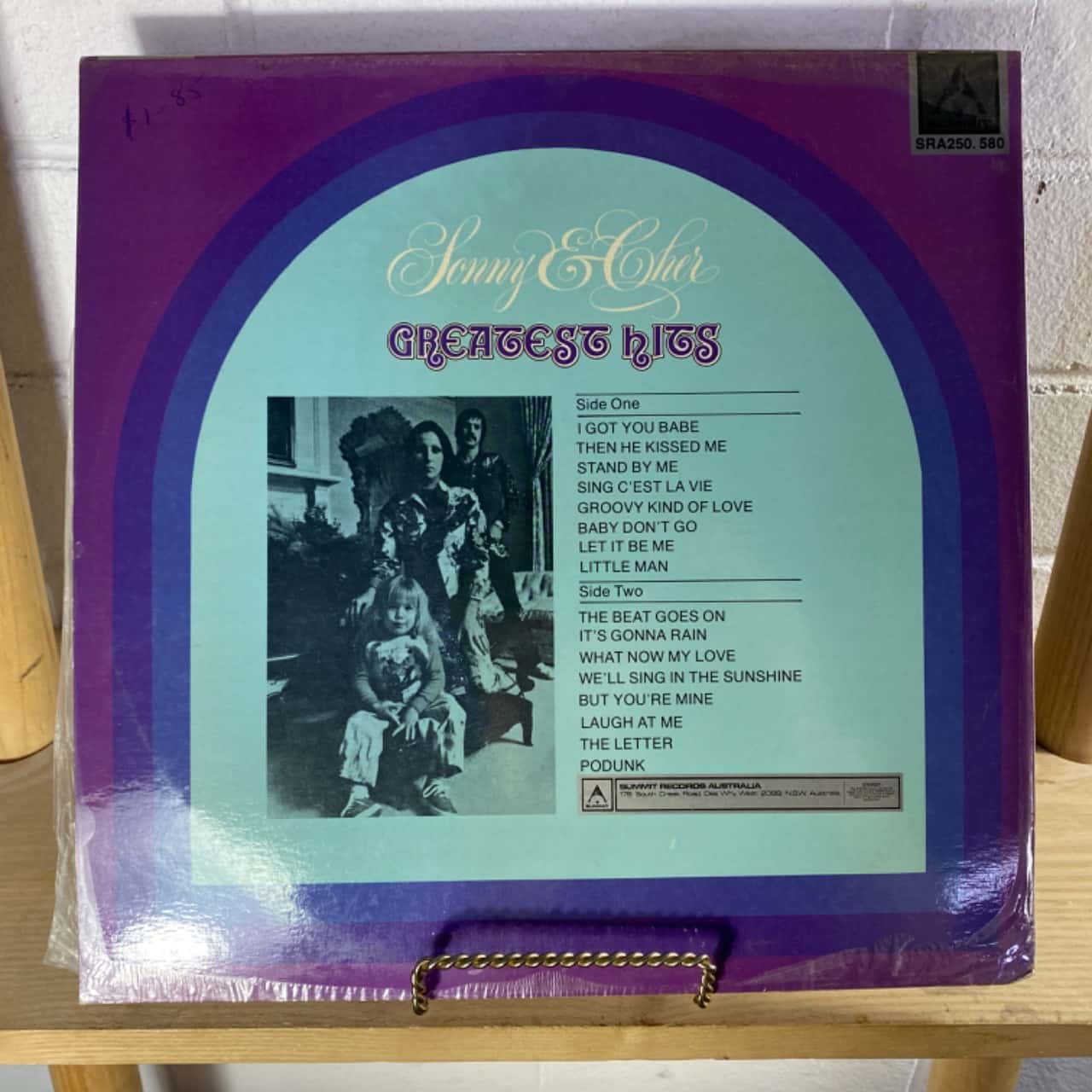
Cher stands as a towering figure in contemporary music, boasting a career that spans seven decades and defies conventional industry cycles. Among her many historic achievements, reaching the number-one spot on the charts across multiple distinct eras highlights a rare capacity for reinvention. Examining the ten chart-topping singles that defined her trajectory reveals not only her personal vocal evolution but also the shifting paradigms of popular music production, gender representation, and stylistic experimentation from the 1960s to the 2000s.
1. "I Got You Babe" (1965) – The Folk-Pop Breakthrough
Released in the summer of 1965, "I Got You Babe" introduced Sonny & Cher to the global consciousness and instantly established the duo as architects of the American folk-pop explosion. Written by Sonny Bono, the track capitalized on the burgeoning countercultural aesthetic while retaining a catchy, accessible melodic structure that appealed to mainstream radio.
The recording is characterized by its distinctive instrumentation, featuring an oboe, a distinctive bassline, and a prominent electric sitar played by Tommy Tedesco, which added a contemporary psychedelic flavor. Cher’s contralto delivery provided a grounding, melancholic counterweight to Sonny’s higher tenor, creating a vocal blend that defined mid-sixties pop harmonies. Reaching the number-one spot on the Billboard Hot 100, the song not only knocked The Beatles' "Help!" off the top position in the United Kingdom but also cemented Cher’s status as a formidable recording artist at just nineteen years old.
2. "Gypsys, Tramps & Thieves" (1971) – The Storytelling Renaissance
After a brief commercial slump for Sonny & Cher in the late 1960s, "Gypsys, Tramps & Thieves" marked Cher’s triumphant return to the top of the charts as a solo artist. Written by Bob Stone, the song is a dramatic, narrative-driven ballad about a traveling family and an adolescent romance, utilizing theatrical lyricism that set a new template for pop storytelling.
Musically, the track bridged traditional pop sensibilities with the emerging singer-songwriter movement of the early 1970s, incorporating acoustic guitars, rhythmic handclaps, and a swelling brass section. Cher’s vocal performance is masterclass in character acting; she inhabits the narrator with a world-weary, empathetic authority that elevates the material above standard bubblegum pop. The single spent two weeks at number one on the Billboard Hot 100, earned a gold certification, and proved that Cher could anchor hits independently of her husband and creative partner.
3. "Half-Breed" (1973) – The Theatrical Character Study
Continuing down the path of narrative-focused pop, Cher released "Half-Breed" in 1973, securing her second solo chart-topper on the Billboard Hot 100. Written by Mary Dean and Al Capps, the song tackles the heavy subject matter of a young woman caught between two cultures, navigating social prejudice and displacement.
The production relies heavily on marching drumbeats, acoustic strumming, and a soaring, cinematic chorus designed to evoke a sweeping western aesthetic. While the song’s lyrical tropes and imagery reflect the sensationalized pop culture depictions of Native Americans common in the early 1970s, Cher’s delivery remains committed, powerful, and emotionally resonant. "Half-Breed" demonstrated her ability to carry controversial and challenging themes into mainstream radio rotation, proving that pop music could function as a vehicle for dramatic, character-driven narrative art.
4. "Dark Lady" (1974) – The Gothic Pop Climax
Rounding out her mid-seventies imperial phase of solo storytelling songs, "Dark Lady" became Cher’s third solo number-one single on the Billboard Hot 100 in early 1974. Written by Johnny Durrill, the track is a dark, suspenseful murder ballad involving a fortune teller, a betrayal of love, and a tragic confrontation.
The arrangement utilizes eerie keyboard lines, harpsichord accents, and a driving, rhythmic pulse that builds suspense from the first verse to the dramatic twist ending. Cher’s vocal performance leans fully into the gothic melodrama of the narrative, using a lower, breathy register that gives way to soaring, passionate notes on the chorus. "Dark Lady" represents the pinnacle of Cher’s early-seventies theatrical pop era, showing how far a mainstream pop artist could push dark, cinematic themes while maintaining massive commercial viability.
5. "Take Me Home" (1979) – The Disco Transformation
As the 1970s drew to a close, the music industry was thoroughly dominated by the disco phenomenon. Cher successfully reinvented her image and sound with "Take Me Home," shifting away from narrative ballads into the lush, orchestral dance-pop landscape crafted by producers Bob Esty and Michele Aller.
The track opens with a sweeping, synthesized fanfare before dropping into a relentless four-on-the-floor beat, punctuated by lush string arrangements and infectious background harmonies. Cher’s vocal performance is breezy, euphoric, and perfectly tailored to the hedonistic energy of the late-seventies club scene. "Take Me Home" reached the top ten on the Hot 100 and topped the Billboard Dance Club Songs chart, marking her official entry into electronic dance music and proving her versatility across shifting musical eras.
6. "If I Could Turn Back Time" (1989) – The Arena Rock Comeback
By the late 1980s, Cher had established a thriving film career, winning an Academy Award for Moonstruck, but her recording career required a fresh spark. "If I Could Turn Back Time," written by Diane Warren, delivered a massive arena-rock comeback that reminded the world of her powerhouse vocal capabilities.
Powered by screaming electric guitars, pounding drums, and a soaring, anthemic chorus, the song fit seamlessly into the hair-metal and adult-contemporary crossover landscape of 1989. Cher’s gritty, gravelly delivery brought genuine emotional stakes to Warren’s lyrics of regret and romantic redemption. The single peaked at number three on the Billboard Hot 100 and reached number one in several international markets, accompanied by an iconic music video filmed on the USS Missouri that cemented her status as an enduring pop culture icon.
7. "Believe" (1998) – The Auto-Tune Revolution
Perhaps the most technologically influential single of Cher’s career, "Believe" transformed the landscape of late-90s pop and introduced an entire generation to her music. Released in late 1998, the track was built around a euro-dance groove, pulsing synthesizers, and an undeniable club-ready tempo.
What immortalized "Believe" in music history, however, was the pioneering use of audio processing software—specifically Antares Auto-Tune—pushed to an extreme setting to create a robotic vocal stutter effect. Initially used as a subtle pitch-correction tool, producers Mark Taylor and Brian Rawling accidentally unlocked a revolutionary sonic signature that every major pop producer would emulate for the next two decades. Cher fought hard to keep the effect on her vocals against executive resistance. The single topped the Billboard Hot 100 for four weeks, became the best-selling single of 1999 in the United States, and proved that a veteran artist could spearhead a modern technological movement in pop music production.
Cher Chart-Topping Hits Comparison
| Song Title | Release Year | Primary Genre | Key Production Feature | Billboard Hot 100 Peak |
|---|---|---|---|---|
| I Got You Babe | 1965 | Folk-Pop | Electric sitar and vocal harmonies | #1 |
| Gypsys, Tramps & Thieves | 1971 | Narrative Pop | Storytelling lyricism and handclaps | #1 |
| Half-Breed | 1973 | Theatrical Pop | Marching drums and dramatic orchestration | #1 |
| Dark Lady | 1974 | Gothic Pop | Suspenseful harpsichord and narrative twist | #1 |
| Take Me Home | 1979 | Disco / Dance-Pop | Four-on-the-floor beat and lush strings | Top 10 (Dance #1) |
| If I Could Turn Back Time | 1989 | Arena Rock | Screaming guitars and anthemic chorus | #3 (Global #1s) |
| Believe | 1998 | Electronic Dance | Pioneering use of extreme Auto-Tune | #1 |
The Legacy of Cher's Chart Dominance
Analyzing Cher’s path to the top of the charts reveals an artist who refused to remain confined to a single genre, decade, or persona. From the acoustic folk strumming of the mid-sixties to the synthesized dance floors of the late nineties, her chart-topping singles trace the evolution of modern popular music production. By embracing risk—whether pivoting to disco or fighting for the robotic vocal effect on "Believe"—Cher continuously outpaced industry expectations and secured a permanent place in pop history.
Frequently Asked Questions
What was Cher's first number-one hit?
Cher's first number-one hit was "I Got You Babe," recorded alongside Sonny Bono as part of the duo Sonny & Cher in 1965. The song topped both the Billboard Hot 100 in the United States and the UK Singles Chart, launching their careers into global stardom.
How did "Believe" change pop music production?
"Believe" popularized the extreme use of Antares Auto-Tune as a deliberate stylistic vocal effect rather than a subtle pitch-correction tool. This robotic stutter sound became a defining sonic signature of late-1990s and 2000s electronic pop music.
Did Cher write her own number-one hits?
Most of Cher’s chart-topping hits were written by professional songwriters and producers, such as Sonny Bono, Bob Stone, Diane Warren, and the production team behind "Believe." Cher's extraordinary contribution lay in her interpretation, vocal delivery, and the distinct artistic choices she brought to each recording.
What is Cher's best-selling single of all time?
"Believe" stands as Cher's most commercially successful single globally, selling over 10 million copies worldwide. It topped the charts in more than 23 countries and remains one of the best-selling physical singles of all time.
How many decades has Cher achieved chart success in?
Cher has achieved chart success spanning across seven distinct decades, beginning in the 1960s with folk-pop and extending into the 2000s and 2010s with electronic dance music and her studio album releases.