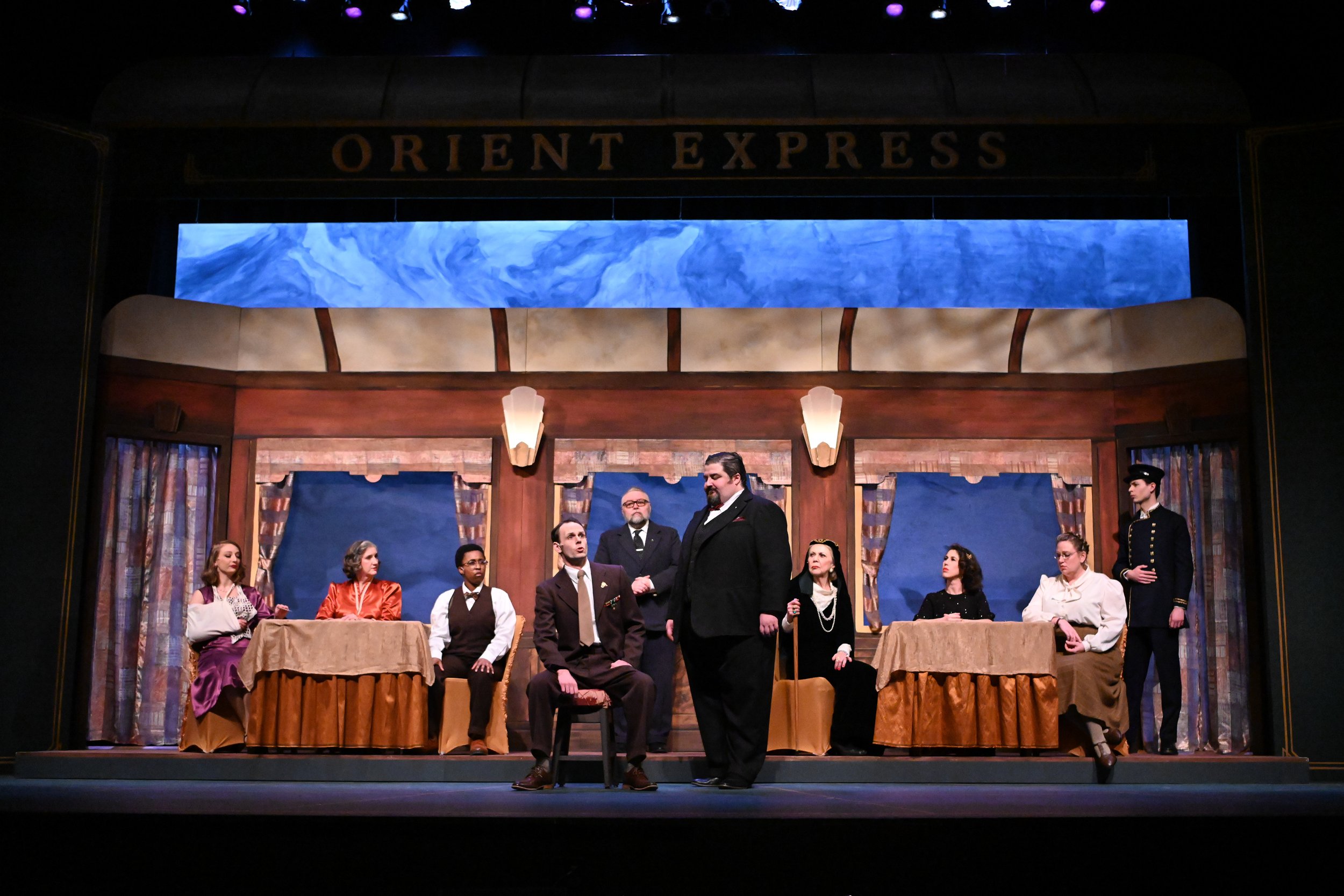
The third film in Kenneth Branagh’s Hercule Poirot franchise, following Murder on the Orient Express (2017) and Death on the Nile (2022), is A Haunting in Venice. Released in September 2023, the film is a supernatural mystery loosely based on Agatha Christie’s 1969 novel Hallowe'en Party, marking a tonal shift for the series.
The Evolution of the Kenneth Branagh Poirot Trilogy
To understand the significance of the third film, one must look at the trajectory Kenneth Branagh and screenwriter Michael Green established starting in 2017. When Murder on the Orient Express was first released, it served as a high-glamour, star-studded revival of the classic whodunit. It introduced a more vulnerable, emotionally complex Hercule Poirot, characterized by his distinctively large mustache and a tragic backstory involving a lost love named Katherine.
The success of the first film led to Death on the Nile, which faced significant production and release delays due to the global pandemic and various casting controversies. By the time the third film was conceived, the creative team decided to pivot away from the grand, "travelogue" style of the first two entries. Instead of another sprawling epic on a train or a boat, they opted for a claustrophobic, eerie atmosphere.
As of 2026, A Haunting in Venice remains a pivotal entry in the series because it proved the franchise could survive by subverting audience expectations. It moved away from the bright, saturated palettes of the Nile and the snowy vistas of the Orient Express into the dark, decaying palazzos of post-WWII Italy.
A Haunting in Venice: Plot and Narrative Departure
Set in 1947, the third film finds a retired and disillusioned Hercule Poirot living in self-imposed exile in Venice. He no longer believes in the inherent goodness of humanity and has stopped taking cases. His retirement is interrupted by an old friend, the celebrated mystery novelist Ariadne Oliver (played by Tina Fey), who invites him to a séance on All Hallows' Eve.
The séance is held at a crumbling, haunted palazzo owned by opera singer Rowena Drake (Kelly Reilly). The medium, Mrs. Reynolds (Michelle Yeoh), claims to be able to contact the spirit of Drake’s deceased daughter. When one of the guests is murdered during the night, Poirot is forced out of retirement to determine if the killer is of this world or the next.
Key Narrative Themes
- Rationalism vs. Supernaturalism: The core conflict of the film is Poirot’s struggle to maintain his logical worldview in the face of seemingly inexplicable events.
- The Weight of the Past: Much like the previous films, the third installment explores how past traumas—specifically those related to World War II—haunt the survivors.
- Faith and Disillusionment: Poirot’s personal journey in this film is one of recovering his sense of purpose.
Production Design and Visual Style
One of the most striking aspects of the third film in the Murder on the Orient Express series is its technical execution. Director Kenneth Branagh and cinematographer Haris Zambarloukos moved away from the 65mm film look used in the first two films to focus on a more intimate, distorted visual language.
Cinematography Techniques
The film utilizes Dutch angles, extreme close-ups, and wide-angle lenses to create a sense of unease and disorientation. This "horror-lite" aesthetic was designed to mimic the feeling of being trapped within the palazzo. Lighting plays a crucial role; the film relies heavily on natural light sources, such as flickering candles and lightning flashes, to emphasize the shadows of the Venetian Gothic architecture.
Sound and Score
The score, composed by Hildur Guðnadóttir (known for her work on Joker and Chernobyl), is a departure from the more traditional orchestral arrangements of Patrick Doyle in the first two films. Guðnadóttir’s work is dissonant and atmospheric, utilizing solo strings and avant-garde techniques to heighten the tension of the supernatural mystery.
The Ensemble Cast
Following the tradition established by Murder on the Orient Express, the third film features a diverse and talented ensemble. However, A Haunting in Venice leans into character actors and rising stars rather than relying solely on "A-list" cameos.
| Character | Actor | Role/Description |
|---|---|---|
| Hercule Poirot | Kenneth Branagh | The world-renowned Belgian detective, now retired. |
| Ariadne Oliver | Tina Fey | A mystery writer based on Agatha Christie herself. |
| Joyce Reynolds | Michelle Yeoh | A world-famous medium performing the séance. |
| Rowena Drake | Kelly Reilly | The grieving mother and owner of the palazzo. |
| Dr. Leslie Ferrier | Jamie Dornan | A shell-shocked doctor suffering from PTSD. |
| Leopold Ferrier | Jude Hill | The doctor's precocious and observant young son. |
| Vitale Portfoglio | Riccardo Scamarcio | Poirot's bodyguard and a former police officer. |
Comparing the Three Films in the Franchise
As we evaluate the trilogy in 2026, the differences between the three films highlight the evolving vision of the filmmakers. While the first film was a faithful but modernized adaptation, the third film represents a radical reimagining of the source material.
| Feature | Murder on the Orient Express (2017) | Death on the Nile (2022) | A Haunting in Venice (2023) |
|---|---|---|---|
| Primary Setting | A luxurious train in the Alps | A paddle steamer on the Nile | A haunted palazzo in Venice |
| Genre Tone | Classic Whodunit | Romantic Tragedy | Supernatural Mystery |
| Source Material | Murder on the Orient Express | Death on the Nile | Hallowe'en Party |
| Core Theme | Justice vs. Law | Obsessive Love | Life after Death |
| Visual Palette | Cool blues and whites | Warm ambers and golds | Dark greens and shadows |
Adaptation Differences: From Hallowe'en Party to Venice
Fans of Agatha Christie’s original work often note that the third film is the most significant departure from the books in the entire series. Hallowe'en Party, the novel on which it is based, takes place in a small English village, not Venice. The victim in the book is a young girl, and the plot revolves around local gossip and historical murders rather than a séance in a storm-tossed Italian city.
The decision to move the setting to Venice was a deliberate choice by Michael Green to raise the stakes. The "locked-room" mystery is enhanced by the rising tides and the decaying history of Venice, which serves as a metaphor for Poirot’s own state of mind. By changing the setting and the tone, the film managed to surprise even those who were intimately familiar with the source material.
The Status of the Franchise in 2026
As of 2026, the question remains: will there be a fourth film? While A Haunting in Venice was not the box-office juggernaut that Orient Express was, it received some of the strongest critical reviews of the trilogy. Its lower production budget compared to Death on the Nile made it a more sustainable model for the studio (20th Century Studios/Disney).
Current industry reports suggest that Branagh and Green have discussed several other Christie titles for potential adaptation. Names frequently mentioned in development circles include The Murder of Roger Ackroyd and And Then There Were None, though the latter is not a Poirot story in its original form. The "Branagh-verse" has established that it is willing to take creative liberties, so a Poirot-led version of a non-Poirot story is within the realm of possibility.
Practical Guidance for Viewers
If you are looking to complete the trilogy or dive into the series for the first time in 2026, here are the recommended next steps:
- Watch in Chronological Order: While each mystery is self-contained, Poirot’s emotional arc—specifically his mourning for Katherine and his eventual return to his "true self"—develops across the three films.
- Streaming Access: In 2026, the trilogy is primarily hosted on Disney+ and Hulu (depending on your region) due to 20th Century Studios being a subsidiary of Disney.
- Physical Media: For the best visual experience, the 4K Ultra HD Blu-ray of A Haunting in Venice is highly recommended to appreciate the dark cinematography and Guðnadóttir’s intricate sound design.
- Literary Comparison: Reading Hallowe'en Party after watching the third film provides a fascinating look at how a screenplay can be "deconstructed" and rebuilt for a different medium.
Frequently Asked Questions
Is A Haunting in Venice a sequel to Murder on the Orient Express?
Yes, it is the direct third installment in the same cinematic universe. It features Kenneth Branagh returning as Hercule Poirot and continues the character development established in the first two films.
Do I need to watch the first two films to understand the third?
Not necessarily for the plot. The murder mystery in A Haunting in Venice is completely independent. However, Poirot’s personal journey and some of his dialogue regarding his retirement and his lost love will make more sense if you have seen the previous entries.
Why is the third film so different from the book?
The filmmakers felt that the original novel, Hallowe'en Party, was not one of Christie’s strongest Poirot mysteries. They chose to use its central premise—a murder during a Halloween gathering—and transplant it to a more atmospheric and cinematic location (Venice) to create a "ghost story" vibe.
Is the third film a horror movie?
It is best described as a "supernatural mystery thriller." While it uses horror tropes—such as jump scares, creepy children, and a spooky setting—it remains a mystery at its heart, where logic and deduction are the primary tools used to solve the crime.
Will Kenneth Branagh return for a fourth film?
As of 2026, there has been no official production start date for a fourth film, but both Branagh and the producers have expressed a desire to continue the series if there is sufficient audience demand and a compelling script.
Final Recommendation
For those who enjoyed the grand scale of Murder on the Orient Express, the third film, A Haunting in Venice, is a must-watch that offers a refreshing change of pace. It successfully transitions the franchise from a period-piece spectacle into a moody, psychological character study. Whether you are a die-hard Christie fan or a casual moviegoer, the third film stands as a bold and visually stunning conclusion (or continuation) to the modern Poirot saga.