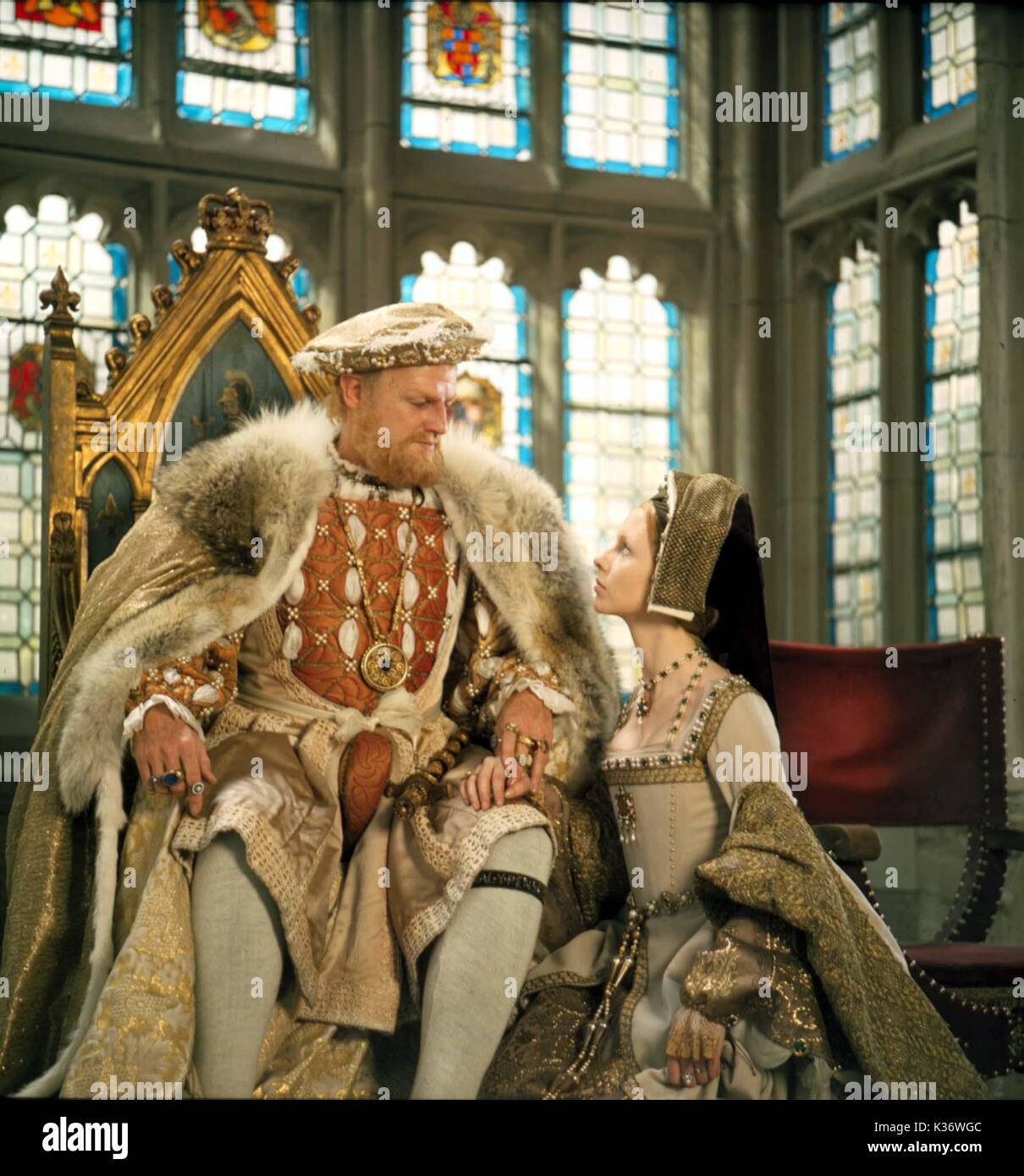
The marriage between King Henry VIII and Jane Seymour remains a pivotal, albeit brief, juncture in 16th-century English history. Occurring in 1536, this union marked a profound shift in the stability of the Tudor dynasty. Jane Seymour is uniquely distinguished among Henry's six wives for providing the male heir the King desperately sought, a contribution that fundamentally altered the course of the English Reformation and the security of the throne.
The Historical Context: The Fall of Anne Boleyn
To understand the rise of Jane Seymour, one must first recognize the precarious political and religious environment of the English court in early 1536. Henry VIII’s marriage to his second wife, Anne Boleyn, was disintegrating. Anne had failed to provide a surviving male heir, having given birth only to the future Elizabeth I, and her inability to produce a son had left the King increasingly anxious about the succession.
By early 1536, the King had already begun to distance himself from Anne. Jane Seymour, a lady-in-waiting, provided a stark contrast to the volatile and intellectually assertive Anne. Contemporary reports describe Jane as quiet, modest, and seemingly compliant—traits that appealed to a King exhausted by the religious and political fallout of his previous marriage. Following the execution of Anne Boleyn on May 19, 1536, Henry acted with characteristic speed, betrothing himself to Jane the very next day.
The Character and Court Presence of Jane Seymour
Unlike her predecessor, Jane Seymour was not a prominent figure in court politics prior to her sudden elevation. She was the daughter of Sir John Seymour of Wulfhall in Wiltshire, a family of modest gentry origins. Her lack of radical religious or political ambition made her an attractive candidate to conservative factions at court who sought to undermine the influence of the reformist circle surrounding Anne Boleyn.
Jane's demeanor was characterized by an adherence to traditional social roles. She was seen as a symbol of the "true" English queen, contrasted with the perceived foreign-influenced "concubine" image that opponents had cultivated regarding Anne. Despite her gentle reputation, she was not entirely apolitical; she famously attempted to intercede on behalf of those involved in the Pilgrimage of Grace, a major rebellion against the King’s religious policies. Henry, however, quickly silenced her, allegedly reminding her of the fate of her predecessor, a warning that underscored the limited power of a Queen Consort in the Tudor period.
Marriage and Coronation
Henry and Jane were married on May 30, 1536, at the Palace of Whitehall. The marriage was not marked by the elaborate, public celebrations that had defined the King’s earlier unions. In part, this was due to the haste of the proceedings and the lingering unease regarding the execution of the previous Queen.
Jane was never crowned. While plans for a coronation were drafted, they were repeatedly postponed. Historians suggest that Henry waited to ensure Jane was pregnant before investing in the pageantry of a coronation. In the rigid hierarchy of the 16th century, this omission remained a point of ambiguity regarding her status, though she was consistently treated as the undisputed Queen.
The Birth of Edward VI
The central objective of Henry’s marriage to Jane Seymour was the provision of a male heir. In October 1537, Jane went into labor at Hampton Court Palace. After a grueling and protracted delivery that lasted several days, she gave birth to a healthy son, the future King Edward VI, on October 12, 1537.
The birth was met with immense national celebration. For Henry, the arrival of a prince was a divine vindication of his break with Rome and his marriage to Jane. However, the joy was short-lived. Jane fell severely ill shortly after the birth, likely suffering from puerperal fever (childbed fever), a common and deadly complication in the era before antiseptic medicine. She died on October 24, 1537, just twelve days after the delivery of her son.
Comparative Status of Henry VIII’s Marriages
To analyze the significance of Jane Seymour, it is useful to evaluate the characteristics of Henry's unions. The following table provides a breakdown of the primary objectives and outcomes of his marriages.
| Queen Consort | Duration of Marriage | Primary Outcome for Henry | Fate of Queen |
|---|---|---|---|
| Catherine of Aragon | 24 Years | Mary I (Surviving daughter) | Annulled |
| Anne Boleyn | 3 Years | Elizabeth I (Surviving daughter) | Executed |
| Jane Seymour | 17 Months | Edward VI (Male heir) | Died in Childbirth |
| Anne of Cleves | 6 Months | None (Political alliance) | Annulled |
| Catherine Howard | 19 Months | None | Executed |
| Catherine Parr | 4 Years | None | Widowed |
Legacy and The King’s Final Wish
Jane Seymour’s legacy was cemented not by her actions during her life, but by her death and the subsequent identity of her son. Because she died in the act of securing the dynasty, Henry viewed her with a singular, lasting reverence that he did not afford his other wives. He remained in mourning for a significant period and, when he died in 1547, he requested to be buried alongside her in the tomb of St. George’s Chapel at Windsor Castle.
This decision was highly symbolic. By choosing to be interred with Jane, Henry acknowledged her as his only "true" wife. This elevated her status in historical memory, casting her as the beloved, tragic mother of the Tudor line. Her death also left a power vacuum in the court that eventually led Henry to pursue the disastrous political marriage with Anne of Cleves, further complicating the later years of his reign.
Addressing Common Historical Misconceptions
There is a tendency in popular culture to portray Jane Seymour as a saintly, passive figure. While she was undoubtedly less abrasive than Anne Boleyn, historical records indicate she was a woman of her time, acting within the narrow margins permitted to women of the Tudor era. Her "modesty" was a strategic alignment with the conservative, patriarchal expectations of the King.
Another misconception involves the timeline of her courtship. Some accounts suggest she was a victim of circumstance, yet correspondence from the time indicates that she and her family were acutely aware of the King’s wandering eye and the opening created by the decline of Anne Boleyn. Jane was an active participant in the court’s power dynamics, even if her methods were subtle and deferential.
Frequently Asked Questions
Why did Henry VIII consider Jane Seymour his favorite wife? Jane Seymour was favored primarily because she provided a male heir, Edward VI. Her gentle demeanor, which stood in sharp contrast to the strong-willed personality of Anne Boleyn, provided the King with a sense of peace and stability that he valued, particularly following the domestic turmoil of his second marriage.
Was Jane Seymour a Protestant or a Catholic? Jane’s religious allegiances remain somewhat opaque. While she was certainly not a radical reformer, she was the chosen figurehead for the conservative, largely Catholic-leaning faction of the court. However, there is no definitive evidence that she was a staunch theologian; she likely adopted the religious stance that best facilitated her survival and influence.
How long was the marriage between Henry VIII and Jane Seymour? The marriage lasted approximately 17 months, from May 30, 1536, until her death on October 24, 1537. It remains the shortest of Henry's marriages that resulted in biological children.
What happened to Edward VI after Jane’s death? Edward VI, born to Jane, was raised in a highly protected environment. Despite his frail health, he succeeded his father in 1547 at the age of nine. His reign was dominated by the regency of his uncle, Edward Seymour (Jane’s brother), which accelerated the Protestant Reformation in England.
Did Jane Seymour have any influence on Henry’s policy? Jane’s influence was minimal compared to other queens. Her most notable intervention was her request for clemency for those involved in the Pilgrimage of Grace. Henry’s harsh refusal served as a firm boundary-setting moment, effectively limiting her role to that of a consort and mother rather than a political advisor.
Practical Historical Inquiry
For those studying the life of Jane Seymour or the broader context of the Tudor period, it is recommended to focus on primary sources, such as the Letters and Papers, Foreign and Domestic, of the Reign of Henry VIII. These records provide the most accurate account of the administrative and personal realities of the King’s court. When researching this subject, distinguish between the sensationalized accounts of Victorian-era novelists and the documented records of the State Papers. The study of Jane Seymour is a study of the constraints of royal life; her importance is intrinsically linked to the biological survival of the Tudor dynasty.