The most famous instance of a man confronting a tank occurred in 1989 during the Tiananmen Square protests. While the iconic "Tank Man" was not run over, other protesters tragically were during the military crackdown. More recently, in 2022, a civilian car in Kyiv was crushed by a tracked armored vehicle, though the driver miraculously survived.
The image of a lone individual standing before a column of massive armored vehicles is one of the most enduring symbols of the 20th century. However, the search for "a man gets run over by a tank" often leads to a mix of historical misconceptions, documented military tragedies, and technical questions regarding the physics of such an encounter. As of 2026, looking back across nearly four decades of documented civil unrest and modern warfare, it is essential to distinguish between the symbolic "Tank Man" and the literal, often fatal, incidents involving heavy armor and civilians.
The 1989 Tiananmen Square Incident: Myth vs. Reality
On June 5, 1989, the day after the Chinese military began its violent crackdown on protesters in Beijing, an unidentified man carrying two shopping bags stood in the middle of Changan Avenue. A column of Type 59 Main Battle Tanks (MBTs) approached him. This event, captured by several photographers and videographers from the balconies of the Beijing Hotel, became the "Tank Man" incident.
Contrary to the common search query, the video footage clearly shows that the lead tank stopped several yards in front of the man. When the tank attempted to maneuver around him, the man stepped into its path again, successfully blocking the column. Eventually, he climbed onto the hull of the lead tank and appeared to speak with the crew. He was later pulled away by several individuals—whether they were concerned bystanders or plainclothes security forces remains a subject of intense debate among historians.
While the "Tank Man" himself was not run over on film, the context of the previous night is where the literal interpretation of the query finds its grim historical basis. During the clearing of Tiananmen Square on the night of June 3 and the early hours of June 4, 1989, multiple reports from journalists and human rights organizations, such as Amnesty International, confirmed that armored personnel carriers and tanks were used to crush barricades, tents, and unfortunately, individuals who remained in the path of the military advance.
The Physics of a Tank Impact: Tonnage and Ground Pressure
To understand the lethality of a tank running over an object or a person, one must look at the mechanical specifications of these vehicles. A Main Battle Tank, such as the Chinese Type 59 (used in 1989) or the modern American M1A2 Abrams, weighs between 36 and 70 metric tons.
Ground Pressure Distribution
A common misconception is that because a tank is so heavy, it will instantly liquefy anything beneath its tracks. While the total weight is immense, tanks utilize wide tracks to distribute that weight. This is known as ground pressure, typically measured in pounds per square inch (PSI).
- Human Ground Pressure: A standing human exerts approximately 8 to 12 PSI.
- Tank Ground Pressure: Surprisingly, most tanks exert only 12 to 15 PSI. This is roughly the same as a human because the weight is spread over the massive surface area of the tracks.
However, this "low" PSI only applies to soft ground. On a hard surface like asphalt or concrete, the "points of contact" (the metal or rubber track pads) bear the full brunt of the tonnage. If a person is caught between the rigid track and a hard road surface, the skeletal structure cannot withstand the 40-to-70-ton load. The result is catastrophic mechanical trauma, often resulting in immediate death or total limb loss.
The 2022 Kyiv Incident: A Modern Case Study
In February 2022, during the early stages of the conflict in Ukraine, a video circulated globally showing a tracked armored vehicle swerving across a road in the Obolon district of Kyiv and running directly over a civilian passenger car. The vehicle involved was a Strela-10, a tracked, short-range surface-to-air missile system.
Unlike the 1989 incident, this was a literal instance of a vehicle running over a person (who was inside their car). The Strela-10 weighs approximately 12 metric tons—significantly lighter than a Main Battle Tank but still massive compared to a sedan. Miraculously, the driver of the car, an elderly man, survived.
The technical reason for his survival was a combination of the car's structural "crumple zones" and the fact that the vehicle’s tracks straddled the driver’s seat just enough to avoid a direct crush of the cabin’s main pillar. This incident highlights the "blind spot" issue prevalent in armored vehicle operations. As noted by Reuters in their verification of the footage, armored vehicle crews have extremely limited visibility (periscopes and small vision blocks), making it difficult to see objects directly in front of the hull or low to the ground.
Technical Specifications: Armor Weight and Lethality
Understanding the difference between various "tanks" is crucial for analyzing these incidents. Below is a comparison of vehicles often involved in reported "run over" incidents.
| Vehicle Model | Type | Weight (Metric Tons) | Estimated Ground Pressure (PSI) | Max Speed (Road) |
|---|---|---|---|---|
| Type 59 | Main Battle Tank | 36.0 | 11.4 | 50 km/h |
| M1A2 Abrams | Main Battle Tank | 67.0 | 15.0 | 67 km/h |
| T-72 | Main Battle Tank | 41.5 | 13.0 | 60 km/h |
| Strela-10 | Armored Vehicle | 12.1 | 6.5 | 61.5 km/h |
| M113 | APC | 12.3 | 7.9 | 64 km/h |
The data shows that even the lightest armored vehicles (like the Strela-10 or M113) possess enough mass to easily crush a human body or a civilian vehicle. The Type 59 tanks used in Beijing in 1989 were mid-weight tanks, yet their 36 tons made them unstoppable barriers against the civilian population.
Visibility and Operational Blind Spots
In many military training accidents where a soldier or civilian is run over by a tank, the primary cause is a "visibility gap." A tank commander sits high in the turret, but the driver is positioned low in the hull, often lying in a semi-recumbent position.
The "Dead Zone"
For an M1 Abrams or a T-72, there is a "dead zone" directly in front of the vehicle extending roughly 5 to 10 meters where the driver cannot see anything on the ground. If a person stands too close to the front of a moving tank, the driver will lose sight of them entirely. This is why infantry soldiers are trained to maintain a specific "safe distance" from tracked vehicles and why armored units use ground guides (soldiers on foot with signal flags or lights) when maneuvering in tight spaces or near crowds.
The psychological pressure on a tank crew during a protest or combat situation also contributes to these incidents. Per the Federation of American Scientists, crews operating under "buttoned up" conditions (with all hatches closed) rely entirely on narrow periscopes, which drastically reduces situational awareness and increases the risk of accidental trampling.
Legal and Ethical Consequences of Armored Vehicle Use
The act of using a tank to run over a civilian is classified as a war crime or a crime against humanity under various international statutes, including the Rome Statute. In the 1989 Tiananmen Square context, the use of heavy armor against a peaceful protest was a violation of international norms regarding the "proportionality of force."
In modern military law, a tank driver or commander can be held liable for "manslaughter by negligence" if it is proven they ignored safety protocols or visibility warnings. However, in active combat zones or state-sanctioned crackdowns, these legalities are often bypassed by the governing regime, leading to the historical "disappearance" of victims and the suppression of evidence.
Frequently Asked Questions
What happened to the "Tank Man" from the 1989 photo?
To this day, the identity and fate of the "Tank Man" remain unconfirmed. Some reports suggest he was executed shortly after the protests, while others, including claims by former Chinese leader Jiang Zemin in a 1990 interview, suggest he was never arrested and might still be alive. However, no person has ever successfully come forward with verifiable proof of being the individual in the footage.
Can a person survive being run over by a tank?
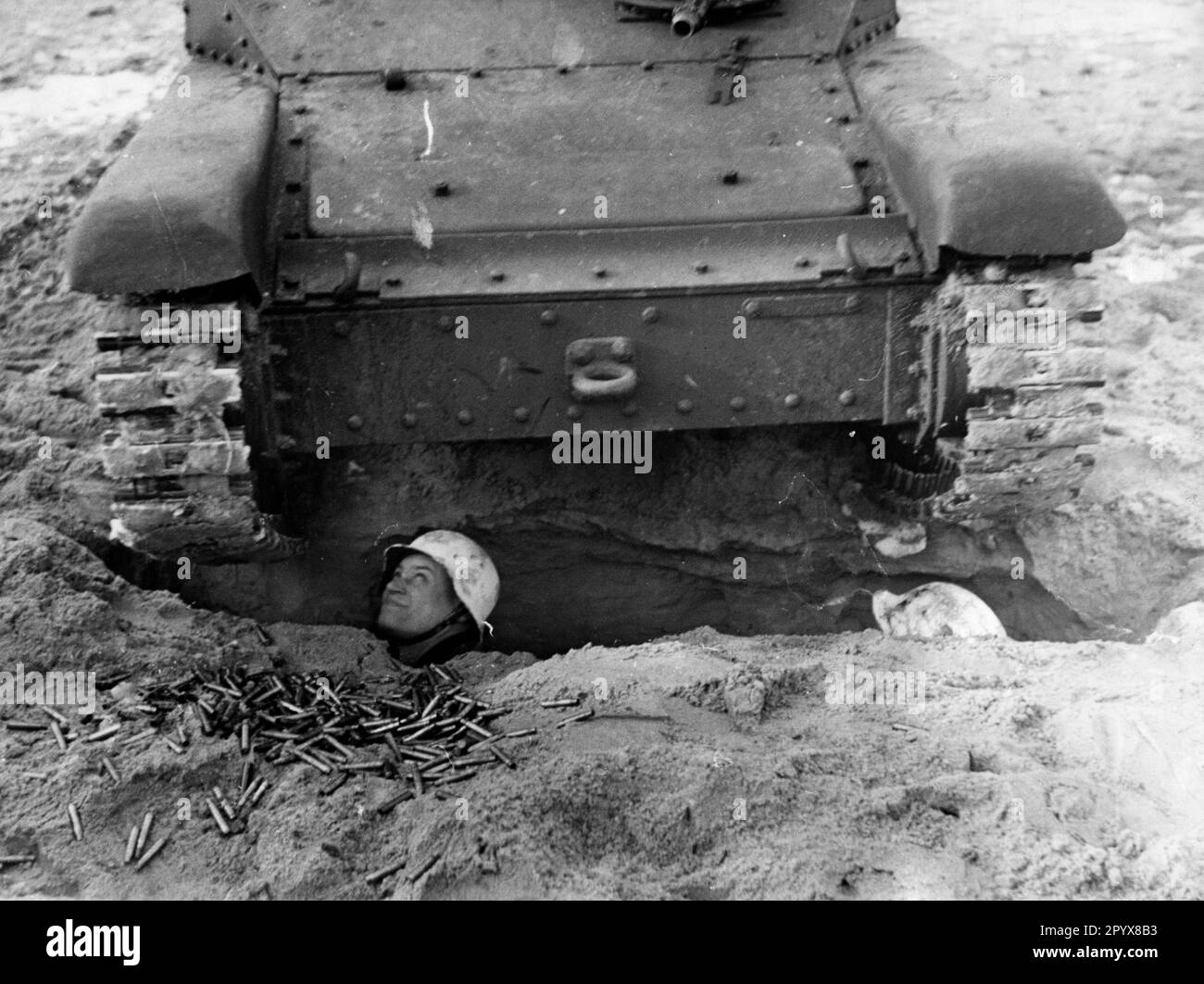
Survival is extremely unlikely due to the sheer tonnage of the vehicle. Unlike a car, which has wheels that might only crush a specific limb, a tank's tracks provide a continuous crushing motion across the entire length of the body. The only documented "survivals" usually involve the person being in a depression in the ground or inside a structurally reinforced vehicle (like the Kyiv incident) that took the brunt of the weight.
Why do tanks have tracks instead of wheels?
Tanks use tracks to maximize the surface area in contact with the ground. This allows them to cross soft mud, sand, and trenches that would swallow a wheeled vehicle. While this creates the "low PSI" mentioned earlier, the massive weight is still present; it is simply distributed so the tank doesn't sink.
Are there modern safety systems to prevent tanks from running over people?
Modern MBTs are increasingly being equipped with 360-degree camera systems (similar to "bird's-eye view" cameras in luxury cars) and thermal sensors. These systems are designed to improve situational awareness for the crew and reduce the "dead zone" visibility issues that caused many historical accidents.
What is the most common cause of tank-related civilian deaths?
Statistically, most civilian deaths involving tanks occur during urban combat or high-speed transit on public roads. Collisions and "crush" incidents are often caused by the tank's inability to stop quickly—a 60-ton vehicle moving at 40 mph has immense momentum and requires a significant distance to come to a complete halt.
Final Considerations for Researching These Events
When investigating claims of a man being run over by a tank, it is vital to utilize primary source footage and cross-reference multiple journalistic outlets. For the 1989 events, the National Security Archive provides declassified documents that offer a deeper look into the military's rules of engagement at the time. For modern incidents, verify the date and location using geolocation tools and metadata analysis to avoid misinformation or mislabeled footage.