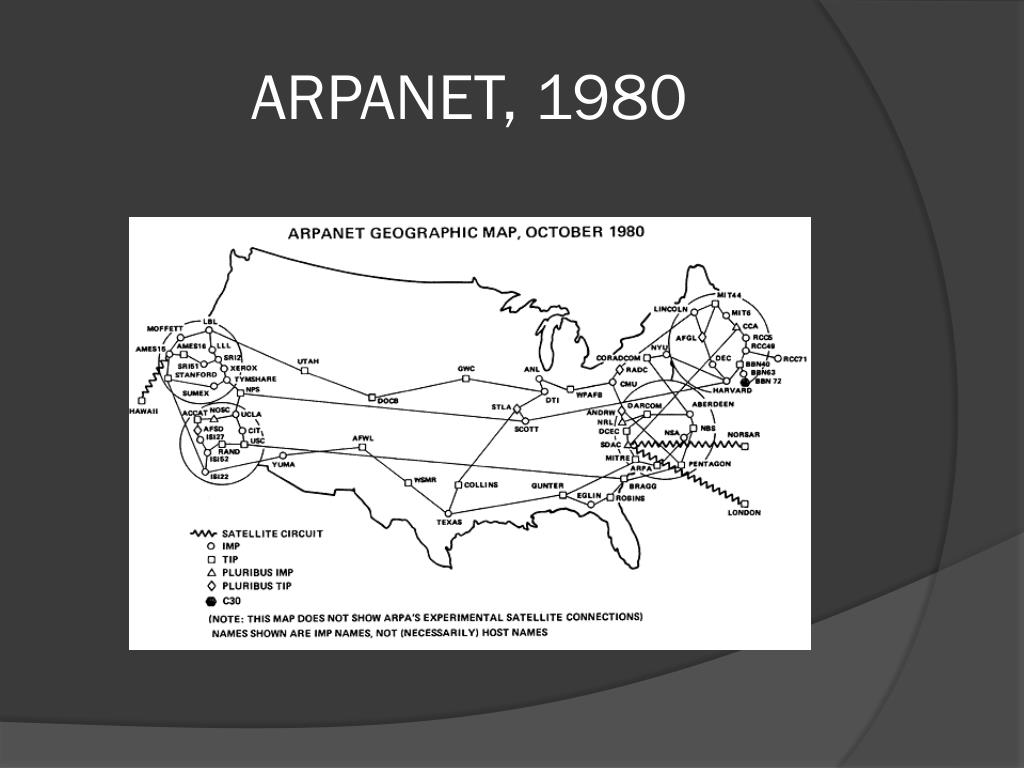
ARPANET (Advanced Research Projects Agency Network) was the first wide-area packet-switching network and the foundational precursor to the modern internet. Established by the U.S. Department of Defense in 1969, it introduced core technologies—most notably packet switching and the TCP/IP protocol suite—that transitioned digital communication from isolated mainframe connections to the interconnected global infrastructure used today in 2026.
The Strategic Foundations of ARPANET
To understand ARPANET, one must look at the geopolitical and scientific climate of the late 1950s. Following the Soviet Union's launch of Sputnik in 1957, the United States established the Advanced Research Projects Agency (ARPA), now known as DARPA, within the Department of Defense. The goal was to ensure U.S. military technology stayed ahead of its rivals.
During this era, computing was centralized. Researchers who needed to use a specific computer had to travel to its physical location or use expensive, dedicated telephone lines that were highly inefficient. J.C.R. Licklider, a visionary psychologist and computer scientist who arrived at ARPA in 1962, proposed a concept he called the "Intergalactic Computer Network." He envisioned a world where everyone could access data and programs from any site through a globally interconnected network.
While popular lore often suggests ARPANET was built solely to survive a nuclear strike, the primary driver was academic resource sharing. ARPA was funding multiple high-cost computer centers at various universities. These institutions wanted a way to share hardware resources and software tools without the redundant cost of buying every university the same mainframe. This practical need for efficiency birthed the architectural requirements of what would become the internet.
The Breakthrough of Packet Switching
Before ARPANET, communication relied on "circuit switching," the same technology used by the traditional telephone system. In a circuit-switched network, a dedicated physical path is opened between two points for the duration of the communication. If that path is interrupted, the connection fails. Furthermore, if no data is being sent, the line remains occupied and "wasted."
ARPANET pioneered packet switching, a method that breaks data into small chunks or "packets." Each packet contains a header with its destination address and can travel independently through the network, potentially taking different routes to reach the same destination. Once they arrive, the receiving computer reassembles them into the original message.
This concept was developed independently by three different parties:
- Paul Baran at the RAND Corporation, who was looking for a "survivable" network for the U.S. Air Force.
- Donald Davies at the National Physical Laboratory in the UK, who actually coined the term "packet."
- Leonard Kleinrock at UCLA, who developed the mathematical theory behind queuing and packet networks.
By using packet switching, ARPANET allowed multiple users to share the same communication lines simultaneously, drastically increasing efficiency and creating a resilient architecture where the loss of one node would not collapse the entire system.
Circuit Switching vs. Packet Switching
| Feature | Circuit Switching (Legacy) | Packet Switching (ARPANET/Internet) |
|---|---|---|
| Path Selection | Dedicated path established before transmission. | Dynamic path; each packet finds its own route. |
| Efficiency | Low; capacity is wasted if the line is idle. | High; multiple users share the same bandwidth. |
| Resilience | Low; if the path is cut, the connection dies. | High; packets reroute around failures. |
| Primary Use | Traditional voice calls. | Data, VoIP, and modern web traffic. |
| Latency | Fixed once the circuit is established. | Variable depending on network congestion. |
The Implementation: Building the First Nodes
In 1968, ARPA issued a Request for Quotation (RFQ) to build the hardware needed to run this network. The contract was won by Bolt Beranek and Newman (BBN), a consulting firm in Cambridge, Massachusetts. The team at BBN, led by Frank Heart and featuring innovators like Bob Kahn, developed the Interface Message Processor (IMP).
The IMP was essentially the world's first router. It was a ruggedized Honeywell DDP-516 minicomputer modified to manage the flow of data packets between host computers and the network. By offloading the networking tasks to the IMP, the host mainframes (which were extremely expensive) didn't have to waste their processing power on managing the connection.
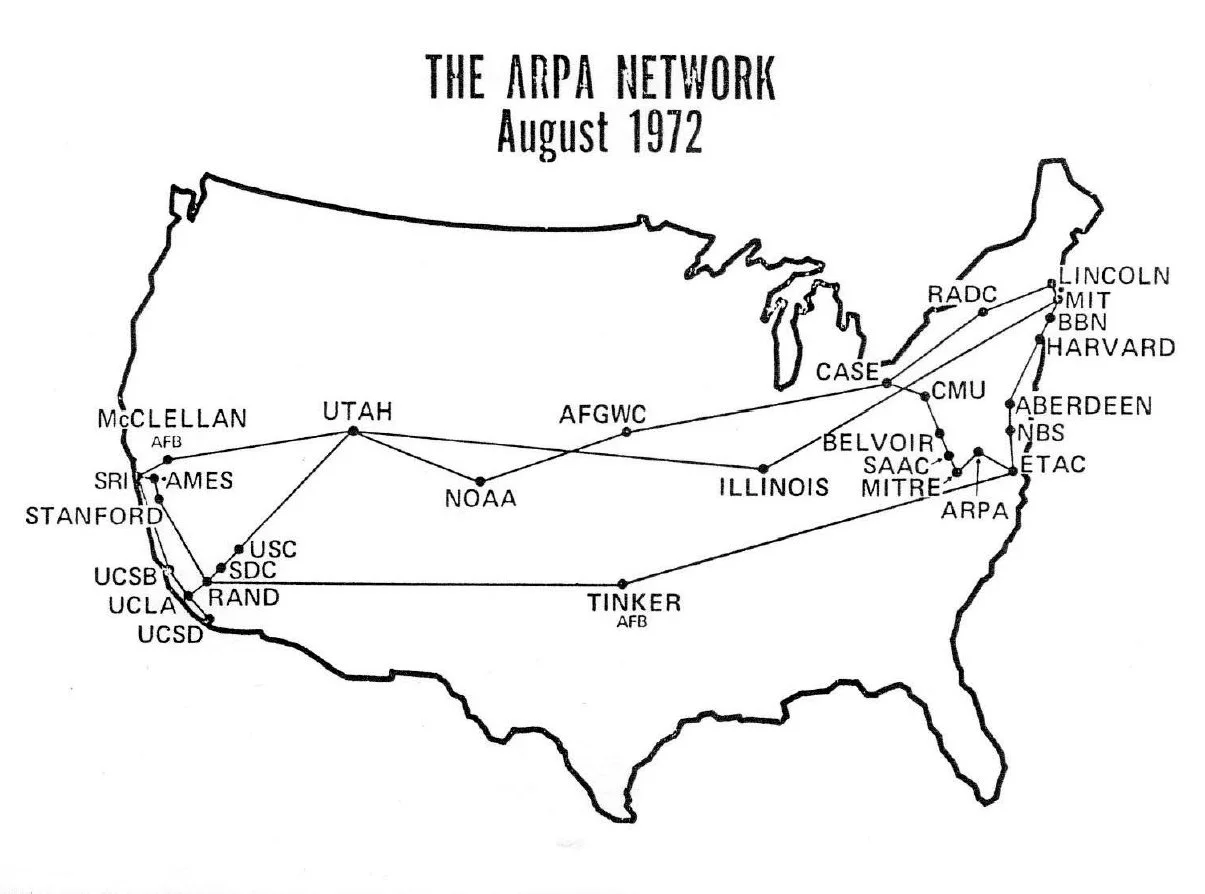
The initial plan called for four nodes, representing the first four locations to be connected:
- UCLA (University of California, Los Angeles): Home to Leonard Kleinrock’s Network Measurement Center.
- SRI (Stanford Research Institute): Douglas Engelbart’s Augmentation Research Center.
- UC Santa Barbara (UCSB): Focusing on interactive graphics.
- University of Utah: Specializing in 3D computer graphics.
1969: The Moment of Connection
On October 29, 1969, the first message was sent between the UCLA node and the SRI node. Charley Kline, a student programmer at UCLA, attempted to type "LOGIN" to access the SRI computer.
The system crashed after he typed the first two letters. Consequently, the first message ever sent over the precursor to the internet was simply "LO." About an hour later, the systems were recovered, and the full "LOGIN" was successfully transmitted. By the end of 1969, all four nodes were operational, marking the birth of a functional, multi-node packet-switching network.
The Computer History Museum maintains extensive digital archives of this era, documenting the transition from these four nodes to the hundreds that would follow within a decade.
Protocol Evolution: From NCP to TCP/IP
In its early years, ARPANET used the Network Control Program (NCP). While effective for a single network, NCP was not designed to communicate across different types of networks (such as satellite or radio networks). As more "islands" of networks began to emerge, a new "meta-language" was needed to connect them all.
This led to the development of the Transmission Control Protocol/Internet Protocol (TCP/IP) by Vint Cerf and Bob Kahn. TCP handles the assembly and disassembly of packets at the endpoints, while IP handles the addressing and routing of packets between networks.
The transition to TCP/IP is widely regarded as the functional "birth" of the internet as we know it. On January 1, 1983, every node on ARPANET was required to switch from NCP to TCP/IP. This was a "Flag Day" event that allowed disparate networks to interconnect, creating an "internetwork"—or, the Internet.
The Internet Engineering Task Force (IETF) continues to manage the evolution of these protocols, ensuring that the standards established in 1983 remain compatible with the high-speed requirements of 2026.
Cultural and Functional Milestones
ARPANET was not just a triumph of engineering; it was a catalyst for new ways of human interaction. Many of the applications we consider fundamental today originated on ARPANET:
- Email: In 1971, Ray Tomlinson of BBN sent the first network email. He chose the "@" symbol to separate the user's name from the host name, a standard that remains unchanged 55 years later.
- FTP (File Transfer Protocol): Established in 1971, it allowed researchers to move entire files between machines.
- Telnet: A protocol that allowed users to log into a remote computer as if they were sitting in front of it.
- Mailing Lists: The first mailing list, "MsgGroup," was created in 1975, leading to the development of online communities.
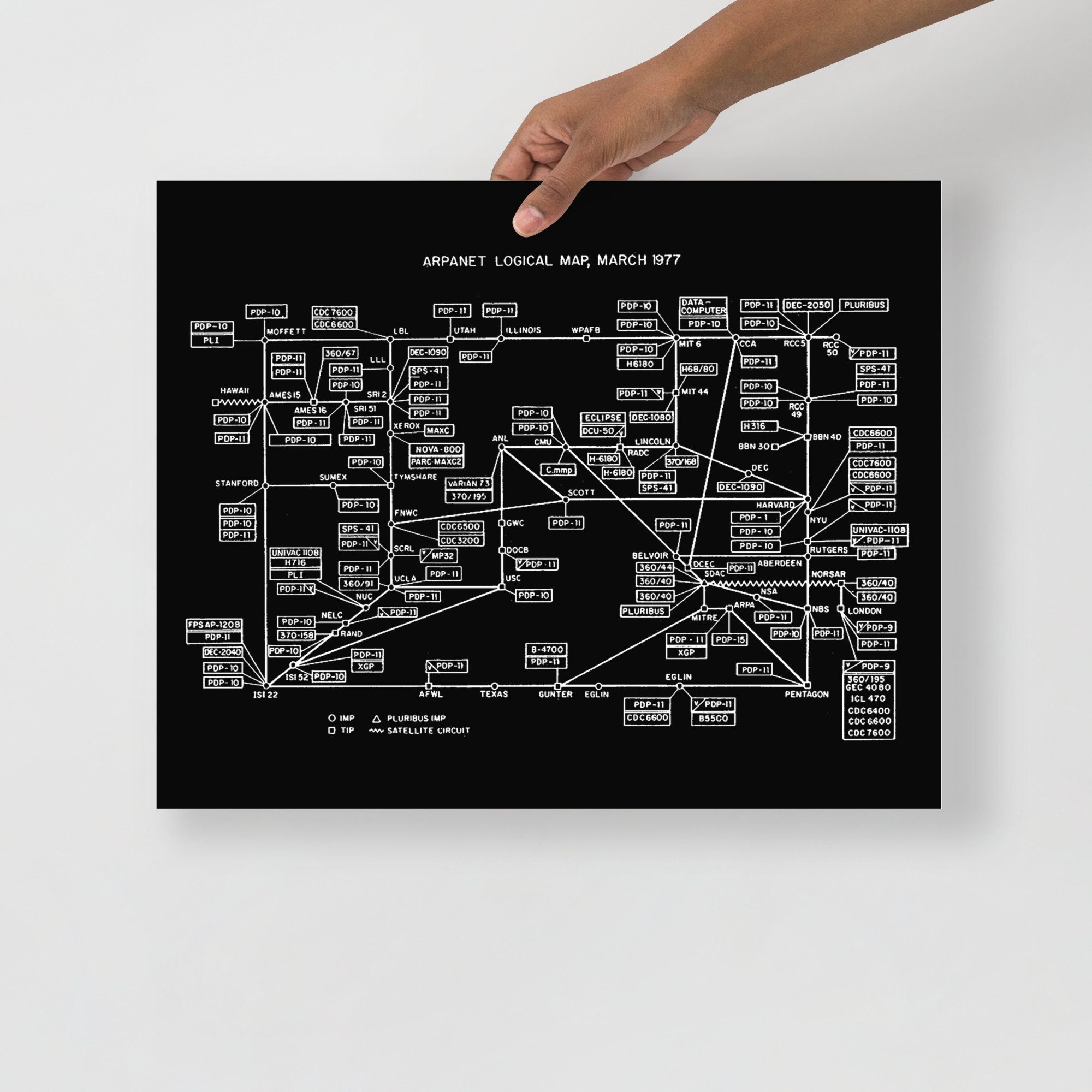
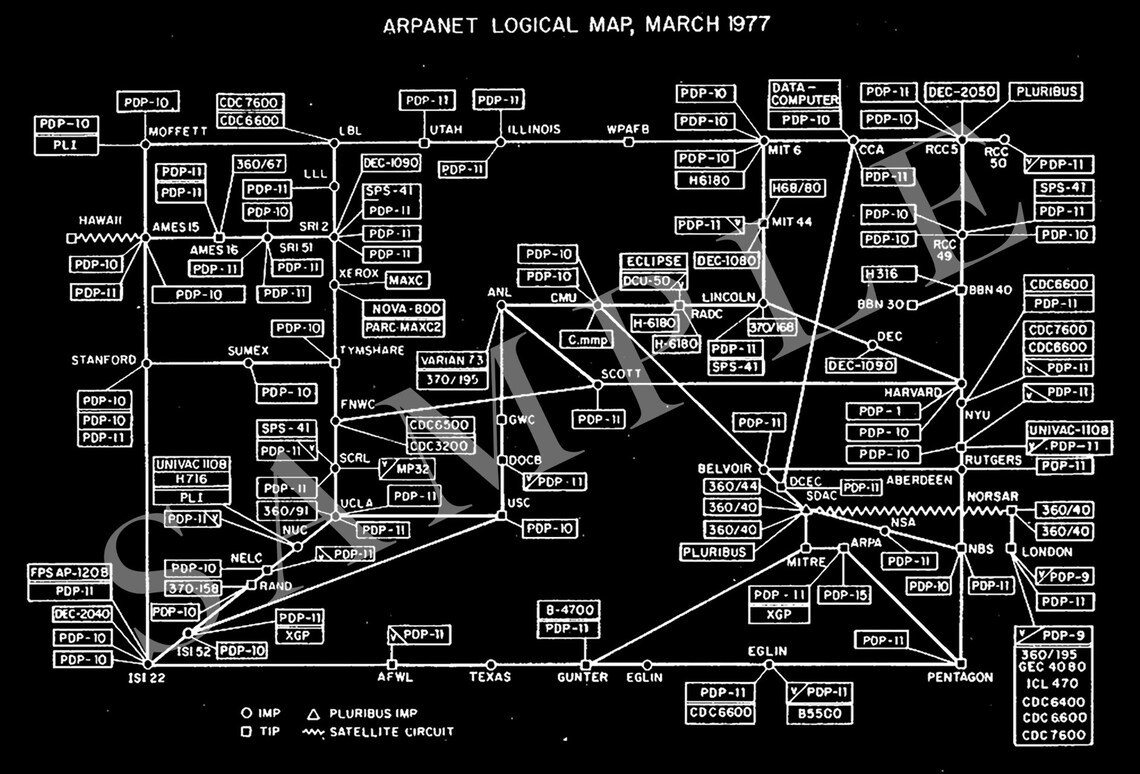
By the mid-1970s, ARPANET had expanded across the Atlantic to Norway and the United Kingdom via satellite links. It was no longer a domestic experiment; it was becoming a global infrastructure.
The Transition to the Modern Internet
As the 1980s progressed, ARPANET became a victim of its own success. The U.S. National Science Foundation (NSF) created NSFNET in 1985 to connect supercomputer centers. NSFNET used the TCP/IP protocols developed for ARPANET but offered higher speeds and more modern equipment.
Because NSFNET was designed to be more inclusive of various academic disciplines, it eventually surpassed ARPANET in traffic and utility. In 1990, ARPANET was officially decommissioned. Its hardware was removed, but its "soul"—the TCP/IP protocols and the packet-switching architecture—lived on as the backbone of the burgeoning commercial internet.
The 1990s saw the introduction of the World Wide Web by Tim Berners-Lee (running on top of the internet's infrastructure) and the eventual removal of restrictions on commercial traffic. This set the stage for the explosive growth that leads to our current 2026 landscape of ubiquitous fiber-optic and satellite connectivity.
Key Milestones in ARPANET History
| Year | Event | Significance |
|---|---|---|
| 1958 | Formation of ARPA | Established the funding body for advanced research. |
| 1961 | Packet Switching Theory | Kleinrock publishes the first paper on digital communication chunks. |
| 1969 | The First Connection | UCLA and SRI connect; the first "LO" message is sent. |
| 1971 | First Network Email | Ray Tomlinson introduces the "@" symbol. |
| 1973 | International Expansion | First international nodes added in Norway and London. |
| 1983 | TCP/IP Transition | The "Flag Day" that established the modern internet protocol. |
| 1990 | Decommissioning | ARPANET officially retires, handing over to NSFNET. |
Common Misconceptions About ARPANET
One frequent error in historical analysis is the conflation of the Internet with the World Wide Web. ARPANET and the subsequent internet are the "plumbing" (the wires, protocols, and hardware). The World Wide Web, which arrived in the early 1990s, is merely one application (like email or Spotify) that runs on top of that plumbing.
Another misconception is that Al Gore "claimed to invent" the internet. In reality, as a Senator, Gore was a primary political champion of the High Performance Computing Act of 1991, which funded the expansion of the regional networks that replaced ARPANET, essentially facilitating the transition of the internet from a research tool to a public utility.
Frequently Asked Questions
Why was the "@" symbol chosen for email?
Ray Tomlinson, who sent the first email in 1971, needed a character that was rarely used in usernames or hostnames to prevent confusion. The "@" symbol (at) was a logical choice because it indicated the user was "at" a specific host. It existed on the Model 33 Teletype keyboards used at the time but had little other use in programming or data processing, making it a unique delimiter.
Who owns the ARPANET today?
Technically, ARPANET no longer exists as a physical entity; it was decommissioned in 1990. The infrastructure that grew out of it is decentralized and owned by thousands of different entities, including Internet Service Providers (ISPs), governments, and private corporations. However, the intellectual property regarding the original protocols is largely open-source and managed by international standards bodies like the Internet Society (ISOC).
Was ARPANET the only network of its kind?
No. While ARPANET was the most influential, other networks existed, such as CYCLADES in France and the NPL network in the UK. The primary reason ARPANET "won" as the global standard was the robustness of the TCP/IP protocol, which was specifically designed to bridge these different, competing networks into a single "internetwork."
What was an IMP in ARPANET history?
The Interface Message Processor (IMP) was a specialized computer used to connect a host computer to the ARPANET. Built by BBN, it acted as a gateway and router, handling the packet switching tasks. Today’s modern home routers are the direct descendants of the refrigerator-sized IMPs used in the 1960s and 70s.
How did ARPANET handle security?
In its early days, ARPANET had very little security. It was a "closed" network of researchers who generally trusted one another. Security was focused on physical access to the terminals. It wasn't until the network began to grow and the first "worms" (like the Morris Worm in 1988) appeared that the community began to integrate formal encryption and security protocols into the TCP/IP stack.
Practical Recommendation for Further Study
For those looking to verify specific technical details or view original documentation from the 1960s, the Request for Comments (RFC) documents are the ultimate primary source. These are the technical notes and standards that defined every aspect of ARPANET and the internet.
- Read RFC 1: Written by Steve Crocker in 1969, it outlines the initial software for the host-to-IMP connection.
- Visit the Computer History Museum: If you are in Mountain View, California, you can see an original BBN IMP and other ARPANET artifacts.
- Explore the DARPA Archives: The DARPA website provides an official timeline of the projects that funded the network's development.
Understanding the history of ARPANET is not just a lesson in nostalgia; it provides the context for why the internet remains a decentralized, packet-based system. By studying the limitations the original engineers faced, modern developers can better understand the current challenges of 2026, from network latency to the transition to IPv6.