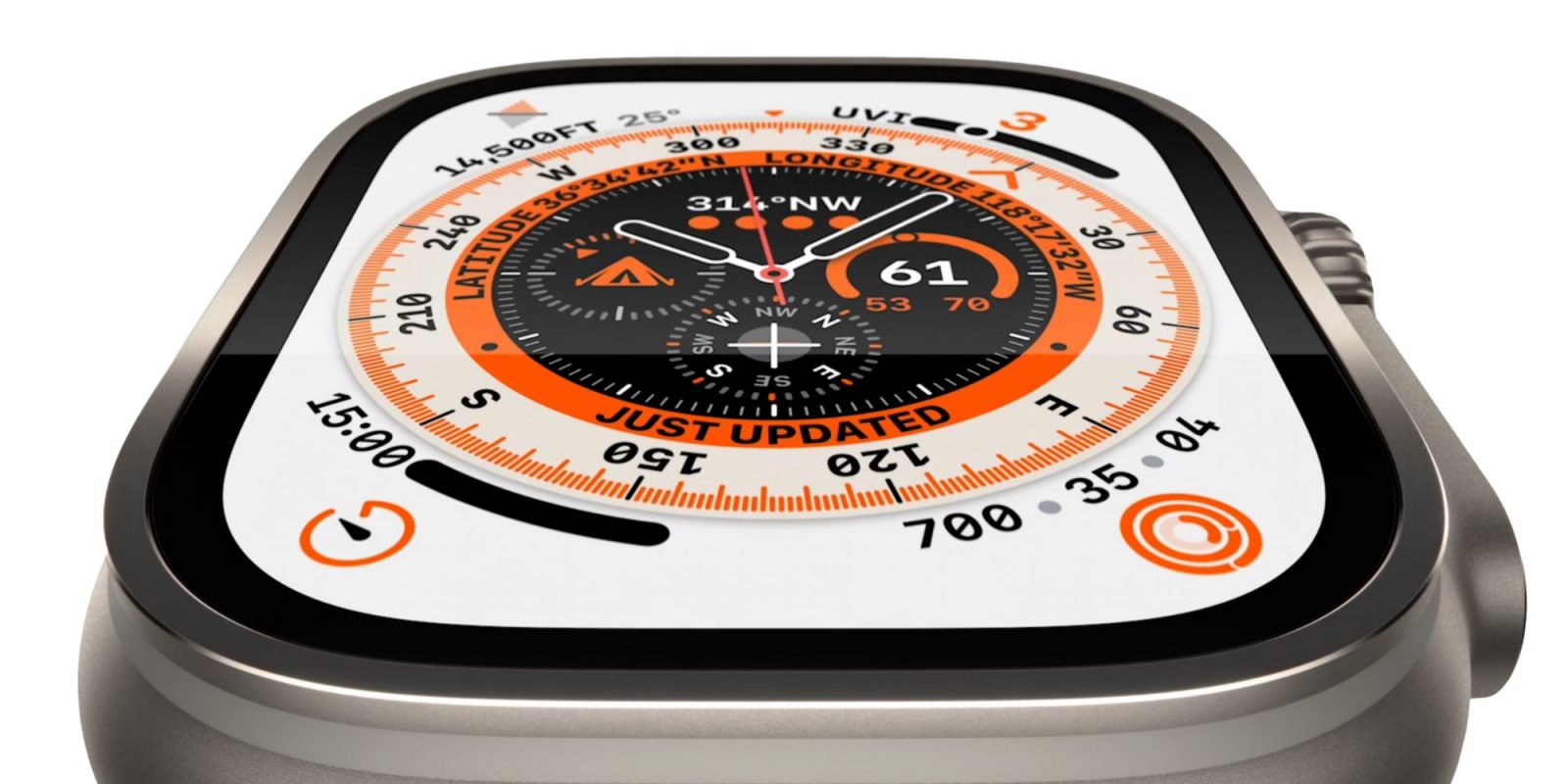
The Apple Watch Ultra 1 features a 49mm aerospace-grade titanium case, a flat sapphire crystal display with 2,000 nits peak brightness, and the S8 SiP. Designed for endurance and exploration, it offers dual-frequency GPS, a customizable Action Button, 100m water resistance, and up to 36 hours of battery life under normal use.
Introduction to the Apple Watch Ultra Legacy
When first introduced in late 2022, the Apple Watch Ultra represented the most significant architectural shift in Apple’s wearable lineup since the original's inception. As we look at this device from the perspective of 2026, the Ultra 1 remains a foundational piece of hardware that established the "rugged" category for Apple. It was designed specifically to bridge the gap between a daily smartwatch and a specialized sports tool for triathletes, hikers, and divers.
Understanding the "apple watch ultra 1 specifications in detail" is essential for users considering a refurbished model or those seeking to understand how the original hardware holds up against newer iterations like the Ultra 2 or 3. The device's longevity is rooted in its over-engineered chassis and a sensor suite that was years ahead of its time.
Design and Structural Integrity
The physical design of the Apple Watch Ultra 1 was a departure from the "pebble" aesthetic of the Series 0 through Series 8. It prioritized utility and protection over slimness.
Aerospace-Grade Titanium Construction
The case is crafted from aerospace-grade titanium, a material chosen for its exceptional strength-to-weight ratio. Titanium provides the corrosion resistance necessary for salt-water activities while remaining light enough for marathon running. The case features a 49mm height, which was the largest ever for an Apple Watch at the time of its release.
Protection and Ergonomics
Unlike the curved glass of the standard models, the Ultra 1 utilizes a flat sapphire front crystal. The titanium case edges rise slightly to surround the crystal, protecting it from side impacts that occur during rock climbing or trail running.
The Digital Crown and the side button are housed within a prominent "guard" on the right side of the device. This guard prevents accidental activations when the wrist is flexed. The Digital Crown itself is larger and features deeper grooves, making it operable even when the user is wearing thick gloves.
The Action Button
One of the most significant functional additions is the International Orange Action Button on the left side. This button is hardware-programmable, allowing users to instantly start a workout, set a waypoint in the Compass app, or start a dive. Its physical presence reflects a shift toward tactile control, acknowledging that touchscreens can be unreliable in wet or freezing conditions.
Display Technology and Visibility
The display of the Apple Watch Ultra 1 was engineered for high-contrast visibility in extreme environments, ranging from blinding snowfields to the dark depths of the ocean.
- Display Type: Always-On Retina LTPO OLED.
- Resolution: 410 by 502 pixels, providing a 1164 sq mm display area.
- Peak Brightness: 2,000 nits. This was double the brightness of any previous Apple Watch, ensuring the screen remains legible under direct high-altitude sunlight.
- Minimum Brightness: The display can dim to just 1 nit, which is crucial for preserving night vision during nocturnal navigation.
The "Wayfinder" watch face was launched specifically for this display, featuring a live compass dial and a Night Mode. By rotating the Digital Crown, the entire interface turns vivid red to eliminate blue light and protect the user’s dark-adapted eyes.
Internal Hardware and Processing Power
The heart of the Ultra 1 is the S8 System in Package (SiP). While later models introduced more powerful processors, the S8 remains highly capable for the vast majority of watchOS tasks in 2026.
The S8 SiP and Wireless Chips
The S8 SiP features a 64-bit dual-core processor. Accompanying it is the W3 Apple wireless chip and the U1 chip. The U1 chip (Ultra Wideband) enables precise spatial awareness, allowing the watch to locate other U1-equipped devices, like an iPhone or AirTag, with directional accuracy.
Storage and Memory
The device comes standard with 32GB of internal storage. This capacity is used for the operating system, cached map data for offline navigation, and a significant library of music or podcasts for phone-free workouts.
Audio and Microphones
To combat the elements, Apple equipped the Ultra 1 with a three-microphone array. This system uses beamforming algorithms and machine learning to suppress wind noise, ensuring voice clarity during calls even in gale-force conditions. It also features dual speakers that are 40% louder than the Series 8, enhancing the volume of Siri responses and phone calls.
Sensor Suite and Health Monitoring
The Apple Watch Ultra 1 is a comprehensive health and safety laboratory on the wrist. It integrates legacy sensors with new, high-performance hardware designed for safety.
Environmental and Safety Sensors
- Depth Gauge: Measures water depth down to 40 meters (130 feet) in real-time.
- Water Temperature Sensor: Provides data essential for divers and cold-water swimmers.
- 86-Decibel Siren: A unique safety feature designed to draw attention to a user's location. The siren uses two distinct high-pitch patterns that can be heard up to 600 feet (180 meters) away.
- High-G Accelerometer: Capable of detecting up to 256 Gs, enabling Crash Detection for vehicular accidents.
Biological Sensors
The Ultra 1 includes the full suite of Apple’s health monitoring tools:
- Blood Oxygen Sensor: Uses green, red, and infrared LEDs to measure SpO2 levels.
- Electrical Heart Sensor: Enables the ECG app to check for atrial fibrillation (AFib).
- Third-Generation Optical Heart Sensor: Tracks resting heart rate, walking average, and heart rate variability (HRV).
- Temperature Sensing: Two sensors (one against the skin and one under the display) monitor baseline body temperature during sleep, facilitating retrospective ovulation tracking and general wellness monitoring.
Connectivity and Navigation
Precision in navigation is perhaps the most critical specification for the "Ultra" target audience. The Ultra 1 introduced dual-frequency GPS to the Apple ecosystem.
Precision Dual-Frequency GPS
Standard GPS (L1) can struggle in "urban canyons" (areas with tall buildings) or under dense tree canopies because the signal bounces off surfaces. The Ultra 1 integrates both L1 and L5 frequencies. The L5 signal is more advanced and better at filtering out interference, resulting in more accurate pace and distance metrics and more reliable "Backtrack" functionality in the Compass app.
Cellular and Networking
Every Apple Watch Ultra 1 model is equipped with Cellular (LTE and UMTS) as standard. It supports international roaming, allowing users to stay connected in various regions without their iPhones. It also supports:
- Wi-Fi: 802.11b/g/n 2.4GHz and 5GHz.
- Bluetooth 5.3: Ensuring low-energy, high-stability connections to headphones and external sensors like cycling power meters.
Battery Life and Power Management
Battery anxiety was a primary complaint among endurance athletes using previous Apple Watch models. The Ultra 1 addressed this with a significantly larger battery.
- Standard Usage: Up to 36 hours. This typically covers a full day of heavy use, a night of sleep tracking, and a second day of moderate use.
- Low Power Mode: Up to 60 hours. In this mode, the watch limits certain background sensors and the Always-On display while maintaining core GPS and heart rate tracking during workouts.
- Fast Charging: Using the included magnetic fast-charging USB-C cable, the device can reach 80% charge in about an hour.
Technical Specifications Summary Table
| Category | Specification | Technical Detail |
|---|---|---|
| Dimensions | Height x Width x Depth | 49mm x 44mm x 14.4mm |
| Weight | Case Weight | 61.3 grams (without band) |
| Case Material | Type | Aerospace-grade titanium |
| Water Resistance | Rating | 100m (WR100), EN13319 certified for diving |
| Dust Resistance | Rating | IP6X |
| Durability | Certification | MIL-STD 810H (tested for altitude, temp, shock) |
| Processor | SiP | S8 with 64-bit dual-core processor |
| Connectivity | GPS | Precision dual-frequency (L1 and L5) |
| Battery | Capacity | 542 mAh (Typical) |
| Storage | Capacity | 32 GB |
Specialized Diving and Water Features
The Apple Watch Ultra 1 was the first to receive the EN13319 certification, an internationally recognized standard for diving accessories. This allows it to function as a legitimate dive computer when paired with the Oceanic+ app.
When the watch is submerged, it automatically launches the Depth app, showing current depth, time underwater, water temperature, and maximum depth reached. While the hardware is rated for WR100 (100 meters), Apple recommends it for recreational scuba diving and free diving only to 40 meters. The depth gauge is accurate to +/- 1 meter, providing the precision needed for safe ascents and decompression stops.
Software Evolution and 2026 Relevance
In 2026, the Apple Watch Ultra 1 continues to receive watchOS updates. While it may lack some of the on-device Siri processing found in the newer S9/S10 chips (due to the older Neural Engine), it still supports core features such as:
- Custom Workouts: Creating intervals and heart rate zones.
- Advanced Running Metrics: Vertical oscillation, stride length, and ground contact time.
- Offline Maps: Topographic maps with contour lines and point-of-interest searching.
- Precision Finding: Using the U1 chip to find your iPhone 12 or newer.
The longevity of the Ultra 1 is a testament to its initial "over-spec'd" nature. In 2026, it remains a popular choice on the secondary market for those who want the "Ultra" experience—larger screen, better battery, and titanium build—at a fraction of the cost of the latest flagship.
Frequently Asked Questions
Is the Apple Watch Ultra 1 still waterproof enough for diving in 2026?
Yes, provided the seals have been maintained. The Ultra 1 is WR100 and EN13319 certified. However, for a device that is several years old, it is recommended to have the water resistance checked by an authorized service provider if you plan on using it for scuba diving, as gaskets can degrade over time.
How does the S8 chip in the Ultra 1 compare to newer models?
The S8 chip is highly efficient but lacks the 4-core Neural Engine introduced in the S9. This means the Ultra 1 cannot perform certain "on-device" Siri tasks without an internet connection and does not support the "Double Tap" gesture found in later models. For standard fitness tracking and notification management, the performance difference is negligible.
Can the Action Button be mapped to third-party apps?
Yes. While the default options include Workout, Stopwatch, Waypoint, Backtrack, Dive, and Flashlight, you can also map the Action Button to "Shortcuts." This allows you to trigger almost any third-party app function or smart home routine with a single press.
What is the difference between WR100 and the 40m dive rating?
WR100 means the device can withstand pressure equivalent to 100 meters of static water depth. However, during diving, movement through the water increases pressure. The EN13319 certification specifically validates the watch for actual diving use down to 40 meters, which is the limit for recreational scuba diving.
Does the Ultra 1 support the latest watchOS features in 2026?
Most features are supported, including the latest workout types and health algorithms. Limitations are usually confined to hardware-specific features like the newer Ultra Wideband 2 chip functions or advanced AI processing that requires a newer Neural Engine.
Final Recommendations for Users
If you are looking for a rugged, long-lasting wearable in 2026, the Apple Watch Ultra 1 remains a formidable choice. Its technical specifications—specifically the 2,000-nit display and dual-frequency GPS—set a high bar that many contemporary mid-range smartwatches still struggle to meet.
Next Steps:
- Verify Battery Health: If purchasing used, ensure the battery maximum capacity is above 85% to maintain the 36-hour promise.
- Inspect the Screen: While sapphire is scratch-resistant, check for any chips in the titanium bezel that might compromise the seal.
- Choose the Right Band: The Ocean Band, Alpine Loop, and Trail Loop were designed for specific activities; ensure you select the one that matches your primary use case.