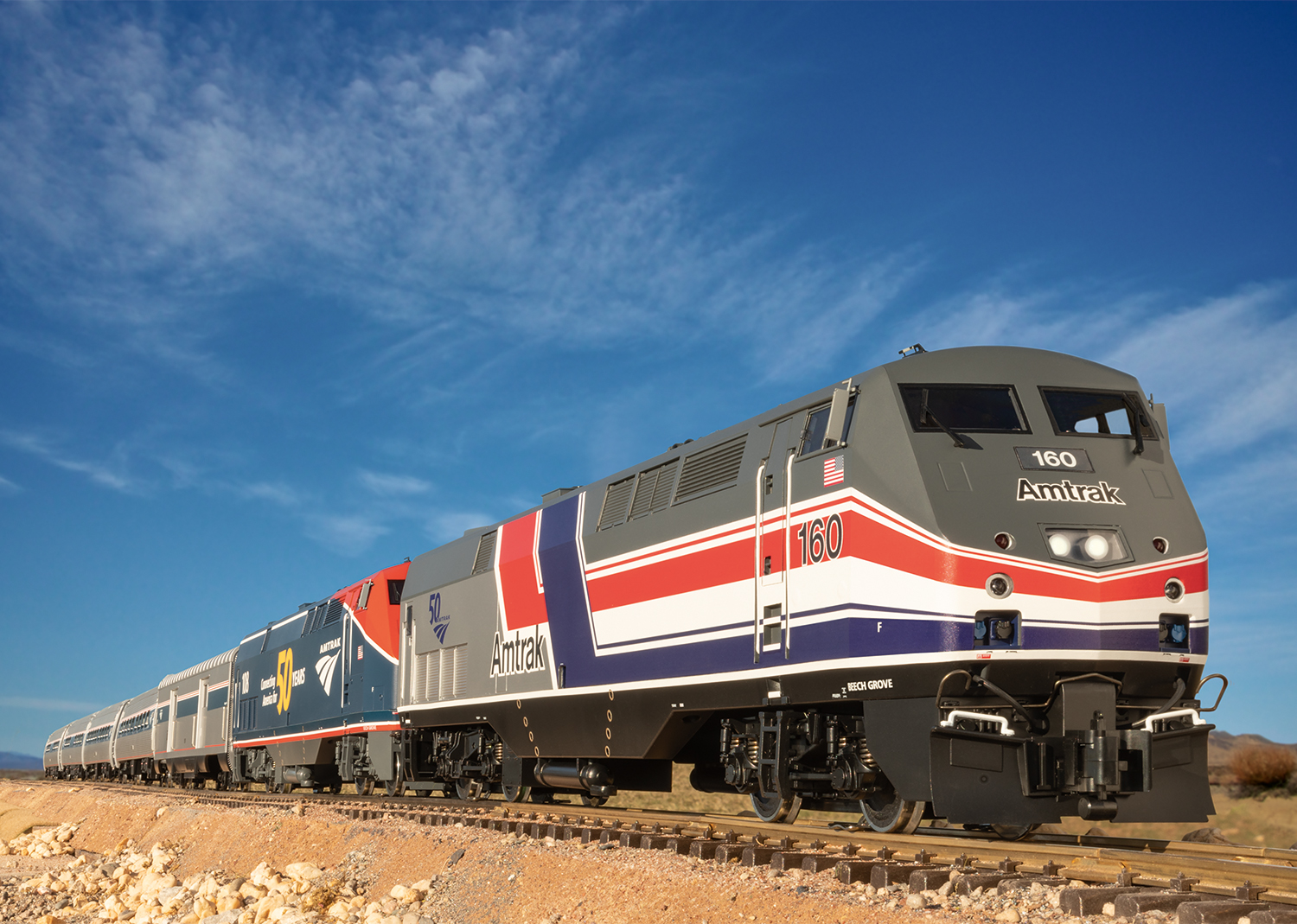
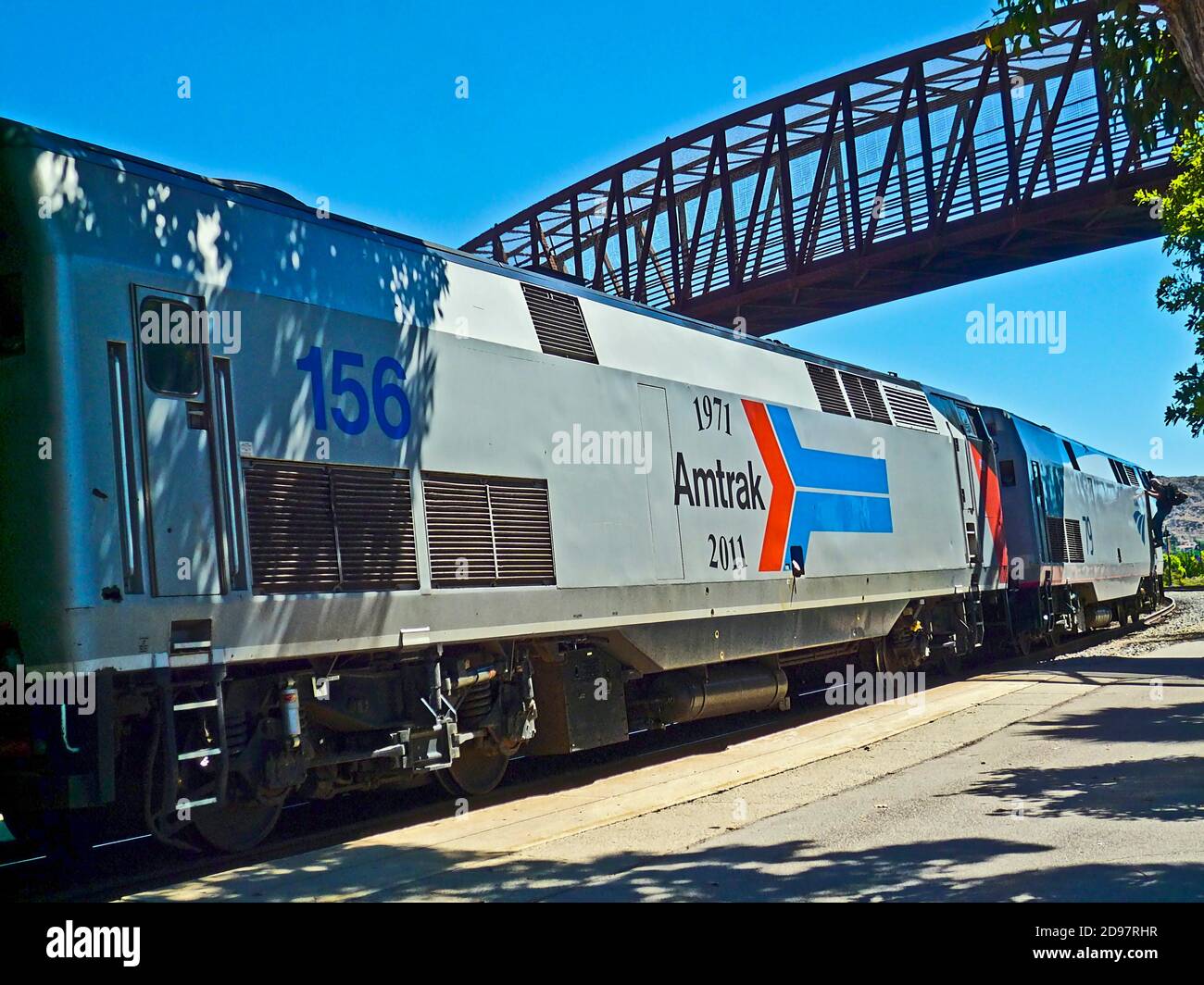
Amtrak locomotives are the specialized traction units that power the United States’ national passenger rail system, ranging from high-speed electric power cars to long-distance diesel-electric engines. As of 2026, the fleet is dominated by the Siemens ALC-42 "Charger" for long-distance routes and the Siemens ACS-64 "Cities Sprinter" for the electrified Northeast Corridor, marking a near-complete transition from legacy General Electric (GE) models.
The Engineering Backbone of American Rail
The locomotive serves as the heart of any train consist, providing the tractive effort required to move thousands of tons of passenger cars across varied terrain. For Amtrak, this task is uniquely challenging. Unlike European rail systems that often operate on dedicated passenger tracks, Amtrak locomotives must navigate a mix of high-speed electrified lines in the Northeast and thousands of miles of freight-owned, non-electrified tracks across the Midwest, South, and West.
In 2026, the Amtrak locomotive roster represents a technological pivot point. The aging GE Genesis series, which served as the face of Amtrak for three decades, has largely been relegated to secondary service or retirement. In its place, a new generation of "smart" locomotives has taken over, defined by higher fuel efficiency, lower emissions, and advanced microprocessor-controlled systems that allow for real-time diagnostic monitoring.
The Diesel-Electric Fleet: Transitioning to the Siemens ALC-42
For the majority of Amtrak’s 21,000-mile network, diesel-electric propulsion is the only viable option due to the lack of overhead electrification. These locomotives are essentially mobile power plants; a large internal combustion engine drives an alternator, which produces electricity to power traction motors located on the axles.
The Rise of the Siemens Charger (ALC-42)
The Siemens ALC-42 (Amtrak Long-distance Charger, 4,200 horsepower) is the current flagship of the national network. Developed specifically for Amtrak's grueling long-distance routes, the ALC-42 was designed to replace the GE P42DC.
- Tier 4 Emissions Compliance: One of the primary drivers for the ALC-42 rollout was the Environmental Protection Agency’s (EPA) Tier 4 standards. These units utilize a Selective Catalytic Reduction (SCR) system and Diesel Exhaust Fluid (DEF) to reduce particulate matter by 90% and nitrogen oxide (NOx) emissions by 80% compared to older models.
- Engine Specifications: At its core is the Cummins QSK95, a 16-cylinder high-speed diesel engine. Unlike the slow-speed "chugging" engines of the past, the QSK95 operates more like a high-performance maritime engine, offering better power-to-weight ratios.
- Enhanced Reliability: The ALC-42 features an increased fuel capacity (2,200 gallons) and larger sand boxes (for traction on grades) compared to the regional SC-44 variant used on state-supported corridors.
The Legacy of the GE Genesis (P42DC and P40DC)
While the Siemens Charger represents the future, the GE Genesis series remains a significant chapter in Amtrak history. Introduced in the early 1990s, these locomotives were revolutionary for their low-profile, aerodynamic monocoque design, which allowed them to fit through restricted-clearance tunnels in the Northeast.
By 2026, the P42DC units that remain in service are often found on shorter regional "shuttle" routes or acting as secondary power. Their primary limitation in the modern era is their Tier 0 or Tier 1 emissions rating and the increasing difficulty of sourcing replacement parts for their 7FDL-16 engines.
Electrified Power: The Northeast Corridor (NEC)
The Northeast Corridor, running from Washington, D.C. to Boston, is the only segment of the U.S. rail network capable of supporting high-speed electric operations. Here, locomotives draw power from overhead catenary lines, eliminating the need for onboard diesel engines and allowing for significantly higher acceleration and top speeds.
Siemens ACS-64 "Cities Sprinter"
The ACS-64 has been the workhorse of the NEC since 2014. Built by Siemens in Sacramento, California, these units are designed to reach speeds of 125 mph while pulling up to 18 Amfleet or Horizon passenger cars.
- Tractive Power: These units produce a peak of 8,600 horsepower, allowing them to maintain tight schedules even with heavy train loads.
- Regenerative Braking: One of the most efficient features of the ACS-64 is its ability to act as a generator during braking. The energy captured is fed back into the catenary system, providing power for other trains on the line and significantly reducing Amtrak’s overall energy costs.
- Redundancy: The locomotive is designed with highly redundant systems; if one inverter or cooling system fails, the unit can often continue to operate at reduced power, preventing "dead-on-track" failures that used to plague older electric models like the AEM-7.
High-Speed Trainsets: Acela and Avelia Liberty
It is important to distinguish between standalone locomotives and the power cars used in integrated trainsets. The Acela Express uses two power cars (one at each end) to achieve speeds of 150 mph.
As of 2026, the new Alstom Avelia Liberty trainsets have fully integrated into the NEC schedule. These units do not use traditional "locomotives" in the sense that they are meant to be decoupled; rather, the power cars are purpose-built to work exclusively with their specific passenger trailer cars, utilizing active tilting technology to navigate curves at higher speeds than conventional equipment.
Technical Comparison of Primary Amtrak Locomotives
The following table compares the specifications of the three most prominent locomotive models in the 2026 Amtrak fleet.
| Feature | Siemens ALC-42 (Charger) | Siemens ACS-64 (Cities Sprinter) | GE P42DC (Genesis) |
|---|---|---|---|
| Primary Use | Long-Distance National Network | Northeast Corridor (Electric) | Regional/Secondary (Legacy) |
| Power Source | Diesel-Electric (Tier 4) | Electric (Catenary) | Diesel-Electric (Tier 0/1) |
| Horsepower | 4,200 hp | 6,700 hp (Cont.) / 8,600 hp (Peak) | 4,250 hp |
| Top Speed | 125 mph | 125 mph | 110 mph |
| Engine/Motor | Cummins QSK95 | AC Traction Motors | GE 7FDL-16 |
| Weight | ~265,000 lbs | ~215,000 lbs | ~268,000 lbs |
| Year Introduced | 2021 | 2014 | 1992 |
Dual-Mode Capabilities and the New "Airo" Fleet
A significant challenge for Amtrak is the "one-seat ride" requirement for routes that transition between electrified and non-electrified territory—most notably trains entering and leaving New York Penn Station, where diesel engines are prohibited due to ventilation issues.
The ALC-42E and the Siemens Airo
In 2026, the introduction of the Siemens Airo trainsets is transforming these regional transitions. These are not just locomotives, but integrated "push-pull" sets. The locomotive component, often referred to as the ALC-42E, features a unique dual-mode or hybrid capability:
- Third Rail/Catenary Access: In the New York area, the unit can draw power from the third rail (or overhead wires) just like an electric locomotive.
- Battery/Auxiliary Power: Some variants are being tested with battery trailers that allow the locomotive to operate in "zero-emission mode" within urban centers or stations, switching to diesel power once they reach open country.
- Efficiency: By eliminating the need to swap locomotives (a process that previously took 20-30 minutes in places like Washington D.C. or New Haven), these dual-mode units significantly reduce travel times.
Maintenance and Operational Logistics
Operating a locomotive fleet across the North American continent requires a massive infrastructure of maintenance facilities. Amtrak’s primary "back shops" are located in Beech Grove, Indiana, and Bear, Delaware.
Precision Maintenance
In 2026, maintenance has shifted from "reactive" (fixing things when they break) to "predictive." Amtrak locomotives are equipped with thousands of sensors that transmit data via cellular or satellite links to the Remote Monitoring Center. This allows technicians to identify a failing fuel pump or a traction motor bearing issue hundreds of miles before it causes a breakdown.
Fueling and Environment
Amtrak has increasingly experimented with Renewable Diesel (RD). Unlike traditional biodiesel, RD is a "drop-in" fuel that meets the same ASTM D975 specifications as petroleum diesel but is produced from fats, oils, and greases. By 2026, several Amtrak routes in California and the Pacific Northwest operate almost exclusively on renewable diesel, further lowering the carbon footprint of the locomotive fleet.
Safety Systems: Positive Train Control (PTC)
Every Amtrak locomotive in 2026 is equipped with fully operational Positive Train Control (PTC). This is a federally mandated integrated command, control, communications, and information system.
- Speed Control: PTC automatically slows or stops a train if it is traveling too fast for a curve or a signal.
- Collision Avoidance: The system prevents train-to-train collisions by monitoring the location of all locomotives on the network.
- Enforcement: If a locomotive engineer fails to respond to a warning, the PTC system on the locomotive will automatically apply the brakes.
Challenges in Locomotive Procurement
Building locomotives for Amtrak is a complex process governed by "Buy America" requirements. Under federal law, a significant percentage of the components—including the steel, the engine, and the final assembly—must originate in the United States.
This has led to a consolidated market where Siemens Mobility has become the dominant supplier, as they maintain a large-scale manufacturing plant in California. Other manufacturers, such as Progress Rail (owned by Caterpillar) and Wabtec (which acquired GE Transportation), primarily focus on the freight market, making the passenger-specific Siemens Charger the de facto standard for Amtrak in the 2020s.
Frequently Asked Questions
What happened to the old Amtrak "AEM-7" locomotives?
The AEM-7 "Toasters," which were the iconic electric engines of the Northeast Corridor for over 30 years, were officially retired by 2016. Most have been scrapped, though a few are preserved in museums like the Railroad Museum of Pennsylvania. They were replaced by the Siemens ACS-64.
Why does Amtrak use two locomotives on some trains?
Amtrak often uses "double-heading" for two reasons: tractive effort and redundancy. On long-distance trains like the Empire Builder or California Zephyr, two locomotives are needed to pull 10+ heavy Superliner cars over mountain passes. Additionally, having a second locomotive ensures that if one engine fails in a remote area, the train can still move under its own power.
Do Amtrak locomotives have bathrooms?
Yes, Amtrak locomotives are equipped with a small, basic lavatory for the engineer and conductor. In modern units like the Siemens Charger, these facilities are significantly improved over the cramped, often poorly ventilated units found in older freight-derived locomotives.
How fast can an Amtrak locomotive actually go?
While many Amtrak locomotives are geared for a maximum speed of 125 mph, they are restricted by the tracks they run on. Most freight-owned tracks have a passenger speed limit of 79 mph. Only on the Northeast Corridor and specific sections of the Michigan Line or the Keystone Corridor do locomotives regularly reach their 110-125 mph potential.
Are Amtrak locomotives automatic?
No. While they have advanced safety systems like PTC and cruise-control-like "speed set" functions, a qualified locomotive engineer must be in the cab at all times. The engineer is responsible for managing the throttle, dynamic braking, and monitoring the track ahead for hazards.
Practical Recommendation for Rail Travelers and Enthusiasts
For those interested in seeing the modern Amtrak fleet in action, the best locations remain the major hubs where equipment transitions occur. Chicago Union Station is the premier destination for viewing the Siemens ALC-42 Charger in long-distance service, as almost all national network trains originate or terminate there. For those interested in the high-speed electric fleet, Philadelphia 30th Street Station or New York Penn Station provide constant views of ACS-64s and the new Avelia Liberty trainsets.
If you are planning a trip and want to ensure you are riding behind the newest equipment, look for routes designated as "Airo" service (rolling out through 2026 and 2027) or any of the long-distance routes, which have now standardized on the Siemens Charger fleet. These newer locomotives offer a smoother ride and, most importantly, much higher reliability rates, meaning fewer delays due to mechanical failure.